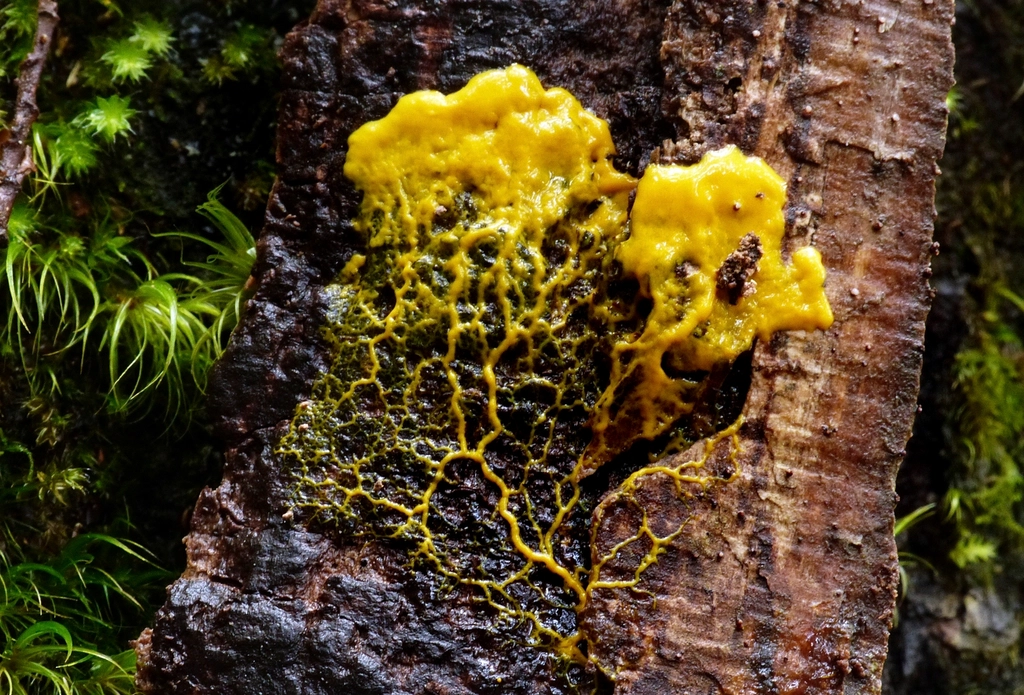

You step out to check on your garden after a night of rain, coffee still in hand, and stop dead in your tracks. Sitting there in your mulch is a bright, spongy, yellow blob that was absolutely not there yesterday. It looks like someone’s dog got sick in your flower bed. It’s alarming, it’s a little gross, and it raises a very reasonable question: what on earth is that thing?
The answer turns out to be far more interesting than the appearance suggests. That strange overnight arrival has a story rooted in ancient biology, surprising chemistry, and a life cycle that scientists are still working to fully understand.
Meet Fuligo septica, the “Dog Vomit Slime Mold”
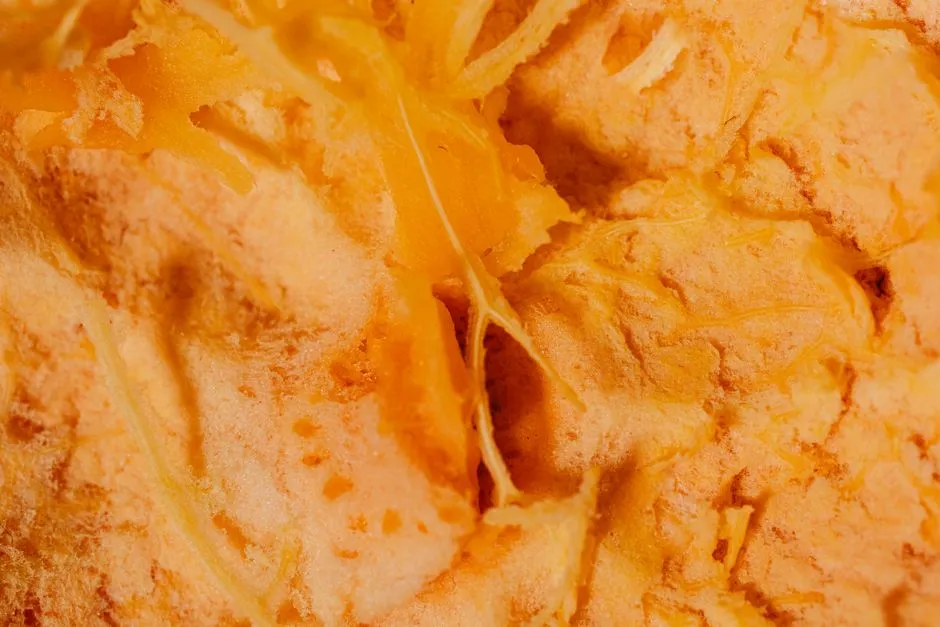
This organism is known scientifically as Fuligo septica, and it’s often referred to as scrambled egg slime or yellow mold because of its bright color and odd, spongy texture. The common nickname “dog vomit slime mold” is, admittedly, not flattering. Despite the name, it has nothing to do with dogs.
Dog vomit fungus isn’t actually a fungus at all. It’s a slime mold, part of a weird and wonderful group of organisms that aren’t animals, plants, or fungi. Fuligo septica is neither a plant nor an animal. It belongs to the kingdom of Protoctista, or Protista.
It Has Been on Earth Far Longer Than You’d Think
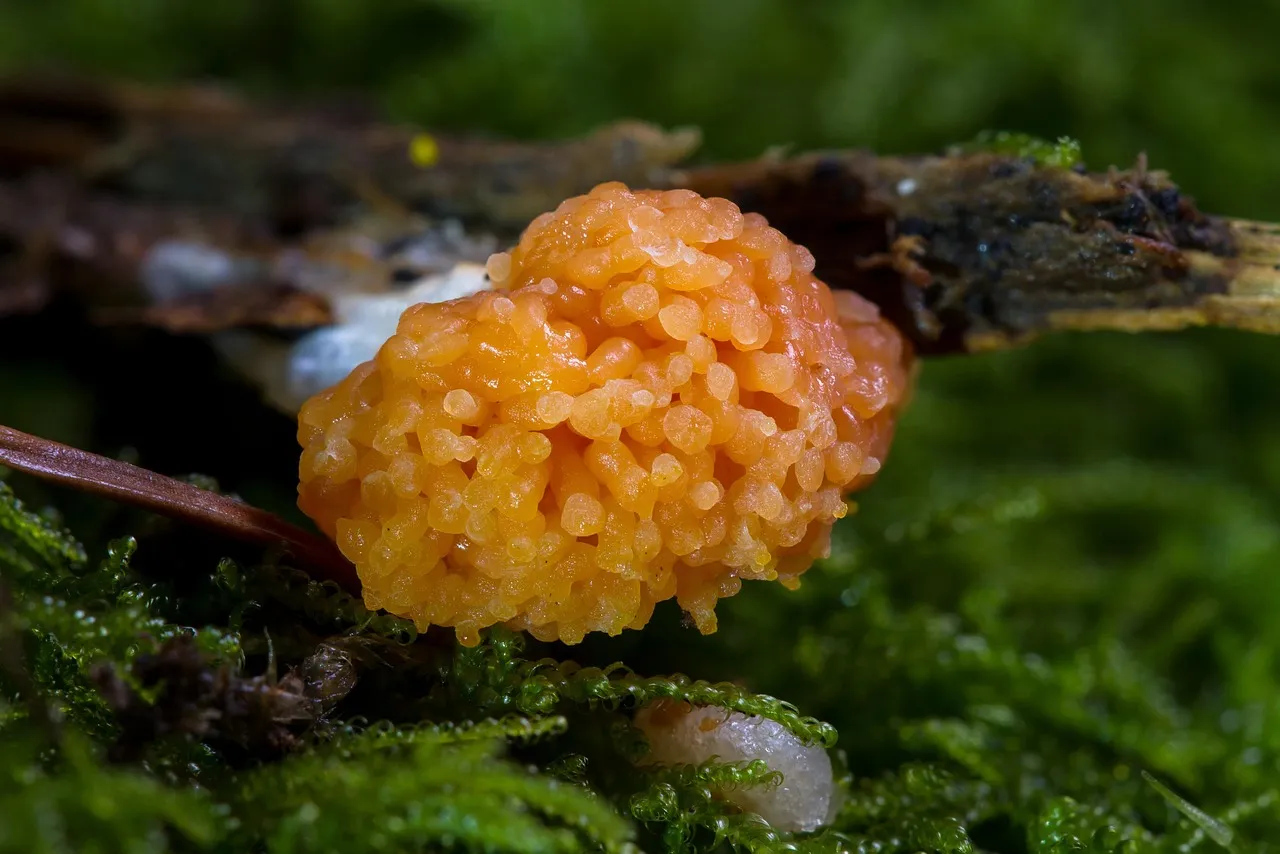
Analysis of the slime mold’s DNA has revealed that it has been on earth for around a billion years, before plants and animals. That’s a staggering timeline. To put it in perspective, the dinosaurs are relatively recent newcomers by comparison.
Fuligo septica is one of the largest of all slime molds and is conspicuous because of its size and intense yellow color. This very common organism is established worldwide and is most often found in landscapes on bark mulch. It has survived mass extinctions, continental shifts, and ice ages. Your garden mulch is a perfectly comfortable home by those standards.
It’s Not a Fungus, Not a Plant, and Not Quite an Animal
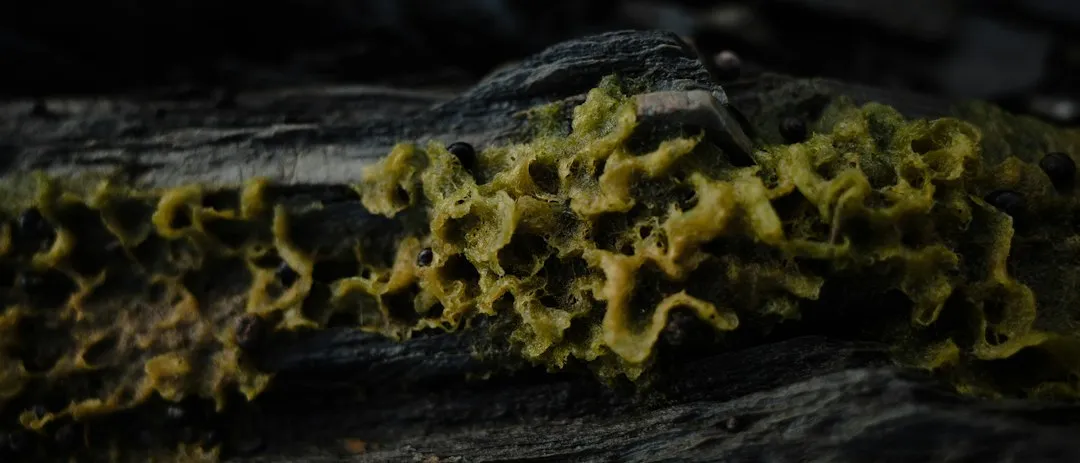
Slime mold is the casual name given for a soil-dwelling, single-celled primitive organism that combines with other cells to form a plasmodium, essentially a blob, kind of like an amoeba. The classification has puzzled scientists for a long time. Initially, slime mold was thought to be part of the plant kingdom, but now scientists recognize that these yellow or yellow-orange blobs growing across shady mulch beds are something less prone to a clear classification.
It belongs to a group of organisms called Amoebozoa, which are more closely related to amoebas and even some microscopic animal life than to typical molds or fungi. A true fungus has a cell wall and breaks down its food with enzymes before absorbing it, where an amoeba absorbs the food source and then breaks it down. The dog vomit slime mold follows the amoeba’s digestion method.
The Whole Blob Is Technically One Cell
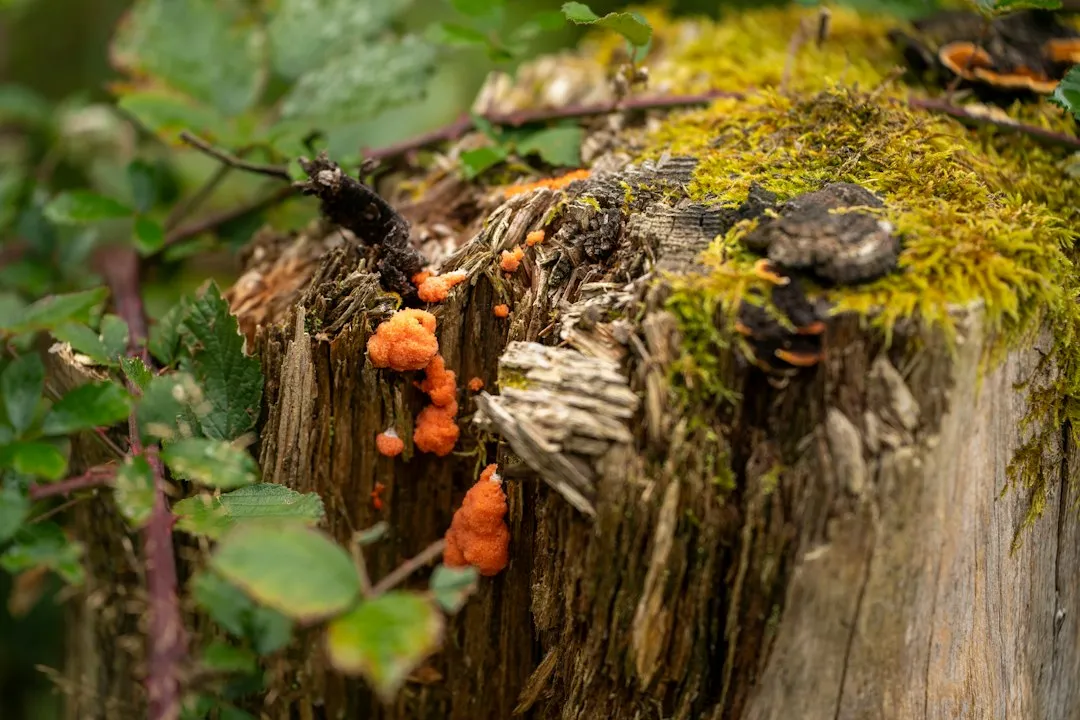
Slime mold is a single-celled organism. Each blob of slime mold is a single cell. Each single cell contains multiple, even thousands and millions of, diploid nuclei that all appear to divide at the same time within the single cell wall. This is one of the more mind-bending facts about the organism.
The blob appears to move by reacting to a food stimulus and contracting its cytoplasm to cause peristaltic waves across the cell. Scientists have measured its speed at about 1 mm per hour, slow and too small to see distance traveled unless one observes over hours and days. Some scientists have clocked slime mold moving at up to 5 cm per hour.
Why It Shows Up After Rain or Heavy Watering
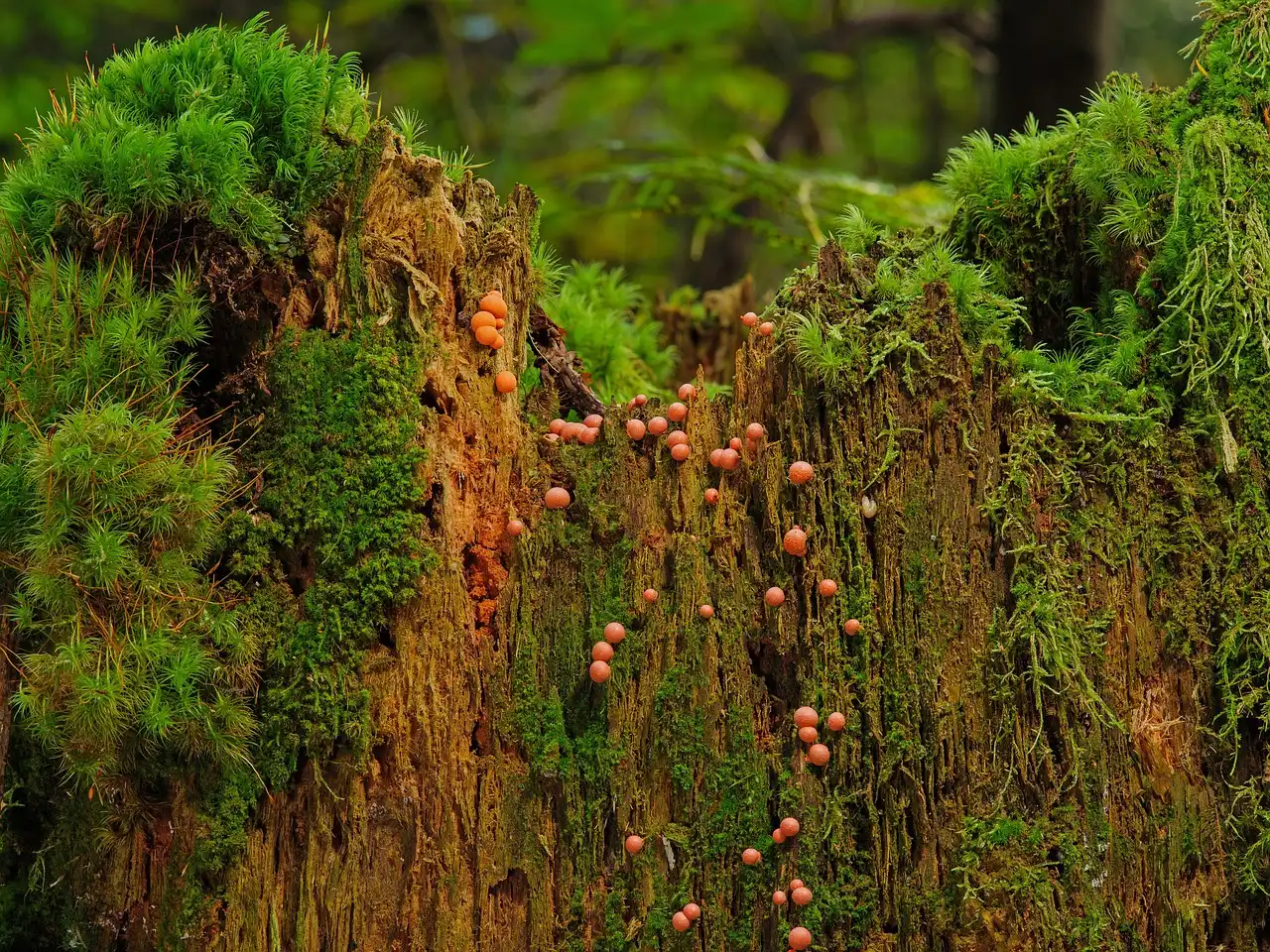
Slime molds typically appear after warm, wet weather and love to hang out in mulch, wood chips, decaying leaves, or other organic matter. The connection to moisture is direct and consistent. Dog vomit fungus can appear anytime from late spring through fall in warmer weather and moist conditions, whether from rain, humidity, or excessive watering.
When it is warm and wet enough, the spores absorb moisture and crack open to release cells that fuse into a plasmodium, a mass of protoplasm containing multiple cell nuclei that aren’t separated by cell walls. Older, more seasoned mulch is less likely to support this mold, so you may never notice it unless you’ve recently spread fresh hardwood mulch on your garden beds.
What It Actually Eats
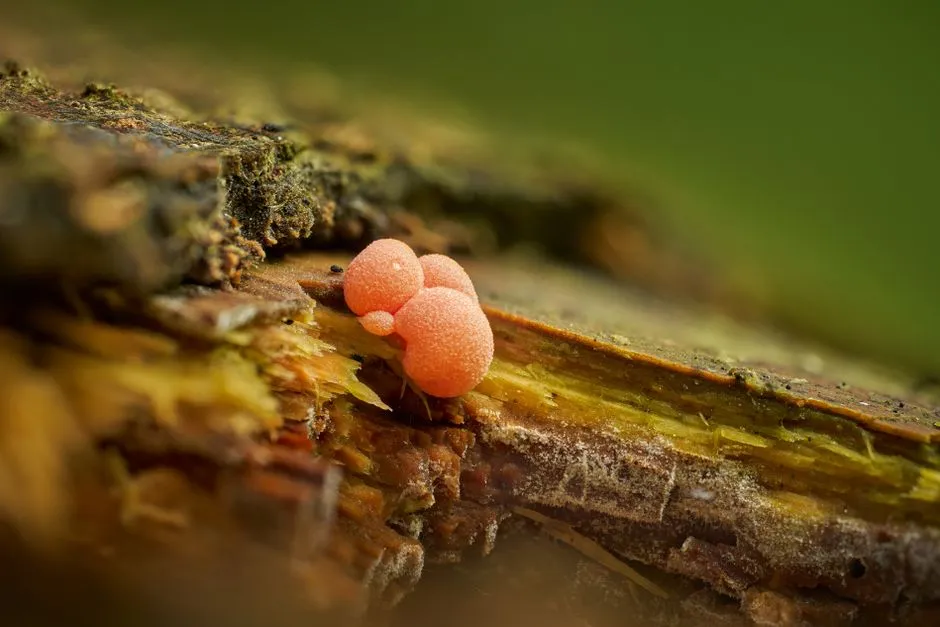
The plasmodium acts like a large amoeba, engulfing its food, which is mostly bacteria. It’s not interested in your plants, your soil nutrients, or your carefully tended seedlings. This organism doesn’t feed on living plants. It munches on bacteria, fungi, and decaying organic material. It’s actually part of nature’s cleanup crew, helping break things down and return nutrients to the soil.
It has come to decompose the hardwood mulch and will not affect any living plants. Perhaps the only rare risk to neighboring plants, particularly small seedlings, is being smothered by the blob as it grows. That’s a pretty minor concern in most home gardens.
The Four-Day Life Cycle in Your Garden
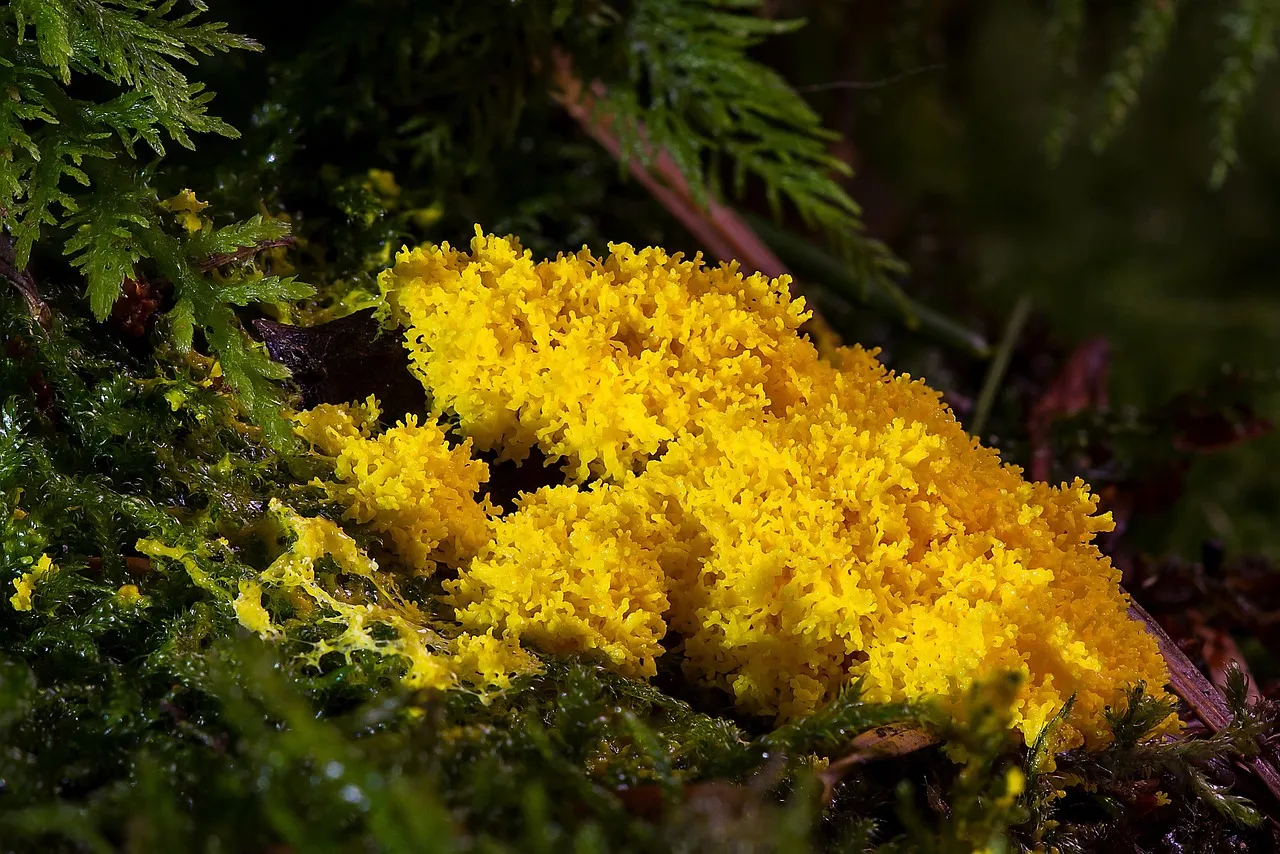
Dog vomit slime mold is most noticeable during its first bright yellow stage. The transformation from there is surprisingly swift. One day later the bright yellow spreads and mutes to a puffy tan color resembling a funnel cake. By the third day, the mold shrinks into a more crusty, gray-flecked form. The fourth day is even more disintegrated, and any disturbance sends clouds of spores wafting.
Fuligo septica produces wind-borne spores that can remain viable for years, waiting for conditions favorable for growth. Spores are transported by wind, animals, or insects. When a spore lands on an optimal site, it fuses with another spore and starts dividing its nucleus. The life cycle continues, and the plasmodium grows.
The Chemistry Behind That Vivid Yellow Color
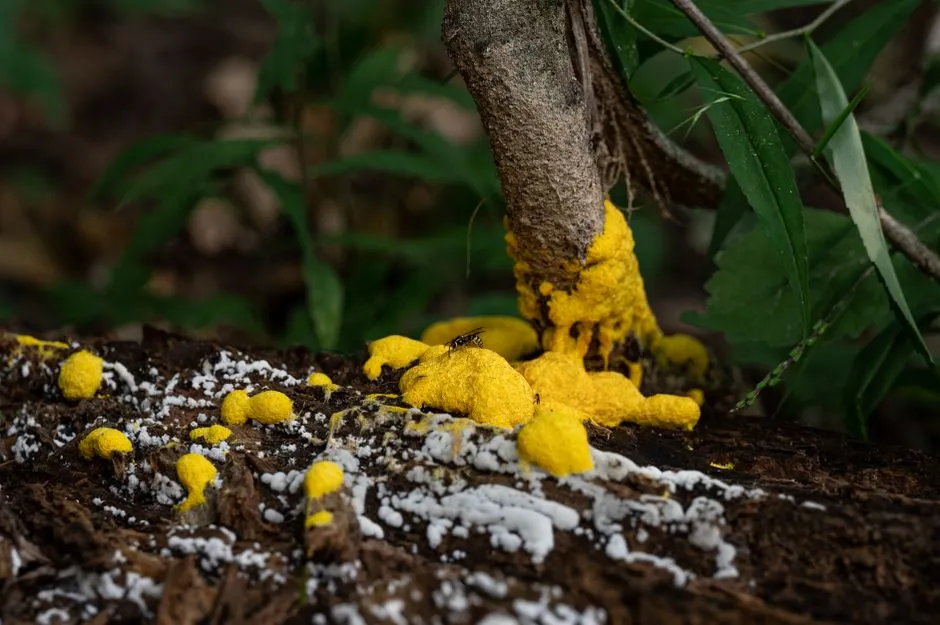
Studies have shown that Fuligo septica’s tolerance to extreme zinc levels is possible due to the synthesis of fuligorubin A. This yellow pigment gives the plasmodium its custard yellow color and forms chelating complexes with zinc, which transforms the metal into its inactive form.
Slime molds can have a high resistance to toxic levels of metals, with zinc concentrations in Fuligo septica recorded at levels of 4,000 to 20,000 parts per million. Fuligorubin A, which is responsible for the yellow color of the plasmodia of Fuligo septica, is the first tetramic acid derivative to be isolated from a slime mold. The same chemical family is found in certain antibiotics and antitumor agents, which has made it a point of scientific interest.
Folklore, History, and a Famous Movie

Folklore has linked Fuligo septica to witches. In Scandinavia, it was said to be the vomit of troll cats, mythical creatures that suck milk from cows and spit it into pails for witches. In Latvia, it has been called “witch’s butter” or “witch’s spit.”
In the 1700s, French botanist Jean Marchant referred to it as “fleur de tan” because of the tannish pigment it develops. On a more cinematic note, news reports about a large, gooey mass of what might have been plasmodial slime mold is said to have inspired the 1958 science fiction movie “The Blob.” Life really does imitate art, or in this case, it seems art imitated your mulch.
Should You Remove It, or Leave It Alone?
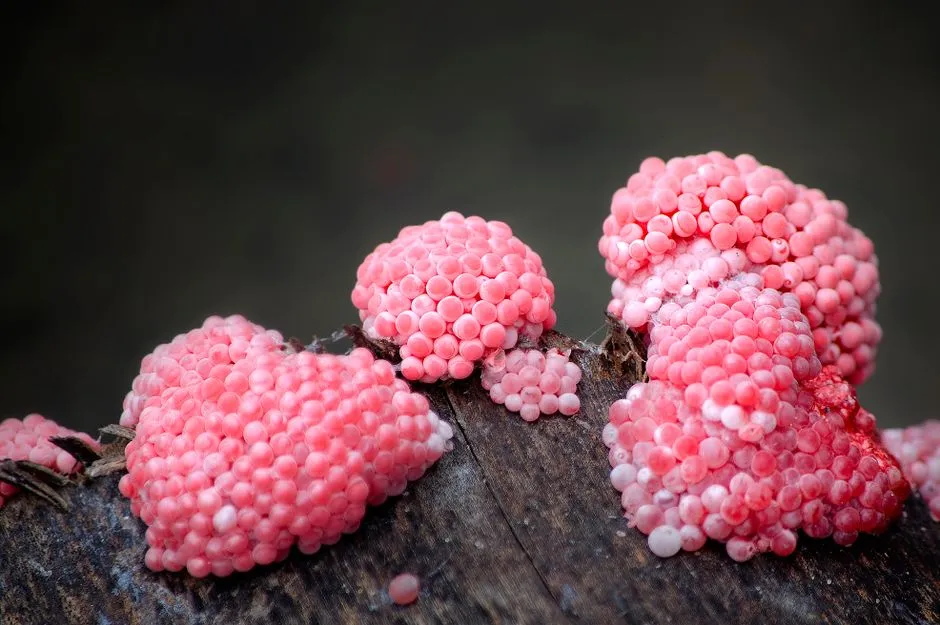
Despite its alien appearance, slime mold is completely harmless to plants, pets, and people. When the slime mold appears in lawns and gardens, no control is necessary, though its breakdown may be quickened by breaking the plasmodium apart with a rake.
Slime mold doesn’t require fungicides or bleach. Chemical treatments are ineffective and may harm your garden more than help. Slime molds thrive in damp conditions, so well-draining soil is less likely to develop slime mold growth. If it genuinely bothers you, rake it, let it dry out, and ease up on the watering for a stretch.
Final Thoughts
That yellow blob in your garden bed is, in many ways, a sign that things are working as they should. It means your mulch is breaking down, your soil has active biology, and the conditions for life are ripe. Slime mold on mulch might be startling, but it’s a harmless natural phenomenon that’s actually a sign your garden is rich in organic life.
Something that has existed for roughly a billion years, survived everything the planet has thrown at it, and still turns up in suburban gardens every spring deserves at least a moment of quiet appreciation. It’s strange, it’s alien-looking, and the name could certainly use some rebranding. Still, Fuligo septica is doing exactly what it was designed to do, and it has been doing it since long before the first flower ever bloomed.
AI Disclaimer: This article was created with the assistance of AI tools and reviewed by a human editor.