
The Screen Time Gap Nobody Talks About
There’s a meaningful difference between how much time remote workers and office workers actually spend staring at screens, and it’s wider than most people assume. Remote and hybrid workers get more than seven hours of screen time each day, compared to just five and a half hours for on-site employees. That gap alone is significant, but it understates what’s really happening.
Remote workers average nearly 13 hours per day staring at screens, up from seven to ten hours before the pandemic. This explosion in screen time isn’t just about work tasks. Remote workers are using multiple devices throughout the day: laptops for meetings, smartphones for communication, tablets for research, and personal devices for entertainment after work.
A landmark 2024 report by the American Optometric Association and the Deloitte Economics Institute found that more than 104 million working-age Americans are exposed to excessive screen time, defined as more than seven hours per day. The threshold that was once considered a lot is now simply a Tuesday.
Computer Vision Syndrome Is the Diagnosis Most Workers Don’t Know They Have

Computer Vision Syndrome encompasses a range of eye and vision-related problems that result from prolonged digital device use. According to the largest meta-analysis conducted in 2024, which reviewed 103 studies involving 66,577 participants, CVS now affects 69 percent of the global population. That’s not a fringe condition. That’s the majority of people who work with screens.
CVS encompasses a range of ocular and extraocular symptoms, including eyestrain, headaches, blurred vision, and neck pain. Symptoms are exacerbated by the unique visual demands of digital screens, such as imprecise letter clarity and reduced contrast.
A first comprehensive study of UK and Ireland remote workers found that 62.6 percent of remote workers experience digital eye strain, with home teleworkers showing significantly higher symptom scores than office workers. The home environment, it turns out, creates conditions that are uniquely hard on the eyes.
The Blinking Problem You’ve Never Noticed
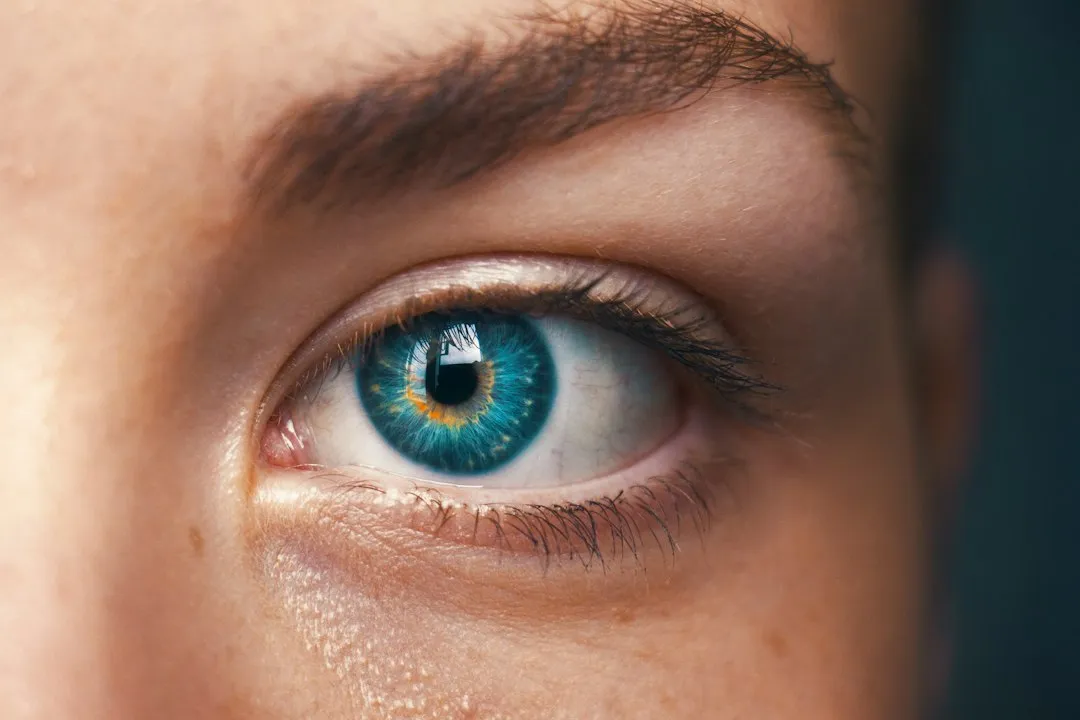
Here’s something that happens to virtually every screen user without their awareness: they stop blinking enough. When you focus on a digital screen, your natural blink rate drops dramatically. Studies show that people blink about half to two thirds less frequently when reading or working on electronic devices compared to normal activities. This happens because the brain becomes so absorbed in the visual task that it suppresses the automatic blink reflex. Your normal blink rate is often about 15 to 20 times per minute, but this can fall to just 5 to 7 blinks per minute during intense screen use.
Each time you blink, your eyelids spread a fresh layer of tears across the surface of your eye. Fewer blinks mean your tear film breaks down faster than it can rebuild. Over the course of a 13-hour screen day, the cumulative effect on surface moisture is substantial.
Recent research from 2025 confirms that regular complete blinking exercises significantly improve tear film stability and reduce dry eye symptoms. The fix sounds almost too simple, but the underlying physiology is real.
Eye Health Is Getting Worse Year Over Year
The trend lines here aren’t reassuring. Two-thirds of employees report having at least one eye issue. Among desk workers, the rate has risen steadily year over year, increasing from 50 percent two years ago to 63 percent last year and 67 percent this year. That’s a consistent upward curve, not a one-time pandemic spike that resolved.
A study by VSP Vision Care and Workplace Intelligence highlights a growing issue in the workplace: 68 percent of employees experience symptoms of digital eye strain, including blurred vision, eye fatigue, and dry, itchy eyes. These aren’t abstract complaints. They’re symptoms that affect daily function.
An alarming 43 percent of workers report that their eye health is worsening as a result of their screen-heavy routines. What’s notable is that this figure comes from people who are actively aware the problem exists. Many more likely haven’t connected their symptoms to screen use at all.
Productivity Loss Is Real and Measurable

Eye strain tends to be framed as a comfort issue, a minor annoyance. The productivity data tells a different story. Half of workers have at least one eye issue, such as blurred or poor vision, eye strain and fatigue, or dry and itchy eyes. Workers struggling with these issues report negative impacts on their productivity (63 percent), ability to focus (55 percent), and mental health (42 percent).
One in four employees say they have taken time off due to digital eye strain, averaging 4.5 days per year. That’s not a trivial number when multiplied across a large workforce.
The strain extends beyond work output. Nearly half of affected workers say it reduces their overall quality of life and contributes to irritability and fatigue. Eye strain bleeds into evening hours, affecting sleep, mood, and the ability to recover for the next day.
Younger Workers Are Bearing the Heaviest Load

Remote work’s toll on eyes isn’t distributed evenly across age groups. A full 82 percent of Gen Z employees report working longer hours, and 54 percent say this has impacted their eye health. For a generation that grew up on screens and now works on them professionally, the cumulative exposure is significant.
A 2024 study published in Ophthalmology followed 12,000 participants over eight years and found a statistically significant correlation between high screen time exceeding eight hours daily before age 30 and earlier onset of presbyopia, which is age-related difficulty focusing on near objects.
The researchers cautioned that correlation does not establish causation, but the association was robust enough to warrant further investigation. The possibility that early and sustained heavy screen use accelerates age-related vision changes is worth taking seriously, even before the science fully settles.
Home Environments Create Unique Eye-Strain Conditions
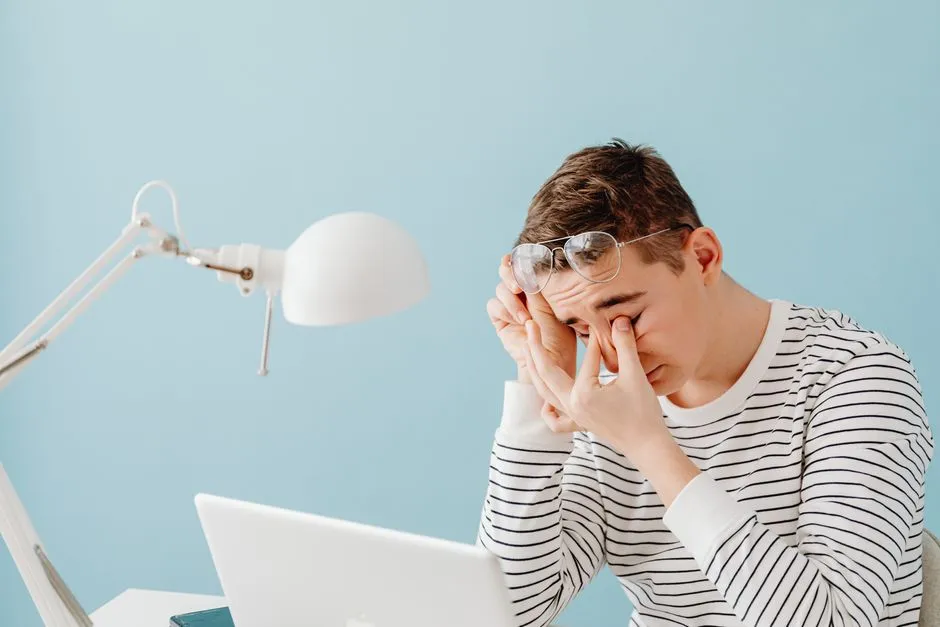
Office buildings, whatever their flaws, are usually designed with working conditions in mind. Home setups rarely are. Nearly half of workers believe their job negatively affects their eye health. Excessive screen time, poor lighting, and improper workstation setup are frequently cited factors.
A marked reduction in eye blinking during screen work might also bring irritation in the eyes because of dryness. Poor ergonomics including improper surrounding lights and excessive glare from screens further contribute to visual fatigue, strain, and discomfort in the eyes.
Remote workers are using multiple devices throughout the day, and the boundaries between professional and personal screen use have completely dissolved. That seamless transition from work laptop to personal phone means there’s genuinely no period of visual rest built into the day.
The 20-20-20 Rule: Simple, Evidence-Based, and Widely Ignored
Of all the interventions studied for digital eye strain, one keeps showing up in clinical recommendations: the 20-20-20 rule. Every 20 minutes, look at something 20 feet away for 20 seconds. It’s the kind of advice that sounds too tidy to be effective, but the mechanism behind it is sound.
A 2024 pilot study at a Fortune 500 tech company published in the Journal of Occupational Health showed a 28 percent reduction in eye-strain-related complaints after deploying automated break reminders across their engineering organization. The rule works when people actually follow it, which is where structured reminders become useful.
Based on the evidence, three interventions have the strongest research support: following the 20-20-20 rule with automated reminders, optimizing monitor ergonomics, and taking frequent short breaks rather than infrequent long ones. None of these require expensive equipment or major behavioral overhaul.
Blue Light: More Complicated Than the Marketing Suggests
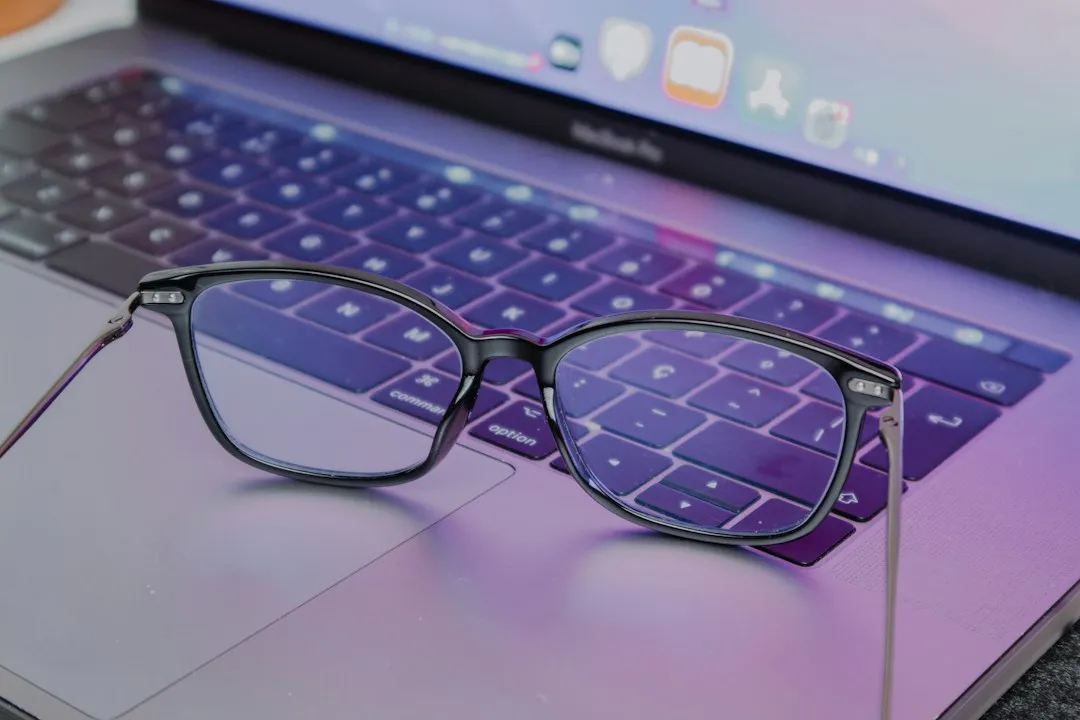
Blue light filtering glasses have become one of the most marketed solutions for screen-related eye discomfort. The reality of their effectiveness is more nuanced. While blue light filtering glasses and screen filters may improve subjective visual comfort for some users, current evidence does not consistently demonstrate that they prevent the core mechanisms of digital eye strain.
Disrupted sleep patterns, leading to daytime fatigue due to sleep disturbances, are an effect seen from blue light emitted by devices. The sleep-disruption concern related to evening screen use is more consistently supported by research than the direct eye-strain claim.
This doesn’t mean blue light glasses are worthless. For people who notice subjective improvement, there’s no harm in using them. The important thing is not to treat them as a substitute for behavioral changes like taking breaks and reducing total screen time, which have stronger evidence behind them.
What Actually Helps: Practical Steps With Research Support
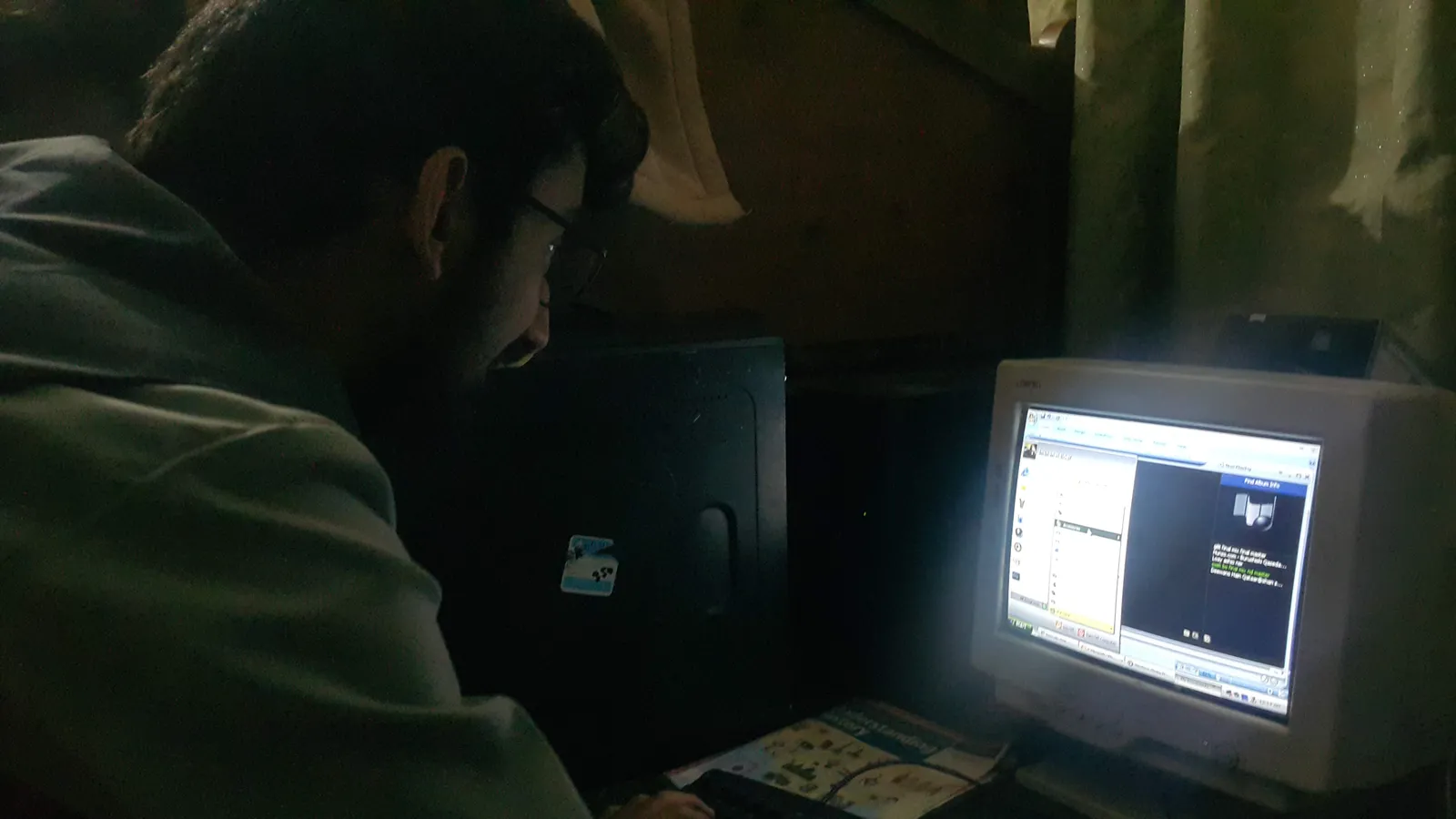
Working from home has increased global cases of Computer Vision Syndrome to 69 percent, with remote workers experiencing 25 percent more severe eye strain than office-based peers. To address this, optimizing workstation ergonomics and following the 20-20-20 rule are the foundational recommended steps.
Practicing five to ten slow, deliberate complete blinks every 20 minutes or at least once each hour helps spread a fresh coat of tears across the eye surface. This is one of the simplest and most underused interventions available. Nearly one in three remote workers struggle to take adequate breaks. The strain has driven 88 percent to seek professional eye care recently, with 45 percent needing new prescriptions.
Forward-thinking employers are recognizing the importance of supporting remote workers’ eye health. Many companies now offer home office stipends that can be used for ergonomic equipment including monitor arms, adjustable desks, and proper lighting. Enhanced vision insurance coverage for computer-related eye care is also becoming more common, including coverage for computer glasses and specialized examinations.
The Quiet Accumulation of a Daily Habit

The remote work habit straining eyes isn’t one dramatic mistake. It’s the slow accumulation of too many hours, too little blinking, unoptimized lighting, and no clear boundary between the work screen and the evening one. None of it feels alarming in the moment. That’s exactly what makes it easy to overlook until the symptoms become impossible to ignore.
With 5 billion people projected to be myopic by 2050, and remote work screen time continuing to increase, the window for prevention is narrowing. That projection isn’t inevitable, but it does suggest that current habits, left unchanged, carry real long-term consequences.
The encouraging part is that the most effective countermeasures are genuinely accessible: structured breaks, mindful blinking, proper screen positioning, and regular eye exams. The gap between knowing these things and building them into a daily routine is where most people get stuck. Closing that gap, quietly and consistently, is what protecting your vision in the remote work era actually looks like.
AI Disclaimer: This article was created with the assistance of AI tools and reviewed by a human editor.