
Pick a word. Any word. Stare at it for thirty seconds without blinking, and something strange starts to happen. It begins to look wrong, spelled incorrectly, like a random jumble of letters that could never belong to a real language. The word hasn’t changed. You have.
This experience is far more universal than most people realize. Psychologists have a name for it, a history of studying it, and a surprisingly rich explanation for why the brain does this. It turns out the sensation is less about vision and more about how meaning is stored, retrieved, and temporarily exhausted.
The Phenomenon Has a Formal Name: Semantic Satiation
The effect is called semantic satiation, and it was formally described by the psychologist Leon James in his 1962 doctoral research at McGill University. The core idea is that when a word is repeated or fixated upon long enough, the mental connections that give it meaning temporarily weaken. What you’re left with is the shell of the word: its shape and sound, stripped of significance.
The term “satiation” is borrowed from the sense of being full. Just as your stomach signals that it can’t take any more food, your brain signals that it has processed this particular word to the point of temporary exhaustion. The meaning doesn’t disappear permanently. It simply goes quiet for a moment before resetting.
Your Brain Treats Words as Patterns, Not Letters
When you’re reading fluently, you’re not actually decoding letters one by one. Research in cognitive psychology has established that skilled readers recognize whole word shapes at a glance, a process sometimes called orthographic processing. The brain essentially pattern-matches a word to a stored mental template, which is why reading at speed feels effortless most of the time.
The moment you stare at a word too long, you interrupt that automatic recognition. You start seeing individual letters again. “Chair” becomes C-H-A-I-R, a sequence that looks increasingly arbitrary the longer you sit with it. That shift from holistic recognition to analytical breakdown is part of what produces the uncanny, “is this even a word?” feeling.
Neural Fatigue Is Real, and It Plays a Direct Role

There is a well-established neurological principle behind semantic satiation: repeated stimulation of the same neural pathway leads to a temporary reduction in that pathway’s response. This is sometimes described as reactive inhibition, a concept closely tied to the broader field of habituation research. The neurons involved in processing a specific word’s meaning don’t switch off entirely, but their firing rate drops noticeably after sustained, repetitive activation.
Think of it like pressing the same key on a piano repeatedly in quick succession. The sound gets thinner, less resonant. The mechanism for producing the note is still intact, but something in the response has been dulled by overuse. That’s roughly what’s happening in the language centers of the brain when a word loses its meaning under prolonged attention.
It Happens with Sound, Too, Not Just Sight

Semantic satiation isn’t limited to reading. It also occurs with spoken words, which researchers have tested by having participants repeat a single word aloud dozens of times in a row. After roughly thirty repetitions, many participants report that the word starts to sound meaningless or foreign. The phonemes are still being produced correctly, yet the sense of them belonging to a real word fades.
This auditory version of the phenomenon was studied alongside the visual version in early satiation research, and both follow a similar timeline. The satiation tends to build quickly in the first minute, then plateaus. Recovery is also fairly swift once stimulation stops, typically within seconds to a few minutes depending on the individual and the word involved.
Some Words Are More Vulnerable Than Others
Short, common words like “door,” “milk,” or “hand” tend to lose their meaning faster under fixation than longer, rarer words. One reason researchers propose is that high-frequency words are processed so automatically that the underlying neural pathway saturates more quickly. The more practiced and effortless the recognition, the more abruptly it can stall when forced into deliberate focus.
Abstract words like “truth” or “justice” also behave differently from concrete nouns. Because abstract words don’t map directly onto a sensory image, they already rely on a more complex network of associations for their meaning. Under satiation, that network frays faster, making abstract words feel especially hollow or invented when stared at long enough.
The Gestalt Principle Helps Explain the Visual Distortion
Part of what makes a stared-at word look “fake” is a breakdown in Gestalt perceptual grouping. Gestalt psychology, developed in the early twentieth century and still heavily referenced in vision research today, explains that the brain naturally organizes visual elements into coherent wholes. Letters in a familiar word are grouped instantly into a meaningful unit without conscious effort.
Prolonged staring disrupts that grouping. The letters start to float free from each other visually, looking like unrelated symbols rather than components of a unified word. This is the same family of effects that makes a familiar face look strange after you stare at it too long. The brain’s tendency to chunk information into meaningful patterns has a fragile edge, and fixation exposes it.
It’s Closely Related to a Broader Effect Called Jamais Vu

Psychologists sometimes connect semantic satiation to a phenomenon called jamais vu, which is essentially the opposite of déjà vu. Where déjà vu makes unfamiliar things feel strangely familiar, jamais vu makes familiar things feel suddenly alien. Staring at a word until it looks fake is a mild, voluntary, easily induced version of jamais vu.
Researchers at the University of St Andrews, including Chris Moulin, have investigated jamais vu as a cognitive event in its own right rather than just a curiosity. Their work suggests these moments of temporary unreality are normal features of how memory retrieval works under certain conditions, not signs of anything going wrong. The brain occasionally “checks itself” by momentarily loosening familiar associations, which can feel deeply disorienting.
Writers and Editors Are Particularly Familiar with This Effect
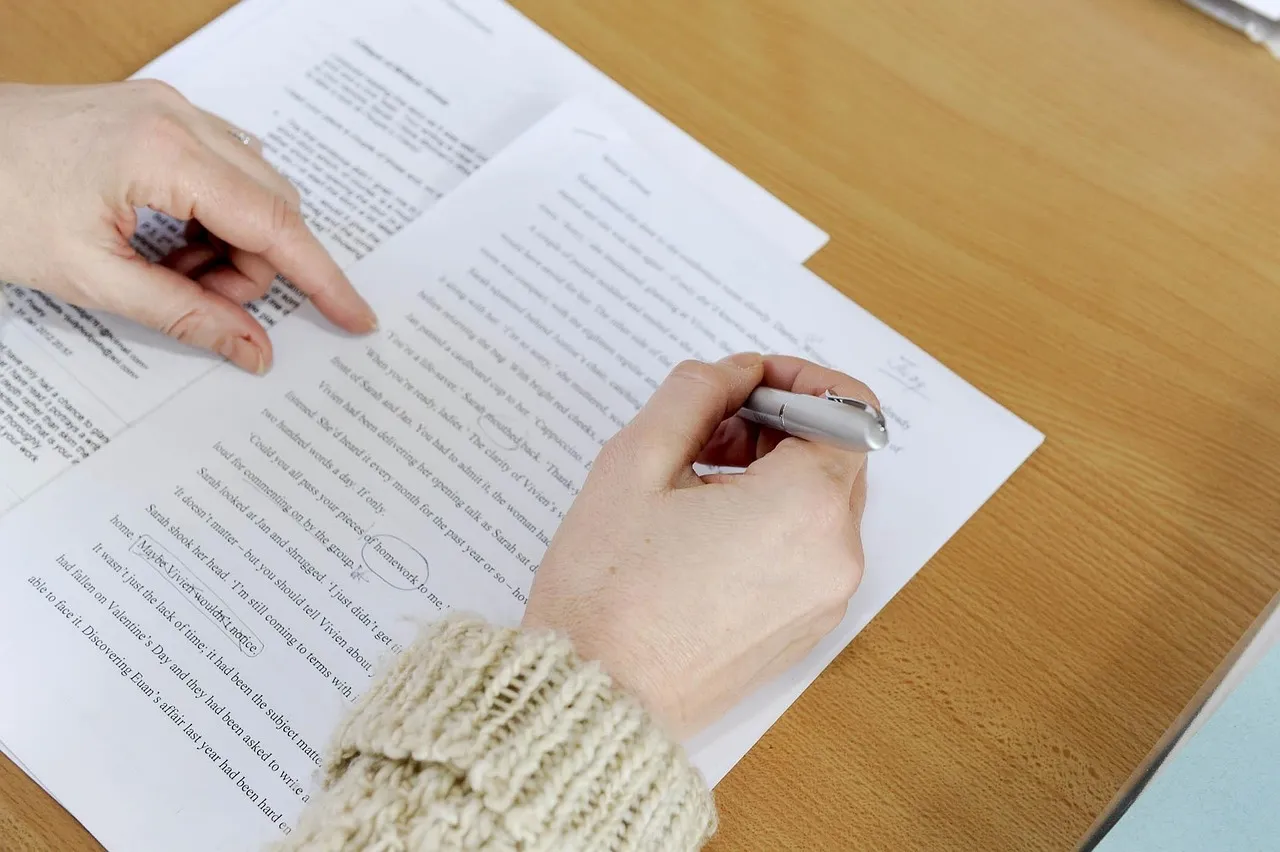
Anyone who has proofread their own writing for hours will recognize semantic satiation immediately. After reading the same sentence fifteen times, common words like “the” or “was” start to look like typos, and you find yourself genuinely uncertain whether “necessary” is spelled correctly even though you’ve written it thousands of times. This is semantic satiation at work in a very practical, professionally relevant way.
It’s also one of the reasons professional editors recommend stepping away from a document before a final read-through. The brain needs time to reset its word-recognition pathways so they function automatically again. Reviewing text in a fresh state allows those holistic word-shape templates to re-engage, making errors easier to spot and familiar words easier to trust.
The Effect Can Be Deliberately Induced and Even Studied at Home
Semantic satiation is one of the few psychological phenomena that anyone can reliably reproduce without any equipment. Simply write a word on paper, stare at it continuously for about forty-five seconds, and the effect will likely begin. Psychologists have used this reproducibility as a methodological strength: the effect is consistent enough across participants and word types to be studied systematically in controlled conditions.
Researchers have used this reliability to probe deeper questions about how meaning is stored in the brain, how quickly semantic networks can be temporarily suppressed, and what individual differences in language processing look like. People with stronger verbal fluency tend to experience satiation slightly differently than those with lower verbal facility, suggesting the effect is sensitive to how richly a word is represented in a person’s mental lexicon.
What Happens When the Word Snaps Back into Focus

The recovery from semantic satiation is almost as interesting as the satiation itself. Most people describe a sudden “click” when the word reassembles its meaning, similar to the way an optical illusion flips between two interpretations. One moment it’s gibberish, the next it’s obvious. That snapping-back sensation reflects the rapid reactivation of the word’s semantic network once the sustained stimulus pressure is released.
This reset doesn’t require effort. Simply looking away, blinking deliberately, or shifting attention to something unrelated for a few seconds is usually enough. The brain treats the interruption as a signal to reload its cached interpretation of the word, and the sense of strangeness dissolves almost immediately. It’s a reminder of how much of language comprehension runs on automatic processes that we rarely notice until, for just a moment, they quietly stall.
A Glitch Worth Appreciating
Semantic satiation is easy to dismiss as a quirk, but it reveals something genuinely important about cognition. Meaning isn’t stamped onto words permanently. It’s actively reconstructed each time you encounter them, using neural pathways that can be worn smooth by repetition. The fact that this reconstruction can temporarily fail is a window into the machinery of language itself.
There’s something quietly humbling about realizing that even the most ordinary words, words you’ve read ten thousand times, can suddenly look like a stranger’s handwriting. It doesn’t reflect confusion or exhaustion on your part. It reflects just how dynamic, and how fragile, the act of reading truly is.
AI Disclaimer: This article was created with the assistance of AI tools and reviewed by a human editor.