

A sound hits your ear, and before you’ve had a single conscious thought, your body has already reacted. Your skin prickles, your shoulders tense, or alternatively, your breathing slows and something in you quietly settles. The speed of that response is not an accident.
Sound reaches the brain faster than almost any other sensory signal. What happens in those first fractions of a second, and why the brain sorts some sounds into “threat” and others into “safe,” turns out to be one of the more fascinating puzzles in neuroscience, one that researchers are still actively unraveling.
The Amygdala’s Split-Second Judgment
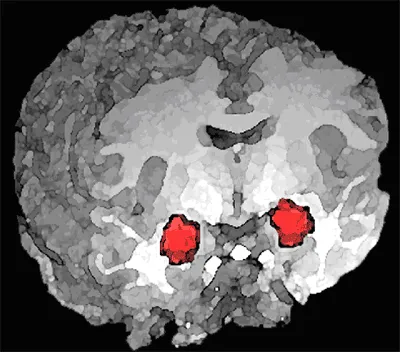
At the center of the skin-crawl response is a small, almond-shaped structure deep in the brain called the amygdala. When the amygdala detects danger, the hypothalamus activates the sympathetic nervous system, flooding your body with adrenaline and cortisol before you’ve even consciously registered what scared you. This happens with frightening efficiency.
The amygdala has direct wiring to sensory input, meaning auditory information can trigger a threat response before it even reaches the parts of the brain responsible for conscious recognition. Neuroscientists describe this as the “low road” versus “high road” distinction. The low road runs from the thalamus straight to the amygdala, skipping the cortex entirely.
Sounds not only arrive faster in the brain than visual signals, but threat-related sounds in particular evoke arousal, capture attention, and alert the brain via the brainstem reflex. The amygdala and the auditory cortex respond interactively to aversive sounds and their perceived unpleasantness. Your rational mind often catches up a moment too late.
The Frequency Sweet Spot That Triggers Discomfort

Not all unpleasant sounds affect us equally, and the reason has a lot to do with specific frequencies. Sounds like nails on a blackboard make our skin crawl because they sit in the 2,000 to 5,000 Hz range we hear most sharply, and they share the rough texture of a human scream, triggering the amygdala’s fight-or-flight alarm. That overlap is not coincidence.
The most painful frequencies are not the highest or lowest, but instead those between 2,000 and 4,000 Hertz. The human ear is most sensitive to sounds that fall in this frequency range. This sensitivity almost certainly has evolutionary roots, since that range corresponds closely with infant cries and distress calls.
When researchers monitored physiological indicators such as heart rate, blood pressure, and the electrical conductivity of skin while playing these sounds, they found that the offensive sounds changed listeners’ skin conductivity significantly, showing they cause a measurable, physical stress reaction. The body doesn’t lie, even when the mind tries to dismiss the sound as harmless.
Why Chaotic Sound Patterns Unsettle Us

Many of the noises that make us uneasy share a key trait: they are what scientists call nonlinear sounds. These are sound waves characterized by extremely high amplitude and sudden, unpredictable changes in frequency or harmony. Think of a squeak, a screech, or a baby’s shriek.
These sounds are chaotic and jarring, presenting a stark contrast to the steady, more predictable sounds we associate with calm and safety. Think of a squeaky hinge, a baby’s cry, or the screech of tires. These noises are nonlinear because they break the expected pattern of sound.
The brain, in essence, is a pattern-matching engine. When a sound violates its predictions, it flags the break as potentially dangerous. Predictability is calming; unpredictability is alarming. That simple rule governs a surprising amount of our auditory emotional life.
Misophonia: When Everyday Sounds Become Unbearable

Misophonia is a condition in which individuals experience intense anger and disgust when confronted with sounds made by other human beings. In particular, sounds like chewing, lip smacking, or breathing may cause intense anger and physical arousal. For people with this condition, the problem goes well beyond ordinary annoyance.
A 2024 study which recruited 4,005 people to resemble the population of the United States estimated that roughly one in twenty people had misophonia, with symptoms higher in women. The noises themselves are not typically egregious, such as the sound of chewing, yawning, snoring, or the clicking of a pen. However, for the person with misophonia, the noise marks an immediate sense of extreme discomfort, and unlike with other aversive noises, there is an inability to habituate or simply get used to it.
Neuroimaging data has revealed increased activation of the right insula, right anterior cingulate cortex, and right superior temporal cortex during misophonic triggers. Results demonstrate that these stimuli trigger anger and physiological arousal in patients with misophonia, associated with activation of the auditory cortex and salience network. The brain effectively misfires its threat alarm for sounds that pose no real danger.
The Role of Memory and Context in Sound Aversion

The physical properties of a sound are only part of the story. Context shapes our perception just as powerfully. Knowing that a screech comes from a chalkboard instead of a piece of contemporary music increases a listener’s discomfort. The sound hasn’t changed; only the label has.
Listeners in one study rated a sound as more pleasant if they thought it was pulled from a musical composition, though this didn’t fool their bodies, as participants in both study groups expressed the same changes in skin conductivity. The implication is that chalkboard screeches may not irk people so much if they didn’t already think the sound was incredibly annoying.
Research on emotion processing has shown the amygdala integrates input from multiple senses and cross-references it against stored emotional memories, essentially asking, “has anything like this hurt me before?” Personal history with a sound can permanently recolor how it feels to hear it again.
Why Nature Sounds Feel Genuinely Calming

The sense of ease that comes from hearing rainfall or birdsong is not purely poetic. It is physiological. Nature sounds like rain, waves, or birdsong gently activate your body’s relaxation response, lowering your heart rate and calming your nervous system. Brain imaging has confirmed the mechanism behind this.
Research scans showed that natural sound clips physically affected what is known as the Default Mode Network in participants’ brains. This region is responsible for a “task-free” state of wakefulness that promotes relaxation. In other words, nature sounds literally shift the brain into a different gear.
A 2024 meta-analysis published in Science of the Total Environment, drawing on 15 studies and over 1,285 participants, found that natural sound exposure produced measurable reductions in heart rate, systolic and diastolic blood pressure, and respiratory rate. These are not subtle or subjective effects. They show up in hard physiological data.
Birdsong and Water Sounds Work Differently From Each Other

Within the category of “nature sounds,” the research draws meaningful distinctions. Not all calming sounds calm us in the same way or for the same reasons. Results from one large study showed that people who listened to sounds of nature experienced improved mood, lower stress, and better cognitive performance. Water was found to be the most effective at evoking positive emotions, while bird noises were the most successful in reducing stress.
Research conducted by South Western Railway in 2024 suggested that natural sounds such as birdsong, rivers, and rainfall reduced rail commuters’ stress levels by roughly a third. That is a meaningful reduction from simply changing the acoustic environment.
A 2025 randomized controlled trial published in Scientific Reports tested forest soundscapes against industrial noise on mood, cognitive restoration, and concentration, and found that forest soundscapes outperformed on all three measures. Mood, focus, and mental recovery all respond to what we hear around us.
ASMR and the Brain’s Relaxation Circuitry

The phenomenon of ASMR sits at an unusual intersection of sound, touch, and emotion. Autonomous sensory meridian response occurs when certain stimuli, including sounds, visuals, or close contact with another person, produce tingling or calm feelings and sensations. Millions of people seek it out deliberately as a way to unwind.
People report feeling sleepy, comforted, and relaxed with ASMR, and the neurohormones dopamine, oxytocin, and endorphins are closely associated with these feelings. These are the same chemicals involved in bonding, reward, and pain relief, which explains the almost physical sense of comfort some people describe.
Physiologically, both ASMR and nature videos are associated with a decrease in pulse rate. Compared to nature videos, ASMR videos elicited more pronounced autonomic responses. Neuroimaging studies have shown that the insular cortex, a region involved in affective touch, is activated during ASMR experiences. The same brain region, incidentally, also lights up in misophonia, which hints at how closely pleasure and discomfort are wired together in the auditory brain.
Music, Stress Hormones, and What the Science Confirms

Music occupies its own category in how the brain processes sound. Unlike random noise, music carries expectation, resolution, and emotional memory. Research findings suggest that music, especially classical and self-selected pieces, effectively reduces physiological stress markers, including cortisol levels, heart rate variability, and blood pressure. The key word there is “self-selected.”
Music you chose for yourself tends to work better than music chosen for you, which makes intuitive sense. A song tied to a stressful memory might raise your cortisol even if it’s technically a slow, melodic piece. The brain’s associations override the acoustic properties.
Nonmusical sounds, such as nature sounds and calming voices, also demonstrate potential for stress relief, although research in this area remains more limited. The broader field of sound therapy is still catching up to the popularity of its use in clinical and wellness settings, but the direction of the evidence is fairly consistent.
The Evolutionary Logic Behind Sound Sensitivity
Stepping back, the whole system makes sense when viewed through an evolutionary lens. Hearing evolved not as a source of aesthetic pleasure but as a survival tool. The answer to why certain sounds trigger such visceral reactions lies deep within the way our brains have evolved to process sound and identify threats. The system was designed for speed, not nuance.
Humans are naturally attuned to emotionally salient sounds, such as screams signaling danger, which trigger survival-related responses. In sound-sensitivity disorders such as misophonia and hyperacusis, everyday sounds provoke intense emotional and behavioral reactions. The system that once kept us alive can, in some people, become miscalibrated.
Sounds can be heard from all directions and travel around obstacles, meaning they allow individuals to detect potential threats that are not immediately visible, such as an animal behind a bush. That ancient advantage persists in every startled flinch, every raised hair, every moment of quiet calm we feel beside a river. The sounds have changed; the brain circuits have not.
What This Means for Everyday Life

Understanding the science of sound aversion and sound comfort has real practical implications, from how hospitals are designed to how we set up our own workspaces. Open offices filled with unpredictable, nonlinear noise can be genuinely stressful at a physiological level, not merely annoying. The stress response is real, measurable, and cumulative.
Researchers at Brighton and Sussex Medical School found that playing natural sounds affected the bodily systems that control the flight-or-fight and rest-digest autonomic nervous systems, with associated effects in the resting activity of the brain. That means something as simple as a recording of a forest has a documented impact on how the nervous system operates.
For people with misophonia or heightened sound sensitivity, the research is also validating. Decreased sound tolerance disorders are characterized by reduced endurance or heightened sensitivity to auditory stimuli, which can provoke adverse emotional or physiological reactions. Characterizing the neural correlates of these conditions may provide deeper insight into their cognitive and emotional impact and support the design of targeted, neuroscience-informed therapies.
The Takeaway
The next time a particular sound makes you wince, or the rain outside the window loosens something tight in your chest, it’s worth knowing that neither response is arbitrary. Both are the output of a deeply ancient, highly tuned system that was shaped long before music, offices, or chalkboards existed.
Sound is one of the most direct routes into the nervous system we know of. The research being done in auditory neuroscience right now, much of it published between 2024 and 2026, is giving us the clearest picture yet of exactly how that route works, and how we might use that knowledge more deliberately.
We don’t fully control which sounds unsettle us or which ones bring us back to earth. But knowing why those reactions happen is, in itself, a small kind of power.
AI Disclaimer: This article was created with the assistance of AI tools and reviewed by a human editor.