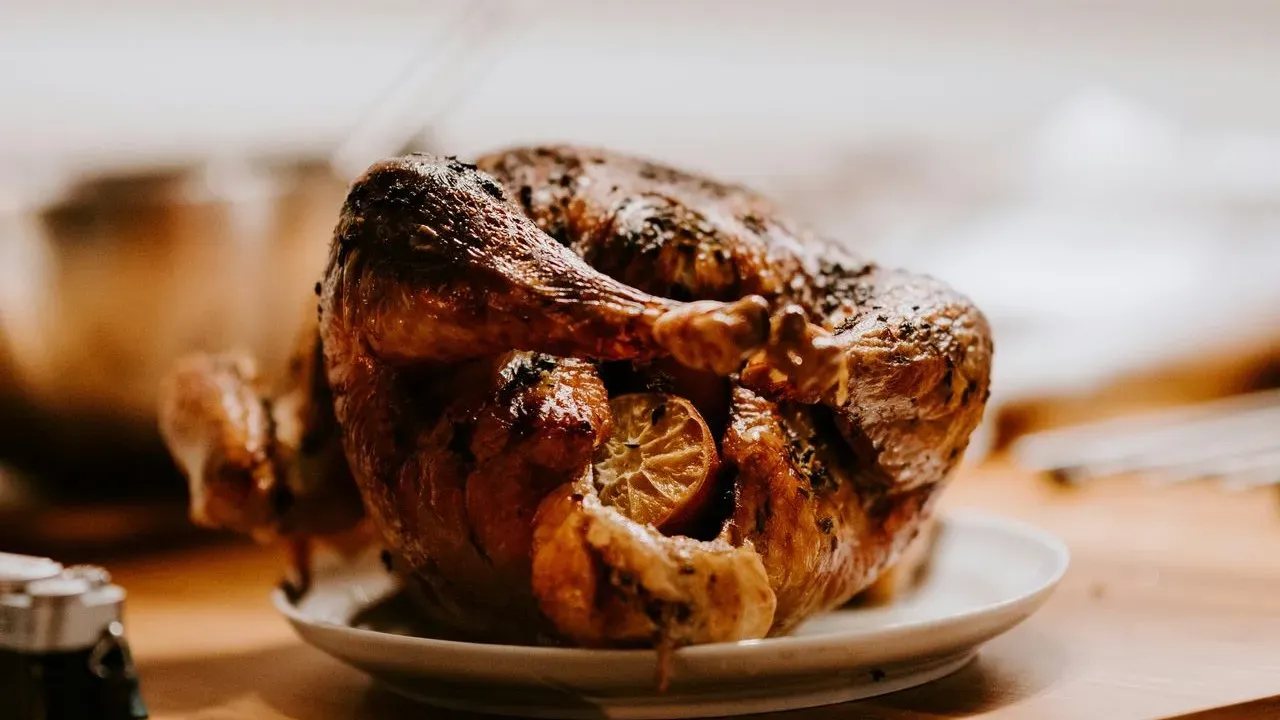

Thanksgiving dinner often hinges on one centerpiece that proves surprisingly difficult to get right. The lean breast meat finishes cooking well before the darker portions reach tenderness, leaving cooks with dry results even when they follow basic timing charts. A single oven temperature and clock simply cannot account for those differences across the bird.
The Science of Uneven Cooking
Turkey breast comes from fast-twitch muscle with little fat or connective tissue, so it loses moisture quickly once it passes the safe internal temperature. Dark meat in the thighs and legs contains more connective tissue and requires additional time to become tender without drying out the rest of the bird. This mismatch explains why many holiday turkeys end up overdone in the white meat while the legs still need more heat. ([1])
Food safety authorities emphasize that roasting times remain approximate because every oven and every bird varies. Relying solely on a clock or a pop-up timer built into the packaging often leads to the same outcome. Checking multiple locations with a calibrated thermometer provides the only reliable way to know when the entire turkey has reached the proper point.
Essential Temperature and Timing Rules
The U.S. Department of Agriculture sets a clear minimum of 165°F measured in the innermost part of the thigh, the innermost part of the wing, and the thickest section of the breast. All three spots must hit that mark before the bird leaves the oven. Higher readings are acceptable if texture preferences call for it, but nothing below 165°F meets safety standards.
After removal, the turkey should rest for about 20 minutes so juices redistribute. Cutting into it immediately allows moisture to escape onto the carving board. A loose foil tent during this rest helps keep the surface warm without trapping steam that could soften the skin.
Practical Steps That Make a Difference
Planning the thaw ahead prevents last-minute problems. A whole turkey needs roughly 24 hours in the refrigerator for every four to five pounds, kept on a tray in its original wrapper. Cooking from frozen is possible but requires at least 50 percent more time in the oven and still demands thermometer checks in all three critical spots.
Brining remains optional and produces mixed results across different methods. Wet brines add moisture while dry brines season the meat and can improve skin crispness, yet both require careful timing and refrigeration. Basting and foil tenting appear in some guidance as optional techniques, though controlled tests showing clear moisture gains are limited.
- Roast at 325°F or higher in a shallow pan with a rack.
- Start checking temperatures 30 minutes before any chart suggests the bird should finish.
- Remove the turkey only when all three locations read at least 165°F.
- Let it rest 20 minutes before carving.
Handling Leftovers and Special Cases
Reheating sliced turkey works best with a splash of broth, covered loosely with foil, until it returns to 165°F. Refrigerated leftovers stay safe for three to four days when stored promptly. Pre-salted or kosher birds already contain added sodium, so extra brining is unnecessary and can make results too salty.
Stuffing the cavity lengthens cooking time and increases the chance the breast will dry out before the center of the stuffing reaches safety temperature. Baking stuffing separately in a casserole avoids that extra exposure while still delivering the traditional flavor.
The difference between a dry turkey and a moist one often comes down to one decision: trusting a thermometer in the right places rather than the clock or a single indicator. Following those measurements, combined with a proper rest, gives the breast and dark meat their best chance to finish together.
AI Disclaimer: This article was created with the assistance of AI tools and reviewed by a human editor.