

Most people assume a messy room is just a minor inconvenience. Something to deal with on a Saturday afternoon. The reality, backed by a growing body of research, is considerably more complicated than that.
Clutter doesn’t just look bad. It quietly changes your brain chemistry, disrupts your ability to focus, and keeps your nervous system on low-level alert for hours at a time. Understanding why this happens is the first step to doing something about it.
Your Brain Sees Clutter as a Threat

When you walk into a messy room, your brain doesn’t simply “see” the disorder and move on. Instead, it launches a complex neurological sequence that can drain your mental energy within seconds. This isn’t an overreaction. It’s the brain doing exactly what it was built to do: scan the environment for unresolved problems and flag them for action.
Researchers from the Princeton University Neuroscience Institute found that clutter in a visual field makes it harder for the brain to concentrate on a single task because it must process unnecessary information. The result is a kind of background mental static that persists even when you’re not consciously thinking about the mess.
The Cortisol Connection Is Real

In a study published in Personality and Social Psychology Bulletin, researchers affiliated with UCLA’s Center on Everyday Lives of Families found that women who described their homes with words like “cluttered” and “unfinished” showed daily cortisol patterns associated with chronic stress. Their moods also showed a decline over the course of the day.
Research published in Personality and Social Psychology Bulletin and related investigations suggest that cluttered environments correlate with cortisol elevations ranging from 18 to 25 percent compared to organized spaces. Cortisol is the body’s primary stress hormone, and when it stays elevated all day instead of naturally declining, the physical and psychological toll adds up fast.
It Disrupts the Brain’s Natural Rhythm

Healthy cortisol patterns follow a predictable rhythm, peaking in the morning and declining throughout the day. When clutter keeps your stress response perpetually activated, this natural rhythm becomes disrupted. Over time, chronic cortisol elevation contributes to anxiety symptoms including persistent worry, difficulty relaxing, and a sense of being constantly on edge.
Elevated cortisol can lead to chronic stress, which may alter brain structure over time, increasing sensitivity to stress and impairing memory. In other words, the longer you live in a cluttered environment without addressing it, the more sensitized your nervous system can become.
Attention Gets Stolen Without You Realizing It

A Princeton Neuroscience Institute study found that visual clutter competes for your attention, reduces working memory, and decreases your ability to focus. Working memory is the cognitive system you rely on to hold information in mind while completing a task. When it gets drained by visual noise, everything from decision-making to emotional regulation becomes harder.
Research by psychology professor Sabine Kastner reveals that visual clutter competes with the brain’s focus, leading to cognitive fatigue over time. Her experiments demonstrated that the brain’s neurons activate based on what individuals are seeking, suppressing other contextual information. In essence, the brain experiences a constant push and pull, where desired objects dominate attention while competing objects create cognitive strain.
The Feedback Loop No One Talks About

What the evidence describes is closer to a loop. A 2025 study in the Journal of Environmental Psychology is careful about the direction of the arrow. Francis Quinn of Robert Gordon University writes that low well-being may lead to more clutter, “which in turn makes well-being worse.”
Stress makes it harder to keep things in order. The disorder that results becomes its own low hum of stress, quietly making everything else harder. This cycle is one reason why people struggling with anxiety or depression often find it genuinely difficult to declutter, not simply because of laziness, but because the psychological weight of the mess compounds the very problem making it hard to address.
Well-Being and Life Satisfaction Both Take a Hit

A 2025 study in the Journal of Environmental Psychology found that people who considered their homes more cluttered had lower levels of well-being and life satisfaction, as well as higher levels of negative feelings. The findings held across different demographics, suggesting this is not a niche or situational effect.
Clutter also reduces the psychological attachment people have to their homes. Office clutter similarly increases emotional exhaustion and reduces productivity and work satisfaction. Home is supposed to be a place of recovery and restoration. When it feels overwhelming instead, that psychological function is lost.
Why Women Experience It More Intensely

Women find a cluttered home more stressful than men do, on average, and this leads to detrimental daily patterns of the stress hormone cortisol. This was shown in a landmark 2010 study of 30 middle-class, dual-income families with at least one young child. For husbands, neither stressful home nor restful home scores were associated with their daily patterns of cortisol levels.
Women have historically shouldered responsibility for maintaining the home environment. Even in households where partners share chores equally on paper, research suggests women often carry the “mental load,” the cognitive work of noticing what needs to be done, planning tasks, and tracking household needs. Clutter, in this context, is not just a visual disturbance but an unending to-do list made visible.
Clutter Affects Sleep Too

A study by Pamela Thacher, assistant professor of psychology at St. Lawrence University, found that people who sleep in cluttered rooms are more likely to have sleeping problems. This includes having trouble falling asleep at night and experiencing rest disturbances. Sleep is one of the primary ways the brain and body recover from daily stress.
When the environment surrounding sleep is visually chaotic, the brain cannot fully shift into the restful, low-alert state required for quality sleep. The clutter signals unfinished business. That signal is hard to switch off when you’re lying in bed staring at a pile of things you haven’t dealt with.
It Feeds Feelings of Guilt and Shame
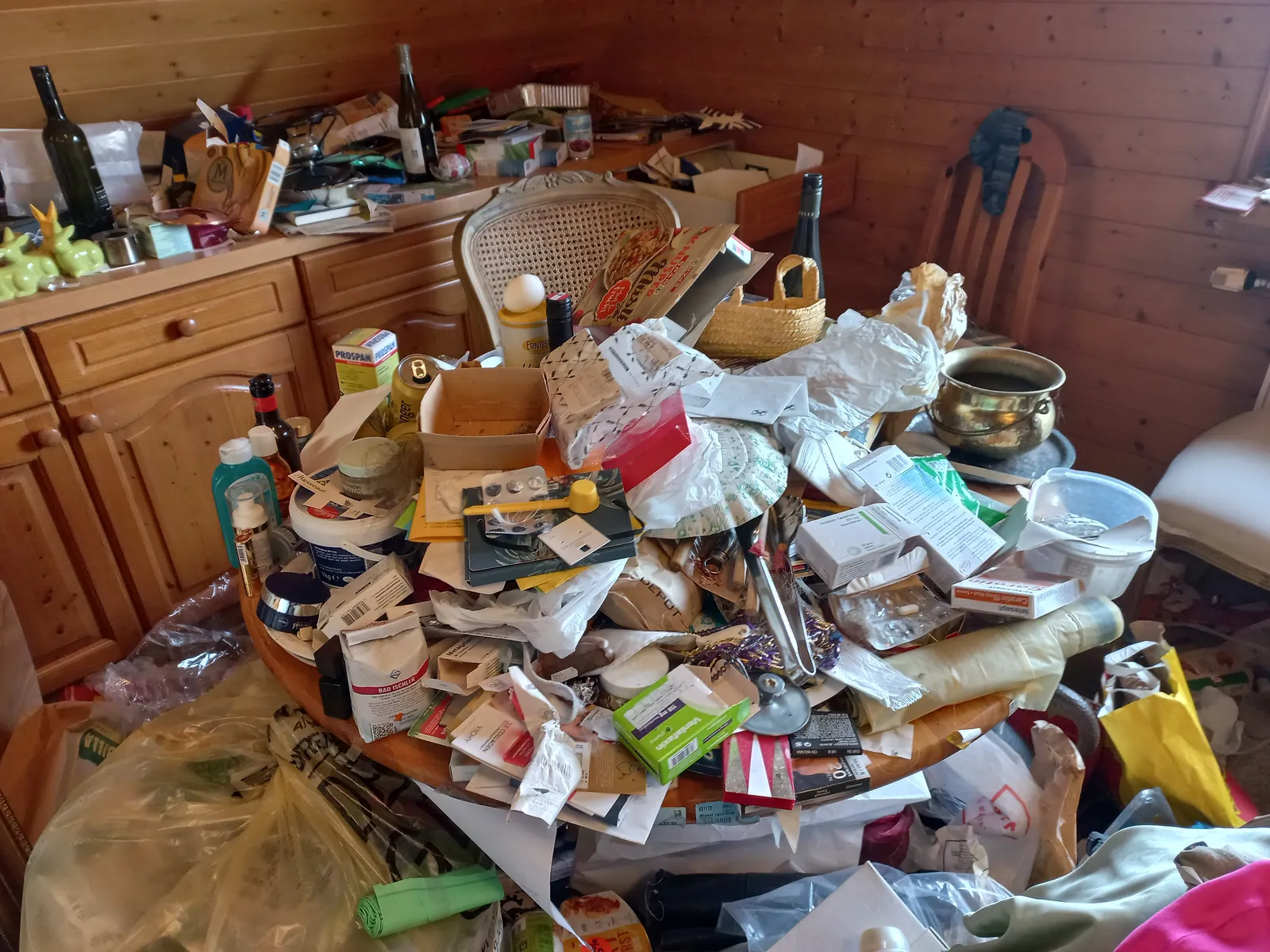
The UCLA research found that participants who viewed their homes as cluttered reported more stress, fatigue, and depressed mood. Other psychologists note that clutter can also contribute to feelings of guilt, embarrassment, or being overwhelmed, especially when people feel unable to manage it.
Besides cognitive overload, clutter is also linked to emotional health. A cluttered environment can trigger feelings of guilt, frustration, and embarrassment, as you become overwhelmed by the unfinished tasks around you. These emotions don’t just feel bad. They deplete the mental energy needed to actually make a change, which is part of why clutter can feel so stubborn to address.
Small Changes, Not Dramatic Overhauls, Are What Work

This cycle points toward modest, repeatable habits as a solution rather than dramatic, home improvement show-style overhauls. The evidence doesn’t suggest you need to throw everything out or reach some impossible standard of tidiness. What it does suggest is that small, consistent efforts to reduce visual chaos have a measurable psychological payoff.
Decluttering has been associated with reduced cortisol levels, providing a tangible pathway to stress reduction. Even clearing one surface at a time, consistently over days, can shift the way your environment makes you feel. The brain responds not just to order, but to the sense of progress and control that comes with it.
The Takeaway

The research makes a strong case that clutter is not a neutral presence. It’s an active drain on attention, mood, cortisol rhythm, and sleep. The psychological mechanisms behind this are well documented, from neuroscience labs to longitudinal family studies.
None of this means a perfectly organized home is the secret to mental health. Clutter does not cause depression, and an organized closet is not a treatment for anxiety or any other condition. What the evidence does suggest is that your environment and your emotional state are in constant conversation. Paying attention to that conversation, one small corner at a time, is a reasonable place to start.
AI Disclaimer: This article was created with the assistance of AI tools and reviewed by a human editor.