

Most people blame their desk chair, their phone screen, or their stress levels when their neck starts acting up. The pillow rarely makes the suspect list. Yet you spend roughly a third of your life with your head resting on it, and if it’s the wrong fit, the damage adds up quietly, night after night.
Neck pain is one of the most common sleep-related complaints reported by adults worldwide, and a growing body of research points to one surprisingly simple culprit: the wrong pillow. The trouble is that most people never think to question theirs.
The Scale of the Problem Is Bigger Than You’d Expect

Globally, neck pain affected around 203 million people in 2020. That’s not a niche complaint. By 2050, the estimated global number of neck pain cases is projected to reach 269 million, an increase of roughly one third from 2020.
In the United States, neck pain ranks as the sixth leading cause of years lived with disability. Sleep habits, and specifically pillow habits, are a largely underexamined piece of that picture. Neck dysfunction is increasingly linked to poor sleep posture and inappropriate pillow use, with the cervical spine’s alignment during sleep playing a crucial role in preventing musculoskeletal problems.
Your Pillow and Cervical Alignment Are Inseparable
The cervical spine consists of seven vertebrae that support the head and protect the spinal cord. During sleep, the cervical spine should maintain its natural lordotic curve. Any prolonged deviation from that neutral alignment places stress on cervical muscles, ligaments, facet joints, and intervertebral discs.
Using a pillow that maintains the natural cervical curve can enhance sleep quality. Conversely, an unsuitable pillow may strain pain-sensitive areas, causing symptoms such as neck pain, stiffness, headaches, and arm discomfort upon waking. Those symptoms often feel mild at first. Over months, they tend not to stay that way.
The Height Problem Nobody Talks About

One of the biggest contributors to neck pain is a pillow that pushes the head too far up or lets it drop too low. Both positions force the neck into awkward angles for hours at a time.
A pillow that’s too thick tilts the head upward. A pillow that’s too thin lets the head drop downward. Both positions create uneven pressure on the neck and upper-back muscles, often leading to tightness, nerve irritation, and morning stiffness. It’s a small mechanical problem with a disproportionately large outcome after thousands of nights.
Pillows that are too thick can force the chin toward the chest, compressing the airway and increasing neck muscle strain. That’s a problem even people without existing neck pain will eventually feel.
Stomach Sleeping Is Where Things Get Particularly Rough

Stomach sleeping forces the neck to rotate or extend for hours at a time. This unnatural position can irritate the nerves that travel into the shoulder and arm, contribute to headaches, and place excessive stress on the joints in the cervical spine.
Because stomach sleepers must turn their heads to breathe, the best way for them to reduce morning neck pain is to work on changing sleep position. If that’s not possible, sleeping with a very thin, flat pillow is best. A loftier pillow on a stomach sleeper creates even more strain, as the neck is not only twisted, but also bent upward.
Stomach sleeping places the cervical spine in excessive rotation and extension and is generally discouraged from a spinal health perspective. Still, millions of people do it every night, often unaware of the cumulative toll.
Your Familiar Pillow May Be the Worst One for You

A field study of 106 habitual side sleepers found that people’s own everyday pillows frequently performed worse than several trial pillows for waking cervical pain and comfort. Familiarity creates a false sense of correctness. People assume that because they’ve used something for years without obvious crisis, it must be fine.
Many people cycle through mattress upgrades and sleep schedules without ever questioning the one thing that directly cradles their head and neck for six to eight hours every night. The pillow stays. The neck pain stays too.
When a Pillow Gets Old, the Damage Compounds
Sleeping on an old or worn-out pillow reduces support and can quietly worsen neck pain over time. This is one of the most overlooked contributors because the decline is gradual. The pillow still looks like a pillow.
Latex holds its shape. It resists the slow “bottoming out” that lets a feather or soft down pillow collapse over the course of the night and drop your head out of alignment by morning. Down or feather pillows typically need replacing about once per year to avoid insufficient neck support.
What the Research Says About Pillow Materials
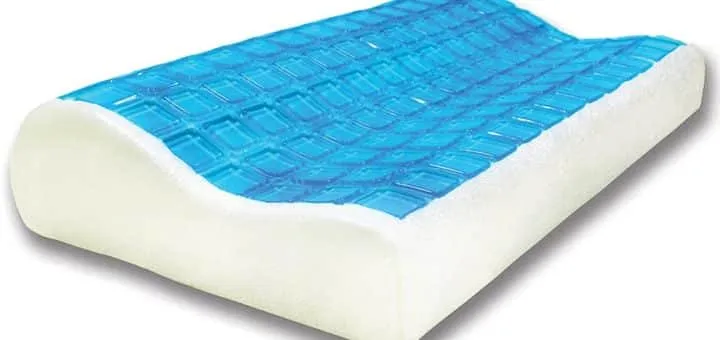
A 2021 systematic review found moderate-quality evidence that four features improve sleep comfort and spinal alignment while reducing sleep-related neck pain: a latex material, a contoured shape, a central height of roughly 7 to 11 centimeters, and a cooling surface.
To reduce neck fatigue, it is desirable to use materials like latex or memory foam that provide neck support, which can improve sleep quality. Research generally suggests that a pillow with good cervical support can help relieve neck pain and improve rest. The material question matters more than most shoppers realize when they’re squeezing pillows in a store aisle.
Sleep Position and Pillow Loft Must Match

Side sleepers need a pillow with higher loft, roughly 4 to 6 inches, and firmer support to fill the gap between the head and the mattress. This keeps the neck straight and prevents it from bending awkwardly.
Back sleepers do best with a medium-loft pillow, around 3 to 5 inches. It should cradle the neck’s natural curve without pushing the head too far forward or letting it drop back. The same pillow cannot do both jobs well. Choosing based on your actual position, not your preference for softness, is the part most people skip.
Research shows back sleeping correlates with roughly 30 percent lower neck pain risk compared to other positions, while side and stomach sleeping are linked to significantly higher pain severity due to prolonged cervical strain.
The Headache Connection That Often Goes Unnoticed

Poor cervical support, incorrect loft height, and inadequate pressure point relief can create conditions where neck muscles remain under strain throughout the night, and that sustained tension can connect to sleep-related headaches by morning.
Improper pillow support may aggravate cervical spondylosis, disc bulge or herniation, chronic neck muscle spasm, postural neck pain, and cervicogenic headaches. People treating their morning headaches with coffee or pain relievers may be treating a symptom while the cause sleeps right next to them.
Awareness Is Still Surprisingly Low

A 2025 study found that a significant portion of participants used improperly sized or shaped pillows, with over 60 percent reporting neck pain. That’s a striking figure given how straightforward the fix can be.
Despite the importance of sleep ergonomics, public awareness regarding ideal pillow use remains limited. Contributing factors include prolonged sedentary behavior and increased screen use, and a significant number of individuals either sleep without a pillow or use multiple pillows in ways that may raise the prevalence of both short-term and long-term neck pain.
What Actually Helps

Research is relatively consistent: contoured cervical pillows outperform traditional pillows, showing significantly greater pain relief in meta-analyses by properly supporting the neck’s natural lordotic curve. That’s not a marketing claim. It’s the direction the evidence points.
Improper pillow usage induces neck pain during sleep and wakefulness, as well as poor sleep quality, by changing cervical spine alignment. Correcting it doesn’t require an expensive intervention. It often requires simply choosing a pillow that suits your sleep position, replacing it when it loses structure, and checking whether the height actually matches the geometry of your shoulder and neck.
Many of the factors contributing to morning neck pain are controllable, which means that changes in sleep habits may be enough to alleviate the problem. That’s a genuinely encouraging finding for something so easy to overlook.
The Takeaway

The neck doesn’t complain loudly at first. It just stiffens a little more each morning until the stiffness becomes the new normal. The pillow underneath your head is one of the most used pieces of equipment in your life, spending more contact hours with your body than almost anything else you own.
Choosing the right one based on your sleep position, your body’s proportions, and the material’s ability to hold its shape over time isn’t a luxury consideration. For the roughly one third of the global population that regularly deals with neck pain, it’s one of the most practical places to start. Sometimes the fix is exactly as unglamorous, and as effective, as swapping out what’s under your head tonight.
AI Disclaimer: This article was created with the assistance of AI tools and reviewed by a human editor.