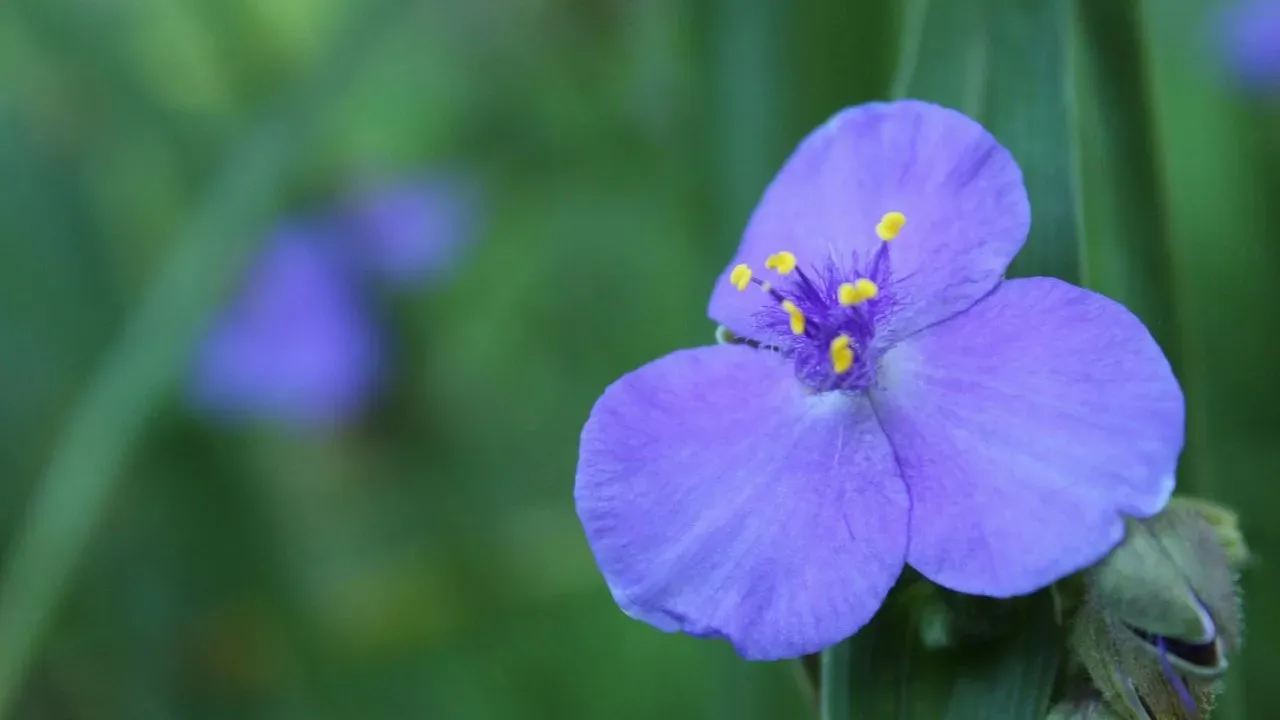

A gardener pulling weeds one day paused after noticing a familiar bloom. The plant resembled Japanese dayflower, an introduced species that spreads readily in many yards. On closer inspection, the flowers and growth habit revealed something different: zigzag spiderwort, an Indiana native perennial that belongs in the landscape rather than the compost pile.
The Unexpected Find During Routine Weeding
The incident began with a common task. The gardener reached for what looked like Commelina communis, a plant known for its invasive tendencies in parts of North America. The leaves and overall appearance matched the exotic species closely enough to prompt removal. Only after examining the flower structure did the true identity become clear. This was Tradescantia subaspera, commonly called zigzag spiderwort. The realization brought relief rather than disappointment, as the plant is a desirable native rather than a nuisance. Such moments occur more often than many gardeners admit when similar-looking species share garden space.
How to Tell Zigzag Spiderwort Apart
Distinguishing the two plants requires attention to detail. Japanese dayflower typically shows bright blue petals with a distinct shape and often forms dense mats. Zigzag spiderwort, by contrast, displays the characteristic three-petaled flowers associated with the Tradescantia genus, along with a more upright or sprawling habit that zigzags as it grows. The stems and leaf arrangement also differ upon examination. Gardeners who stop to check these features before discarding a plant can avoid removing a valuable native. The resemblance is close enough that quick weeding sessions frequently lead to the same initial error.
Keeping Native Perennials in the Garden
Zigzag spiderwort earns its place as a native species suited to Indiana conditions. It supports local ecosystems without the aggressive spread associated with some introduced plants. Retaining it reduces unnecessary work and preserves biodiversity in home landscapes. The discovery serves as a reminder that not every unfamiliar or weedy-looking plant needs removal. Taking a moment to confirm identity protects desirable species that might otherwise be lost during routine maintenance. This approach aligns with broader efforts to favor natives over lookalikes that can disrupt garden balance. For those managing similar situations, the lesson remains straightforward: pause before pulling when a plant shows spiderwort traits. The reward is a resilient perennial that fits naturally into the August garden scene.
AI Disclaimer: This article was created with the assistance of AI tools and reviewed by a human editor.