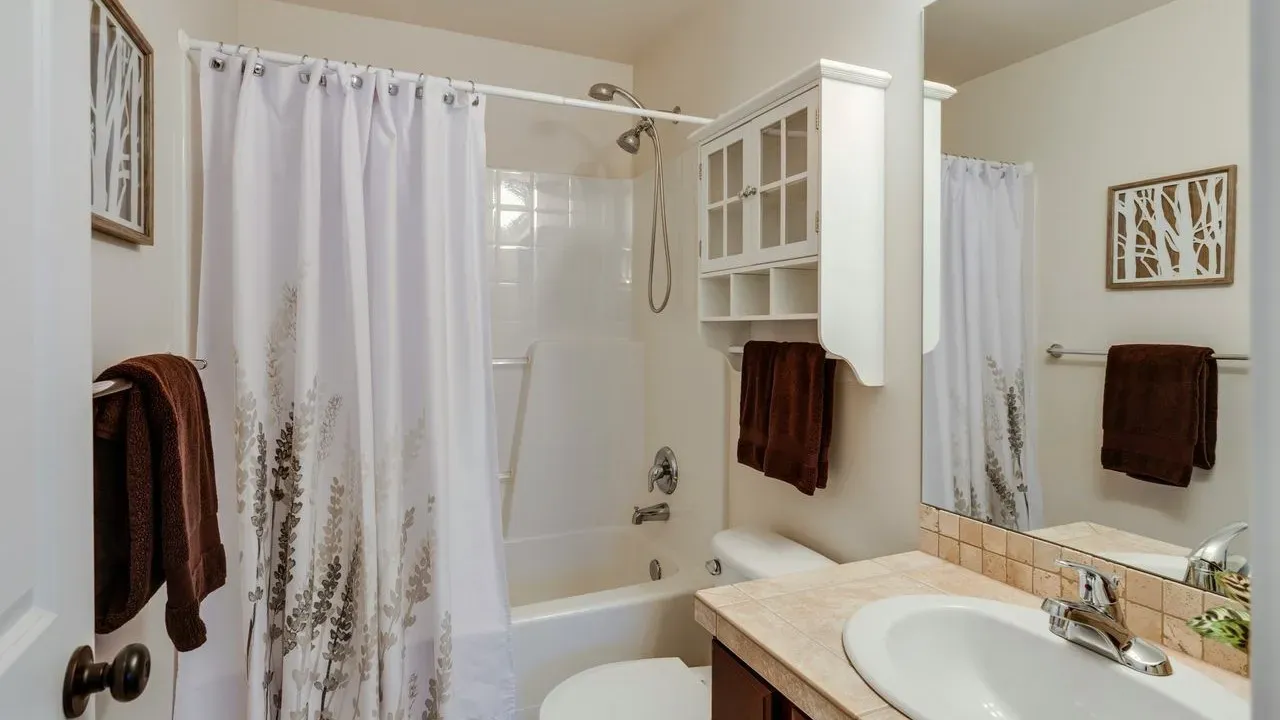

Many households settle into a daily routine without realizing how small choices in the bathroom can quietly encourage unwanted growth. The debate over whether to leave the shower curtain open or closed often misses the real driver behind mildew and bacteria. Proper moisture control, rather than a strict open-or-closed rule, determines whether surfaces stay clean or develop problems over time.
Moisture Sets the Stage for Trouble
Bathroom humidity spikes during every shower, and without quick drying, damp conditions can persist long enough for microbes to establish themselves. Experts note that mold and similar organisms need only 24 to 48 hours on a wet surface to begin colonizing. The curtain itself often becomes a focal point because folds and edges trap water longer than flat walls or floors. Ventilation plays a larger role than most people expect. Running an exhaust fan for 20 to 30 minutes after a shower, or opening a window when possible, lowers overall humidity and speeds drying across multiple surfaces. Without this step, even the best curtain position cannot fully compensate for lingering moisture in the air.
Position Alone Does Not Solve the Problem
Pulling the curtain fully closed and flush against the wall or track can block airflow almost as effectively as bunching it into a heap. Both setups leave folds or edges damp for extended periods, giving bacteria an ideal environment. Stretching the curtain across the rod while leaving a few inches of space at each end allows air to circulate on both sides without sacrificing water containment. Leaving the curtain wide open works better in bathrooms that lack a strong exhaust fan or where the fan vents into an attic rather than outdoors. In those cases, full exposure to room air helps the fabric or liner dry faster. The trade-off is potential water on the floor and a less tidy appearance when guests visit.
What Actually Grows on the Liner
The pink or orange film commonly seen on shower curtains is usually bacterial biofilm rather than mold. Research from a 2004 University of Colorado study identified dominant organisms such as Sphingomonas and Methylobacterium, which thrive on soap residue in damp folds. These communities vary slightly between households but consistently favor the creases along the bottom hem. Vinyl liners tend to develop these films faster than nylon or fabric options because the material holds folds and retains moisture. Glass shower doors accumulate growth more slowly since they lack porous surfaces and deep creases. Frequent cleaning or replacement remains the most reliable way to limit buildup, especially for households with infants, older adults, or anyone with respiratory conditions.
Steps That Make the Biggest Difference
A few consistent habits outperform debates over curtain position.
- Squeegee or towel-dry walls, tub, and curtain immediately after each use to remove water before it evaporates.
- Run the exhaust fan during the shower and continue for 20 to 30 minutes afterward.
- Stretch the curtain with small gaps at each end rather than sealing it flush or bunching it.
- Ensure the liner does not drag in standing water at the bottom of the tub.
- Machine-wash vinyl liners every few weeks on a gentle cycle and replace them every six to 12 months.
These actions address the root cause of persistent dampness more directly than any single positioning choice.
Matching the Approach to Your Bathroom
Bathrooms without reliable outdoor ventilation benefit most from leaving the curtain fully open after use. In well-ventilated spaces, the gapped-closed method keeps water contained while still allowing enough airflow for quick drying. Material choice also influences results, with fabric liners sometimes requiring extra attention to drying because they hold moisture longer than vinyl. For anyone concerned about off-gassing from new PVC liners, chlorine-free alternatives such as PEVA offer a lower-odor option without changing the core drying strategy. The goal remains the same across setups: reduce the time any surface stays wet. Over time, these small adjustments protect both the appearance of the bathroom and the air quality inside the home for everyone who uses it.
AI Disclaimer: This article was created with the assistance of AI tools and reviewed by a human editor.