

There is a jug of oil sitting near most stovetops right now, a little darker than when it started, saved from last night’s frying session because throwing it out felt wasteful. It is such a normal habit that almost nobody questions it. Yet a growing body of laboratory research over the past two years has started asking exactly that question, and the answers are more specific than most people expect.
What Actually Happens Inside The Bottle

Heating oil once already changes its molecular structure, but the real trouble starts when it goes back on the stove a second or third time. It only takes one use to alter the composition of the oil, and reusing oil, especially at too high of a heat, can cause a build-up of harmful byproducts. Each use creates more and more build-up, increasing the risk of harm. Fat molecules break apart and recombine into new compounds that were never part of the oil’s original chemistry, and none of this is visible to the naked eye at first.
Toxic Aldehydes Build Up With Every Round Of Heating
One of the best documented consequences of repeated heating is the formation of aldehydes, a group of reactive compounds researchers have been tracking since a landmark Spanish study identified several previously undetected types in reheated oil. The major toxic aldehydes identified include acrolein, acetaldehyde, formaldehyde, t,t-2,4-decadienal, 4-hydroxy-2-hexenal, and 4-hydroxynonenal, which have been associated with adverse health effects ranging from respiratory irritation to carcinogenicity.
A 2025 review in a peer reviewed journal confirmed the pattern again, noting that during frying, aldehydes are the main chemical class generated, and the content of certain aldehydes increase significantly with the increase in temperature. Small carbon chain versions like acetaldehyde and formaldehyde are not minor players either. Small carbon chain aldehydes, such as acetaldehyde and formaldehyde, are recognized as probable or known carcinogenic agents.
Trans Fats Sneak In Even Without Hydrogenation

Trans fats are usually associated with processed snack foods, but repeated frying quietly manufactures them too. A 2025 academic review on oil reuse practices in Indian households pointed out that consistent reuse of frying oil contributes to the development and build-up of harmful substances, including trans-fats, malondialdehyde, acrolein, and polycyclic aromatic hydrocarbons.
These are not trace amounts that disappear once the food is served. The same research linked this buildup directly to measurable health markers, noting these substances have been linked to various negative health impacts such as elevated LDL cholesterol, oxidative stress, compromised endothelial function, and genetic mutations. That is a fairly serious list for something as ordinary as a second round of frying.
A 2024 Study Linked Reheated Oil To Brain Changes
Perhaps the most attention grabbing research to emerge recently came out in March 2024, when scientists studied rats fed diets containing reheated cooking oils. The new study found that rats fed diets with reheated cooking oils exhibited significantly higher levels of neurodegeneration compared to rats consuming a standard diet.
The mechanism proposed was not a direct hit to the brain but something more roundabout. The research suggests that reheated oil may increase neurodegeneration by disrupting the liver-gut-brain axis, which appears crucial in maintaining neurological health. It is worth being careful here, since this was animal research rather than a human trial, but the authors themselves were candid about that limitation.
Although this study was conducted on rats, its results highlight the possible health hazards linked to the consumption of reheated oils and advocate for mindful dietary choices.
Cancer Risk Remains An Active Area Of Research

Oncology groups have started addressing this question directly for patients asking about diet and prevention. One 2025 explainer from a cancer treatment network described the chemical shift plainly, stating that when cooking oils are heated repeatedly, they undergo complex chemical changes that can produce harmful compounds. A separate oncology blog published in early 2026 summarized the biological pathway connecting reused oil to tumor risk.
When oil is heated many times, it begins forming harmful substances, including trans fats, aldehydes, acrylamide and PAHs, and all of these substances have been studied for their link to cancer development. Animal experiments cited in that same piece went further still, reporting that experiments on animals have shown that eating reheated oil for a long time may lead to liver damage and tumor formation.
None of this proves that an occasional reused batch of oil causes cancer in a person, but it does explain why the concern keeps resurfacing in medical literature rather than fading away.
Chronic Inflammation Is The Quiet Common Thread
Almost every study on this topic eventually arrives at inflammation, the slow burning process behind many long term diseases. Health insurance and wellness researchers summarized it this way in a piece published in early 2025: cooking food by reusing cooking oil can also increase free radicals or unstable molecules that can damage cells in the body, and this can cause inflammation, the root cause of most diseases, including obesity, heart disease and diabetes.
A separate 2026 oncology summary echoed the same idea, noting that consuming food cooked in reused oil can trigger inflammation inside the body, and constant inflammation is known to be a contributor to several health conditions including some cancers. Inflammation is not dramatic in the short term, which is exactly why it is easy to overlook while it accumulates.
The Heart Pays A Price Too

Cardiovascular effects from reused oil are less headline grabbing than cancer or brain disease, but they are arguably better established. The same 2026 oncology piece noted a direct arterial concern, explaining that reused oil is also linked with the formation of plaque in arteries, and this plaque narrows the arteries and increases the risk of heart disease.
A hospital based health article added detail on how this happens at the chemical level, describing that reheating causes oxidation that releases a higher concentration of aldehydes, hydroxy-trans-4-nonenal, and free radicals that are toxic to the body due to their unstable nature. Rising LDL cholesterol from repeated frying, mentioned earlier in the trans fat discussion, only adds to this cardiovascular picture rather than standing apart from it.
Scientists Measure Oil Damage With A Number Called TPC

Researchers do not rely on guesswork to decide when oil has gone bad. They use a laboratory measurement called Total Polar Compounds, or TPC, which tracks the buildup of breakdown products from repeated heating. Regulatory bodies across the globe have converged on remarkably similar thresholds, with one detailed review noting that the maximum content of TPC has been set at 24% in Germany, 25% in Belgium, France, Portugal, Italy, Spain and 27% in Australia, China, Switzerland, respectively.
Beyond this threshold, oil is considered unfit for consumption regardless of how it looks or smells. A 2025 study using a simplified test kit for restaurants and home cooks noted that polar compounds in repeatedly used frying oil pose significant health risks to consumers, which is precisely why this number matters more than color or smell alone.
How Many Times Is Actually Too Many

India’s food safety authority has issued some of the clearest public guidance anywhere on this exact question, and it is worth paying attention to since it comes from an official regulator rather than a wellness blog. The guidance is direct: do not use the same oil for more than three times, and it is ideal to use only once. The same regulator backed this recommendation with a measurable ceiling, noting that in order to safeguard public health, FSSAI has notified the limit of Total Polar compounds to be not more than 25% beyond which the oil is unsafe for human consumption.
A separate 2024 legal analysis of the regulation confirmed that the only legal restriction on reusing vegetable cooking oil is that the Total Polar Compounds developed in cooking oil due to reheating cannot exceed 25%, and any cooking oil whose TPC content is more than 25% is unsafe for human consumption and is thereby prohibited for use. Three reuses is not a magic safe number either. It is simply the outer edge before the odds of harm start climbing sharply, and most nutrition experts would still argue that reusing oil zero or one time is the safer habit.
Not All Oils Break Down At The Same Speed
Oil type matters more than most home cooks realize, since fat composition determines how quickly harmful compounds form. The original 2012 aldehyde research, still widely cited today, found that sunflower and linseed oil are the ones that create the most toxic aldehydes in less time, as these oils are high in polyunsaturated fats, while olive oil, which has a higher concentration of monounsaturated fats such as oleic, generates these harmful compounds in a smaller amount and later.
A separate laboratory study measuring how long different oils take to reach the 27 percent polar compound rejection threshold found meaningful differences in real time, reporting that total polar compounds of 27% would be reached upon heating olive oil at 180°C for 114 hours, while the corresponding times were 45, 43, 30 and 26 hours for canola, corn, sunflower and soybean oils, respectively. That gap is not small. It means the same frying routine can push one oil past its safety limit roughly four times faster than another.
Practical Habits That Actually Reduce The Risk
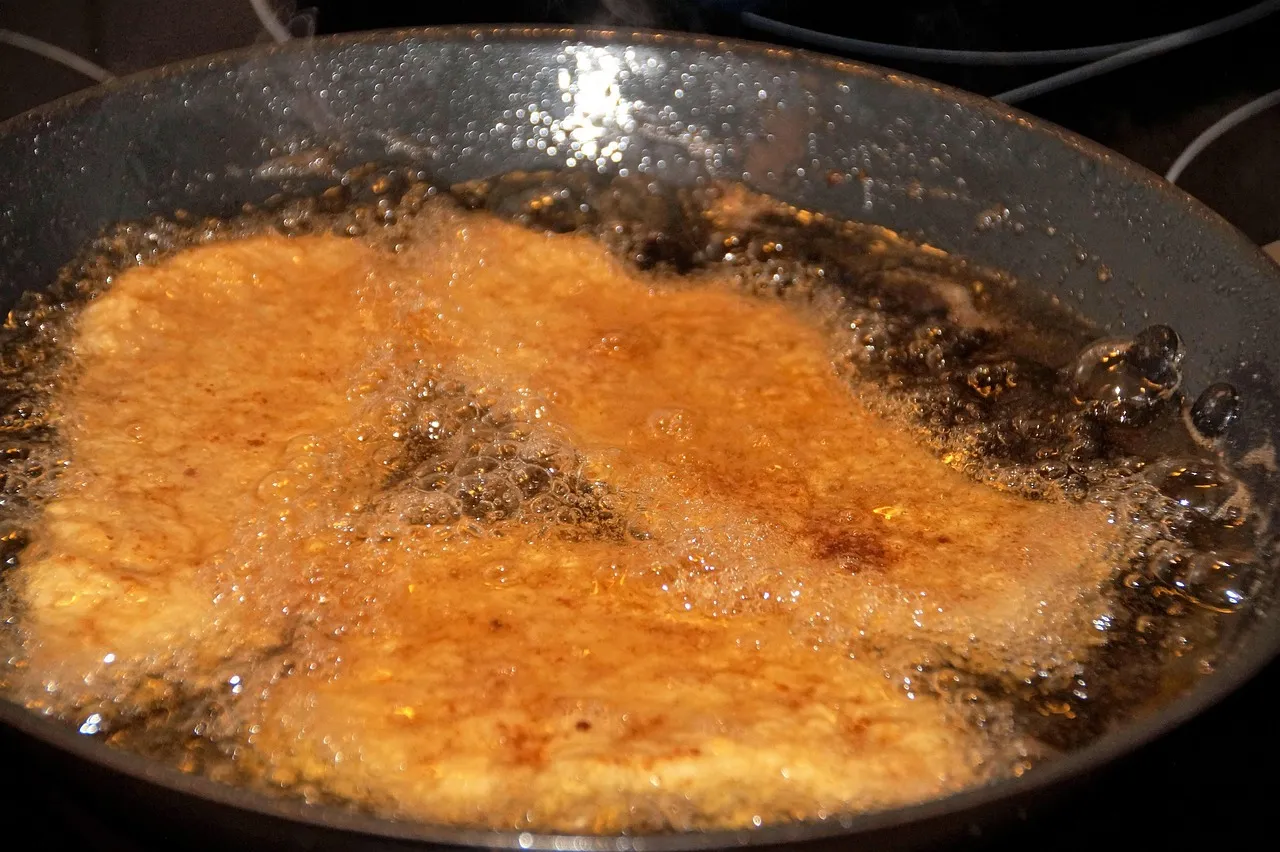
None of this research means fried food has to disappear from the kitchen entirely, but a few habits genuinely lower exposure. Filtering oil promptly after each use, storing it in a sealed airtight container away from light, and watching for foaming, dark color, or a rancid smell are all signals experts point to repeatedly.
One health guidance piece summarized the warning signs plainly: if the oil starts foaming, has a bad smell, or becomes thick and murky when reheated, it should be thrown away. Choosing oils higher in monounsaturated fat for anything that will be reused, keeping frying temperatures moderate rather than searing hot, and simply using less oil per batch so there is little left to save all make a measurable difference over time.
None of the research reviewed here suggests that one reheated batch of frying oil will cause immediate harm. The concern is cumulative, built from repeated small exposures over months and years rather than a single meal. Given how consistently regulators, chemists, and oncology researchers keep landing on the same handful of warning signs, it seems like a reasonable trade to fry a little less oil at once, use it once or twice at most, and let the rest go down the drain rather than back into the pan.
AI Disclaimer: This article was created with the assistance of AI tools and reviewed by a human editor.