

There’s something almost stubborn about the road trip game. It should have died out by now. Smartphones, tablets, audiobooks, and in-car screens have given every passenger in the vehicle a private world to disappear into. Yet families keep playing. They spot license plates, shout out alphabet letters, guess who’s who, and invent bizarre hypothetical questions for the next hundred miles. The games change shape, but the impulse stays the same.
For more than a century, road trips have been a hallmark of American culture, and to keep restless kids entertained and silence the inevitable “are we there yet?” chorus, families have long turned to car games. What’s remarkable isn’t just the survival of these games. It’s the way each generation quietly reworks the rules to fit their own times, technology, and sense of humor.
Road Trips Are Still America’s Favorite Way to Travel

Before talking about the games, it helps to understand just how many people are actually in those cars. Road trips were the most popular form of travel in 2024, claiming roughly two in five travel styles, alongside slow travel at about one in five and multi-generational family trips at just over one in five. That’s a remarkable number of families spending long hours together on the road.
The 2025 edition of Miles Partnership’s road trip research highlights that road trips have grown to a $67 billion segment of the tourism industry in total spending, up 28% from 2019. That kind of growth suggests the road trip isn’t nostalgia. It’s a living, expanding habit that millions of families are actively choosing.
Families and groups are the most common road trip participants, comprising roughly three quarters of all travelers. With that many people sharing a vehicle for hours at a stretch, the question of how to pass the time becomes very real, very fast.
The License Plate Game: The Original That Refuses to Retire

Before digital diversions kept the backseat peace, families passed the hours with the license plate game, Mad Libs, and Etch-a-Sketch. From simple, observation-based classics like I Spy to today’s sophisticated digital entertainment, these games have evolved alongside both cars and society itself. The license plate game sits at the very beginning of that timeline.
The objective is to spot license plates from different states or countries, earning points for each unique one found. This game encouraged players to learn geography, sparked curiosity, and made road trips more thrilling. It’s a quiet but effective geography lesson dressed up as competition.
A popular modern upgrade is to download a license plate tracking app that allows you to keep a virtual collection of the plates you spot, adding an element of competition and curiosity to the game. The core idea hasn’t shifted at all. The scorekeeping just moved to a phone screen.
I Spy: Simple, Timeless, and Quietly Brilliant

I Spy’s simplicity and versatility make it a favorite among all ages. Players take turns choosing an object in sight and give a clue like “I spy with my little eye, something green,” and others then guess the object until someone correctly identifies it. No equipment needed. No setup. Just sharp eyes and a little patience.
The game has been adapted into countless variations over the decades. Some families play by color, others by shape, and still others swap to themed categories based on what’s outside the window. From simple, observation-based classics like I Spy to today’s sophisticated digital entertainment, these games have evolved alongside both cars and society itself.
What keeps I Spy alive isn’t sentimentality. It’s accessibility. A four-year-old and a fourteen-year-old can play the same round together without either getting bored within the first minute, which is a harder design challenge than it sounds.
The Alphabet Game: Competition That Teaches Without Trying

The Alphabet Game involves looking out the window and trying to find words that start with each letter of the alphabet, in order. Signs, storefronts, trucks, and billboards all count. The game rewards attention and moves fast enough on busy highways to keep everyone leaning toward the glass.
It’s one of those games that works differently depending on the landscape. On an interstate near a major city, the letters fly by. On a quiet two-lane road through open countryside, the hunt slows down to a crawl and the competition gets genuinely tense around Q and X.
On trips through sparsely populated areas, a popular variation swaps road signs for physical objects: instead of looking for a sign with a word starting with A, you simply look for any object that starts with that letter, like an arrow or asphalt. That small twist opened the game up to landscapes where signage is scarce.
20 Questions and Would You Rather: The Conversation Starters

Road trip games are so much fun because all of your travel companions are involved and having a good time. Everyone enjoys a good laugh, whether it’s kids playing “who am I?” with their parents, the whole family cracking their heads over a word game, or friends goofing around with absurd proposals of “would you rather.” These verbal games are often the ones that generate the best conversations.
Games like hypothetical questions get everyone in the car responding to a series of prompts, like “What would you do if you won the lottery?” or “If you could transform into any kind of animal, what would it be?” Those questions reveal surprising things about the people you thought you already knew.
Would You Rather has a particular quality that other games lack. The answers tend to spiral into reasoning and debate, which means the game keeps generating new conversation long after the original question is settled. That’s a rare feature in any car game.
Storytelling Games: When the Car Becomes a Stage

Storytelling games tap into the imagination and encourage collaboration, quick thinking, and narrative creativity. They come in many forms. One player starts a sentence or paragraph, another continues it, and the story spirals in directions nobody planned. The results are frequently absurd and often memorable.
Research shows that shared activities strengthen family bonds and create lasting memories, and these games encourage conversation, laughter, and connection while reducing screen time. Collaborative storytelling does all three at once, which is why it has stayed in the rotation even as digital entertainment improved dramatically.
The game scales surprisingly well across age groups. Younger kids tend to make their characters do outrageous things, while older kids and adults introduce complications or callbacks to earlier moments. A good round can last a full hour without anyone noticing the miles slipping past.
The Rise of Multi-Generational Play

Family travel trends indicate a significant rise in multi-generational trips, reflecting a growing desire for shared experiences among family members. Many families are prioritizing bonding time and creating lasting memories during their travels. That shift in who’s in the car has changed what games actually work.
A trend called “grandymoons” is emerging in 2025, with families taking grandparents on special getaways as a gesture of gratitude, and multigenerational travel is on the rise, with nearly half of families including grandparents or extended relatives. A car with a six-year-old, two parents, and a grandparent in it requires games that bridge a genuinely wide gap.
That challenge has pushed families to rediscover older games that work across decades rather than just within an age bracket. Trivia, storytelling, and observation games are all well suited to a mixed-age car. The license plate game, in particular, tends to delight grandparents who remember playing it with their own parents.
Digital Apps Reinvent the Classics
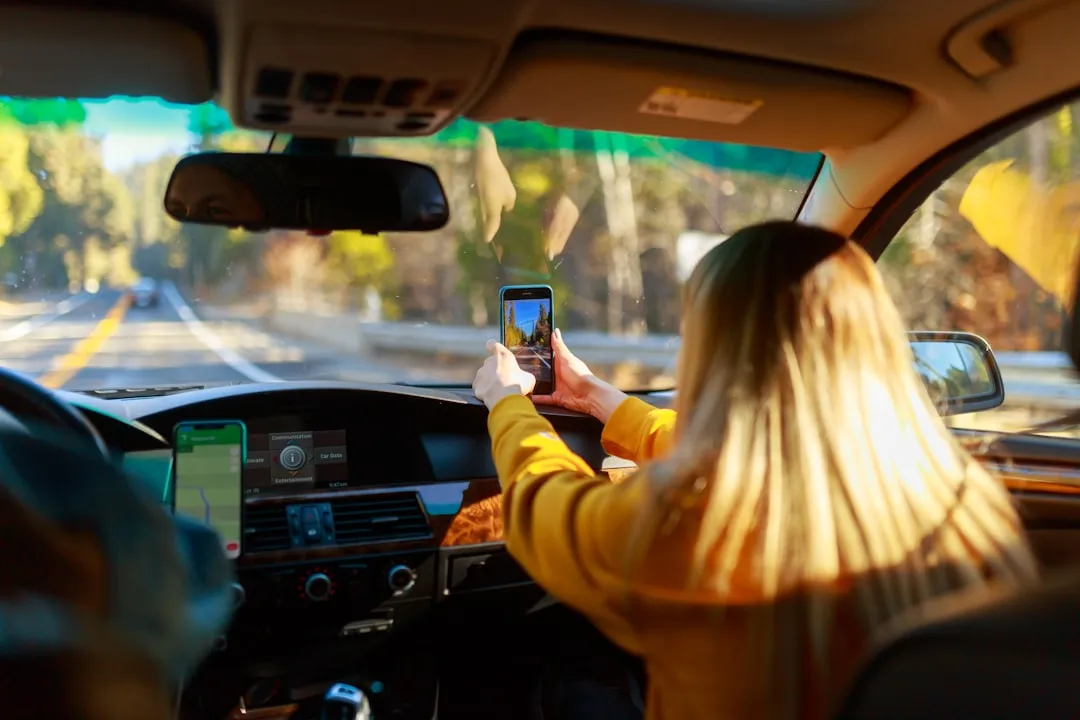
By embracing modern updates, families can revive classic road trip games and adapt them to the digital era, adding convenience and interactivity. Phone-based assists serve as a bridge between nostalgia and modern technology, ensuring that beloved games continue to bring joy, laughter, and bonding experiences. The key is using apps to support the game, not replace it.
Guides for 2025 now collect road trip games ranging from classics like I Spy to trivia, printable games, apps, and even web-based puzzle games you can play directly in your browser. The menu has expanded considerably, but the social structure of the games remains the same: everyone participates, and someone usually wins.
The goal isn’t zero screens. The goal is intentional screens mixed with real conversation, games, and some peaceful silence when everyone’s had enough togetherness for a bit. That’s a more honest framing than the old “no screens allowed” rule, and families seem to be finding it more workable in practice.
Why These Games Keep Getting Passed Down

Road trips bring people together, literally and emotionally. Playing games encourages interaction among passengers, helping everyone relax and enjoy one another’s company. Whether traveling with longtime friends, extended family, or new acquaintances, these games can break the ice and strengthen bonds. That social function is something no passive entertainment can replicate.
Research surveying approximately 2,100 parents and children in the US shows that families rate watching content together as their third-most important bonding activity after mealtime and travelling together. Games fall squarely into that travel-and-activity category, which may explain why parents keep reaching for them.
There’s also something worth noting about memory. The specific games a family plays on road trips tend to stick. Adults in their thirties and forties can describe exactly which games their parents introduced and which ones their kids have since revamped. The game is the memory as much as the destination is.
Road Trip Games and the Families Who Play Them in 2026

The theme of traveling with family carries strongly into 2025 and beyond, as a majority of American travelers plan to prioritize taking a family vacation in the next year. That consistent interest in family travel keeps road trip games relevant by sheer volume alone.
Despite strong spending forecasts, affordability remains a challenge to family travel, as reported by nearly three quarters of parent respondents. For many families, road trips remain a practical and cost-effective alternative to flying, which puts more people in cars and more games into play.
Research shows that shared activities strengthen family bonds and create lasting memories, and these games encourage conversation, laughter, and connection while reducing screen time. In an era where reducing screen time has become a genuine concern for many parents, a game that requires no device at all holds a certain appeal that’s hard to dismiss.
The Takeaway

The road trip game persists not because families are sentimental, but because it solves a real problem. Long drives need structure, and shared games turn dead time into something everyone remembers. The rules shift from decade to decade. The scorekeeping moves from paper to apps. The questions get stranger and funnier as kids get older. The game, at its core, stays the same.
What each generation actually reinvents isn’t the game itself. It’s the version that fits their specific car, their specific age gap, and their specific stretch of highway. That’s a quiet kind of creativity, happening in back seats across the country every time a family hits the road.
AI Disclaimer: This article was created with the assistance of AI tools and reviewed by a human editor.