

Your phone rings. The caller ID shows your bank’s name. A calm, professional voice explains there’s suspicious activity on your account and that you need to act immediately. It sounds completely legitimate. In fact, that’s precisely the problem.
This is the fake “fraud department” scam, one of the fastest-growing and most financially devastating cons targeting Americans today. The cruel irony is that victims aren’t tricked into handing over a password or clicking a link. They’re convinced to move their own money, voluntarily, into accounts that criminals control.
The Scale of the Problem Is Staggering
Consumers reported losing more than $12.5 billion to fraud in 2024, a 25% increase over the prior year, according to the Federal Trade Commission. That number alone is alarming. What’s worse is that impersonation scams drove a significant portion of those losses.
Scams impersonating businesses and government are consistently among the top frauds reported to the FTC, resulting in $2.95 billion in consumer losses in 2024. Then in 2025, things escalated further. The FBI’s Internet Crime Complaint Center received over one million complaints in 2025, with reported losses reaching nearly $20.9 billion, a 26% increase over 2024.
How the Call Actually Works

The frauds tend to go like this: scammers conjure a fake crisis and pose as trustworthy sources, perhaps a representative for a bank or companies like Amazon, Apple, or Microsoft, or workers at a federal agency like the Social Security Administration. The goal is to establish immediate trust before you have time to think.
The script follows a predictable arc: an invented crisis, such as a large transfer happening right now; an invented authority, such as a federal investigation or a warrant; and an invented urgency that discourages the victim from pausing to verify or telling anyone else what’s happening. In the process, they persuade unsuspecting victims to transfer their money to “keep it safe” or for another bogus reason, the FTC said.
Caller ID Spoofing Makes It Almost Impossible to Tell
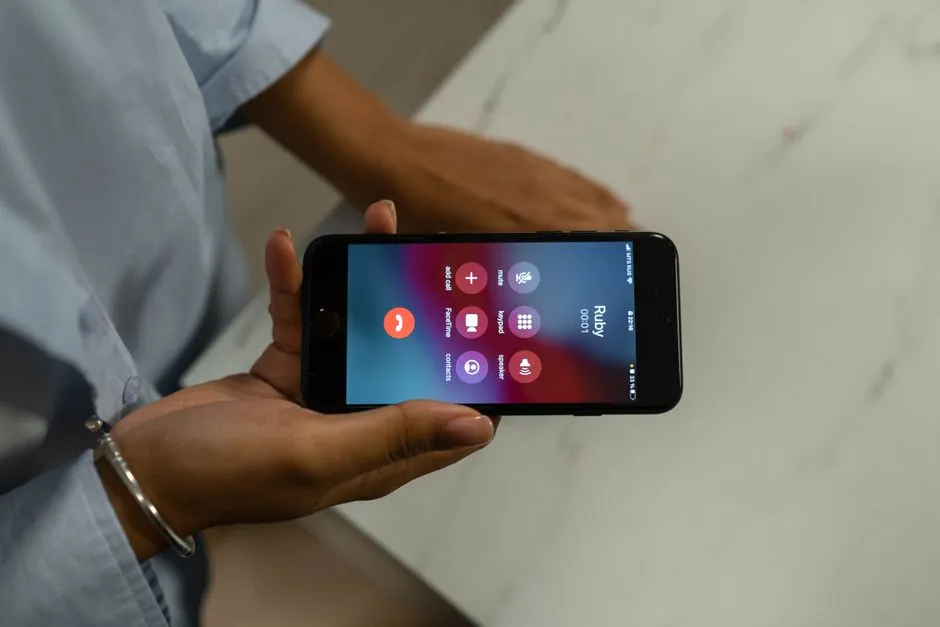
Many fraudsters can spoof caller ID, so the bank’s name appears when the phone rings. A victim who checks the number against the back of their debit card will see an exact match. That moment of false confirmation is where the scam locks in.
Scammers may use the name of an actual bank employee and spoof the bank’s phone number to make the call seem authentic. Stolen credentials, account numbers, and transaction histories from data breaches and phishing campaigns circulate on dark web marketplaces long before a scammer ever picks up the phone. Knowing your balance or a recent purchase isn’t proof of legitimacy. It’s a technique designed to lower your guard.
The “Safe Account” Trap

More complicated scams try to convince you that the bank is working with a government agency to investigate suspicious activity in your account, and that you will need to move the funds to another account or convert them to gold or cryptocurrency to protect them. This is the core mechanism that makes the scam so effective: victims believe they’re protecting themselves.
One particularly concerning tactic is convincing customers that legitimate bank employees are involved in the scam. The caller may say that the local branch is under investigation and that employees cannot be trusted. The customer may then be told to give the teller a fake story about the large withdrawal, like needing money for a down payment on a house or to help a grandchild buy a car.
AI Is Making These Calls More Convincing Than Ever

Scammers are now using sophisticated tactics, including artificial intelligence-driven voice cloning, spoofed phone numbers, text messages, and emails to make it appear that banks are contacting customers directly. The technology required to pull this off has become cheap and widely accessible.
Some scammers utilize AI tools to create realistic voice messages and impersonation attempts designed to sound authentic. According to McAfee, AI can now clone a person’s voice in as little as three seconds. The FBI’s nationwide warning issued in September 2026 noted that scammers were also using artificial intelligence to appear as government officials during video calls.
Older Adults Are Being Hit the Hardest

New analysis from the FTC shows a more than fourfold increase since 2020 in reports from older adults who say they lost $10,000 or more, sometimes their entire life savings, to scammers who impersonate trusted government agencies or businesses to convince consumers to transfer money to protect it.
Most notably, combined losses reported by older adults who lost more than $100,000 increased eightfold, from $55 million in 2020 to $445 million in 2024. Total losses among older Americans amounted to $700 million in 2024, a more than fivefold increase from $122 million in 2020. These aren’t just numbers. Sometimes financial loss amounts to households’ entire life savings, with the FTC noting that some people over 60 have reported emptying their bank accounts and even clearing out their 401(k)s.
A Real Victim Example That Shows the Stakes

A retired California couple reportedly lost nearly $850,000 after people posing as FBI agents allegedly convinced them they were connected to a criminal investigation. What makes this case notable is what didn’t happen: no hacking, no phishing link, no malware. They simply moved their own money.
In February 2025, Minnesota Vikings linebacker Dallas Turner, 22, received a phone call that seemed legitimate. The caller claimed to be a banker at JPMorgan Chase, and trusting the caller, Turner went to two actual Chase Bank branches and transferred $120,000 into accounts mentioned by the scammer. If a young, financially sophisticated professional can fall for this, nearly anyone can.
Why Victims Don’t Know It’s a Scam Until It’s Too Late
Under a program called Operation Level Up, the FBI contacted 3,780 victims of crypto investment fraud in 2025. According to the IC3 report, 78% of them did not know they were being scammed. That figure is sobering, because it reveals that the scam’s power comes not from deception in the traditional sense, but from the construction of a believable alternate reality.
The crisis short-circuits careful thinking. The authority figure discourages questions. The secrecy cuts off anyone who might intervene. Each element is deliberately engineered. By the time a victim senses something is wrong, the transfer has already cleared.
What Banks and Regulators Are Doing About It
Between January 2025 and July 2026, the IC3 received nearly 61,000 complaints of law enforcement or government impersonation scams, with losses totaling more than $1.6 billion. The scale has pushed regulators into more aggressive action across multiple agencies.
The FCC is holding telephone service providers that fail to protect consumers accountable, taking enforcement action against providers that turned a blind eye to scammers impersonating banks, government agencies, internet service providers, and major retailers. The FTC’s Government and Business Impersonation Rule, which took effect in April 2024, has also given enforcement agencies new legal tools to pursue these operations directly.
The Simple Rules That Can Protect You

Regardless of the pitch, it is always a scam. Banks will never call or text and ask you to move your money to protect it. That single fact is the clearest line of defense available. If someone on a call is asking you to transfer, withdraw, or convert money for any protective reason, hang up.
The FTC will never demand money, make threats, tell you to transfer money, or promise you a prize. A sense of urgency and secrecy are the two major warning signs to watch for. If the caller insists you tell no one, act right now, and avoid your local branch, those are not security procedures. They are manipulation tactics built to prevent you from thinking clearly.
The Takeaway

This scam works because it exploits trust in the very institutions designed to protect us. The phone number looks right. The voice sounds right. The details feel right. None of that means it is right.
The most reliable defense isn’t technology. It’s a pause. If any call creates pressure to move money fast, end the call, find your bank’s number on their official website or the back of your card, and call back independently. That one step has stopped this scam countless times. The scammers know it, which is exactly why they work so hard to make sure you never take it.
AI Disclaimer: This article was created with the assistance of AI tools and reviewed by a human editor.