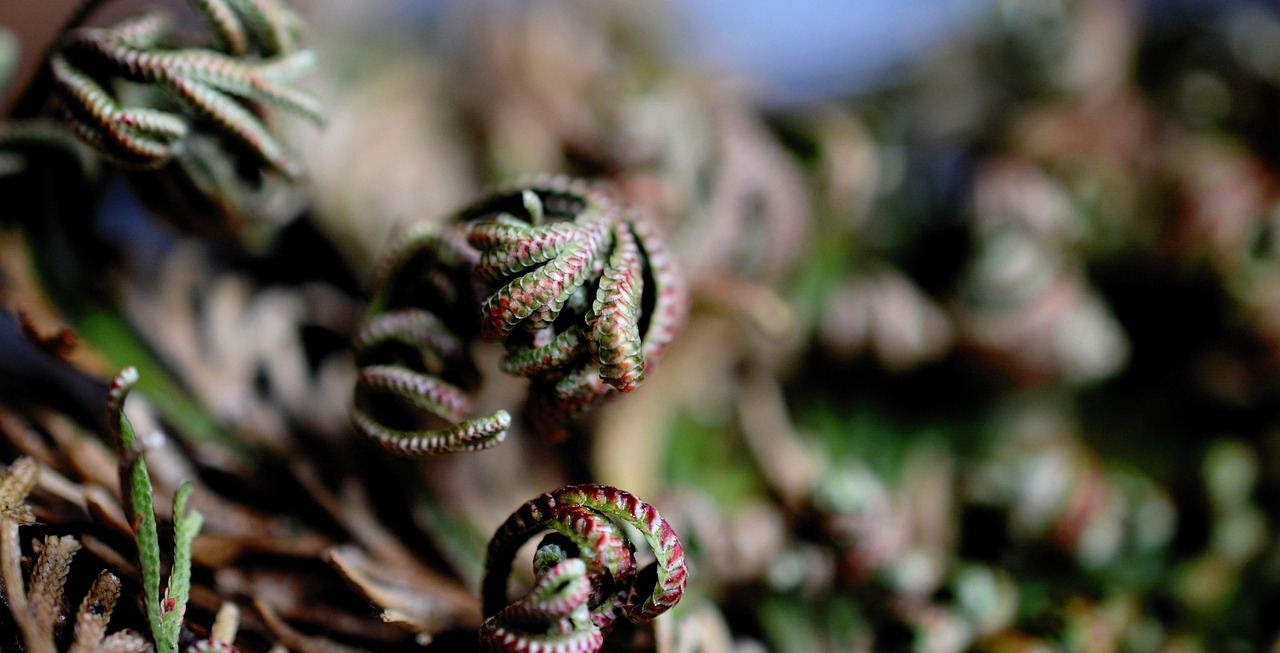

Most plants respond to drought the same way: they struggle, wilt, and eventually die. Water is so fundamental to plant biology that its absence sets off a rapid chain of cellular collapse. Yet tucked away in one of North America’s most unforgiving landscapes, a small, unassuming plant quietly breaks all those rules.
Selaginella lepidophylla, a species of desert plant sometimes called the resurrection plant, can “resurrect” itself after periods of extreme dehydration lasting months or even years. It doesn’t store water like a cactus. It doesn’t die and regrow from seed. It simply waits, folded in on itself, as patient and intact as something wound tight by time itself.
A Plant Born in the Chihuahuan Desert
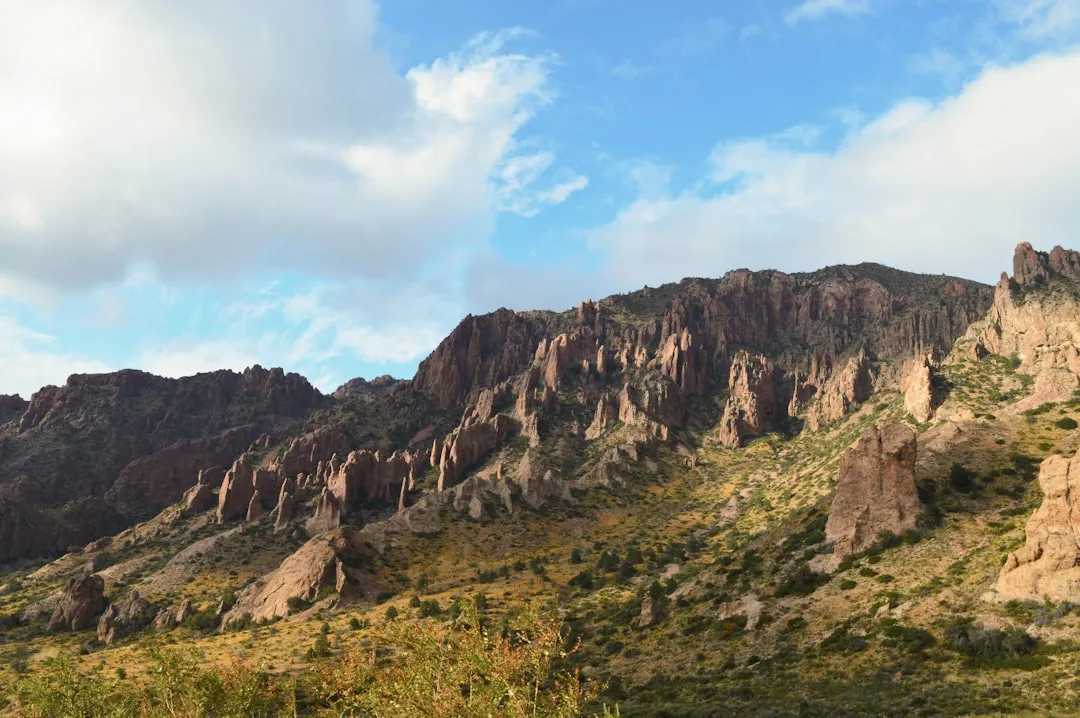
The Chihuahuan Desert, which spans the borders of Mexico, Texas, and New Mexico, is home to this native plant that has evolved to survive and reproduce in an arid, parched environment. This is a region of intense heat, scarce rainfall, and rocky terrain that would punish almost any other plant into extinction.
Selaginella lepidophylla is a desiccation tolerant plant able to survive complete vegetative tissue dehydration and revive in water conditions. Vegetative desiccation tolerance is an adaptive feature it has acquired to withstand the long dry periods of its natural habitat. That adaptation didn’t happen overnight. It’s been refined over an extraordinary span of geological time.
An Ancient Lineage That Predates Much of Life as We Know It
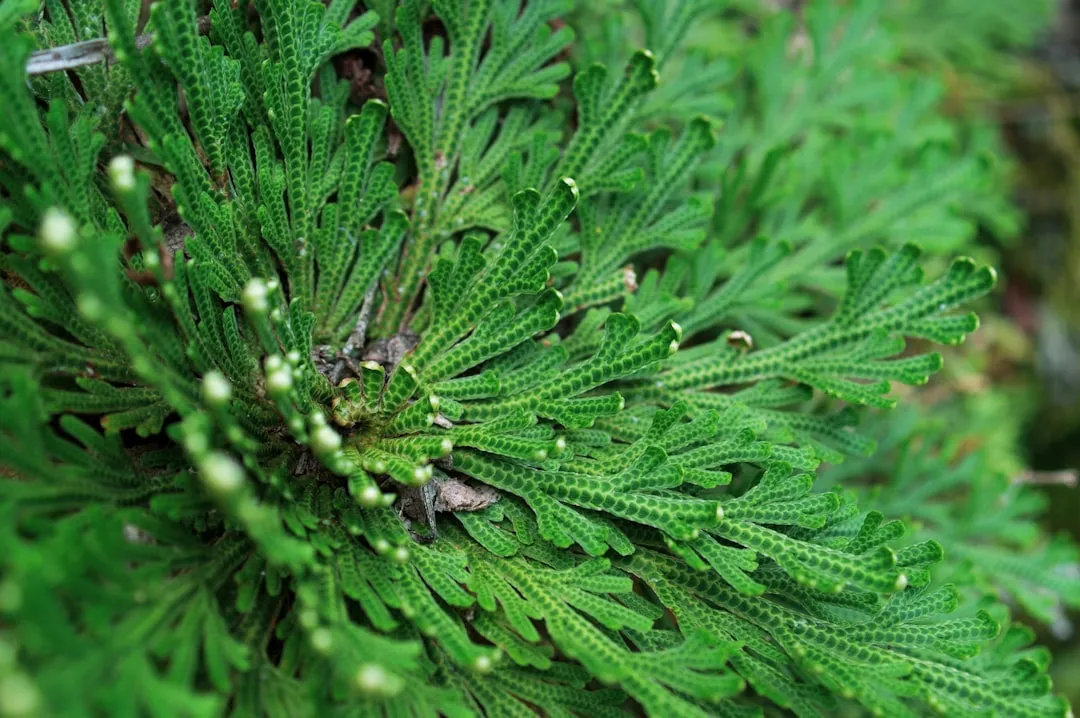
Selaginella is a lycophyte in the Selaginellaceae family, and the lycophytes are the oldest extant division of vascular plants, with their origins dating to the Late Silurian and Early Devonian period roughly 400 million years ago. To put that in context, that predates the dinosaurs by a wide margin.
Spikemosses and clubmosses are often referred to as “living fossils,” as they look very similar to their fossil relatives that lived 370 to 400 million years ago. Lycophytes dominated the Earth’s flora during the Carboniferous period, encompassing a tremendous expansion of terrestrial life roughly 360 million years ago. Selaginella lepidophylla is, in a real sense, a survivor of deep time.
Members of this genus are relicts from ancient times, and one has to marvel at how it has survived virtually unchanged in appearance for hundreds of millions of years. That unchanged form isn’t stagnation. It’s a design that works.
How Long Can It Actually Go Without Water?
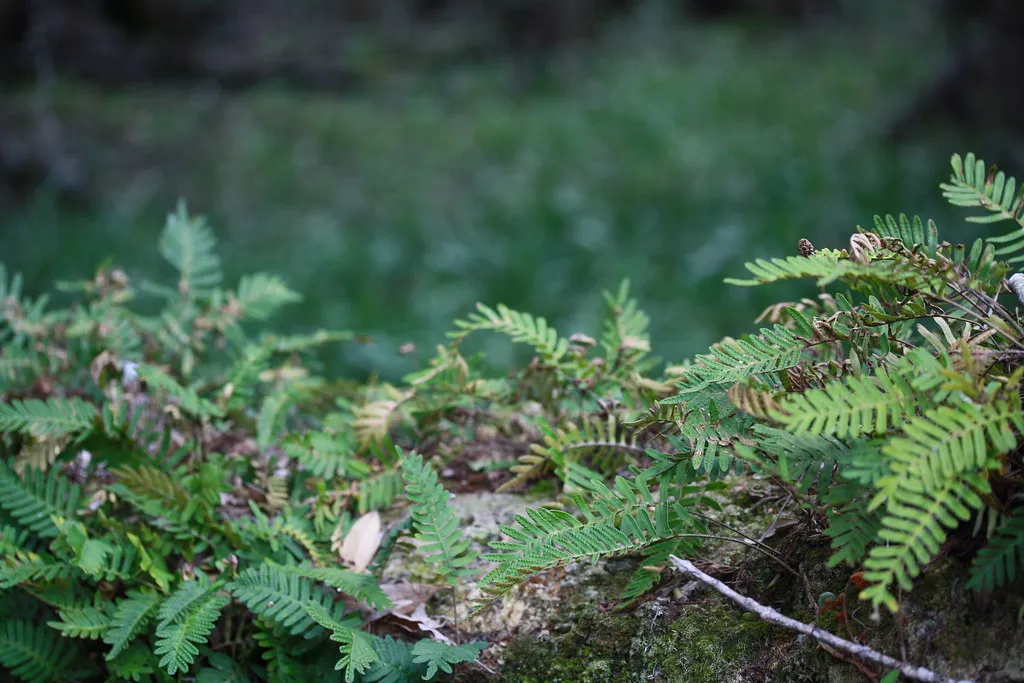
Selaginella lepidophylla can survive nearly total desiccation, down to about five percent internal moisture, and remain dormant. Most astonishingly, it can remain in this dormant state for nearly a decade. That alone is remarkable enough.
In fact, the longest documented survival time is fifty years without water. Whether that extreme figure represents the absolute outer limit of its biology remains an open question among researchers, but field accounts consistently confirm multi-year dormancy as a routine part of its life cycle.
Some field accounts estimate that individuals can remain viable for six to seven years without a drop of water. For a plant this small and physically unremarkable, that endurance is staggering.
The Curl: Its First and Most Visible Defense
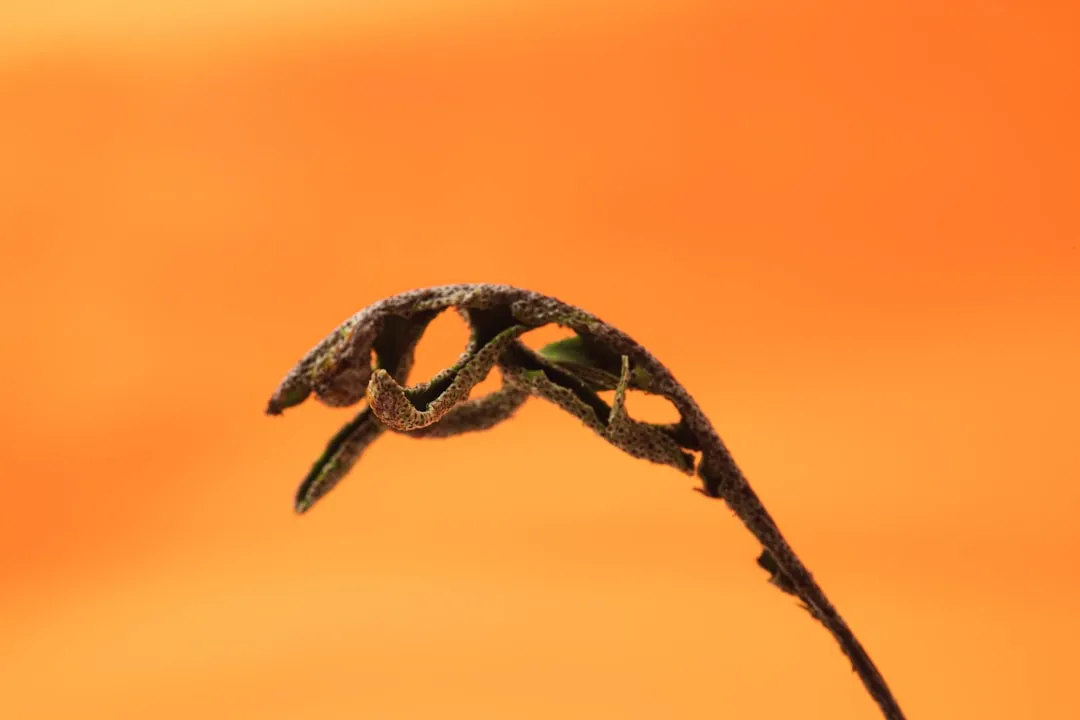
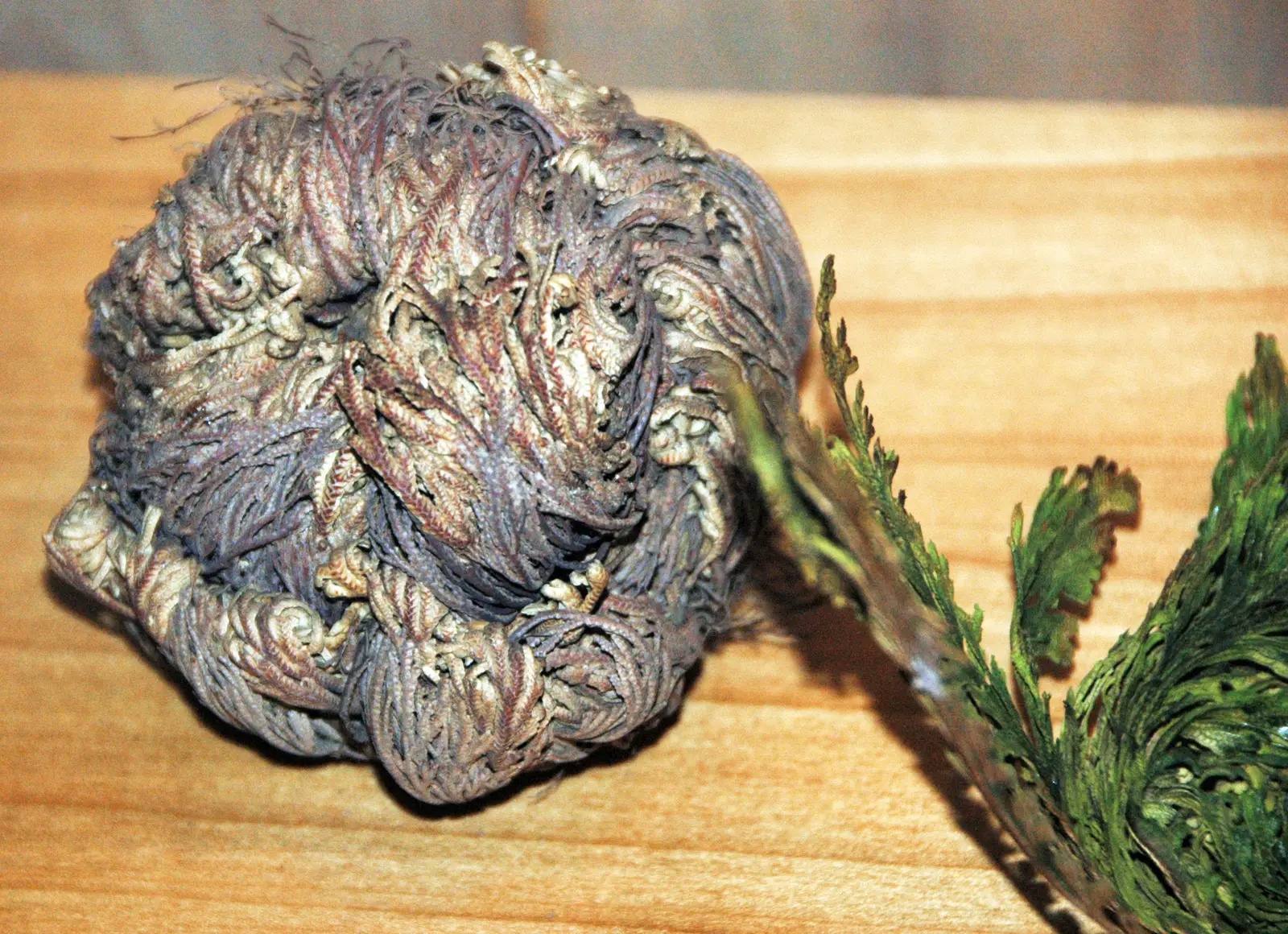
When water disappears, the plant curls up tightly, drastically reducing its surface area and minimizing water loss. The transformation is visible and striking. What was once a flat, fernlike rosette becomes a tight, brown ball that looks completely dead to anyone who doesn’t know better.
The curling and uncurling movements of Selaginella lepidophylla are governed by its stem structure, specifically a gradient of lignified cells that controls stiffness and spiraling. Outer stems curl into rings during desiccation, while inner stems spiral tightly. This isn’t random shrinkage. It’s a precise, engineered response.
Once it reaches this curled-up state, the plant becomes almost weightless, meaning it’s easily blown across desert plains in the same way a tumbleweed would. Moving with the wind is actually part of the strategy: the plant can drift until it reaches a wetter patch of ground.
The Sugar Trick That Keeps Cells Alive
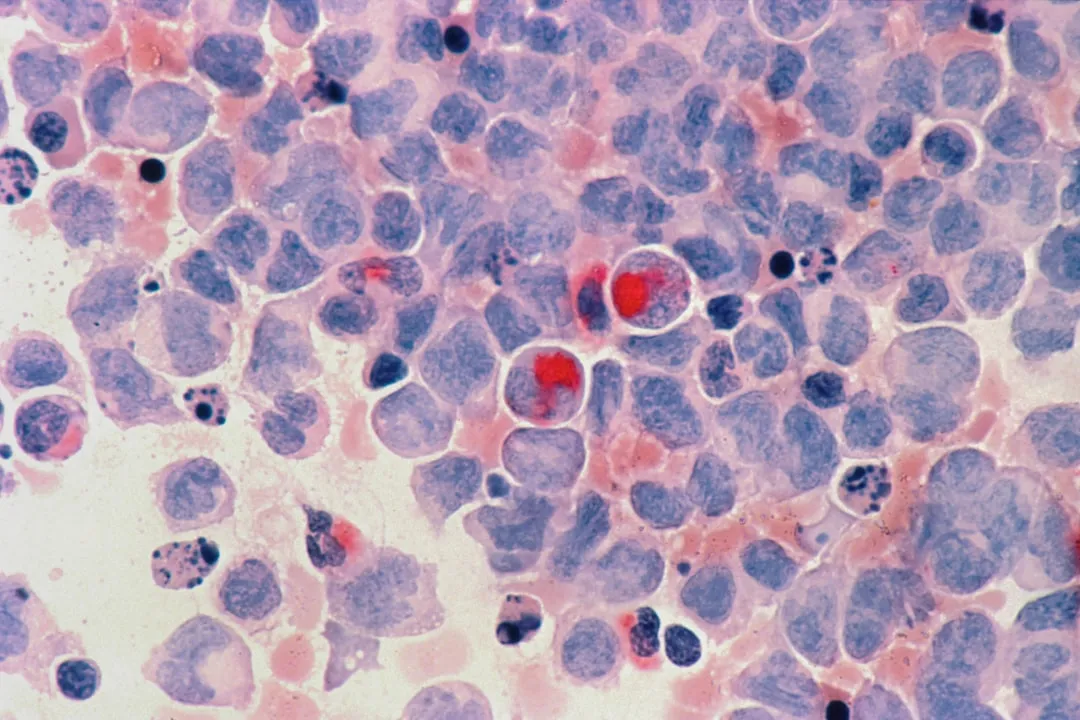
While losing water, the resurrection plant accumulates enormous quantities of trehalose, a sugar known to stabilize proteins and membranes. This sugar serves as a molecular scaffold that prevents cell structures from collapsing as water continues to disappear. Think of it as a kind of biological antifreeze, but for dryness rather than cold.
Research shows that Selaginella lepidophylla’s trehalose concentrations increase significantly during desiccation, which assists in the formation of an almost “glassy” state inside its cells. In that glassy state, the cellular machinery is suspended rather than destroyed. Metabolism doesn’t stop cleanly so much as it gets locked in place.
Many organisms that have the capacity to dehydrate but remain viable contain high levels of trehalose, at eight percent or more of the dry weight. Selaginella lepidophylla is among those organisms, sharing this chemical strategy with tardigrades and certain yeasts.
The Rapid Return: What Rehydration Looks Like
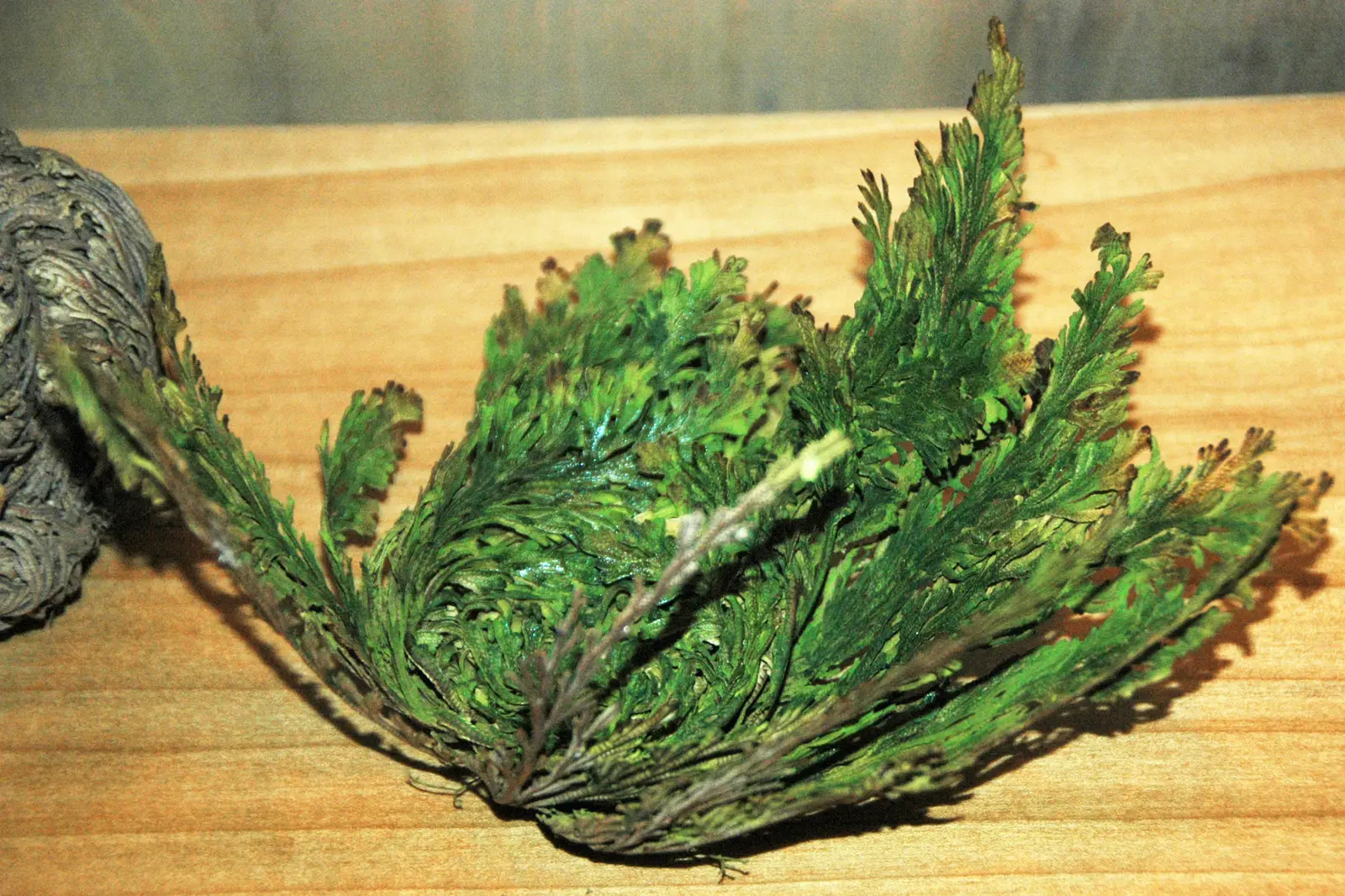
The resurrection plant’s revival is rapid, almost dramatically so. Within minutes of receiving water, its stems uncurl. Within hours, chloroplasts that were previously clumped and dormant start to spread out. Soon, it is able to completely reactivate photosynthesis and begin rebuilding its metabolic pathways.
The plant actually follows a cycle where it remains in a dormant state until it accumulates enough moisture to rejuvenate and reproduce, and then it returns to dormancy as weather conditions become dry and inhospitable. This cycle can repeat many times over the life of a single plant. It doesn’t exhaust the mechanism each time it revives.
Other Resurrection Plants Around the World
Scattered across some of the Earth’s harshest landscapes, there is an elite group of species that defy the normal rules of desiccation. They’re known as resurrection plants: organisms capable of drying out almost completely and then springing back to life as soon as water returns. Selaginella lepidophylla is among the most studied, but it’s not alone.
In Africa, Myrothamnus flabellifolia thrives on rocky slopes, enduring long dry seasons. Each species has adapted to its local climate, but all share the astonishing ability to survive without water for years.
Resurrection plants like Xerophyta viscosa, Craterostigma plantagineum, and Sporobolus stapfianus are vascular plants capable of surviving extreme dehydration, losing up to ninety-five percent of their water content and resuming normal function upon rehydration. The fact that multiple unrelated plant lineages evolved this same trick independently makes it all the more remarkable.
What Science Is Still Trying to Understand
Scientists are still studying the chemical makeup of these plants, trying to determine whether the types of sugars and enzymes they contain are a significant factor in their survival in such harsh climates. The trehalose hypothesis is compelling, but research has shown that desiccation tolerance is almost certainly a multifactorial trait with no single chemical explanation.
Researchers have now sequenced the small 109 megabase genome of Selaginella lepidophylla, and single-molecule sequencing has enabled accurate haplotype assembly, revealing extensive structural variation. Unlike all other land plant lineages, Selaginella has no evidence of a whole-genome duplication event in its evolutionary history, but instead shows unique tandem gene duplication patterns reflecting adaptation to extreme drying.
By examining sequenced genomes and studying transcriptome and metabolome data, researchers are gaining insights into the unique genes and gene families critical to desiccation tolerance, as well as the role of early light-inducible proteins and other molecular factors that support revival.
The Agricultural Stakes: Why This Matters for Global Food Security
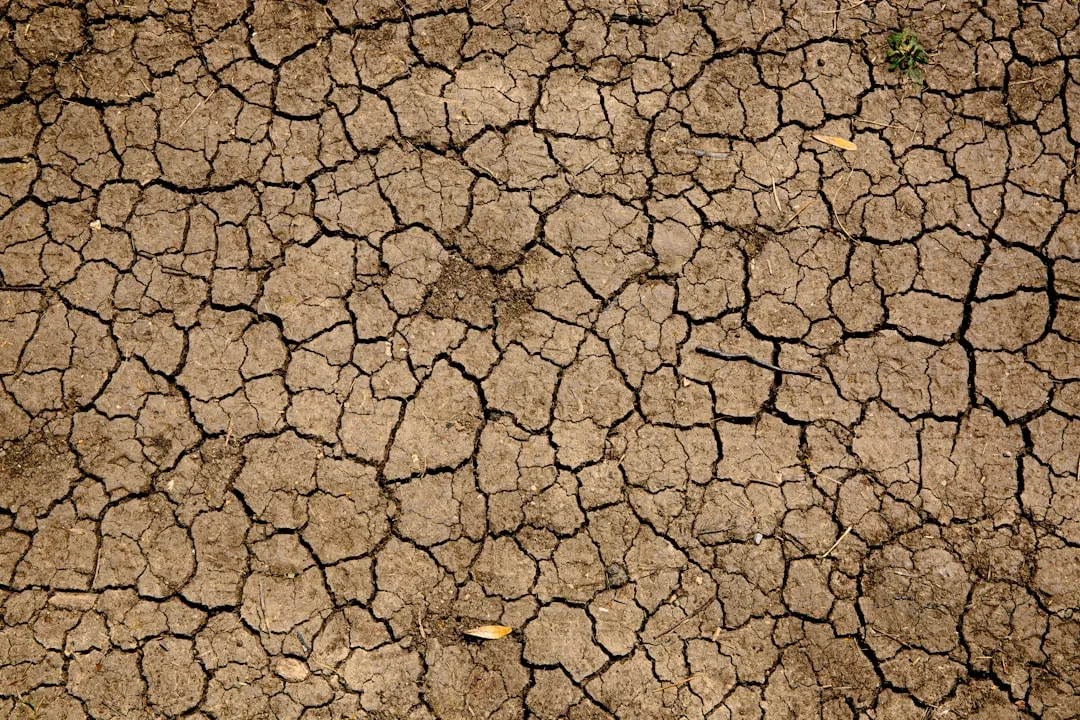
Drought is considered the greatest threat to worldwide agriculture, and increased and extended droughts are predicted worldwide due to global warming. This threatens global food security and represents an existential issue for humankind.
Vegetative desiccation tolerance enables resurrection plants to undergo almost complete drying without losing viability. Current research discusses how incorporating different molecular and biochemical mechanisms underlying this tolerance into crops might expand the time during which crops can continue growing under limiting water conditions.
Extreme desiccation tolerance has real implications for agriculture, climate resilience, and biotechnology. One goal is engineering drought-resistant crops. Understanding how resurrection plants stabilize their membranes, protect their proteins, and regulate their stress genes may help scientists develop crops that are able to survive longer without water. A 2025 review published in the Philosophical Transactions of the Royal Society B specifically examined how this work could be translated into practical crop improvements.
The Researcher Racing to Unlock Its Secrets
Plant biologist Jill Farrant has spent years studying “desiccation-tolerant” species in hopes of teaching her how to make crops more resilient. Her work, centered at the University of Cape Town, has become one of the most sustained scientific efforts to understand how resurrection plants manage what other plants cannot.
In August 2025, Farrant was given a Lifetime Achievement Award by South Africa’s National Research Foundation, one of the country’s highest honors. She was originally set to retire, but after an independent panel gave her lab the highest possible marks, the university asked her to stay on for another five years.
Understanding how plants survive extreme dehydration has the potential to enlighten new strategies to improve the climate resiliency of crops, thereby positively impacting worldwide food security and sustainability. Farrant’s field represents some of the most practically urgent plant science being done anywhere today.
What It Means to Be Alive Without Looking Like It
There’s something quietly unsettling about the resurrection plant in its dormant state. To many, at first glance, Selaginella lepidophylla appears to be a dried-up ball of dead plant matter. It looks like something to throw away, not something to study carefully. That gap between appearance and biological reality is exactly what makes it so important.
Desiccation, or the loss of all moisture, means death for most organisms on Earth. Cells collapse, membranes rupture, DNA fragments, and metabolism grinds to a halt. The resurrection plant manages to pause all of that rather than let it happen, which places it in a category of life that biologists are only beginning to fully characterize.
A small number of species called resurrection plants can tolerate desiccation of their vegetative organs and are a natural resource that can be tapped to address the growing challenge of drought in agriculture. The more we understand them, the more the line between dormant and dead starts to feel like a matter of perspective.
Looking Ahead: Climate Change and the Resurrection Plant’s Moment
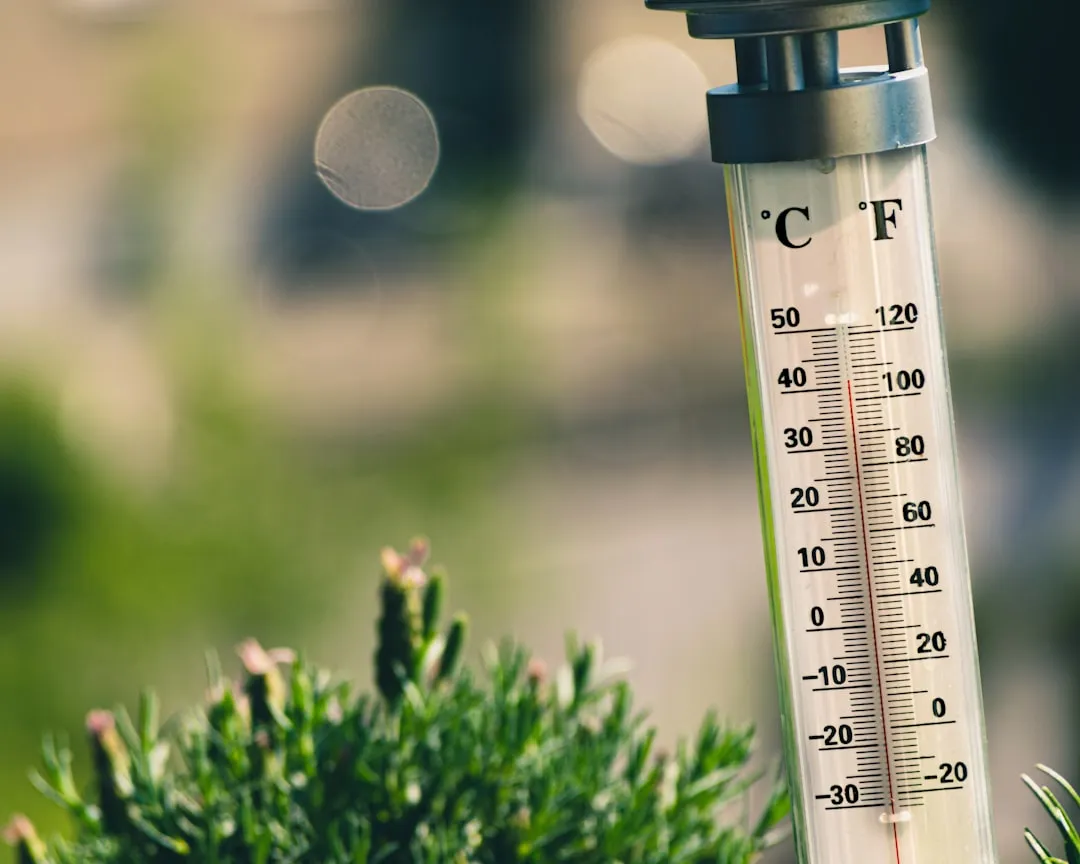
As global temperatures rise and arid zones expand, the resurrection plant’s biology becomes less of a botanical curiosity and more of a template worth understanding urgently. As climate change exacerbates drought stress, resurrection plants offer valuable insights for sustainable agriculture and ecosystem conservation.
Climate alterations substantially impact plant resilience to abiotic stress and, consequently, agricultural productivity. A better understanding of plant adaptations to tolerate extreme environmental conditions could pave the way for future advances in agricultural sustainability.
A better understanding of plant adaptations to tolerate extreme environmental conditions could pave the way for future advances in agricultural sustainability. One such adaptation is vegetative desiccation tolerance, which enables some species to undergo almost complete drying without losing viability. For a plant that’s been quietly solving this problem for hundreds of millions of years, the timing of our interest in it might just be exactly right.
The Takeaway
Selaginella lepidophylla doesn’t thrive despite its hostile environment. It thrives because of the precision with which it has adapted to it. Dormancy, in its case, isn’t failure. It’s an ancient, carefully engineered form of patience. The plant curls up, goes still, and waits for conditions to change, which they always eventually do.
What’s most striking isn’t the revival itself. It’s the fact that the revival was always possible. The cellular machinery, the sugars, the proteins, the folded stems, all of it was simply waiting. That’s a kind of resilience that goes deeper than survival. It’s a biological argument that being ready for the next rain matters more than trying to outlast the drought in the conventional way.
For plant scientists, farmers, and anyone watching the world’s dryland regions grow larger, a small brown ball rolling across the Chihuahuan Desert may turn out to be one of the most important things in nature worth paying attention to right now.
AI Disclaimer: This article was created with the assistance of AI tools and reviewed by a human editor.