

More People Do This Than You’d Think

You’re not unusual if your dog sleeps in your bed. Research shows roughly more than half of people report sleeping with a pet in their bedroom, and nearly a third of children share their bed with a pet at night. Those numbers have stayed fairly consistent across studies, suggesting this isn’t just a recent trend.
A survey of just over 1,000 Australians in 2024 found almost half of pet owners let their pets sleep with them. Of those surveyed, nearly half reported sleeping with their dog in or on their bed, while another roughly one in five said their dog slept in the same room but not on the bed.
Single dog owners are slightly more likely to sleep with their dog, at around four in five, while slightly fewer married dog owners allow it. Age, bed size, and dog size all play a role in who ends up sharing. It’s a genuinely common setup.
Dogs Are Active at Night. More Than You Realize.

Because dogs are active for about one in five moments throughout the night, co-sleeping can cause relatively mild reductions in overall sleep quality for humans, a small Australian study found. The word “mild” matters here, but so does “active.” Dogs aren’t perfectly still from 10 PM to 6 AM.
Dogs are polyphasic sleepers, meaning their rest is most observed at night, but sleep bouts are also present during the day. This means their nighttime schedule doesn’t perfectly match yours. They drift in and out, shift positions, and your body often responds.
Research has shown that dogs’ movements predicted human movement, and humans were significantly more likely to be awake during their dogs’ periods of wakefulness than during their dogs’ periods of inactivity. Most people aren’t consciously aware of this happening, which is exactly what makes it tricky to diagnose.
The Gap Between How You Feel and What’s Actually Happening

In survey-based studies, pet owners report that their dogs favorably affect sleep quality, but prior actigraphy-based studies of human-dog co-sleeping have concluded the practice can lead to sleep arousals and disturbances and, thus, reduce sleep efficiency. That disconnect is real and worth sitting with.
Research found clear associations between human and dog movement over sleep periods, with dogs influencing human movement more than humans influenced dog movement. Humans were largely unaware of their dog’s nighttime movements and rarely reported that their dog had awakened them.
So you can feel like you slept fine while your body tells a different story. That was me. The tiredness was real, even if I couldn’t pin it on Biscuit in the moment.
What Happens When the Dog Sleeps on the Floor Instead
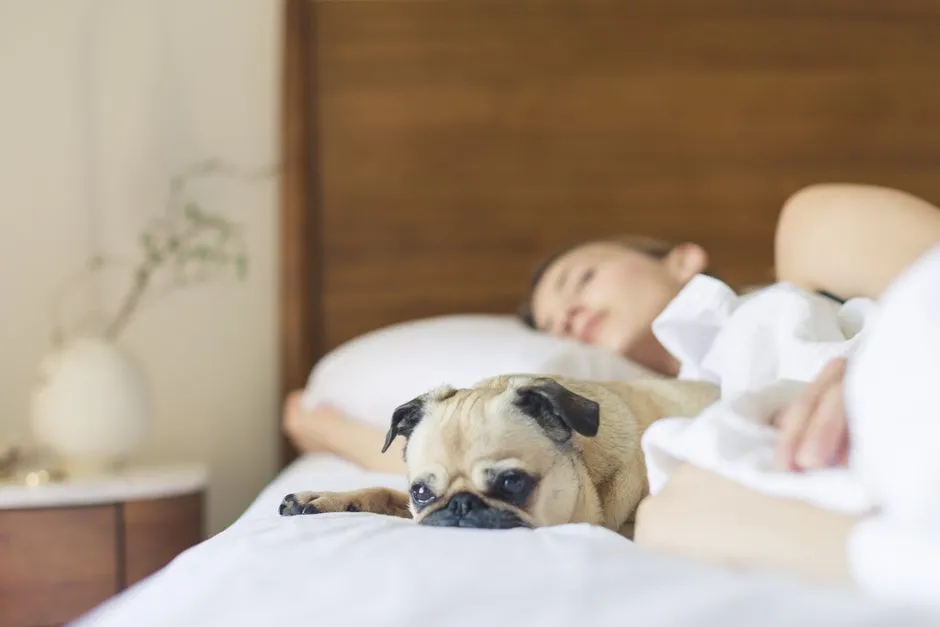
A small study of 40 dog owners found that dog owners had poorer sleep efficiency when their dogs slept in the bed as opposed to just being in the room. That distinction, on the bed versus in the room, turns out to be meaningful.
A small study of adults found that people sleep just fine with a dog in the bedroom but less so when the dog is actually in the bed. Researchers have found that having the dog sleep elsewhere in the bedroom, such as a cozy bed of their own, can make slumber a bit more peaceful.
This was the middle ground I hadn’t considered. I didn’t have to banish Biscuit to another room entirely. A dog bed two feet away turned out to be a reasonable compromise, one the research actually supports.
The Allergy Angle Nobody Wants to Admit
According to the Asthma and Allergy Foundation of America, dog dander, fur, and even outdoor allergens brought in on paws can trigger allergic reactions. If you or a family member suffers from asthma or seasonal allergies, co-sleeping could worsen symptoms, even if your dog is well-groomed.
Even if you’re not overtly allergic to dogs, prolonged exposure to allergens like dander, saliva, and pollen during sleep can trigger or exacerbate respiratory issues. The concentration of allergens in your bed, where you spend a significant portion of your night breathing, can be considerably higher than elsewhere in your home.
While you might not be allergic to your dog specifically, dogs can track in pollen and other outdoor allergens into your home and bed. A dog that spent the afternoon in the park is essentially depositing that afternoon’s allergen load right next to your pillow.
The Hygiene Reality (Which Is Uncomfortable But Not Catastrophic)

In a study examining zoonotic risks, 58 percent of the pets monitored slept on their owner’s bed. Of the dogs tested, the vast majority, roughly 86 percent, tested positive for Enterobacteriaceae on the fur or footpads. These bacteria are common environmental organisms, but that number does give you pause.
Even healthy dogs carry bacteria and parasites that may be passed to humans. The CDC notes that close contact, like sharing bedding, can increase the risk of zoonotic disease transmission. The overall risk remains low for healthy adults, but it’s not zero.
Contracting a disease from a pet is rare, but when it occurs it can be serious, even deadly, especially in immunocompromised people and the very young. The elderly are also at risk. Regular grooming, washing bedding weekly, and keeping your dog current on parasite prevention all reduce this risk significantly.
What the Research Says About Comfort and Security

The benefits side of this ledger is real too, and it deserves honest treatment. A 2018 survey of adult women showed that a dog in bed is associated with comfort and security more so than sleeping with another person or a cat. That’s a notable finding, not just sentimental noise.
When asked about the impact of co-sleeping on their sleep quality, almost two thirds of participants in one study indicated that their dog rarely or never disturbs their sleep. Perception is part of the picture too. If you feel rested and secure, that matters.
Pet companionship has been increasingly recognized as providing health benefits akin to human relationships, such as stress reduction and improved cardiovascular functioning. None of that disappears the moment the dog moves to its own bed. Proximity in the same room preserves much of it.
Dogs Have Their Own Sleep Needs Too
This part gets overlooked. Sleep loss affects activity patterns, increases anxiety-like behaviors, decreases cognitive performance, and is associated with depressive states, in dogs as well as in humans. A restless night shared with a human can affect your dog’s daytime wellbeing too.
Research has shown that sleep loss in dogs increased inactivity and decreased play and alert behaviors. A dog that isn’t sleeping well isn’t just tired. It’s potentially more irritable and less engaged. Dogs appear to compensate for the lack of sleep during the night by remaining inactive during the day.
Giving Biscuit his own dedicated sleeping space meant he had a reliable, undisturbed spot to actually rest. Whether he appreciated it is debatable, but his behavior during the day improved in small ways I hadn’t anticipated.
The Behavioral Side of Bed Sharing

If your dog exhibits behavioral issues like possessiveness or aggression, allowing them in your bed could unintentionally reinforce these behaviors. The bed might become viewed as their exclusive territory, leading to guarding behavior or difficulty when you need them to move.
Dogs thrive on structure and boundaries. If your dog already shows signs of separation anxiety, allowing them to sleep in your bed may blur the lines of independence. It can create clingy behavior or distress when you’re away, according to veterinary behaviorists.
Bites from a pet can spread infection and cause injury, and dogs may be more likely to bite when abruptly awoken from sleep. Children are more likely than adults to sustain a dog bite requiring medical attention. This is a genuine safety consideration, especially in households with younger children.
How the Transition Actually Went

The first three nights were the hardest, mostly for me. Biscuit adapted faster than expected. I put his bed beside mine, kept the routine otherwise identical, and resisted the urge to give in when he gave me the look. Consistency mattered more than I expected.
Within a week, I noticed I was waking up less. Not dramatically, not in some revelation-style shift, just fewer groggy mornings and less of that low-level fatigue that had become my baseline. A good solution for many owners is to keep a dog bed beside their own. That turned out to be genuinely true in practice.
The bond didn’t change. He still slept close, still greeted me the moment I woke up. The only real difference was that neither of us was disturbing the other’s sleep cycles anymore. That turned out to be a better arrangement for both of us.
A Quiet Reckoning
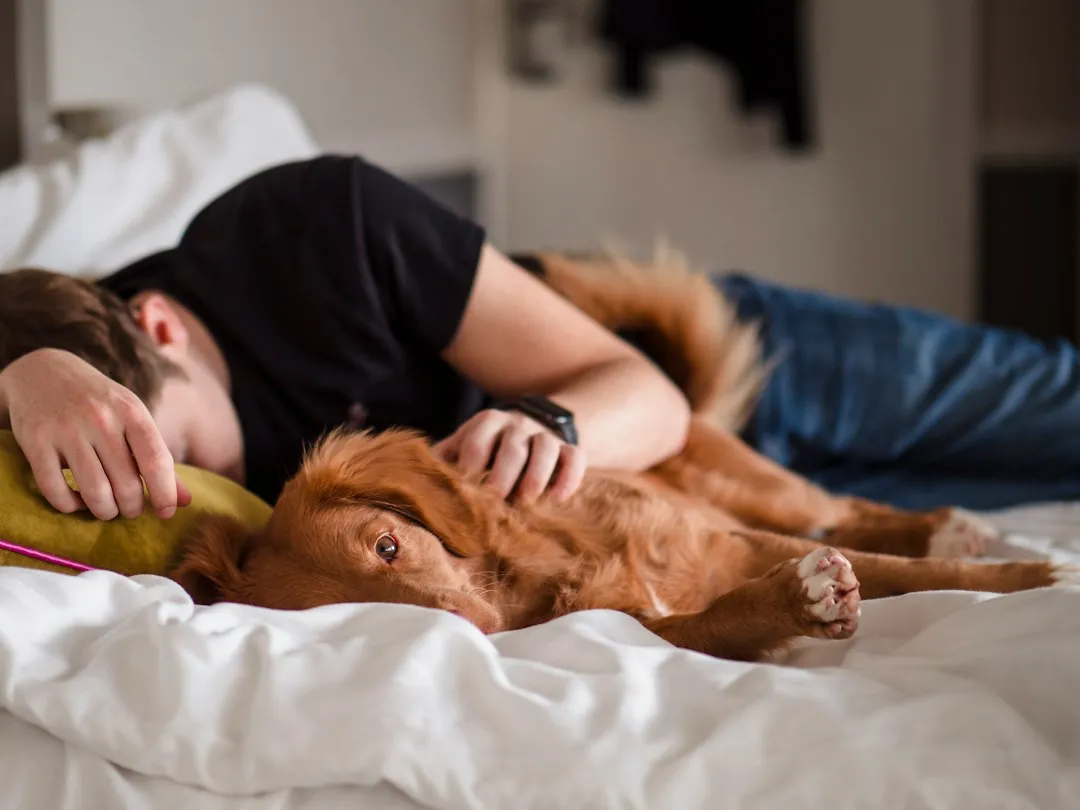
The science on this topic is genuinely nuanced. Some studies have found that co-sleeping with pets may have a neutral or mixed impact on humans’ sleep. There isn’t a universal verdict, and your own situation, your dog’s size, your sleep sensitivity, your allergies, your household setup, all of it shapes what the right answer looks like for you.
What’s clear is that the bed itself is just one option among several. The bedroom, with a dedicated dog bed, preserves most of the comfort and closeness while reducing the actual disruption. That middle ground is where the research tends to land, and where I ended up.
Sometimes making a better decision for your health doesn’t feel like a grand act of discipline. It just feels like finally paying attention to what your body has been quietly telling you for months.
AI Disclaimer: This article was created with the assistance of AI tools and reviewed by a human editor.