

What Pruritus Really Means When It Won’t Stop

This intense, unrelenting sensation known as pruritus is, for many people with liver conditions like primary biliary cholangitis (PBC) and primary sclerosing cholangitis (PSC), one of the most frustrating and misunderstood symptoms. It is not the ordinary itch you can satisfy with a quick scratch. The itching sensation is deep, persistent, and impossible to ignore. It’s not the kind of itch you can scratch away. No amount of rubbing, pressing, or scratching brings real relief.
Known medically as pruritus, it can be severe, sleep-disturbing, and profoundly affect quality of life, even when other symptoms are mild. That last part is what catches many patients and doctors off guard. A person can feel otherwise relatively well and still be tormented by an itch that has no rash to show for it.
The Liver Connection: When Bile Flow Goes Wrong

Itching is particularly common in cholestatic liver diseases, where bile flow is impaired. Conditions such as primary biliary cholangitis, primary sclerosing cholangitis, and some forms of drug-induced or pregnancy-related liver disease are strongly associated with pruritus.
Bile-related pruritus is caused by the buildup of bile salts in your blood. The bile salts, or bile acids, irritate nerves in your peripheral nervous system, causing itching. There is no rash with this type of pruritus. Some people seem to be more sensitive to bile salts than others, and pruritus may be mild to severe.
Studies show that more than 80% of people with cholestatic liver conditions, such as primary biliary cholangitis and primary sclerosing cholangitis, experience this form of itching. That is a striking proportion, and it helps explain why physicians increasingly treat persistent unexplained itch as a potential red flag for liver health.
The Kidney Connection: Uremic Pruritus
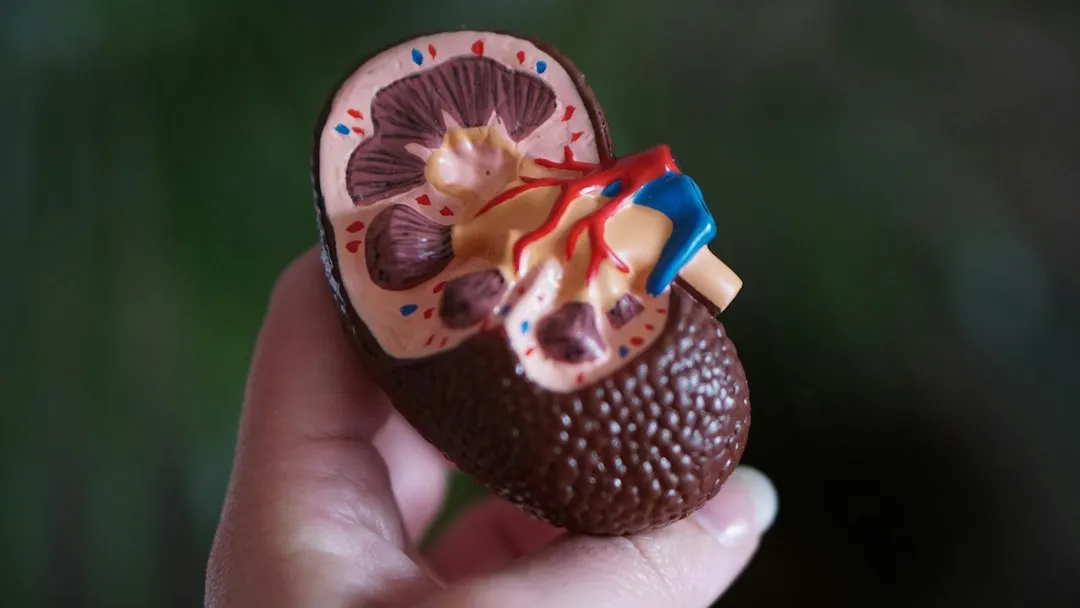
Uremic pruritus, also called chronic kidney disease-associated pruritus (CKD-aP), is a symptom of severe and ongoing itching that patients with chronic kidney disease (CKD) or end-stage renal disease frequently experience. The kidneys, when functioning poorly, fail to filter waste compounds from the blood. Those compounds accumulate, and the skin pays the price.
Up to 70% of people who receive hemodialysis experience some degree of itching. Around 25% of people with chronic kidney disease who are not on dialysis also have uremic pruritus. The reported prevalence of uremic pruritus varies between 18% and 98%, with an overall prevalence of around 55%.
Pruritus is highly prevalent among patients with chronic kidney disease, particularly in those with advanced stages. Approximately 58% of study populations report pruritus, with higher severity scores associated with increased serum urea, phosphorus levels, and reduced eGFR. In other words, the worse the kidney function, the more intense the itch tends to become.
How the Itch Feels Different From Ordinary Skin Irritation

Unlike typical itching caused by allergies or skin conditions, pruritus from liver disease usually does not come with an obvious rash, making it harder to diagnose correctly. This absence of visible skin changes is one of the key clinical clues doctors are trained to recognize.
You might itch anywhere on your body, but it is most common on the arms and legs, or the palms of your hands or soles of your feet. The more severe the disease, the worse the itching gets. You might notice it is worse in heat, including a hot bath, at night, or when you wear certain clothes.
Symptoms are often most intense at night, which interferes with sleep and exacerbates fatigue. Despite a significant impact on quality of life, pruritus is undertreated in cholestatic liver disease. That undertreament problem is well documented. In the TARGET-PBC study, only 52% of patients with pruritus received any treatment for itching, and a majority did not feel that their itching was adequately treated.
The Biological Mechanisms Behind the Itch
In patients with PBC, there are high serum and plasma concentrations of multiple factors, including bile salts, bilirubin, endogenous opioids, lysophosphatidic acid (LPA), autotaxin, and histamine. Bile salts, bilirubin, LPA, and autotaxin affect itch mediators in the skin and sensory nerves, while the endogenous opioid balance affects mediators in the spinal cord.
Protein-bound uremic toxins such as indoxyl sulfate and p-cresyl sulfate are mainly excreted by renal tubular secretion and poorly removed by conventional dialysis because of their strong protein-binding. Increasing evidence suggests that the accumulation of these toxins may contribute to an increased risk of pruritus.
Other research suggests that unusual levels of bilirubin stimulate peripheral itch sensory neurons. Bilirubin is a pigment of bile. People with liver disease often have high levels of bilirubin. The picture that emerges from recent research is that multiple chemical pathways can fire simultaneously, which is part of why the itch is so difficult to fully suppress.
Why the Severity Doesn’t Always Match the Test Results
The severity of itching does not always match liver test results. Someone with only mildly elevated alkaline phosphatase levels might experience extreme itching, while someone else with more advanced disease might not itch at all. This disconnect is one reason the symptom gets dismissed or misattributed for so long.
Interestingly, the severity of itching does not always correlate with the levels of these markers in the blood, meaning someone can have terrible itching even with relatively mild abnormalities in blood tests. For patients, this can be deeply frustrating. Tests come back “not that bad” while the itch itself is relentless.
When to Take the Itch Seriously: Warning Signs to Watch For
Persistent unexplained itching, particularly if accompanied by fatigue, jaundice, dark urine, or pale stools, should prompt liver function testing. In some cases, pruritus can be one of the earliest symptoms of cholestatic liver disease.
Persistent itching might be the first sign that your liver is struggling. For kidney patients, the picture is equally sobering. Persistent itching can keep you from sleeping and affect your quality of life. In fact, some studies suggest that people with uremic pruritus have a higher mortality rate than those with chronic kidney disease or end-stage kidney disease who do not have it.
Participants with more severe pruritus have worse health-related quality of life. Pruritus persists over extended study periods across all chronic liver diseases. These are not trivial findings. They suggest that the itch itself, independent of the underlying organ disease, carries its own measurable burden on overall health.
How Doctors Diagnose the Underlying Cause

Diagnostic evaluation combines medical history, physical examination, blood tests measuring liver enzymes and bile acids, imaging studies of the liver and bile ducts, and sometimes liver biopsy to identify the underlying cause. If you have symptoms of cholestasis, your healthcare provider will begin their investigation by testing a sample of your blood. They will look for high levels of bilirubin and bile salts.
Hepatologists investigate with blood tests, liver imaging, and sometimes autoimmune screening to identify the underlying cause. For suspected kidney-related itch, clinicians typically assess kidney function through measures of filtration rate, blood urea nitrogen, phosphorus, and creatinine levels, looking at the full picture of renal function rather than any single marker.
Treatment Options: What Works and What Doesn’t

Pruritus from cholestasis is not a histamine-related itch, so typical itching relief medications like antihistamines do not help. This surprises many patients who reach for over-the-counter allergy pills out of habit. Bile acid sequestrants are considered first-line treatments for cholestatic pruritus, including in PBC and PSC. These are positively charged, nonabsorbable resins that bind negatively charged substances like bile acids, which are implicated as pruritogens.
Rifampin is used as a second-line treatment of cholestatic pruritus in patients who have not responded to bile acid sequestrants. Rifampin, a pregnane X receptor agonist, reduces the expression of a pruritic mediator called autotaxin and also modulates bile acid metabolism through its antimicrobial impact on the gut microbiome.
Maralixibat and odevixibat have been shown to reduce pruritus in children with Alagille syndrome and progressive familial intrahepatic cholestasis, respectively. Linerixibat showed a signal towards improving pruritus in PBC patients, despite not meeting the primary endpoint in its phase 2b trial. For kidney-related itch, some people with CKD receive a kidney transplant, and in one study, itching went away completely in nearly three out of four people who received a transplant.
The Quality-of-Life Cost That Gets Overlooked
Among patients receiving dialysis in one 2026 study, 62% experienced chronic kidney disease-associated pruritus. Of those, 66% reported moderate to severe itching, with the body and trunk region most commonly affected. These numbers put real scale to what might otherwise sound like a minor complaint.
In Alagille syndrome, up to 88% of patients experience pruritus, with 45% reporting severe pruritus. Sleep becomes a battle. Just as patients try to rest, the itching flares up, keeping them awake for hours. The downstream effects of chronic sleep deprivation on mental health, cardiovascular function, and daily functioning are well established, meaning this symptom carries consequences far beyond the skin.
If your itching is caused by a liver problem, there will not be a skin rash or an insect bite. Constant scratching can, however, damage the skin. Over time, many people with chronic itch develop excoriations or even prurigo nodularis, which are raised scratch nodules from chronic skin injury.
What to Do If You Recognize These Signs
The most practical takeaway from the growing body of research on organ-related pruritus is simple: do not wait. A persistent, unexplained itch lasting more than six weeks, especially without a visible rash, deserves a proper medical evaluation. When itching becomes persistent and does not seem to have an obvious cause, it may be a sign of something more serious. One of the lesser-known reasons for chronic itching is liver disease.
Uremic pruritus is an itching sensation experienced by patients with chronic kidney disease, the etiology of which is multifactorial and not completely understood. Although the understanding of its pathophysiology has evolved, effective management of uremic pruritus remains challenging. Researchers are still working to fully map the mechanisms involved, and newer, more targeted therapies are in active development.
If you already have a known liver or kidney condition and have not mentioned ongoing itching to your doctor, it is worth raising. Underlying liver disease, aspartate aminotransferase levels equal to or greater than 60 U/L, and comorbid diabetes are risk factors associated with pruritus in patients with chronic liver disease. That kind of context helps clinicians connect the dots more quickly, and faster diagnosis often means faster relief.
Final Thoughts

The body communicates in ways that are easy to misread. An itch that feels like nothing more than a skin problem can, in reality, be the surface expression of something happening in an organ you cannot see or feel. The liver and kidneys are largely silent until they are not, and pruritus is one of the few early signals they are capable of sending.
Listening to that signal carefully, rather than reaching for a moisturizer and moving on, could genuinely matter. The research now available from 2024 through 2026 makes it increasingly clear that chronic unexplained itching belongs in a clinical conversation, not on a list of tolerable inconveniences.
AI Disclaimer: This article was created with the assistance of AI tools and reviewed by a human editor.