
Most drivers never notice the moment their headlights start to fail them. The change is so gradual, so constant, that the brain simply adjusts – the way it adjusts to a slowly dimming room. By the time the lenses look visibly yellow under a gas station canopy, the damage has been compounding for years, every single night.
This isn’t a cosmetic problem. It’s a safety one. And the numbers behind it are far more alarming than most people realize when they glance at their aging, fogged-up headlights and think, “they still look okay.”
The Scale of the Light Loss Is Shocking
According to AAA research, cloudy headlights produce only about one fifth of the light created by new headlights. That’s not a minor dimming. That’s an extraordinary collapse in output happening right in front of you, on every road you drive after sunset.
As a rough illustration of what this means in practice: if new headlights lit the road roughly 300 feet ahead, badly degraded ones might show just around 60 feet. At 45 miles per hour, a vehicle covers 66 feet per second – meaning drivers are effectively arriving at obstacles before the light does.
Most people haven’t noticed because they were never supposed to. The degradation is so gradual that the brain filters it out. By the time headlights are visibly yellow, the damage has been compounding for thousands of commutes.
Why Night Driving Is Already the Deadliest Window
While we do only about a quarter of our driving at night, roughly half of all traffic deaths happen after dark. That disproportionate danger is the baseline before you factor in degraded headlights making things worse.
Nighttime visibility is critical to highway safety. About half of traffic deaths occur either in the dark or at dawn or dusk. Dimmer headlights push those odds further in the wrong direction for every driver whose lenses have started to cloud.
An IIHS study of police-reported crashes showed that vehicles with good ratings for visibility are involved in roughly one fifth fewer nighttime single-vehicle crashes and about one quarter fewer nighttime pedestrian crashes than vehicles with poor-rated headlights. The beam quality matters enormously.
What’s Actually Happening to the Lens
Once the protective clear coat fades, the polycarbonate surface becomes susceptible to UV radiation, which leads to oxidation, turning headlights yellow and cloudy. When exposed to UV light, the polycarbonate oxidizes into compounds such as phenols, benzyl alcohol, ketones, and other unsaturated compounds.
As polycarbonates absorb UV radiation, the absorbed energy causes cleavage of the covalent bonds within them, initiating what’s known as the Photo-Fries process, leading to photo aging and degradation of the material. This isn’t surface grime you can wipe off. It’s a structural breakdown inside the material itself.
Oxidation of the headlights causes the beam of light from the internal bulbs to be diffused, which leads to weaker light and a reduced area of coverage. The light doesn’t just get dimmer. It gets scattered, losing its sharp, directed beam pattern entirely.
The Factory Coating That Was Never Designed to Last Forever
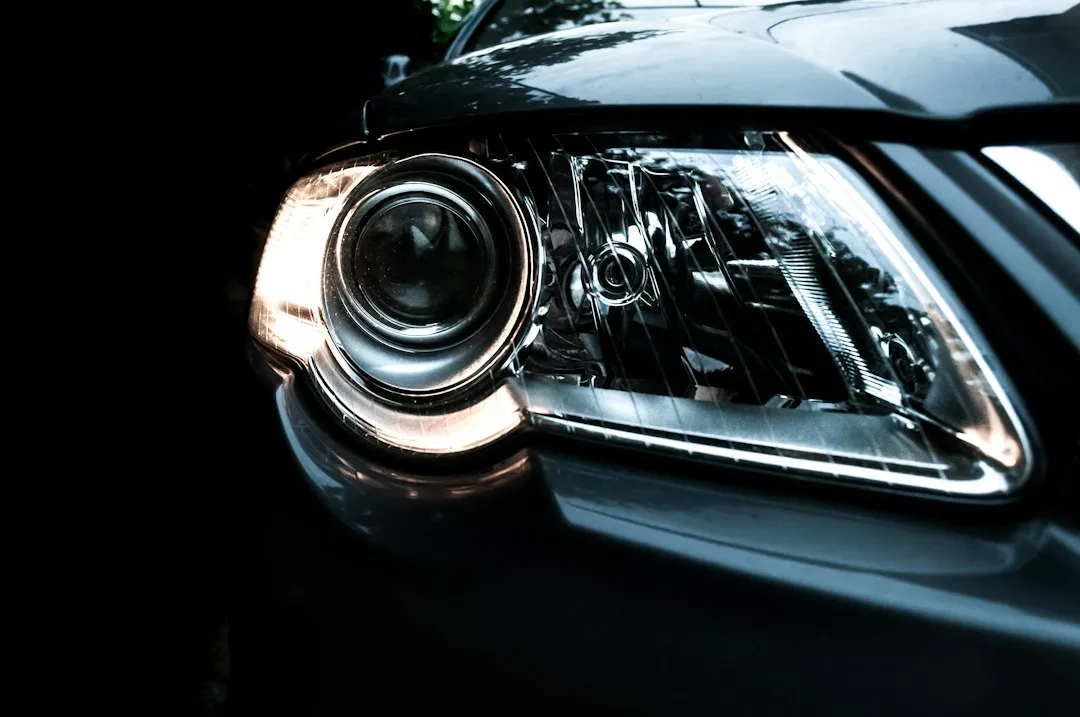
Modern headlight lenses are comprised of polycarbonate plastic, making them extremely sensitive to sunlight and susceptible to UV degradation. Although these plastic lens caps are constructed with a layer of UV protection from the manufacturer, it does not last long – three years at most before oxidation begins.
Automotive manufacturers counter this vulnerability by applying a microscopically thin, UV-resistant hard coat during production. Over several years, UV radiation and environmental factors such as road debris, harsh chemicals, and heat from the bulb gradually break down this initial protective layer. Once the factory coating wears through, the raw polycarbonate underneath begins to oxidize, resulting in the characteristic yellowing, cloudiness, and micro-cracks known as crazing.
How UV Radiation Attacks the Lens at a Chemical Level
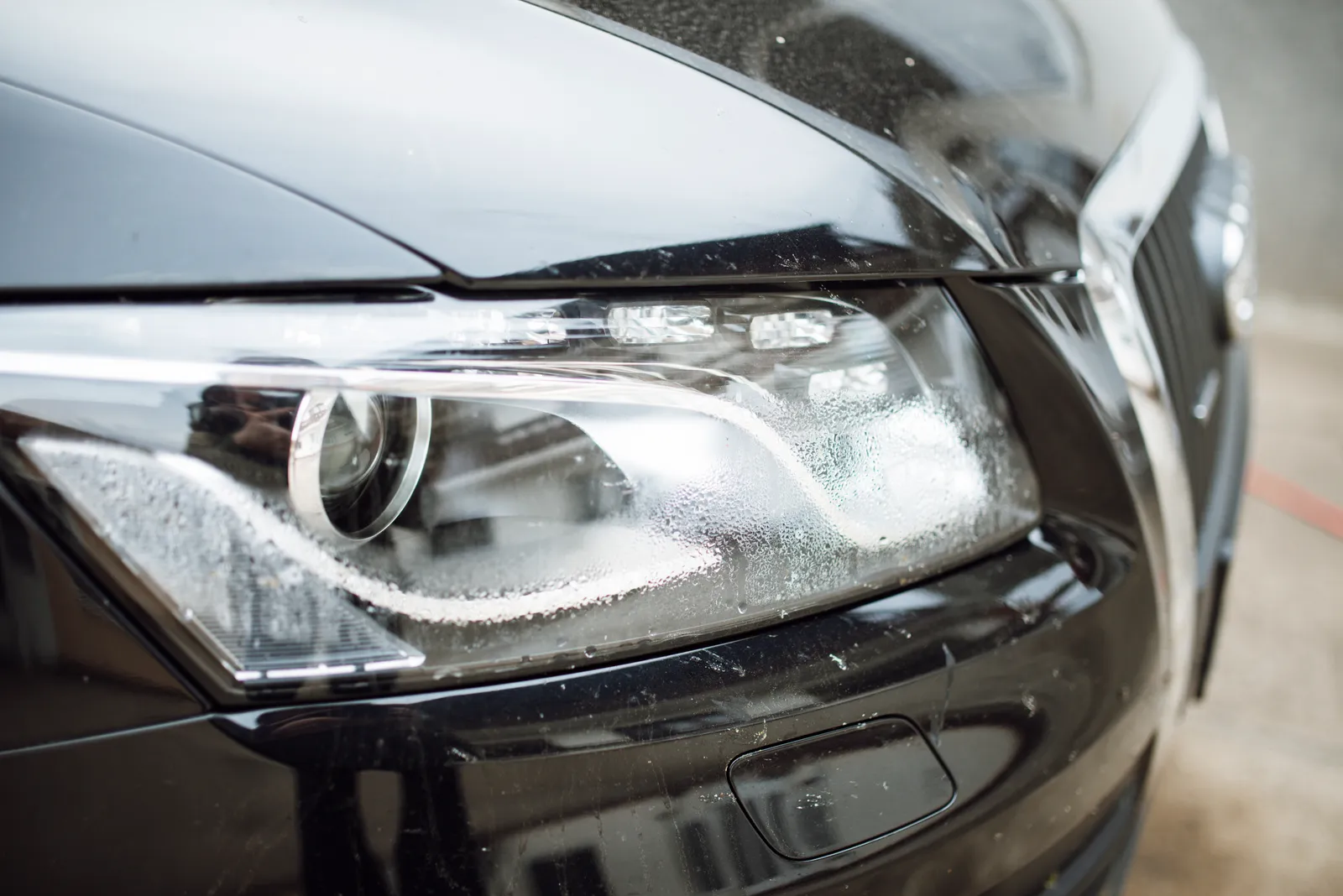
When UV radiation – primarily in the 290 to 320 nanometer UVA range – strikes the lens, it cleaves polymer chains, generating carbonyl groups that scatter visible light. This is the photochemical mechanism behind that milky haze you see on older cars.
The physical reason for lens degradation has to do with the fact that the energy of UV radiation is close to the disassociation energy of the chemical bonds. Over long periods of time, UV radiation causes the bonds in the polymer to disassociate, and this leads to oxidation.
Oxidation is a progressive failure mode driven by UV exposure, acid rain, and thermal cycling, and it degrades polycarbonate lenses faster than most drivers realize. Regions with high UV indexes and frequent temperature swings accelerate the timeline significantly.
The Light Reduction Is Not Just Dimming – It’s Scattering
The resulting oxidation, UV degradation, and dirt buildup on the plastic reduce the transmission of light from the headlight lamps. The oxidized plastic and dirt tend to refract the light rays passing through the plastic medium. Instead of a focused beam, light fans out in directions that don’t help the driver.
Photo-oxidation reduces total lumen output significantly and increases stray-light dispersion, directly impairing contrast sensitivity for both the driver and oncoming pedestrians. What’s lost isn’t only raw brightness. The ability to discern contrast, edges, and shapes at distance also degrades.
As headlight lenses dull and yellow from oxidation and baked-on contaminants, the light beams become cloudy and hazy rather than the sharp, clear beams that help drivers see clearly at night. That transition from precise illumination to diffused haze is exactly what erodes reaction time on dark roads.
Restoration Kits: What They Can and Can’t Do
Consumer Reports has noted that whether a driver uses a DIY or professional kit, these products are not a permanent solution. The hazing effect typically returns, becoming noticeable after roughly a year based on their testing.
Chemically restored lenses can retain the majority of their transmittance for around 34 months, according to testing. Sanded lenses, however, drop to below acceptable transmittance levels by around month 14. The method of restoration matters as much as whether you restore at all.
A UV protectant is sufficient to extend the life of a headlight lens for a period, but will eventually be worn away, leaving the lens exposed to the elements. The UV protectant will not repair existing lens damage. This is why restoration must come first, followed by a proper protective coating.
The Toothpaste Myth and Other Shortcuts That Backfire
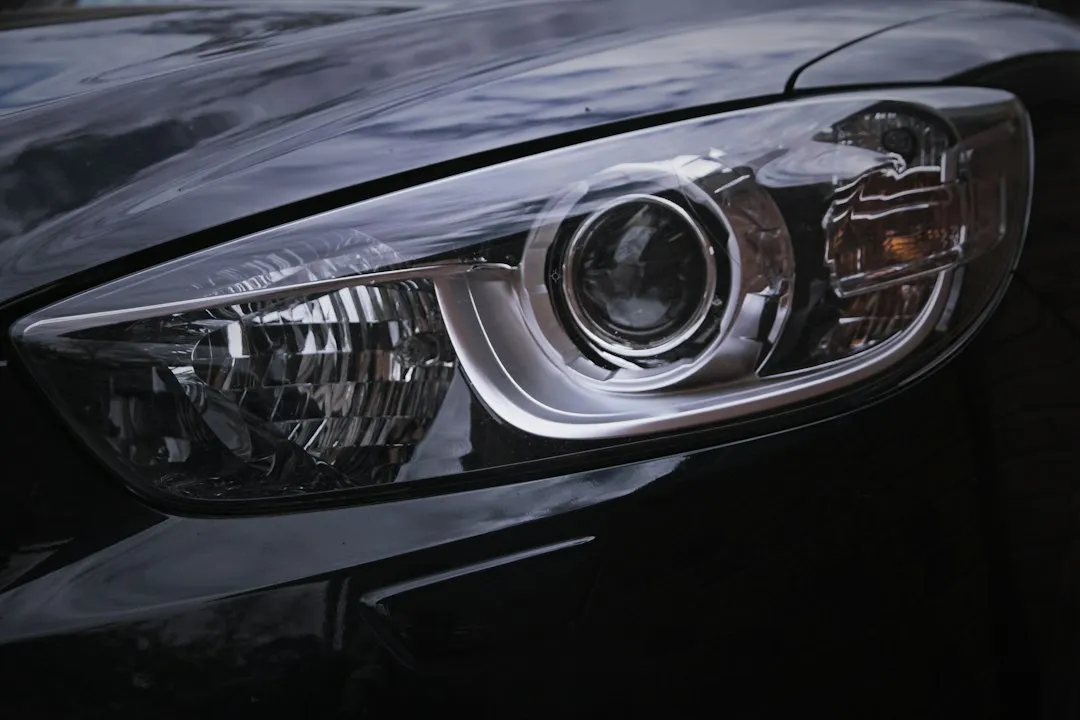
Toothpaste contains hydrated silica, a compound that scratches polycarbonate during application. Microscopic imaging shows grooves forming after just a few applications. These micro-scratches scatter light more than the oxidation itself, reducing usable output by an additional notable margin.
Unlike brake pads or cabin filters, headlight restoration has zero margin for error – one over-aggressive buff or wrong compound can permanently haze or etch the lens surface. It’s one of those car maintenance tasks where good intentions with the wrong tools genuinely make things worse.
The proliferation of cheap “10-minute restoration” kits at auto parts stores reflects demand, not reliability. Over recent years, several aftermarket suppliers to the automotive industry have developed refinishing techniques to replace deteriorated UV hard coats on polycarbonate headlights, generating a proliferation of innovative ideas and products. Quality varies enormously between them.
How Long Your Lenses Last Depends on Where You Park
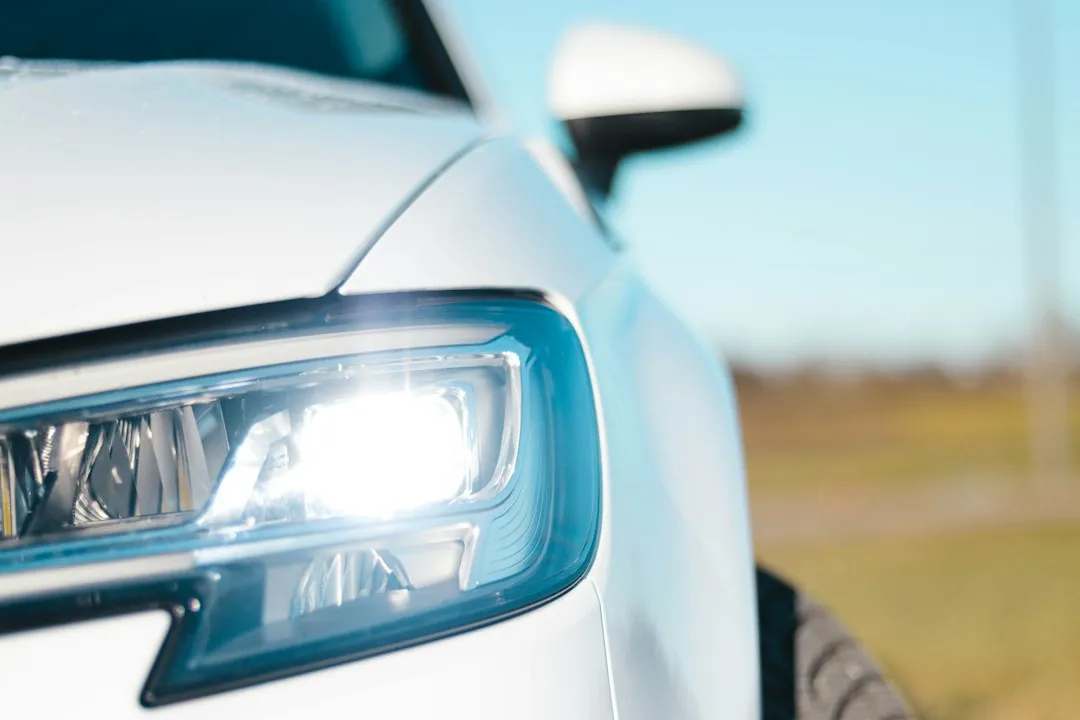
Without its factory-applied UV-inhibiting topcoat, polycarbonate yellows, crazes, and loses a large share of its original light transmission within three to five years, especially on vehicles parked outdoors in southern U.S. or high-altitude regions where the UV index exceeds 8 for more than 120 days per year.
In the case of polycarbonate headlights, exposure to rain, dirt, snow, and road salt, combined with heat from the headlight lamps, works to delaminate the silicone hard coat from the polycarbonate. Parking in a garage, even occasionally, meaningfully slows this process.
While the silicone hard coat does resist oxidation, dirt, and damage from UV exposure, UV light significantly accelerates degradation of the hard coat layer itself, leaving polycarbonates substantially unprotected in as little as a year. The protection is a race against time from the moment the car rolls off the lot.
The Bigger Headlight Picture: New Cars vs. Older Fleets
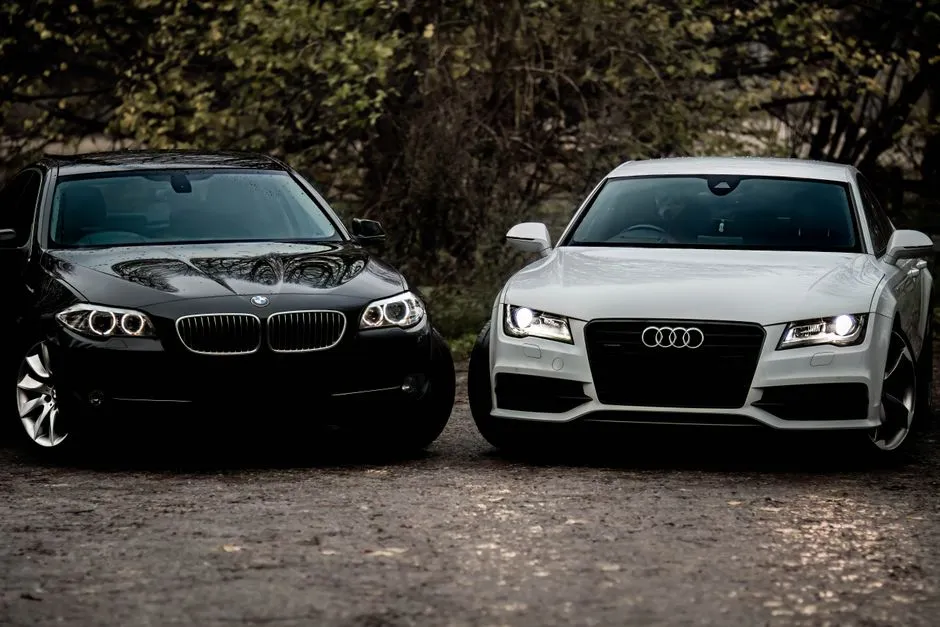
When IIHS released its first headlight ratings in 2016, only one out of more than 80 headlight systems evaluated received a good rating, compared with about half of the headlights tested on model year 2025 vehicles. Only about one sixth of the headlights tested today are rated marginal or poor, compared with more than four fifths in 2016. That’s a real improvement for new car buyers.
The problem is that millions of Americans aren’t driving new cars. The average vehicle on the road is about 10 years old. The older a car gets, the more likely hazy headlights become a serious problem. Those aging vehicles sit in the gap between where technology is heading and where most drivers actually are tonight.
Reduced beam output compromises visibility at night and reduces effective stopping distance, according to SAE J1383 photometric testing protocols. That reduction in stopping distance is not abstract. It shows up in the gap between seeing something in time and not seeing it at all.
Final Thoughts
Cloudy headlights are easy to overlook precisely because they decline so slowly. There’s no warning light, no sudden failure, no obvious moment when things go wrong. The road just gets a little darker, a little more demanding, and the driver adapts without realizing they’re compensating for a problem that has a practical fix.
Checking your headlight lenses takes about ten seconds in daylight. If they look even slightly yellow or hazy, they’re probably outputting far less light than you need after dark. Keeping headlight lenses clear is absolutely necessary because clouded plastic significantly reduces light output, which compromises visibility and makes nighttime driving less safe.
The technology in new vehicles keeps getting better. But the car in your driveway right now, with its aging lenses and faded factory coating, deserves attention too. Night roads don’t grade on a curve.
AI Disclaimer: This article was created with the assistance of AI tools and reviewed by a human editor.