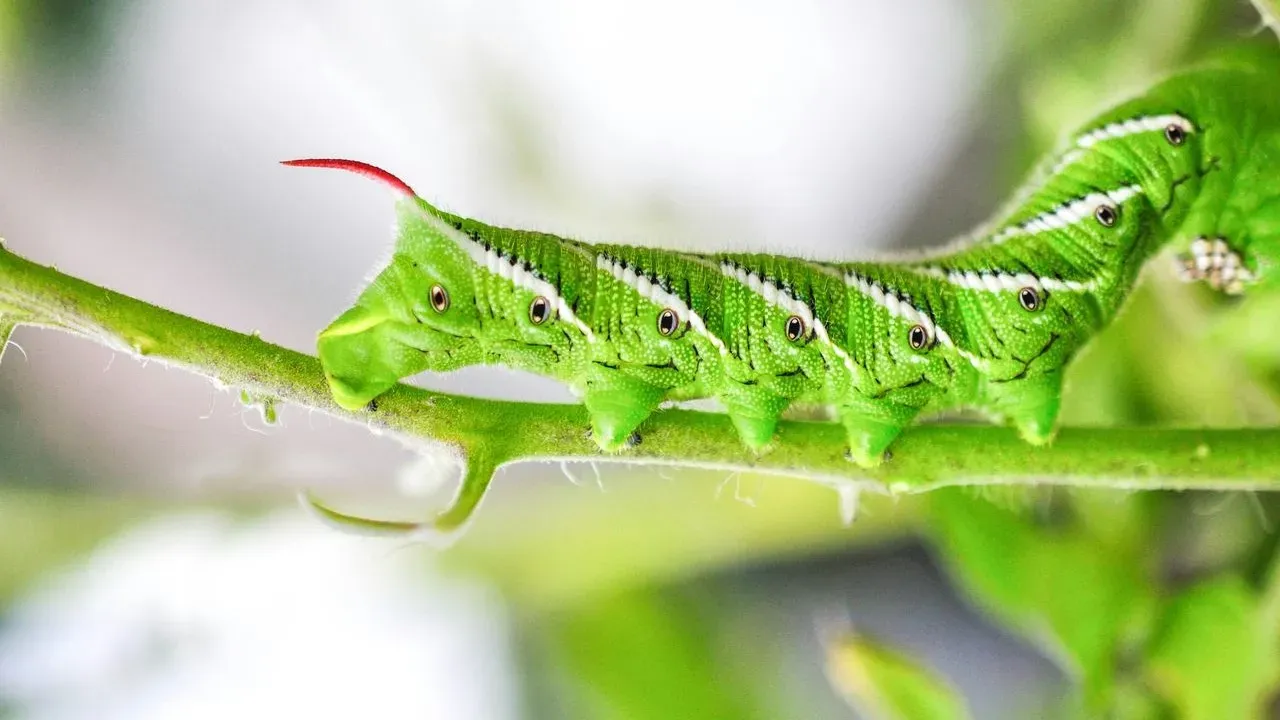

Gardeners across the country often discover large green caterpillars devouring their tomato foliage seemingly overnight. These hornworms belong to the sphinx moth family and can strip leaves and stems with remarkable speed. The same insects that frustrate growers later emerge as hovering hawk moths that pollinate night-blooming flowers. Understanding their full story helps gardeners decide how to respond when one appears.
Why Tomato Plants Attract These Moths
Female Carolina sphinx moths seek out plants in the nightshade family, including tomatoes, peppers, eggplants, and even goji berries. They detect suitable hosts through a blend of scents that signal a healthy plant. Once a suitable leaf is found, the moth deposits a single light-green egg, often on the edge or underside, rather than in clusters.
In warm conditions the egg hatches in less than a week. The tiny larva immediately begins feeding and grows through five stages in roughly a month. Because the caterpillars blend so closely with tomato foliage in both color and shape, they frequently go unnoticed until significant damage appears. Dark droppings on the ground or missing leaves at the top of the plant are usually the first clear signs.
Telling Tomato Hornworms Apart From Tobacco Hornworms
Two closely related species are commonly called tomato hornworms. The true tomato hornworm carries a blue or black horn and eight V-shaped white markings along its sides. The tobacco hornworm, more common in warmer southern regions, features a yellow-orange to red-orange horn and seven diagonal white stripes edged in blue-black.
Both species feed on the same garden plants, so the distinction matters more for identification and curiosity than for immediate control decisions. In low-desert areas the tobacco hornworm tends to appear more frequently, though both can show up wherever nightshade crops grow.
Practical Steps When You Spot One
The right response depends on the size of the plant and the gardener’s goals. A single hornworm on a large, healthy tomato may cause limited harm, while several on a small container plant can quickly defoliate it. Hand-picking remains the most direct method; the caterpillars can be dropped for birds or chickens to find. Many gardeners choose to tolerate limited feeding by planting extra tomatoes or peppers.
Natural enemies often keep populations in check without intervention. Birds such as bluebirds and finches consume the larvae, while parasitic wasps lay eggs inside them, eventually killing the host. A hornworm covered in small, rice-like structures should be left alone so the next generation of beneficial wasps can emerge.
The Surprising Adult Form and Its Role
When the larva finishes feeding it crawls away from the plant and burrows just beneath the soil surface. Within about a week it forms a brown chrysalis. Roughly three weeks later the adult moth emerges, its wings expanding and drying before it takes flight.
These hawk moths, also called sphinx moths, are important pollinators of deep-tubular flowers including datura, wild tobacco, and certain agaves. Their hovering flight and long proboscis allow them to reach nectar that other insects cannot access. The transformation from leaf-stripping caterpillar to night-flying pollinator illustrates why many gardeners weigh the value of a few extra plants against complete removal of every hornworm. The decision ultimately rests on balancing harvest needs with support for the broader garden ecosystem.
AI Disclaimer: This article was created with the assistance of AI tools and reviewed by a human editor.