

Your phone rings and the number on the screen is yours. Not someone similar to you, not a neighbor, your own number, down to the last digit. Most people freeze for a second before answering, which is exactly what the scammer wants. It’s a disorienting trick, and it’s more common than most people realize.
This tactic is one variation of a broader fraud method called caller ID spoofing, and it’s been growing steadily more sophisticated. Understanding how it works is the first step toward not falling for it.
What Caller ID Spoofing Actually Is
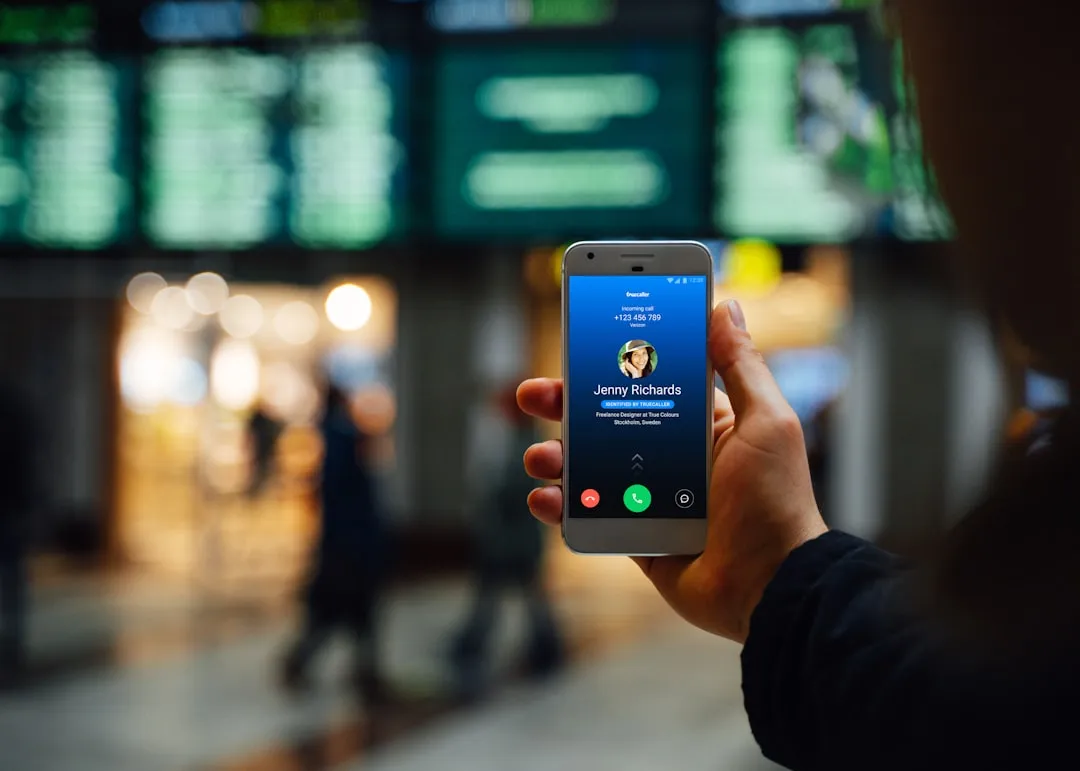
Spoofing is when a caller deliberately falsifies the information transmitted to your caller ID display to disguise their identity. The number you see has nothing to do with where the call is actually coming from. Spoofing commonly uses VoIP services to make internet-based calls rather than traditional phone lines, and scammers use software to enter any phone number they want to display on your caller ID.
Phone spoofing occurs when scammers use Voice over Internet Protocol (VoIP) technology to manipulate your caller ID into displaying a name or number that you trust. The underlying phone system wasn’t originally built with fraud prevention in mind, which is a big reason this problem has been so persistent.
Why Scammers Use Your Own Number Specifically
Scammers understand that many people no longer answer calls from 1-800 numbers, numbers with unfamiliar area codes, or that display no caller ID information. By spoofing local phone numbers or familiar information into caller ID devices, scammers hope to entice the recipient to answer a call they would otherwise decline.
Seeing your own number creates a unique psychological jolt. It feels like a technical glitch or something urgent, which tends to override the normal skepticism most people have developed toward unknown callers. This tactic works because local numbers feel safer. A familiar-looking number could be your child’s school, a nearby doctor’s office, a delivery driver, or a neighbor. Scammers exploit that instinct.
The Tools That Make It So Easy
You can buy spoofing services online for as little as $10 per month. Some services even offer user-friendly apps that let scammers type in any number they want to display on your caller ID. The barrier to entry is startlingly low.
Many VoIP services allow users to customize the number that appears on caller ID, and attackers exploit this feature to make their calls look legitimate. SIP trunking technology, used by businesses to manage calls over the internet, can also be abused to spoof numbers. Third-party spoofing websites and apps provide caller ID spoofing services, allowing anyone to input a fake number for a small fee. The technology itself is not inherently illegal, which is part of why it’s so widely available.
Neighbor Spoofing vs. Spoofing Your Own Number
Robocallers use neighbor spoofing, which displays a phone number similar to your own on your caller ID, to increase the likelihood that you will answer the call. This is slightly different from using your exact number, but both rely on the same psychological mechanism: familiarity breeds trust.
In neighbor spoofing scams, thieves manipulate caller ID information in ways that make calls appear to have been placed locally. While a call might originate overseas, the caller ID information on the recipient’s phone would appear as though the call is coming from the consumer’s own area code and local exchange. Scammers use such spoofing to increase the likelihood that consumers pick up the phone and to increase the consumer’s trust in the call.
The Financial Damage Is Real and Growing
The Federal Trade Commission reported that consumers lost more than $12.5 billion to fraud in 2024, representing a significant increase over the prior year. Phone-based scams are a major driver of that figure.
The FTC has documented a more than four-fold increase since 2020 in reports from older adults who lost $10,000 or more to scammers who impersonate trusted government agencies or businesses. Most notably, combined losses reported by older adults who lost more than $100,000 increased eight-fold, from $55 million in 2020 to $445 million in 2024. These aren’t abstract numbers. They represent real people losing real savings.
The Legal Picture: What the Law Says

Under the Truth in Caller ID Act, FCC rules prohibit anyone from transmitting misleading or inaccurate caller ID information with the intent to defraud, cause harm, or wrongly obtain anything of value. Anyone who is illegally spoofing can face penalties of up to $10,000 for each violation.
Recent penalties have reached unprecedented levels, with one robocaller fined $300 million for illegal spoofing activities. Still, enforcement is slow and fines don’t always get collected. In 2024, the DOJ recovered a $9.9 million penalty from an Idaho resident for thousands of unlawful spoofed robocalls. The legal machinery is there, but scammers adapt quickly.
How STIR/SHAKEN Is Trying to Fix This

Calls traveling through interconnected phone networks can have their caller ID “signed” as legitimate by originating carriers and validated by other carriers before reaching consumers. STIR/SHAKEN digitally validates the handoff of phone calls passing through the complex web of networks, allowing the phone company of the consumer receiving the call to verify that a call is in fact from the number displayed on caller ID.
The telecommunications industry has introduced STIR/SHAKEN technology, a system that adds digital signatures to verify caller ID information. The FCC mandated this technology in June 2021, requiring phone companies to implement call authentication. However, the system still has real gaps. STIR/SHAKEN coverage fell to 40.4% of calls by June 2025, down from a 49% peak in October 2024, meaning significant gaps remain in protection against spoofed calls, particularly for international calls and smaller carriers.
What Happens When Scammers Use Your Number Against Others

Caller ID spoofing allows fraudsters to use the telephone numbers of innocent people in order to avoid block lists, as well as target and trick victims into sharing personal information or money. When your number gets used this way, you become an unwitting participant in someone else’s fraud.
Your friends and family can become victims if spoofers impersonate you and target your closest contacts. People who trust you are far less guarded when they think you’re on the line. While some victims of phone number spoofing are able to fix the problem by changing their phone numbers, security experts agree that a spoofed phone number could be a warning sign of larger security risks.
The Robocall Problem Isn’t Going Away

In April 2026 alone, Americans received roughly 4.2 billion robocalls, averaging about 13 per person. The FTC logged over 2.6 million Do Not Call complaints in fiscal year 2025, with most violations coming from automated robocalls. The scale of the problem is genuinely staggering.
In February 2024, the FCC banned AI-generated robocall voices, making it illegal to use artificial intelligence to generate voices in robocalls without explicit consent. This landmark ruling came in response to the surge in deepfake voice scams targeting elderly victims with fake family emergency calls. AI has made spoofed calls more convincing than ever, adding voice cloning on top of number spoofing.
What You Can Actually Do Right Now
The FTC specifically warns that if a number on caller ID looks like your own number pattern, it could still be fake, and letting it go to voicemail is often the safest move. That’s genuinely useful advice. No legitimate caller will refuse to leave a message.
If someone claims to be from your bank, utility, school, or a government office, hang up and call the official number from a bill, statement, or website. Never call back the number that appeared on your screen. You may not be able to tell right away if an incoming call is spoofed, so be extremely careful about responding to any request for personal identifying information. Caution costs nothing. Trust, once misplaced, can cost everything.
The Takeaway

The unsettling truth about caller ID spoofing is that the technology behind it was never designed with security in mind. Phone systems were built on trust, and scammers have been exploiting that ever since. Seeing your own number on your screen isn’t a glitch. It’s a calculated move.
Regulators are pushing back, carriers are implementing authentication systems, and enforcement is ramping up. Still, the sheer volume of spoofed calls tells you all you need to know about how effective those measures are so far. The most reliable protection you have right now isn’t a piece of software. It’s knowing the trick exists in the first place.
AI Disclaimer: This article was created with the assistance of AI tools and reviewed by a human editor.