
Most people use the word “berry” loosely, assuming it means any small, sweet, juicy fruit. Botanists, though, have a much stricter vocabulary. The three categories they rely on most often – true berries, drupes, and pomes – are structurally distinct in ways that go far deeper than taste or appearance.
Understanding these distinctions isn’t just academic trivia. It reflects how plants evolved to disperse their seeds, how fruits develop from flowers, and why two fruits that look almost identical can belong in entirely separate categories. The gap between what we call something in the kitchen and what it actually is in a botanical sense is surprisingly wide.
What Actually Makes a Fruit a Fruit
Before separating one fruit type from another, it helps to know what a fruit actually is in botanical terms. Simply defined, a fruit is the fleshy or dry ripened ovary of a flowering plant that encloses a seed or seeds. That definition might sound simple, but it has a lot of consequences once you start applying it to what sits in the produce section.
Botanists classify fruits based on the development of the flower’s ovary wall, known as the pericarp, and this classification system organizes fruits into distinct groups. The pericarp can be thin, thick, fleshy, woody, or papery, and those variations are exactly what separate a berry from a drupe from a pome.
The True Berry: Simpler Than You’d Think
A true berry is a simple, fleshy fruit that develops from a single flower with a single ovary and contains multiple seeds embedded in the flesh, with the entire ovary wall ripening into a fleshy, edible pericarp. The seeds sit directly inside the pulp without any hardened layer separating them from the surrounding flesh.
To a botanist, a berry is a simple fruit that is produced from the ovary of a single flower and has fleshy pulp and multiple seeds instead of a stone (like a drupe) or a core (like a pome). That one-ovary rule is non-negotiable in the botanical definition.
Examples of true berries include grapes, blueberries, and even bananas, while the culinary term “berry” is far broader than its botanical counterpart, often including fruits that are technically aggregate fruits or accessory fruits. So the category is less about size or sweetness and more about structure.
Tomatoes, Bananas, and the Surprising True Berries
The fruits that are true berries include blueberries, grapes, currants, tomatoes, eggplants, kiwis, and bananas. Many people find this genuinely surprising. A tomato fits the botanical definition perfectly, yet it rarely gets grouped with “berries” in everyday conversation.
Of the familiar fruits that have “berry” in their names, blueberries, cranberries, huckleberries, and gooseberries are berries in the botanical sense, while bananas, tomatoes, kiwis, and eggplants are also botanically berries. The gap between common names and botanical reality is nowhere more visible than in this category.
Common fruits that are sometimes classified as epigynous berries include bananas, coffee, members of the genus Vaccinium such as cranberries and blueberries, and members of the family Cucurbitaceae including gourds, cucumbers, melons, and squash. Cucumbers and watermelons fall under a specialized subgroup called pepos, but they are botanically berries nonetheless.
The Drupe: Architecture of the Stone Fruit
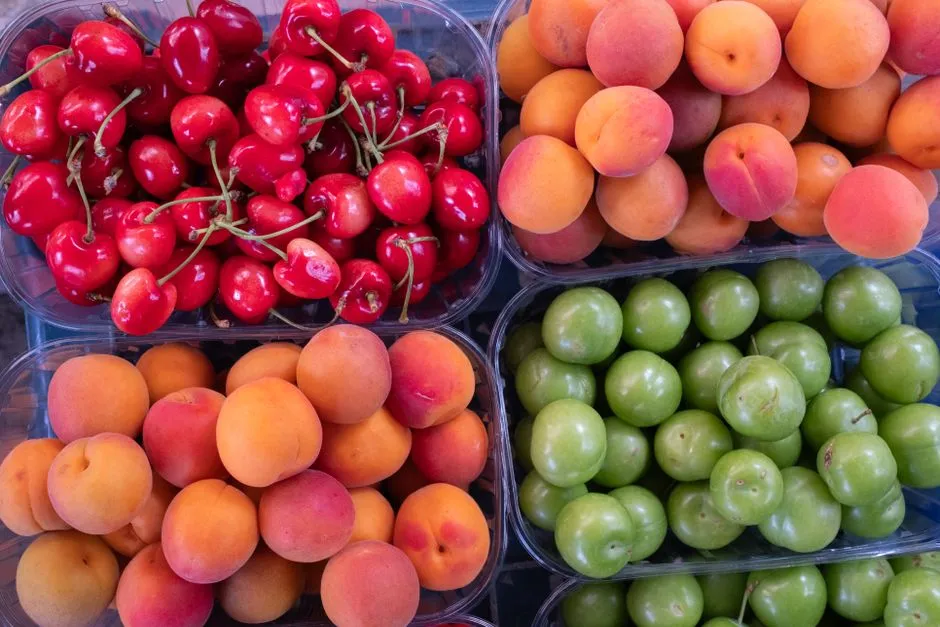
In botany, a drupe, or stone fruit, is a type of fruit in which an outer fleshy part – the exocarp, or skin, and mesocarp, or flesh – surrounds a single shell, the pit, stone, or pyrena, of hardened endocarp with a seed, or kernel, inside. The key feature is that hardened inner layer, which no true berry ever has.
Fruits classified as drupes consist of three distinct parts: a thin skin or outer wall (exocarp), a fleshy edible part (mesocarp), and a hard, inedible central pit or stone (endocarp) that contains a single seed at maturity. The pit is not simply a seed – it is actually part of the ovary wall that has lignified, or turned woody, during development.
The definitive characteristic of a drupe is that the hard, woody (lignified) stone is derived from the ovary wall of the flower. When you consume a stone fruit such as a peach, apricot, plum, or nectarine, you’re eating a drupe.
Almonds, Avocados, and Unexpected Drupes
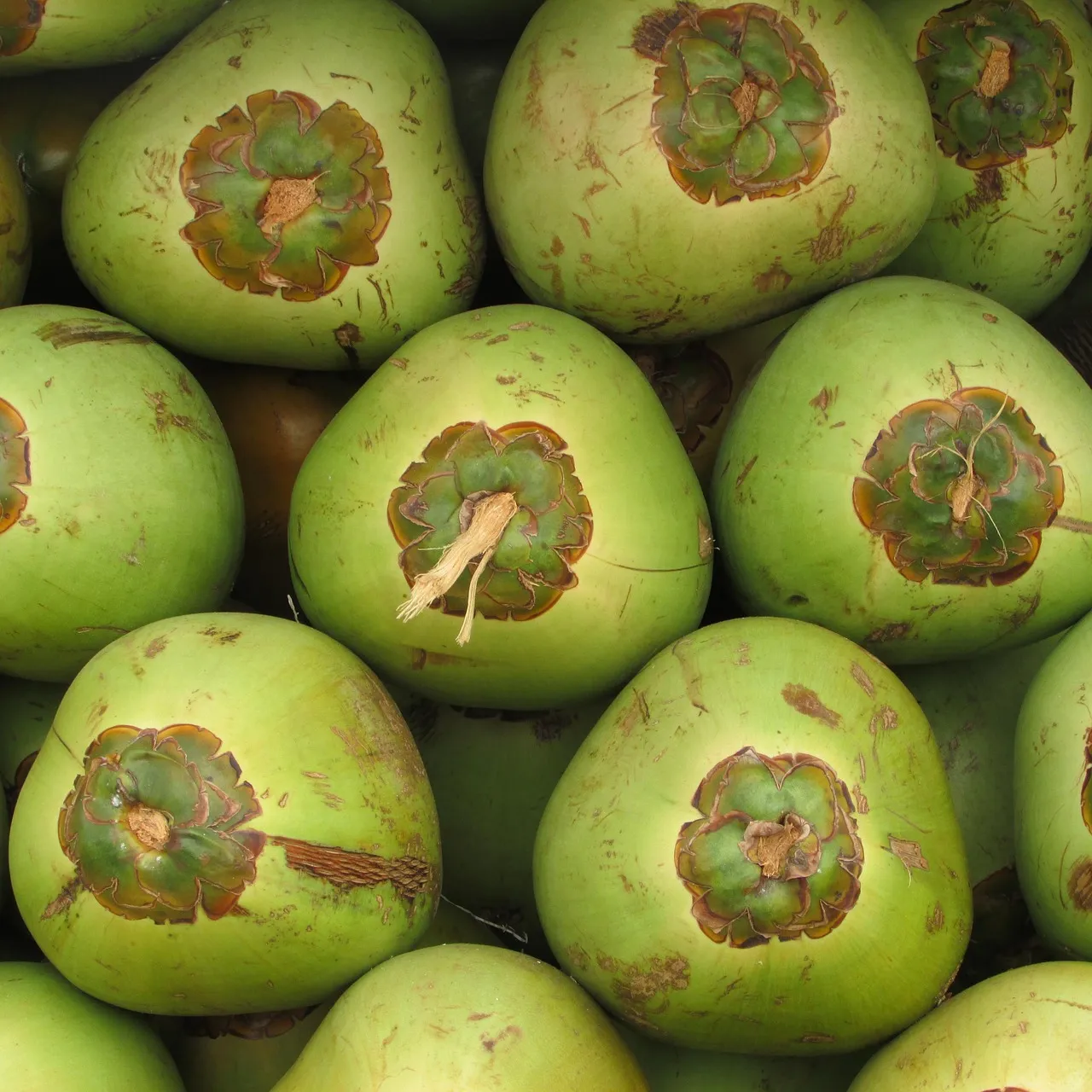
Botanically, the almond tree produces a drupe – the edible part is just the seed rather than the flesh. Most people eat the inner kernel and discard the surrounding tissue, but the whole structure still fits the drupe definition precisely.
Avocados are also classified as single-seeded drupes, with the thick buttery flesh representing the mesocarp and the leathery skin serving as the exocarp. The large pit inside is the hardened endocarp. Olives follow the same structural logic, though their mesocarp is far less sweet.
Hickory nuts and walnuts, in the Juglandaceae family, grow within an outer husk and are technically drupes or drupaceous nuts, not true botanical nuts. So even the familiar walnut, cracked from its shell at the table, is technically the seed of a drupe.
The Pome: When the Flower Becomes the Fruit
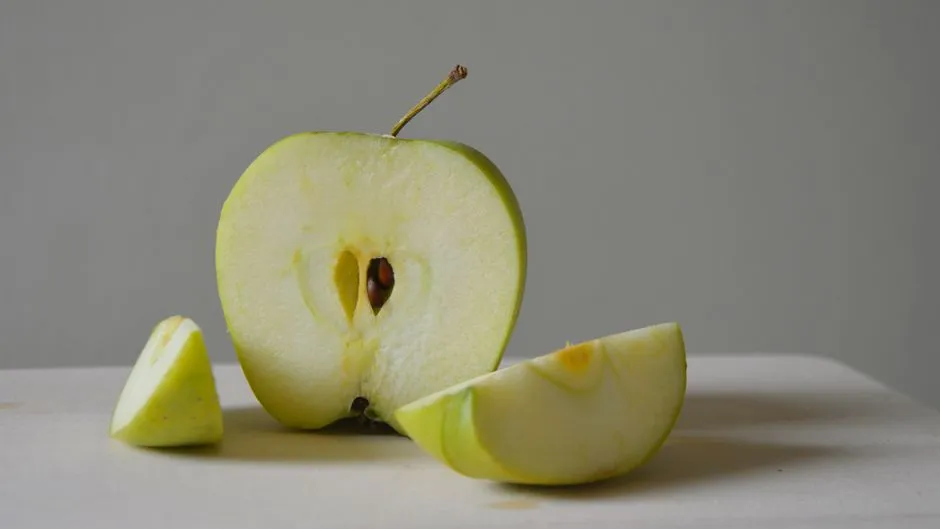
A pome is a type of accessory fruit produced by flowering plants in the subtribe Malinae of the rose family Rosaceae, featuring an edible fleshy outer layer derived from the hypanthium surrounding a tough, central core that contains the seeds enclosed in carpels. That “hypanthium” is the structural key to the whole story.
An apple is an example of a species where the culinary fruit part we eat is actually hypanthium tissue rather than ovary wall tissue, with the ovary being the papery core that encloses the seeds; since the part we eat isn’t the ripened ovary wall, the apple is called an accessory fruit. In other words, the core of an apple is the true botanical fruit. Everything surrounding it is not.
The true fruit within consists of an inferior ovary forming five united carpels that create a papery or leathery core, typically enclosing five to ten seeds in a capsule-like structure. Pears, quinces, loquats, and medlars all share this same underlying architecture.
Strawberries Are Not What You Think
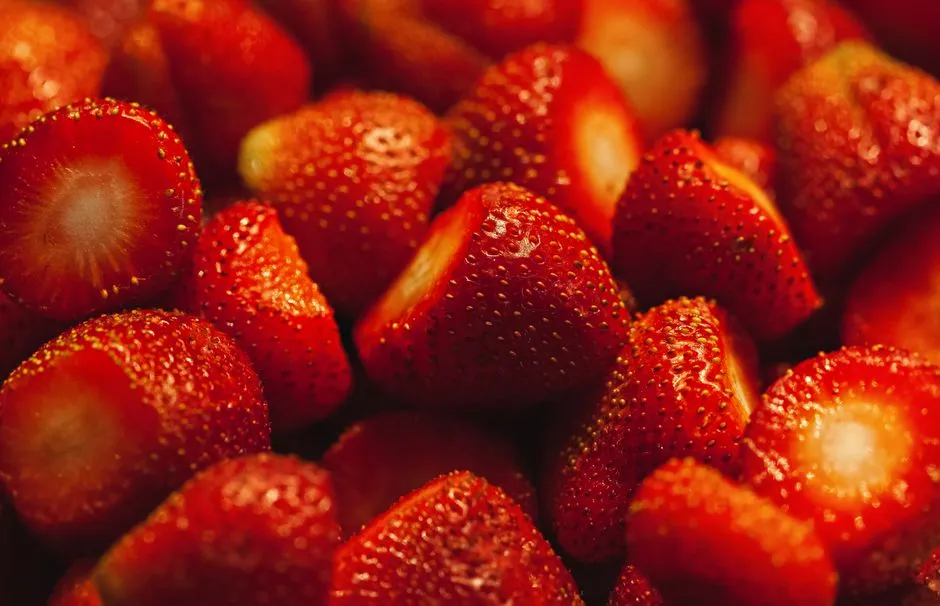
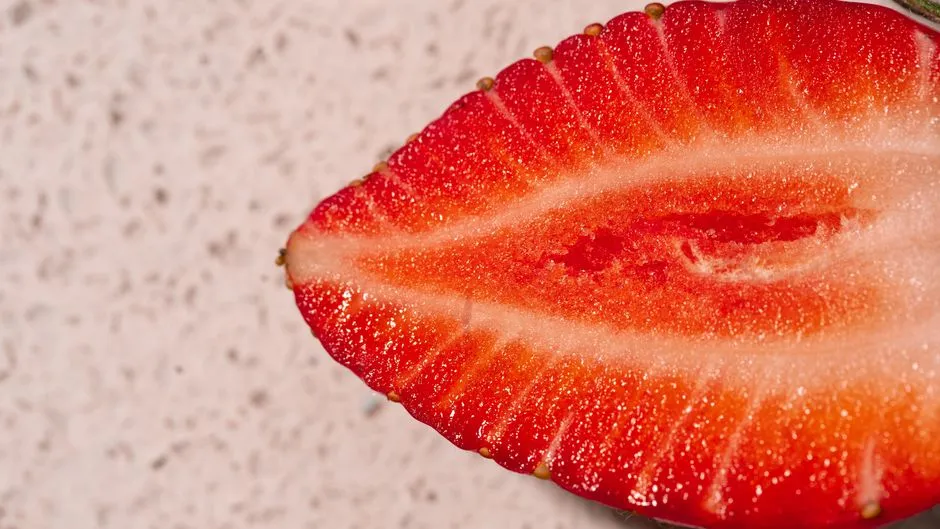
Botanically speaking, a strawberry is not a berry – it’s an aggregate accessory fruit, with the juicy red part being a swollen flower receptacle, and the “seeds” on the outside being the true fruits, called achenes, of which there are about 200 per strawberry. That familiar red flesh is essentially just a swollen stem base.
The strawberry is an accessory fruit because the red fleshy part we eat is made up not of the ovary wall, but primarily of receptacle tissue, and the strawberry is also an aggregate fruit formed from multiple ovaries present in one flower. Each tiny yellow speck on the surface is a separate botanical fruit.
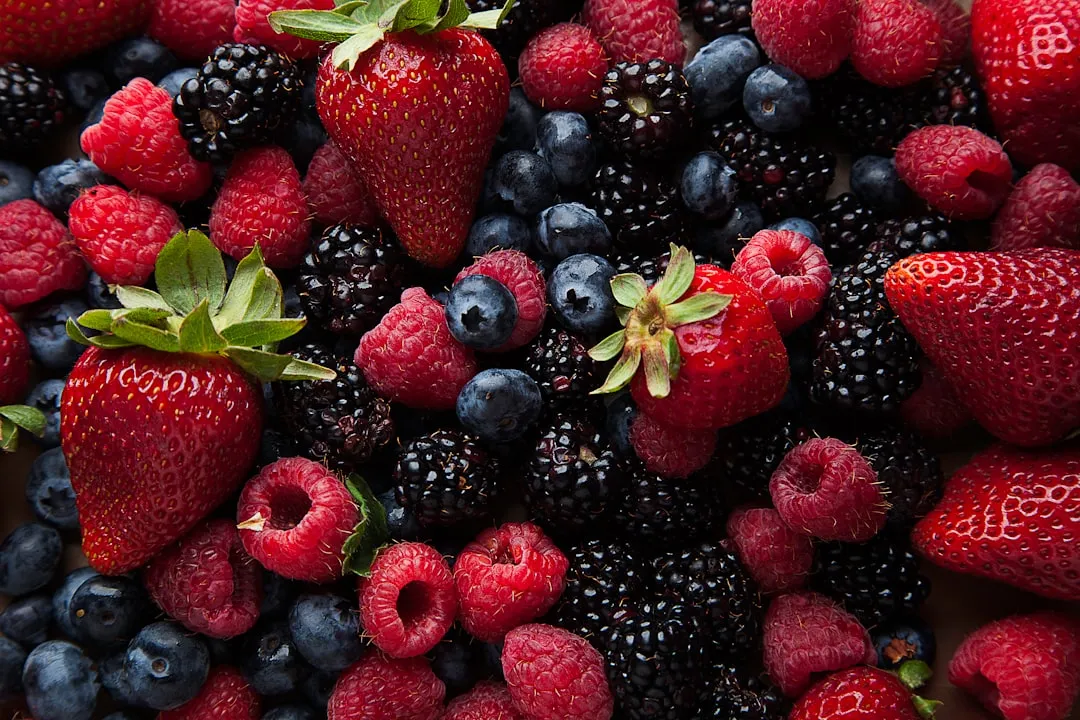
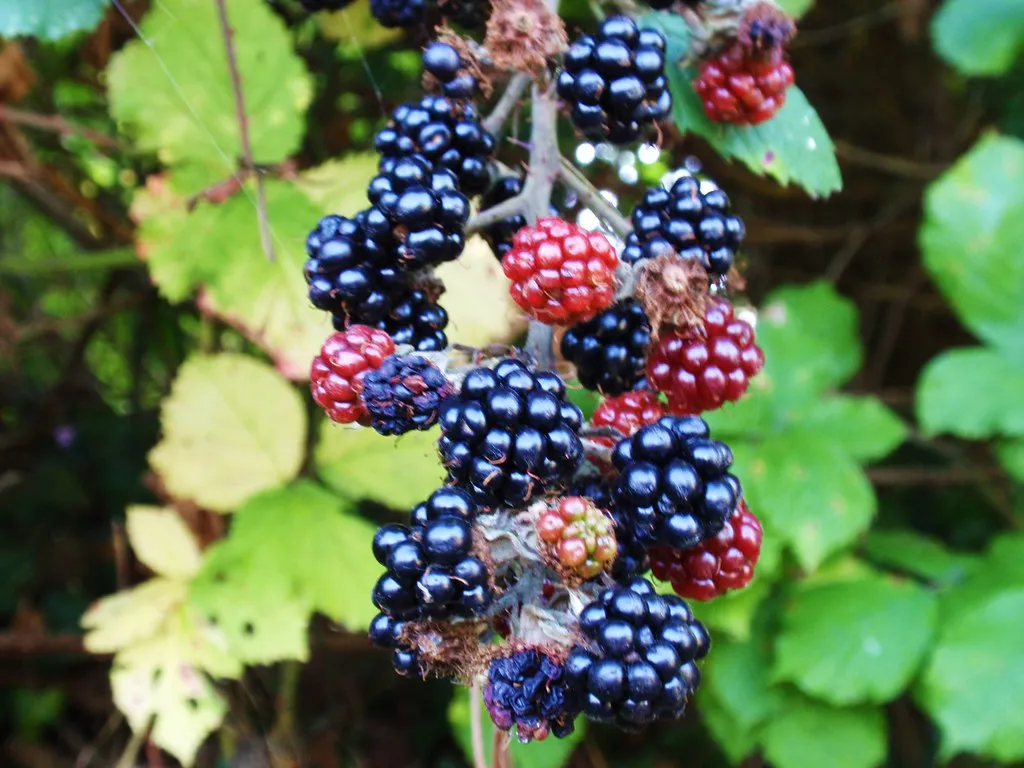
Raspberries and blackberries are made up of multiple drupes, each drupe developing from an ovary and containing a seed. In an aggregate fruit composed of small, individual drupes such as a raspberry, each individual is termed a drupelet, and may together form an aggregate fruit. So in a strange twist, raspberries are closer to being tiny clusters of drupes than they are to being berries.
How the Pericarp Tells the Whole Story
Botanically, a drupe differs from other fruit types in how it develops from the flower’s ovary, with the ovary wall maturing into three distinct layers rather than remaining uniform, producing a fruit that is architecturally more complex than it looks from the outside. This layering is what physically separates drupes from all other fleshy fruit categories.
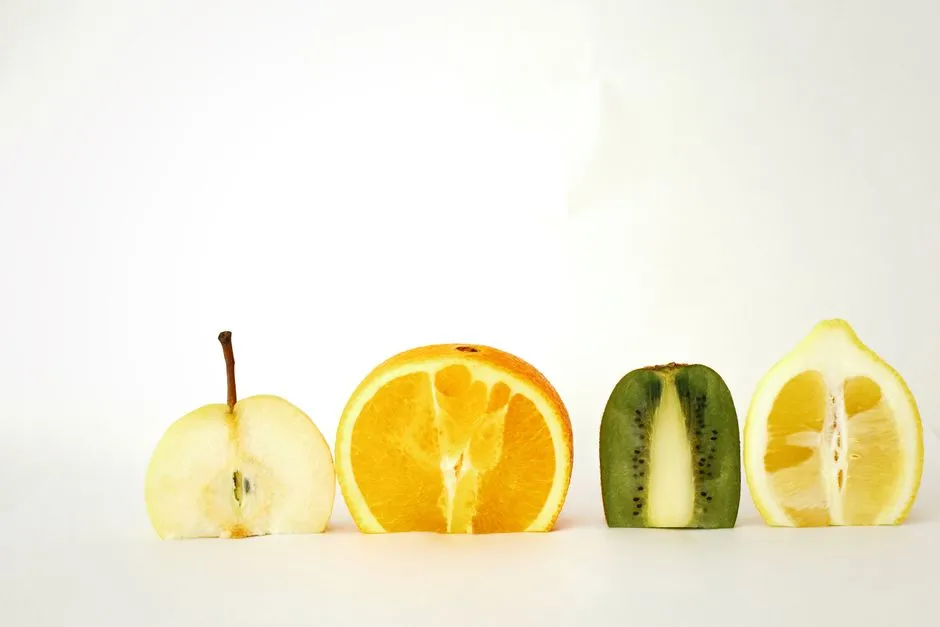
In berries, the endocarp forms a thin, flexible envelope around the seed. Compare that to a drupe, where the endocarp has hardened into a woody pit, or a pome, where the endocarp becomes leathery and forms the core. The same layer behaves in three completely different ways depending on the fruit type.
A drupe’s pericarp has three distinct layers: the outer skin-like exocarp, the middle fleshy mesocarp, and the inner hard and woody endocarp. In a true berry, the endocarp never lignifies, which is why there’s no hard pit to spit out when you eat a grape or a tomato.
Linnaeus and the Long History of Fruit Classification
In 1751, Carl Linnaeus wrote Philosophia Botanica, considered to be the first textbook of descriptive systematic botany, and used eight different terms for fruits, one of which was bacca or berry, distinguished from other types of fruit such as drupa (drupe) and pomum (pome). The categories we use today trace directly back to that foundational text.
A berry or bacca was distinguished from a drupe and a pome, both of which also had an unvalved solid pericarp; a drupe also contained a nut and a pome a capsule, rather than the berry’s naked seeds. Even Linnaeus anchored the distinctions in seed arrangement, just as modern botanists do.
Botanists continue to differ on how fruit should be classified. The avocado, for instance, is described by some botanists as a drupe and by others as a berry, depending on how strictly each criterion is applied. Taxonomy rarely gives clean edges.
Why the Distinction Matters Beyond Botany
Understanding fruit structure helps growers predict how a fruit behaves during ripening, storage, and processing – making it a practical concern, not just an academic one. Stone fruits bruise differently from pomes precisely because of those structural layers. Packers, processors, and cold-storage facilities work around these differences daily.
The consumption of berries and drupes by animals enables their seeds to be spread around, as they are not harmed by the animal’s digestion and are excreted a short distance away. The architecture of each fruit type reflects an evolutionary relationship between the plant and the animals that disperse it. A hard endocarp in a drupe protects the seed from being digested; a soft-walled berry makes the whole fruit easy to swallow whole.
Pomes are classified within the Rosaceae family, specifically grouped under the tribe Maleae, which includes genera such as Malus (apples), Pyrus (pears), and Cydonia (quinces). Their shared structural plan reflects shared evolutionary ancestry. Fruit form and family lineage are tightly linked in ways that seed dispersal helped to shape over millions of years.
Conclusion: Structure Is Everything
Once you understand the underlying architecture, the differences between a true berry, a drupe, and a pome stop feeling arbitrary. Each category describes a specific developmental path from flower to fruit, and each path leaves a distinct fingerprint in the tissue you bite into.
The tomato is a berry, the peach is a drupe, and the apple’s edible flesh isn’t even the true fruit. None of this changes how things taste, but it does change how precisely we can describe what we’re eating and why it grew the way it did.
There’s something quietly satisfying about realizing that the familiar fruit bowl contains three completely different structural solutions to the same biological problem: protect the seed, attract the disperser, and let the next generation find its way into the ground.
AI Disclaimer: This article was created with the assistance of AI tools and reviewed by a human editor.