

Every year, a child tears open an envelope and finds cash inside. It might be $20 from a grandparent, maybe more for a milestone birthday. What happens in the next ten minutes, or the next ten days, quietly tells you a great deal about who that child will become financially.
This isn’t about judging kids for wanting to spend their birthday money immediately. It’s about something more interesting: research increasingly shows that the habits formed around small, unstructured windfalls like birthday cash are some of the earliest and most durable predictors of adult financial behavior. Here’s what the evidence actually says.
Money Habits Form Earlier Than Most Parents Realize

A pivotal 2013 study by researchers at Cambridge University found that core money habits are typically formed by the age of seven. These behaviors, including emotional responses to spending, saving, and planning, often persist into adulthood.
Children can start learning permanent money habits as early as age 5, research shows. This makes the birthday envelope moment more significant than it might seem. It’s one of the few times a young child holds real money with genuine autonomy over what to do with it.
According to research from the Journal of Behavioral Decision Making, children develop feelings about spending choices while they are young that may influence their financial behaviors as adults. Birthday money is often where those feelings first get tested in a real, tangible way.
What a Child Does in the First Hour Reveals a Lot

Talking about the plan before money arrives, such as sitting down together and deciding how to split it, prevents the impulse to spend it all immediately and sets the expectation that some planning is part of the deal. Children who have never had that conversation tend to spend impulsively, and that pattern often sticks.
Kids who immediately run to a store, or beg to go online to buy something right away, are demonstrating a default impulse toward immediate gratification. That’s not a character flaw, it’s developmentally normal. The question is whether anyone ever gently interrupts that pattern.
The physical act of dividing money is more powerful than any lecture about saving. Sorting coins and bills into jars, even for a five-year-old, creates a mental model that money has categories and purposes, not just a single destination called “spend.”
The Spending-Immediately Pattern and What It Signals

Birthday cash turns into short-term satisfaction. Short-term satisfaction turns into spending habits. Spending habits turn into adult financial stress. That chain isn’t inevitable, but it does require someone to intervene early and consistently.
Teaching children about the consequences of financial decisions at an early age can significantly impact their financial behavior as adults. Encouraging children to take responsibility for their money, whether through managing an allowance, paying for their expenses, or making spending choices, helps them understand the consequences of their actions. This sense of accountability fosters a more responsible approach to financial matters in adulthood.
The Saving Habit: A Cumulative Skill, Not a One-Time Lesson
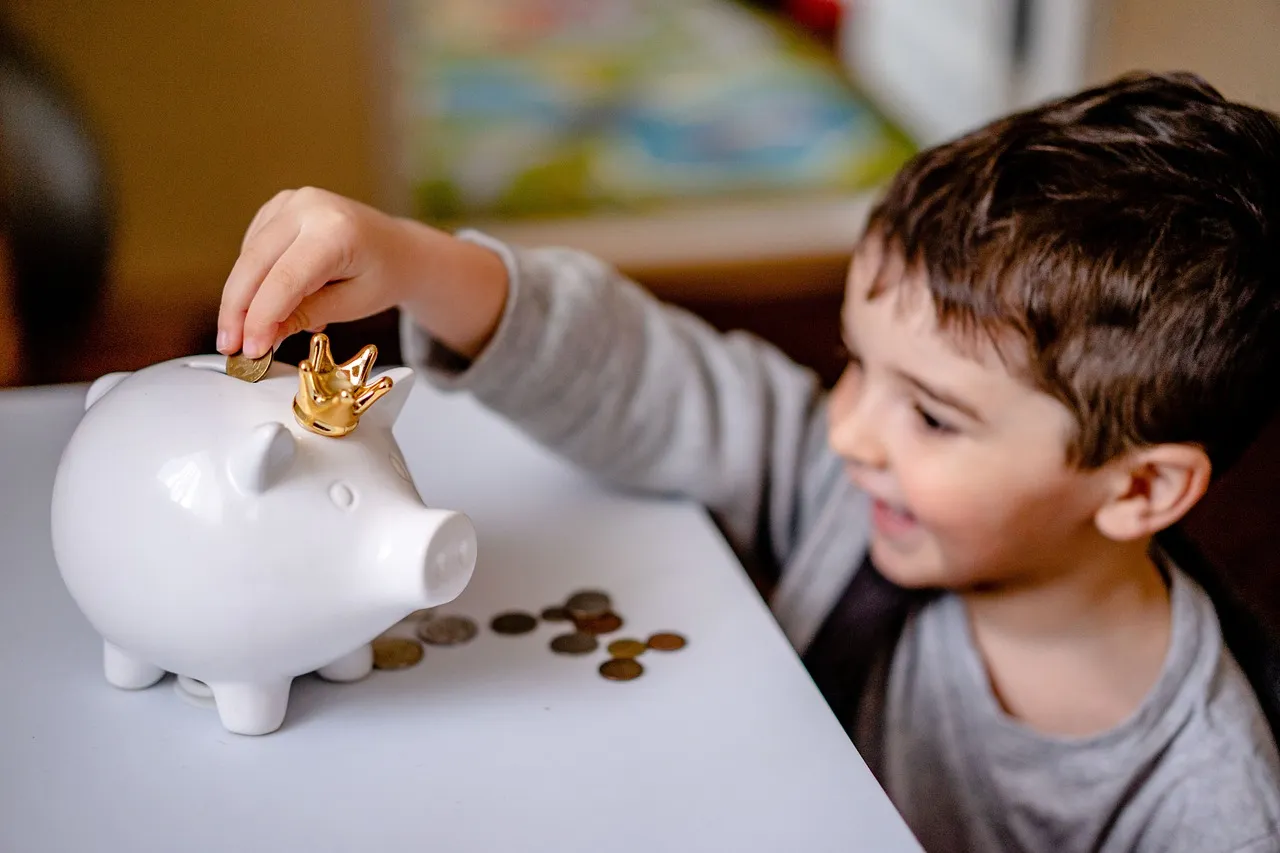
Research published in 2026 found that saving habits are among the strongest behavioral predictors, suggesting that saving functions as a cumulative behavioral skill, consolidated through repetition, partial automation, and temporal consistency. Birthdays offer a recurring, natural opportunity to practice exactly that.
Whether it’s allowance, birthday money, or earnings from small chores, teaching kids to save a portion of their money is a great habit to build early on. Helping them understand the idea of “paying yourself first” by setting aside a percentage before spending on anything else, and using a clear jar or savings account to see savings grow, creates a sense of accomplishment.
Kids learn patience and the value of delayed gratification, which are essential skills for responsible money management. These aren’t abstract virtues. They show up decades later in retirement savings rates, emergency fund balances, and credit card debt.
Delayed Gratification: The Science Behind Waiting

In the late 1960s, psychologist Walter Mischel’s famous Stanford Marshmallow Test illustrated both the challenge and value of delaying gratification. Children were given a simple choice: eat one marshmallow immediately or wait 15 minutes and receive two. Some chose the immediate reward, while others waited. Follow-up studies later found that those who demonstrated the ability to wait tended to experience more favorable life outcomes, including stronger academic performance and healthier behavioral patterns.
Research in the 2020s confirmed and refined these earlier findings. Newer studies continued to show that the ability to delay reward is associated with positive outcomes, but emphasized that this relationship depends strongly on environmental stability. Children are more likely to wait for a future reward when they trust that adults will deliver it and when their home and school environments are predictable.
That last point matters for birthday money specifically. When a parent promises to help a child save toward a goal and actually follows through, the child builds both a financial habit and a foundation of trust that makes future saving feel worthwhile.
The Divide-and-Conquer Approach: Save, Spend, Give

Budgeting can be as simple as dividing money into categories like saving, spending, and giving. Kids can put their allowance or gift money into envelopes or jars marked for different purposes. Encouraging them to give a small portion to charity reinforces values like sharing and responsibility. Budgeting even small amounts of money gives children a sense of control and helps them learn financial planning from a young age.
A 50/30/20 split on $200 lands at $100 to spend, $60 to save, and $40 to give. While the exact percentages matter less than the habit itself, having any deliberate framework teaches children that money is meant to do more than one job.
How Parents’ Own Behavior Shapes the Moment
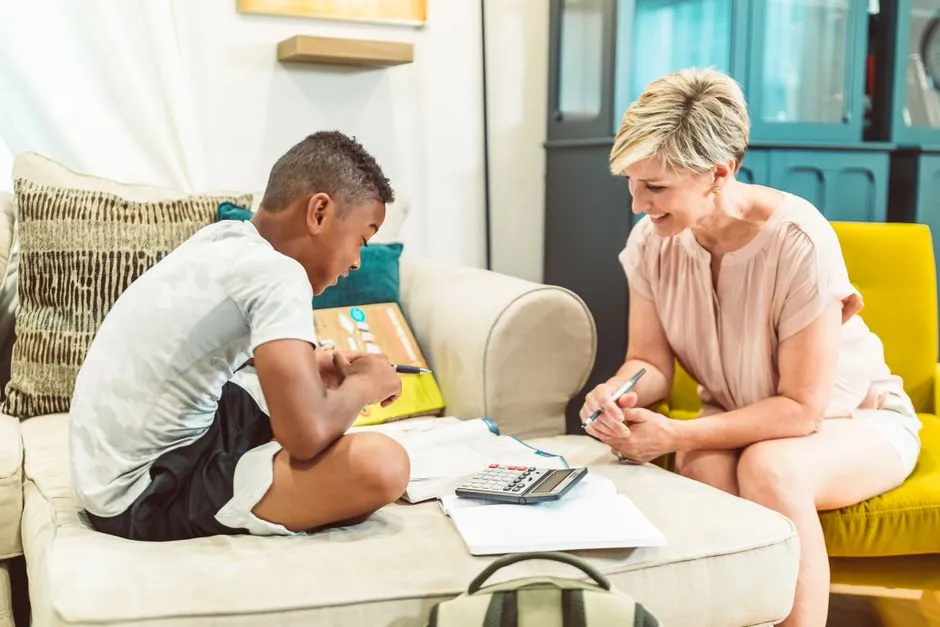
Children learn the behaviors that take them into adulthood by observing what parents do. These observations can override financial knowledge in shaping behavior. A parent who pockets their own birthday cash without discussion teaches a lesson, just not necessarily a productive one.
Parents signal their attitudes about money, either through purposeful and explicit messages or in unconscious ways. Children learn the behaviors that take them into adulthood by observing what parents do. The birthday moment is one of those naturally explicit teaching windows that doesn’t require a formal sit-down conversation.
Kids who learn financial literacy early on are more likely to form healthy relationships with money that can help improve their financial and overall well-being as adults, according to a 2022 study by researchers at Brigham Young University. Parental modeling during these small, real-money moments is part of what drives that outcome.
When Birthday Money Becomes an Investment Lesson

The earlier kids learn that money can grow when it’s invested, the more likely they are to carry that belief and behavior into adulthood. Custodial investment accounts now make it genuinely practical for families to redirect even small birthday sums into long-term holdings.
Opening a custodial investment account, which is an account that parents manage on behalf of a child until they reach adulthood, usually 18 or 21 depending on the state, is one route, with reputable platforms like Fidelity, Charles Schwab, and others offering user-friendly options designed specifically for families. Even modest early contributions have time on their side.
Grandparents can contribute up to $19,000 per child in 2025 without filing a gift-tax return under the IRS annual exclusion, and 529 contributions grow tax-free for qualified education expenses. Birthday money, redirected wisely, can quietly compound into something meaningful over time.
The Low Financial Literacy Risk: What Happens Without These Habits

Pew Research (2024) reports that only 41% of U.S. adults aged 18 to 29 feel knowledgeable about handling their finances. That gap doesn’t appear overnight. It builds slowly, across years of missed conversations and unchallenged spending impulses.
Children who grow up in households where money is a taboo subject or where poor financial habits prevail are more likely to face challenges in adulthood. Breaking the cycle of financial illiteracy requires intentional efforts to provide children with the necessary tools and knowledge to make sound financial decisions.
Early interventions can shape financial attitudes and capabilities, potentially leading to more financially responsible adults. The birthday envelope isn’t just a gift. For many children, it’s one of the few early chances to practice real financial decision-making under low-stakes conditions.
The Conversation Matters as Much as the Money Itself

Elementary school-aged children can be expected to understand basic money concepts about the value of money and the concept of cost factoring into what they buy. Middle school students might be more prepared to discuss complex concepts like budgeting and long-term saving. Matching the conversation to the child’s age keeps it useful rather than overwhelming.
Skills acquired during childhood are associated with a greater capacity to make informed economic decisions and with lower levels of financial fragility throughout the life cycle. The conversation around birthday money doesn’t have to be heavy or moralistic. Even a simple, calm discussion about options builds something durable.
The goal is teaching kids about money early so they can build strong financial habits for life. Birthdays are one of those rare moments when a child is genuinely motivated, holding real money, and open to guidance. That combination doesn’t come along very often.
The Takeaway

The birthday money habit isn’t a single defining moment. It’s a pattern, repeated year after year, that quietly builds a child’s default relationship with money. Whether they immediately spend it, divide it with intention, save toward something specific, or invest a portion, each of those choices reflects a framework that was either given to them or left to chance.
The development of children’s financial literacy involves both cognitive and emotional dimensions, emphasizing long-term thinking and self-regulation of behavior. None of that requires a formal curriculum. It just requires a parent willing to sit down with a child, count the cash together, and ask what they want to do with it.
Some of the most consequential financial lessons don’t happen in classrooms. They happen over a birthday cake, with an envelope in a kid’s hand and a few calm, curious questions from the adults in the room.
AI Disclaimer: This article was created with the assistance of AI tools and reviewed by a human editor.