

Most people assume that getting money back from an airline requires a long fight, a lot of patience, and a fair bit of luck. That assumption was reasonable for many years. In the past, it was up to each airline how they handled refunds, and it was often a nebulous process to file a claim through a proprietary portal or website over an extended period of time, with airlines not required to provide a cash refund at all – instead they typically offered vouchers toward future flights.
That changed in a significant way in 2024. A sweeping new rule now sits firmly in your corner, covering situations millions of travelers face every year. The problem is that most passengers still don’t know exactly when it applies to them, how automatic it actually is, or what it means for their next trip.
The Rule That Rewrote the Playbook

The U.S. Department of Transportation introduced new airline refund rules on October 28, 2024, designed to simplify and speed up the refund process for passengers affected by flight cancellations or significant changes. This wasn’t a minor policy update. There were 21 “passenger experience improvements” in the 170,000-word federal law passed in May 2024, along with additional rules approved by the DOT in April.
The final rule creates certainty for consumers by defining the specific circumstances in which airlines must provide refunds. Prior to this rule, airlines were permitted to set their own standards for what kind of flight changes warranted a refund. That era is now over. The standards are federal, fixed, and enforceable.
What “Automatic” Actually Means

Airlines must automatically issue refunds without passengers having to explicitly request them or jump through hoops. That single sentence is the heart of the rule and the part most travelers miss entirely. You no longer need to find a buried refund form, call a helpline, or hope a customer service agent cooperates.
Without this rule, consumers had to navigate a patchwork of cumbersome processes to request and receive a refund, searching through airline websites to figure out how to make the request, filling out extra digital paperwork, or at times waiting hours on the phone. The new rule eliminates all of that for covered situations. Your refund should simply arrive.
The Delay Thresholds You Need to Remember

If your flight is canceled or delayed by three or more hours on a domestic route, or six or more hours on an international route, you’re entitled to a cash refund. These are the thresholds that define a “significant” delay under the rule. If the airline changes your flight for any reason, at any point up until departure, you are entitled to a full refund should you not accept their alternative arrangements. This applies to day-of-departure disruptions such as weather or crew availability, but also any time before departure if the airline changes its schedule.
The weather point is especially important and catches many travelers off guard. If your flight is significantly delayed or canceled, you are legally entitled to a refund regardless of the cause. As recently as January 2026, the largest winter storm of the season impacted thousands of flights across the U.S., and customers were entitled to a complete flight refund under the current DOT regulations.
It Goes Beyond Late Flights

Significant changes to a flight include departure or arrival times that are more than three hours domestically and six hours internationally, departures or arrivals from a different airport, increases in the number of connections, instances where passengers are downgraded to a lower class of service, or connections at different airports or flights on different planes that are less accessible or accommodating to a person with a disability.
Paid extras such as seat selection and Wi-Fi are also refundable if not provided. Baggage fees are refunded if your luggage is delayed twelve or more hours on domestic flights or thirty or more hours on international flights. So if you paid for a window seat and were moved at the gate, or if your checked bag took two days to arrive, there’s a real financial recourse available to you under federal rules.
Cash Back, Not a Voucher

Airlines and ticket agents must provide refunds in cash or whatever original payment method the individual used to make the purchase, such as a credit card or airline miles. Airlines may not substitute vouchers, travel credits, or other forms of compensation unless the passenger actively and affirmatively chooses to accept them instead.
One detail that catches people off guard is that the airline must tell you that you’re entitled to a refund before pushing vouchers or credits. A carrier can’t just send you a travel credit and call it settled. Any time a carrier offers you a voucher or credit, it must clearly disclose the restrictions, including expiration date, blackout periods, advance purchase requirements, and capacity limits, at the time of the offer. If an airline skips that disclosure step, it is not in compliance.
How Fast the Refund Must Arrive

Airlines and ticket agents must issue refunds within seven business days of refunds becoming due for credit card purchases, and within twenty calendar days for other payment methods. These are hard deadlines, not targets. If an airline refuses to process your refund or drags its feet past the deadlines, start by contacting the airline directly, give the carrier’s customer service team a chance to fix it, and document everything. Airlines are required to acknowledge your complaint within thirty days and send a written response within sixty days.
If airlines fail to comply, you can escalate your case to the DOT. Filing a complaint with the DOT is free, straightforward, and creates a paper trail that the agency actively tracks. Airlines accumulate enforcement scrutiny based on complaint volume, so reporting matters even if you eventually reach a resolution on your own.
The Third-Party Booking Trap
The 24-hour refund requirement for airlines does not apply to tickets booked through online travel agencies, travel agents, or other third-party agents. However, these agents are free to apply the same or similar procedures to provide equivalent customer service. That freedom, though, is entirely voluntary – they aren’t required to do so.
To maximize your chances of benefiting from the rule, the safest bet is to book directly with the airline, avoiding third-party agencies. It’s also worth noting that third-party booking sites may have their own rules, which are not necessarily in line with DOT regulations. The company responsible for issuing the refund is whoever’s name appears on your credit card or bank statement. About ninety-two percent of the time, that’s the airline, even when the ticket was purchased through a third party, according to the DOT. Still, going through an OTA can complicate the timeline considerably.
The 24-Hour Cancellation Rule Still Stands

The 24-hour rule has been around since 2012, but the DOT rolled out major new protections in late 2024. The two rules now work in tandem. The 24-hour rule lets you cancel a ticket within a day of booking for a full refund, penalty-free. The 24-hour rule applies to any flight that touches the United States, whether departing from, arriving in, or connecting through a U.S. airport. This means foreign carriers like Lufthansa, British Airways, and Emirates must also comply when selling tickets for U.S. routes.
The 24-hour rule lets you cancel a ticket you booked without any penalty as long as you do so within 24 hours of purchase. This protection is guaranteed by the federal government, but only when you book directly with an airline. If you spot a lower fare shortly after booking, canceling and rebooking is entirely within your rights.
What the Rule Does Not Cover
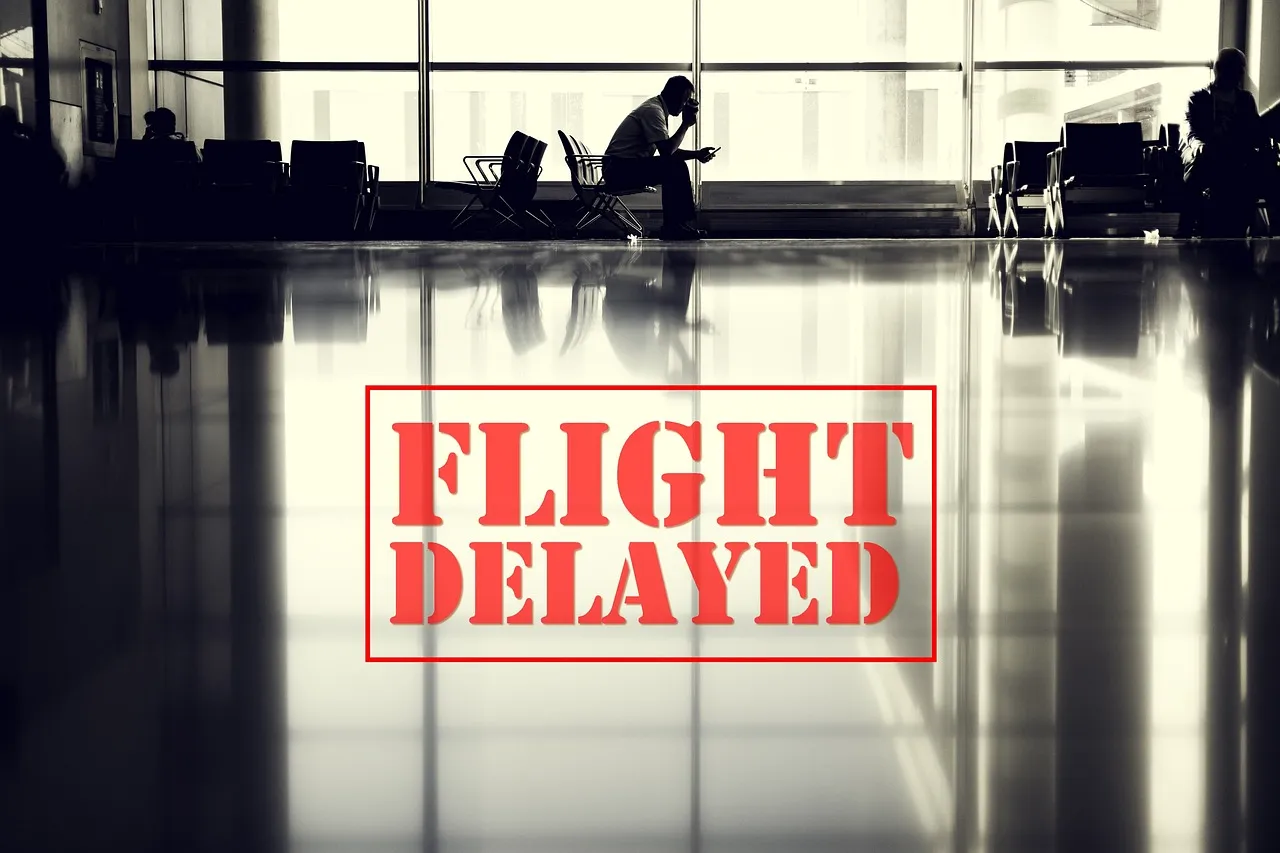
Knowing the boundaries of the rule is just as important as knowing what it includes. Refunds are available only if passengers choose not to accept alternative transportation or compensation offered by the airline. The rule also does not cover other unforeseen events that can disrupt your travel plans, such as personal emergencies, medical issues, or travel supplier bankruptcy.
If your delay hits you mid-travel and you end up paying for meals or a night at a hotel, there are no flight delay compensation regulations requiring the airline to reimburse you for these expenses. During uncontrollable delays or cancellations, it’s completely up to the airline’s customer service team to decide how they treat passengers, and in many cases they will not pay these additional costs. Travel insurance still fills a meaningful gap for those scenarios.
The Bigger Picture: What This Means for the Industry
These rules significantly expand consumer protections in air travel, provide passengers an easier pathway to refunds when owed, and save consumers more than half a billion dollars every year in hidden and surprise fees. That’s not a trivial figure. It reflects how much money was quietly being absorbed by airline systems that weren’t designed in passengers’ favor.
News has broken that airlines are lobbying the current administration to remove a wide range of consumer protection regulations. The administration has also said it would scrap a Biden-era rule that required airlines to compensate customers for delays and cancellations. Despite major repeals of overarching DOT laws by the current administration, cancellation protection remains in effect. The landscape is worth monitoring, because what is in place today may not look identical a year from now.
The Takeaway

The refund rule that most travelers overlook isn’t buried in fine print or reserved for elite frequent flyers. It’s federal law, and it applies to nearly every passenger flying in or out of the United States. The core principle is straightforward: you do not have to argue, fill out a long form, or prove your case. If you reject what the airline offers and ask for your money back, the refund is mandatory.
Knowing this before your next disrupted flight puts you in a fundamentally different position. Airlines won’t always volunteer the information, and many passengers still walk away with a voucher they never fully use when cash was their right all along. The rule exists. The question is simply whether you know to use it.
AI Disclaimer: This article was created with the assistance of AI tools and reviewed by a human editor.