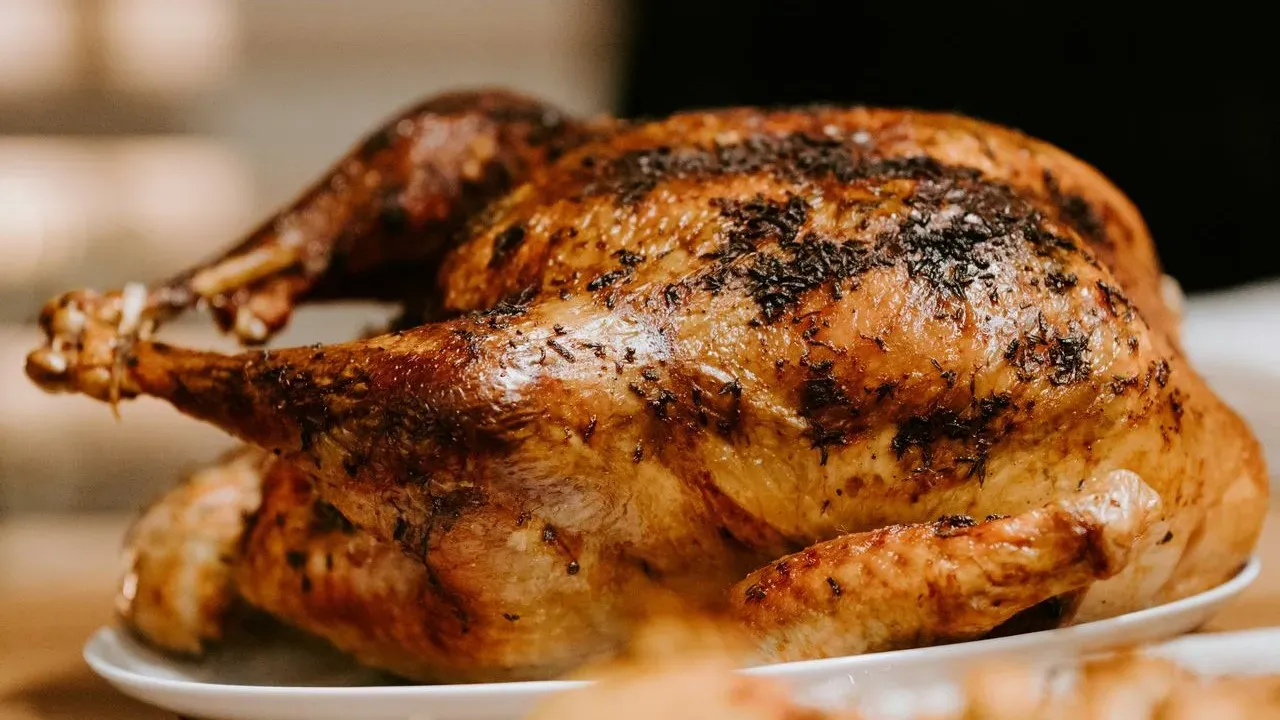

Thanksgiving dinner often comes down to one question asked in the kitchen: how much longer does the bird need? With the holiday about a week away, many home cooks are working backward from their serving time. USDA’s ([1])roasting guidance gives approximate times by weight for a turkey cooked at 325°F, but the agency is clear that the clock is only a starting point. The real test is a food thermometer reading of at least 165°F in the thickest parts of the bird.
Reading the Timetable Without Overtrusting It
USDA’s table for an unstuffed whole turkey, roasted at 325°F, runs in weight bands. The agency’s figures for fully thawed birds are as follows:
- 8 to 12 pounds: 2¾ to 3 hours
- 12 to 14 pounds: 3 to 3¾ hours
- 14 to 18 pounds: 3¾ to 4¼ hours
- 18 to 20 pounds: 4¼ to 4½ hours
- 20 to 24 pounds: 4½ to 5 hours
A bird that falls on the boundary between two rows, such as a 12 or 18 pound turkey, can reasonably be planned on the longer end. Oven performance, pan choice and the turkey’s starting temperature all shift the schedule. USDA describes the figures as approximate, so a bird that runs past the chart is not necessarily in trouble.
Why the Thermometer Makes the Call
Doneness is determined by temperature rather than the timer. USDA’s guidance sets a minimum internal temperature of 165°F, and it asks cooks to check three spots: the innermost part of the thigh, the innermost part of the wing, and the thickest part of the breast. The thigh often lags behind the rest of the bird, so once it reaches 165°F, the wing and breast should be checked to confirm the whole turkey is done.
Pop-up indicators have a role to play, but USDA recommends confirming with a food thermometer in those same spots. Tasting the meat is not a substitute. Oven temperature matters as well. USDA says the oven should be set no lower than 325°F, and Illinois Extension has warned that overnight cooking at 190 to 200°F is dangerous because the bird heats too slowly and gives bacteria time to grow.
Stuffing, Frozen Birds and Smaller Cuts
Stuffing adds time and a separate safety step. USDA says stuffing a turkey is not recommended for optimum safety, and it suggests baking stuffing in a casserole dish for more even cooking. If a cook chooses to stuff the bird anyway, the stuffing’s center must also reach 165°F, and the stuffed times in USDA’s table run longer than the unstuffed ones.
Frozen birds can be roasted safely, but they need more patience. USDA says a turkey cooked from frozen takes at least 50 percent longer than a fully thawed one. Smaller cuts follow their own schedule. USDA lists 1½ to 3¼ hours for a 4 to 8 pound unstuffed turkey breast at 325°F, a wide range that reflects how differently breasts of different sizes cook. USDA’s tables do not cover deep frying, smoking, grilling, spatchcooking or brined birds, so cooks using those methods should follow the instructions for their recipe or equipment and still check for 165°F.
Timing the Meal and Handling Leftovers
Planning the dinner hour means adding a rest period to the cooking time. USDA suggests letting the turkey stand for 20 minutes before carving, which allows the juices to settle and makes the meat easier to slice. Resting does not replace the temperature check. A turkey should still read 165°F before it leaves the oven.
Once the meal is served, the food safety clock keeps running. USDA says turkey, stuffing and gravy should be discarded if they sit out longer than 2 hours, or longer than 1 hour when the temperature is above 90°F. Refrigerated leftovers are best used within 3 to 4 days, and frozen portions keep for 2 to 6 months for best quality.
Key points for Thanksgiving: set the oven to at least 325°F, use USDA’s weight ranges as a planning guide, confirm 165°F in the thigh, wing and thickest part of the breast, and let the bird rest for 20 minutes before carving.
The chart is useful for deciding when to start the oven, but the thermometer is what confirms the bird is ready. Cooks who plan around that distinction are far less likely to end the holiday with either a raw center or a dry platter.
AI Disclaimer: This article was created with the assistance of AI tools and reviewed by a human editor.