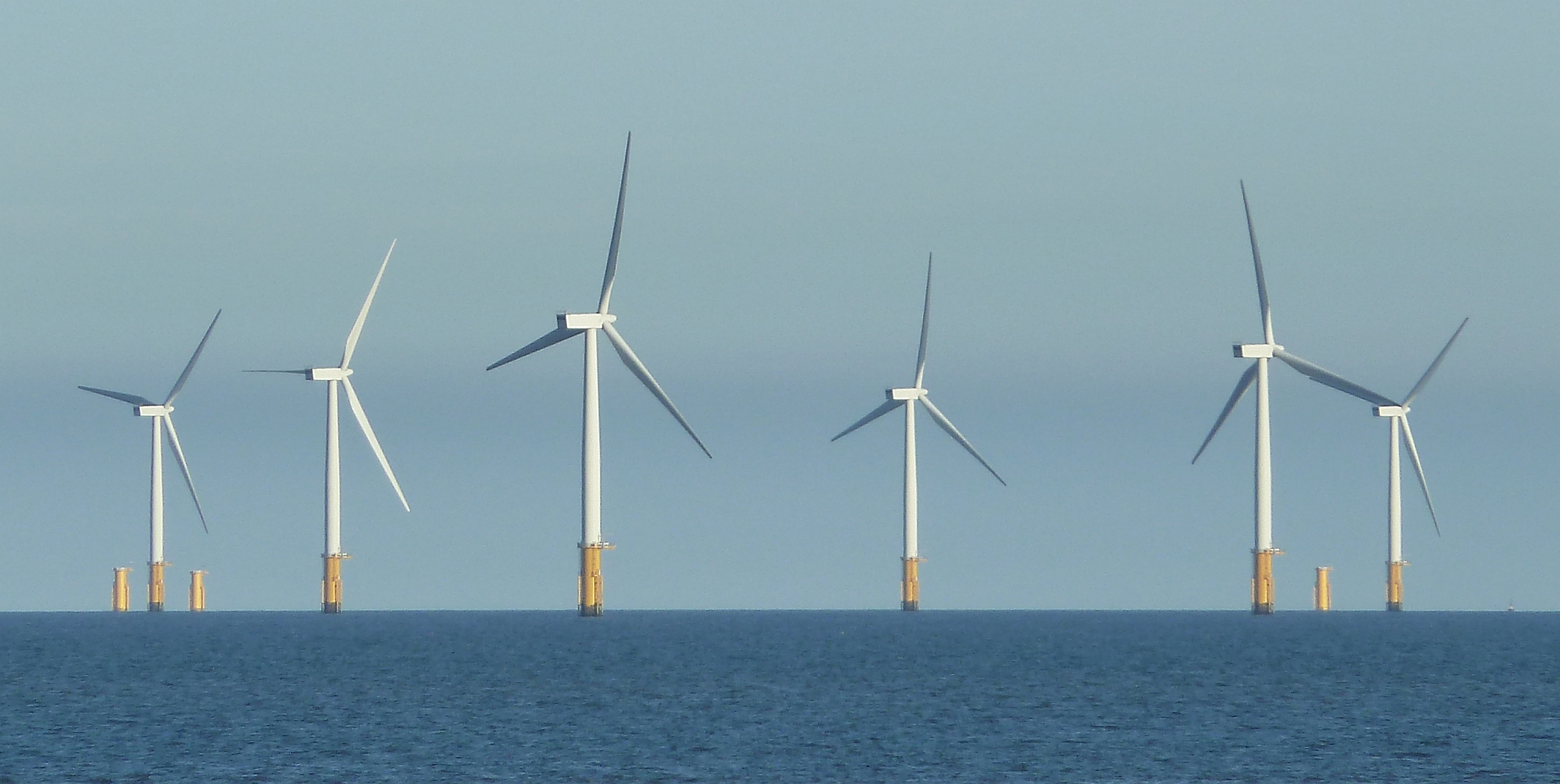

The ocean is often framed as being the next frontier in energy: offshore wind, deep‑sea drilling, tidal power. When it comes to whales, reputable science is increasingly indicating a surprising divide: wind turbines appear to pose far lower risks, while oil and gas operations carry heavy danger.
Wind Turbines & Whales: What the Science Says
To date, there is no confirmed scientific evidence that offshore wind activities cause whale mortality.
NOAA and other regulatory agencies have repeatedly stated that ongoing offshore wind construction or operation has not been linked to serious injury or death of whales.
But the science isn’t all settled. As turbines grow larger, aerodynamic noise (noise generated by the turbine blades moving through air, which then transmits into water) is being studied as a potential new stressor. A recent modeling paper suggests that very large offshore farms might begin to create detectable underwater noise that could overlap with marine animal hearing ranges.
Trump’s Whale Claims About Wind Turbines: Fact-Check
President Donald Trump has repeatedly claimed that offshore wind farms are responsible for whale deaths along the East Coast, claiming that they’re washing up on shore after windmills are being built. However, these claims are not supported by scientific evidence.
According to the National Oceanic and Atmospheric Administration (NOAA) and the Bureau of Ocean Energy Management (BOEM), there is no link between offshore wind development and whale strandings or deaths. Most of the recent whale mortalities have been attributed to well-documented threats like vessel strikes and entanglement in fishing gear – not wind energy.
While it’s true that wind farms can introduce noise and disturbances during construction, there are strict marine mammal monitoring and mitigation requirements in place. Experts continue to stress that the leading risks to whales come from shipping traffic, oil and gas exploration, and climate change, not from offshore wind projects.
Bottom line: The science doesn’t back up the claim that wind turbines are killing whales – but it clearly shows that fossil fuel activities do.
Oil & Gas Drilling: The Known Threat
Compared to wind, the impacts of oil and gas operations on whales are better documented and more deeply concerning.
Oil and gas companies often use seismic airguns to map the seafloor in search of hydrocarbons. These produce extremely loud, low-frequency pulses that can travel great distances underwater, disrupting whale communication, navigation, and behavior.
But the most dramatic threats come from oil spills. Whales exposed to oil can suffer from skin lesions, respiratory distress, internal organ damage, and reproductive failure. The effects may linger for years, and populations may take decades (or never) to recover.
Oil infrastructure also means increased ship traffic, drills, support vessels. Whales, especially those that frequent surface waters, are vulnerable to collisions with vessels.
One notable case: the Rice’s whale, native to the Gulf of Mexico, is so few in number (fewer than 100 individuals) that even one collision or disturbance could push the species further toward extinction.
Why the Contrast?
- Oil operations use intense sound tools (airguns), deep drilling, and carry spill risk—elements with direct, high-impact harm profiles.
- Offshore wind development is relatively newer and better regulated from the start; protocols exist to mitigate marine impacts.
- Wind doesn’t inherently introduce toxins or extract from the marine system, whereas oil extraction often comes with habitat alteration, pollution, and traffic.
What This Means (and What We Don’t Know)
- It’s misleading to claim wind turbines are wholly harmless – they may have localized, non-lethal effects – but the evidence currently supports that oil and gas drilling poses a far greater threat to whale populations.
- Given climate imperatives, wind energy may offer a cleaner path forward, especially if projects are designed with marine life in mind (careful siting, strict noise controls, real-time monitoring).
- But vigilance is vital. As turbines get larger and wind farms more ambitious, new kinds of impacts (like aerodynamic noise or subtle prey disruption) must be studied.
- For whales on the brink – like the Rice’s whale – even small incremental threats can tip the balance; protective measures in oil sectors (vessel speed limits, exclusion zones) are critical.