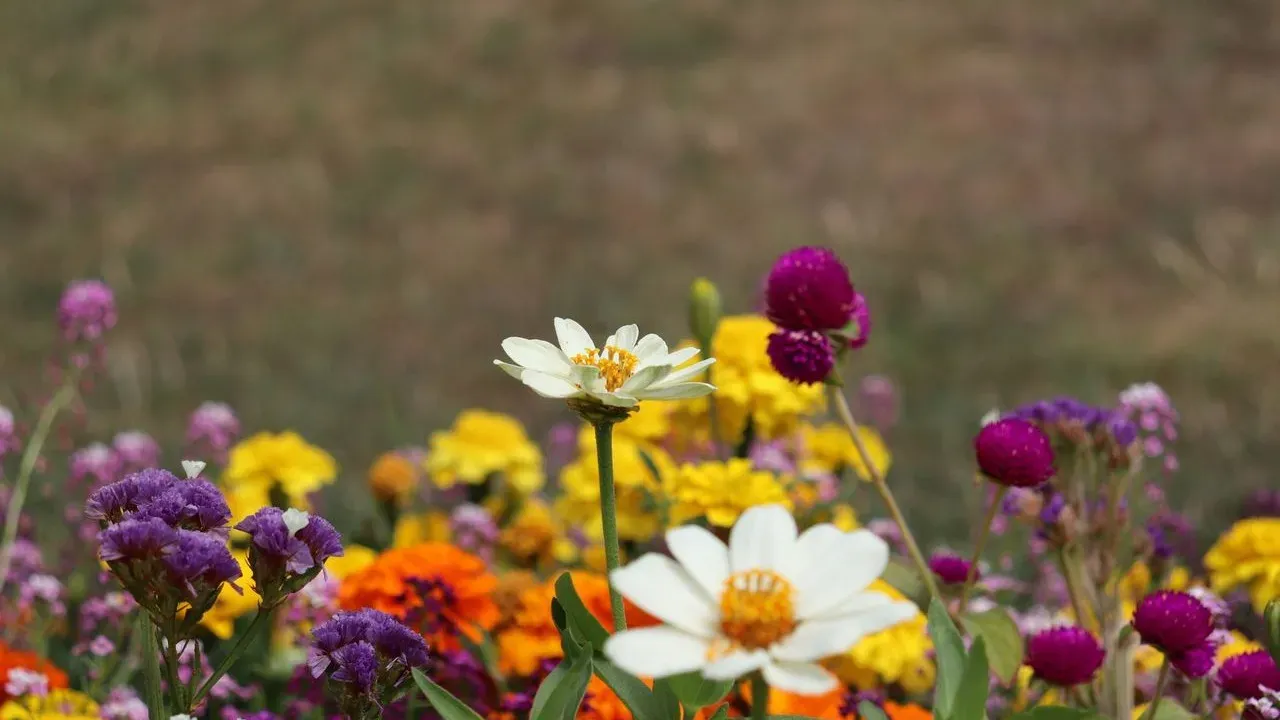

Pansies planted a few months ago are thriving in a Zone 6a garden in central Indiana, and they are not alone. Gardener Carol J. Michel reports that ([1])this November has been one of the warmest autumns on record in her USDA Hardiness Zone 6a garden, and flowers have kept opening well past the point most gardeners expect them to fade. A few sunny days earlier in the week brought out blooms that might otherwise have been finished.
Flowers that refuse to quit
Michel’s count covers a surprising range of plants. Some of them are old standbys, and others are plants that usually belong to earlier in the season. She listed the following as still flowering:
- Pansies, planted a few months ago and doing well in the mild weather
- Alyssum, which is coming up as a seedling on the patio
- Two different roses
- Yellow mums
- Verbena bonariensis, growing out by the mailbox
- Autumn crocus, which is waiting for warmer weather before it opens fully
- ‘Rozanne’ geranium, which she describes as a plant that never quits
- Christmas rose and leadwort, which she photographed separately
Beacon impatiens still bloom under the crabapple tree in front of the house. Michel believes the tree and a west-facing wall are shielding them from frost so far, but she expects to pull them out before the week ends.
A warm fall with a limited window
Michel frames the season as a welcome gift with an end date. She acknowledges that a warm fall is only a good thing if a gardener sees it that way, and she notes that winter is now close enough that it is time to prepare for it. Her approach reflects a common reality for home gardeners in the Midwest. A late warm spell can extend color for a few weeks, but a single hard freeze can change the picture overnight.
Her own garden shows how quickly conditions can shift. Plants that bloom in a sheltered corner may survive a few cold nights, while open beds take the full brunt of the weather.
How this November compares with past years
Michel has posted November updates since 2007, which gives her a long record to compare against. She says that no two Novembers have looked the same, and the differences are often tied to the weather. Several past seasons stand out in her notes.
| Year | What her garden looked like in November |
|---|---|
| 2012 | Very little was in bloom |
| 2014 | A heavy frost forced her to feature indoor houseplants |
| 2016 | The first freeze came later than in any year she recorded |
| 2019 | A light snow settled on the garden |
Read against that history, this season stands out for how much color has lasted. The comparison also makes clear that the calendar alone does not decide what a garden looks like in late autumn.
What the late bloom season suggests
For gardeners in central Indiana, the lingering flowers are a reminder to pay attention to the forecast rather than the date on the calendar. Michel’s experience suggests that plants with some natural protection, such as those near a house wall or beneath a tree, can extend their display. Gardeners who want to track their own seasons can join the Garden Bloggers’ Bloom Day community by posting what is blooming around the 15th of each month.
Michel closes her post with a line from horticulturist Elizabeth Lawrence: “We can have flowers nearly every month of the year.” This November, her garden offers a useful test of that idea, at least until the first hard freeze arrives.
AI Disclaimer: This article was created with the assistance of AI tools and reviewed by a human editor.