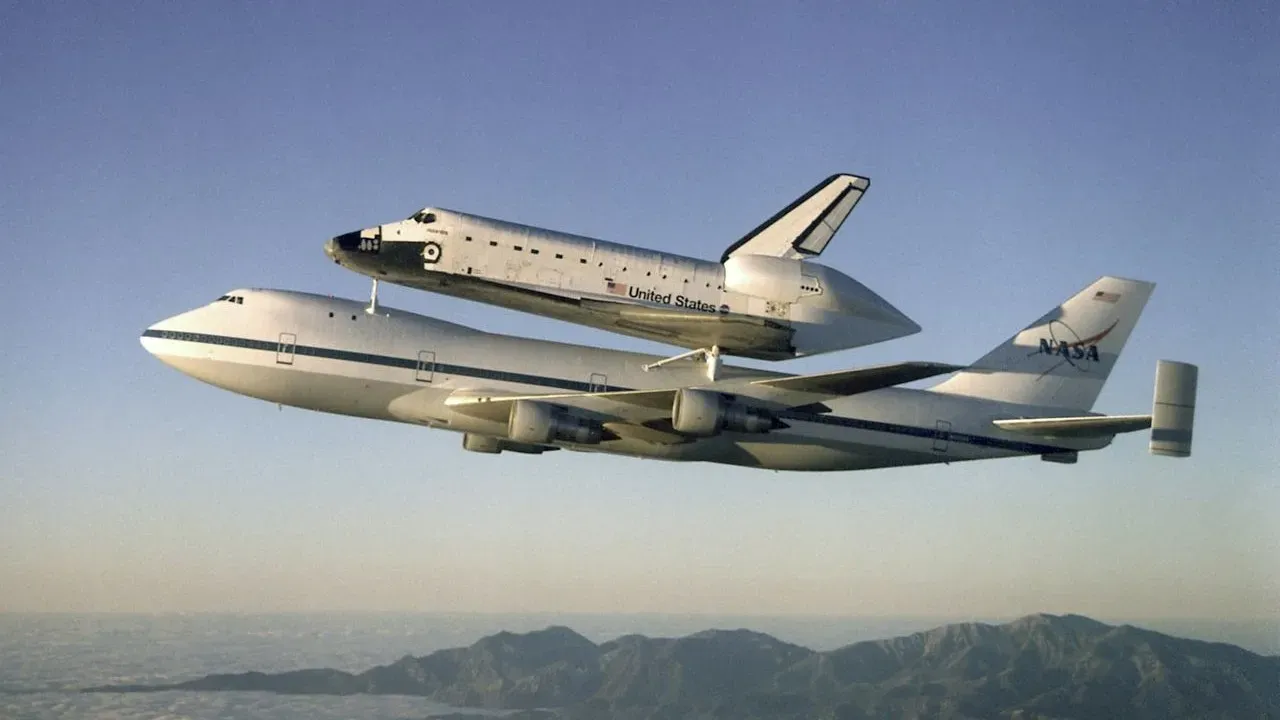

Exposition Park has a new centerpiece. The California Science Center opened its Samuel Oschin Air and Space Center to the public on Friday, November 13, and the hall’s main attraction is Space Shuttle Endeavour, displayed in its launch configuration ([1]). The 200,000-square-foot addition nearly doubles the museum’s exhibit space, giving the science center its largest platform to date.
A Shuttle That Now Stands Upright
For years, Endeavour was displayed lying flat. Now the orbiter rises nearly 200 feet in the same vertical pose it would have held before liftoff, and museum materials describe the arrangement as the only place in the world where visitors can see a complete, authentic space shuttle system ([2]).
That complete system includes the orbiter itself, along with solid rocket boosters and an external tank. The tank is ET-94, which the museum has described as the last remaining flight-qualified external tank. Standing side by side with the orbiter, these pieces recreate the familiar silhouette that millions of people once saw on television broadcasts from Cape Canaveral.
What Visitors Can Examine Up Close
The Samuel Oschin Air and Space Center is organized into three multilevel galleries, each with its own focus:
- The Samuel Oschin Shuttle Gallery, which holds the orbiter and its launch hardware
- The Korean Air Aviation Gallery, with more than a dozen aircraft, including gliders, fighter jets and part of a Korean Air Boeing 747-400
- The Kent Kresa Space Gallery, which focuses on the broader history of spaceflight
Because the orbiter sits in a vertical position, guests can get a close look at details that are hard to see from a distance. Those include the engines and the thermal tiles that protected the shuttle during its return through Earth’s atmosphere ([3]). The aviation gallery also offers a five-minute simulated flight from Los Angeles to Seoul.
The center also includes about 100 artifacts and 100 hands-on exhibits focused on science and engineering. A photo exhibit called “Endeavour’s Long Journey” documents the shuttle’s final trip across California, which covered 12 miles over 68 hours through Los Angeles and Inglewood.
Planning a Visit
General admission to the California Science Center remains free. Reservations for the new air and space center are strongly encouraged because of expected demand, and a $4 reservation service fee applies per person, though members do not pay it. Reports differ on whether timed tickets are mandatory. One outlet said they are required, while another said they are not, so visitors should confirm the current policy before making the trip.
Parking is available on site, with fees of $20 for cars and school buses until 5 p.m. and $24 afterward. Larger vehicles such as charter buses and RVs pay $42. Visitors who prefer transit can ride the Metro E Line to the Expo Park/USC Station ([4]).
A Long Road to the Opening
Endeavour arrived in Los Angeles in 2012 after a slow overland journey through city streets from Los Angeles International Airport. The opening marks the end of a project that took decades to plan and years to build. Jeff Rudolph, president and CEO of the California Science Center, said the new center ([3])”fulfills a decades-long dream” and gives the museum its biggest platform yet.
The grand opening drew attention beyond the usual museum audience. About 30 astronauts were expected to attend, including all six crew members from Endeavour’s final mission, STS-134, which was commanded by now-Senator Mark Kelly ([5]).
For many visitors, the first moment of looking up at the orbiter from the floor of the hall is likely to be the lasting impression. The shuttle that once flew above Earth now stands within reach of anyone who walks through the doors on Exposition Park Drive.
AI Disclaimer: This article was created with the assistance of AI tools and reviewed by a human editor.