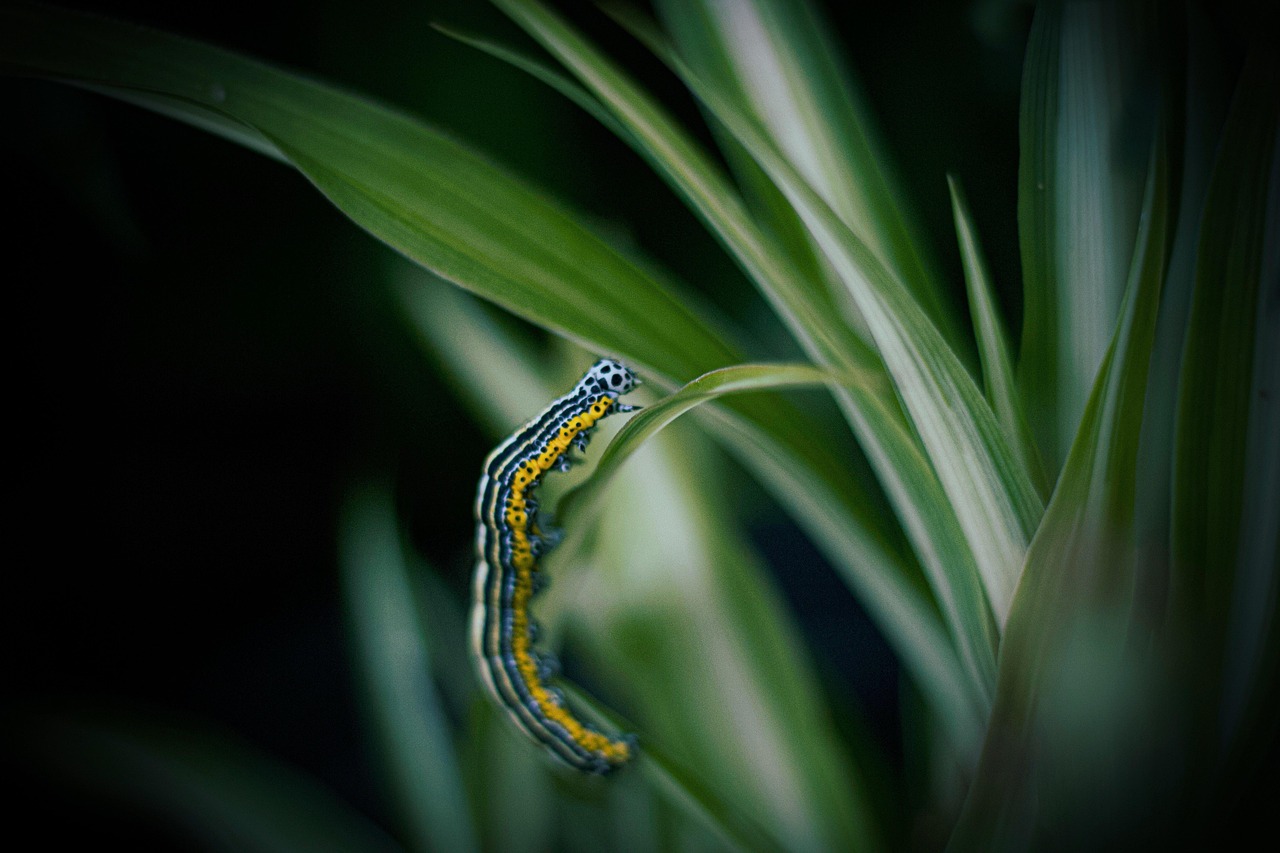

There’s a caterpillar sitting right now on a leaf somewhere in North America, and if you glanced at it, you’d walk away thinking a bird had simply passed overhead at the wrong moment. That’s the whole point. The disguise is remarkably effective, and it has been refined over millions of years of evolutionary pressure into something that genuinely fools predators day after day.
What looks like a smear of bird waste is, in fact, a living, feeding larva with a survival strategy as sophisticated as anything in the animal kingdom. The science behind it is even more interesting than the spectacle.
What Scientists Actually Call This Strategy
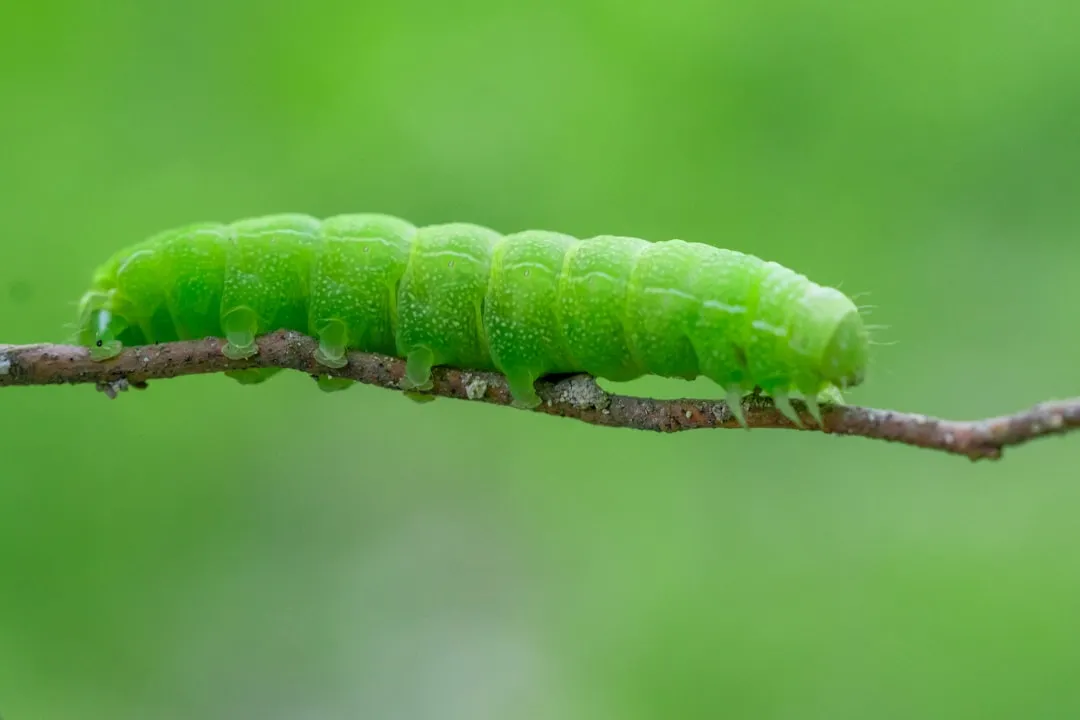
Masquerade is a form of camouflage where an organism mimics an inedible object to avoid predation. It’s distinct from what most people think of as mimicry. Insects use camouflage to protect themselves by looking like inanimate or inedible objects, while mimicry involves one species evolving similar warning color patterns to another.
Masquerade describes a defence by animals that have evolved to closely resemble inedible objects such as twigs, stones or bird droppings. Animals that masquerade often match their models in size or shape, and may even adopt specific postures in order to enhance their resemblance, causing predators to misclassify them as their model objects. It’s a precise biological term for a very precise trick.
Why Bird Droppings Make Such a Good Disguise
To protect themselves from hungry predators, caterpillars have evolved a number of defenses. Some caterpillars physically camouflage themselves to look like bird droppings or sticks, while others have developed fake eyes to scare off birds. Bird droppings are particularly clever models because birds themselves ignore them completely.
Research has demonstrated that insects employing this strategy experience significantly lower predation rates compared to similar species without the adaptation. The logic is simple: predators learn early on that droppings aren’t food, so anything that looks like one gets a free pass. The effectiveness of fecal mimicry depends on multiple factors working in concert: coloration, pattern, texture, posture, and behavior. Studies using model insects have confirmed that predators like birds are indeed much less likely to attack insects that resemble droppings, even when they’re placed in otherwise conspicuous locations.
The Giant Swallowtail: Nature’s Most Famous Impersonator
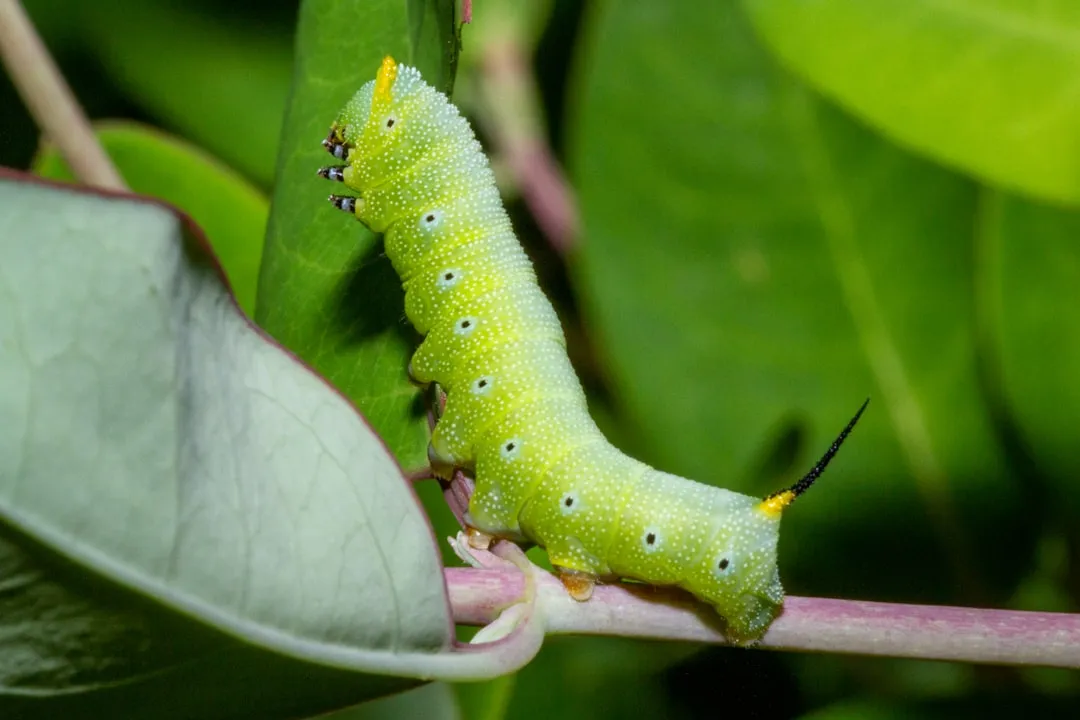
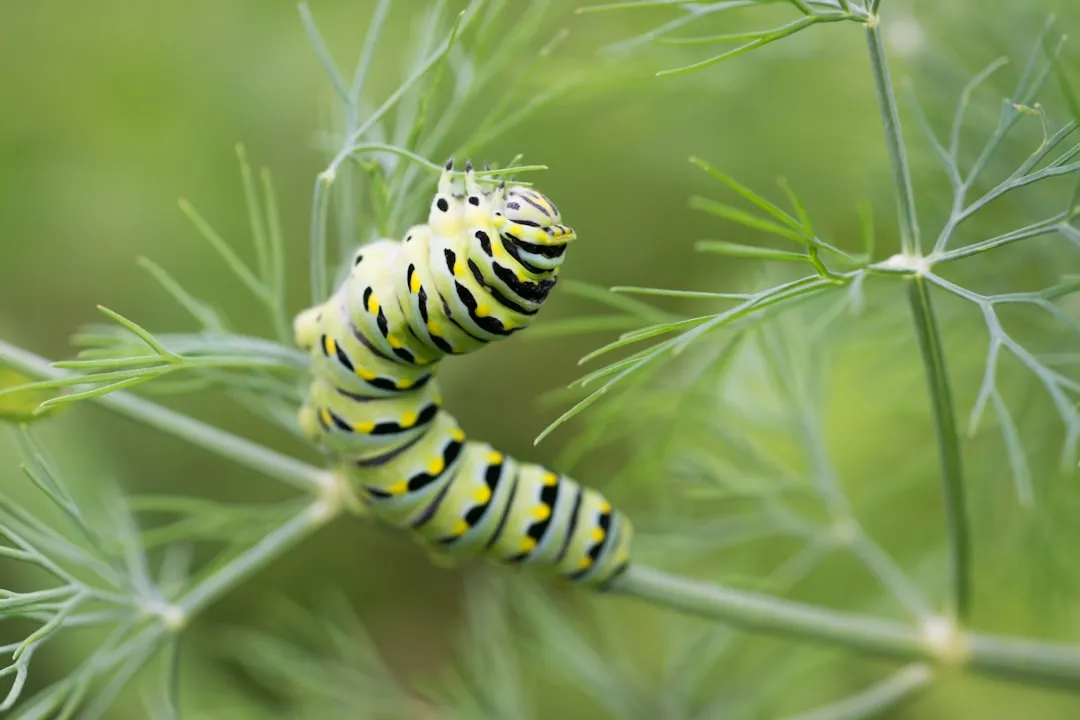
In their caterpillar form, giant swallowtail butterflies (Papilio cresphontes) take on a much less pleasing aesthetic than the majestic winged creature they will eventually become. Like the moth caterpillars, they use their black, brown and white coloration to hide from bird predators by resembling poop. Younger caterpillars are generally smaller and more effective at the disguise.
From the brown-and-white patterning, to the shiny skin, they’ve got all the right accessories to pass as a fresh, wet piece of bird poop. That glossy sheen is a particularly telling detail. The swallowtail’s charade allows it to keep large predators, including birds, at bay. It’s one of the most convincing disguises in the insect world, and it’s earned the species its own informal common name: the “bird poop caterpillar.”
How Moth Caterpillars Take the Trick Even Further
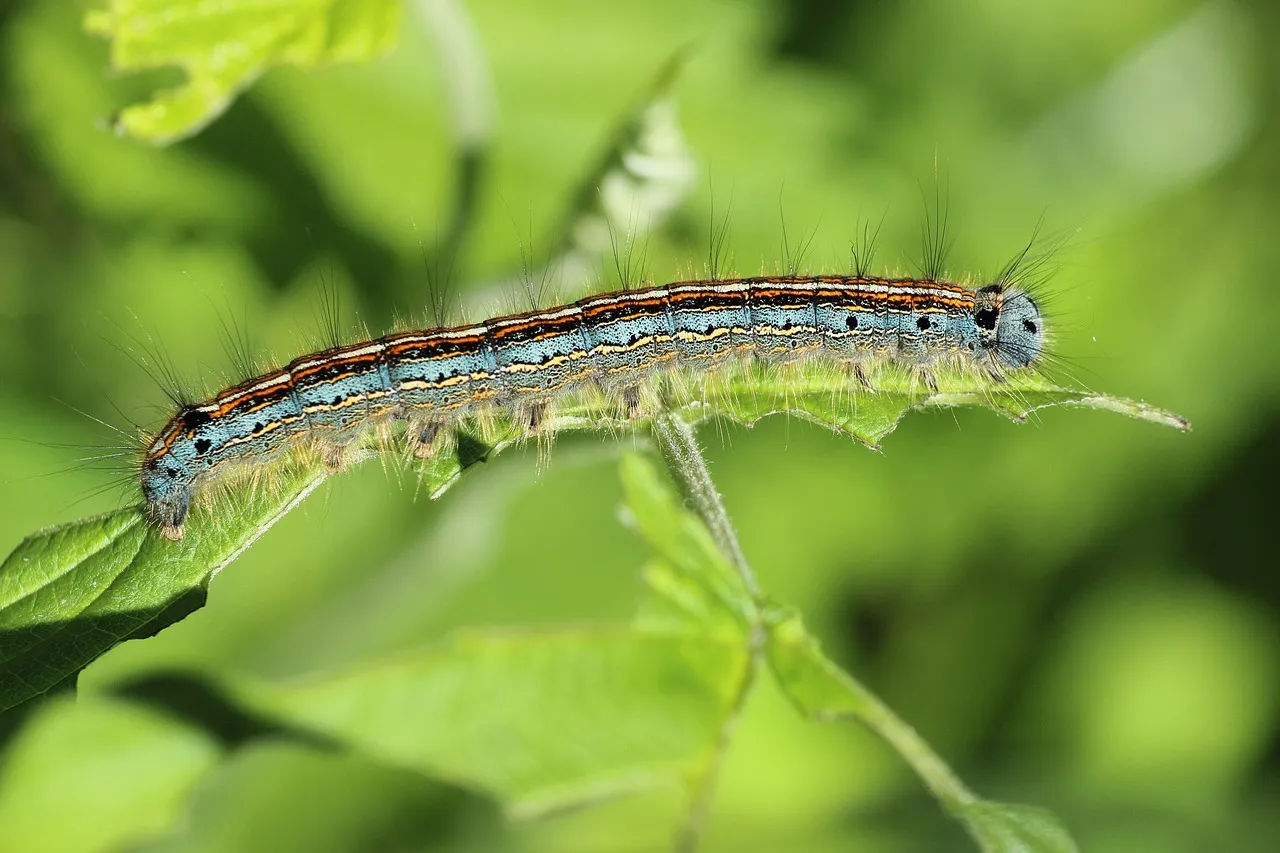
Some moth caterpillar species have white and brown coloration that gives them the appearance of a bird dropping. Researchers report in the journal Animal Behavior that they take the disguise a step further and also change their posture to look like a dollop of excrement when resting on leaves or branches. For the moth caterpillars, taking on the posture of poop pays off and they are much better able to hide from birds and avoid getting pecked when curled up rather than stretched out.
The caterpillars of some moth species resemble bird droppings, and bend their bodies while resting on branches or leaves. Researchers hypothesized that such bending might enhance the caterpillars’ resemblance to real bird droppings. That hypothesis held up. The bent posture proved to provide measurable protective benefit beyond coloration alone.
Posture Is Part of the Performance
Researchers in Japan created fake caterpillars to test color and posture while observing bird behavior. Their fake green colored caterpillars didn’t fare well against the birds. Those colored black and white to resemble poop did much better, especially when placed in a bent posture. The experiment isolated posture as a genuine variable, not just an incidental quirk.
Color alone, it turns out, isn’t enough. Shape matters too. These results support the hypothesis that the bent posture improves the protective value of bird dropping masquerade in caterpillars. It’s the combination of the two that really sells the illusion to a passing bird.
The Asian Swallowtail and Its Genetic Switch
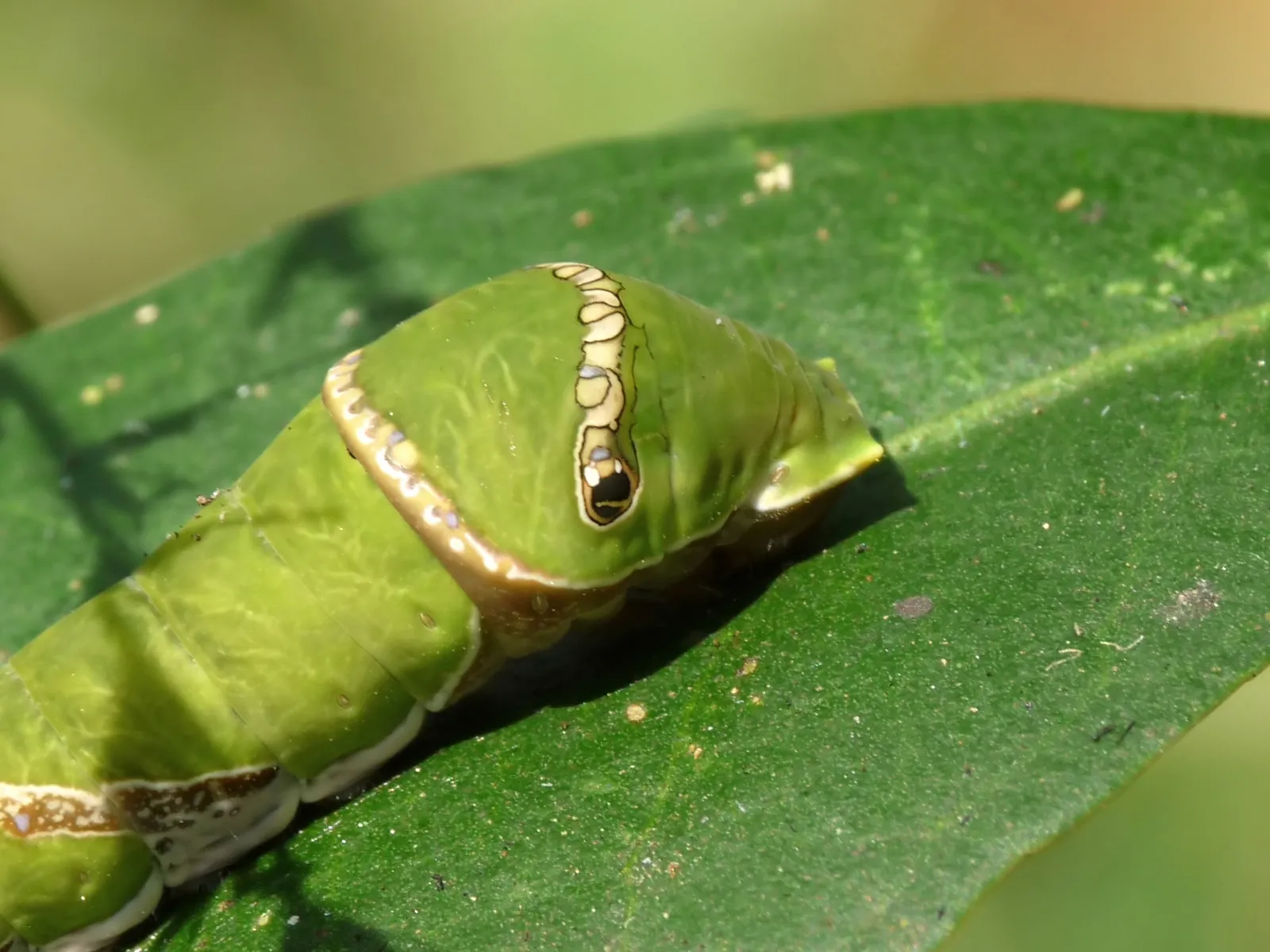
In most swallowtail butterflies in the genus Papilio, younger caterpillars show body coloration patterns that mimic bird droppings, which change during their final instar stage. In the Asian swallowtail butterfly, Papilio xuthus, the younger larva (first through fourth instar stages) mimics bird droppings, with a black and white color pattern.
Long before Asian swallowtails grow up to be beautiful black-and-white butterflies, and before they take on the appearance of fat, green leaves, the young caterpillars look like little logs of bird poop. The change in form from bird dropping to green leaf relies on only three genes, researchers at the University of Tokyo reported. Three genes. That’s it. The elegance of that switch is genuinely striking.
The Strategy Works Best at the Right Life Stage
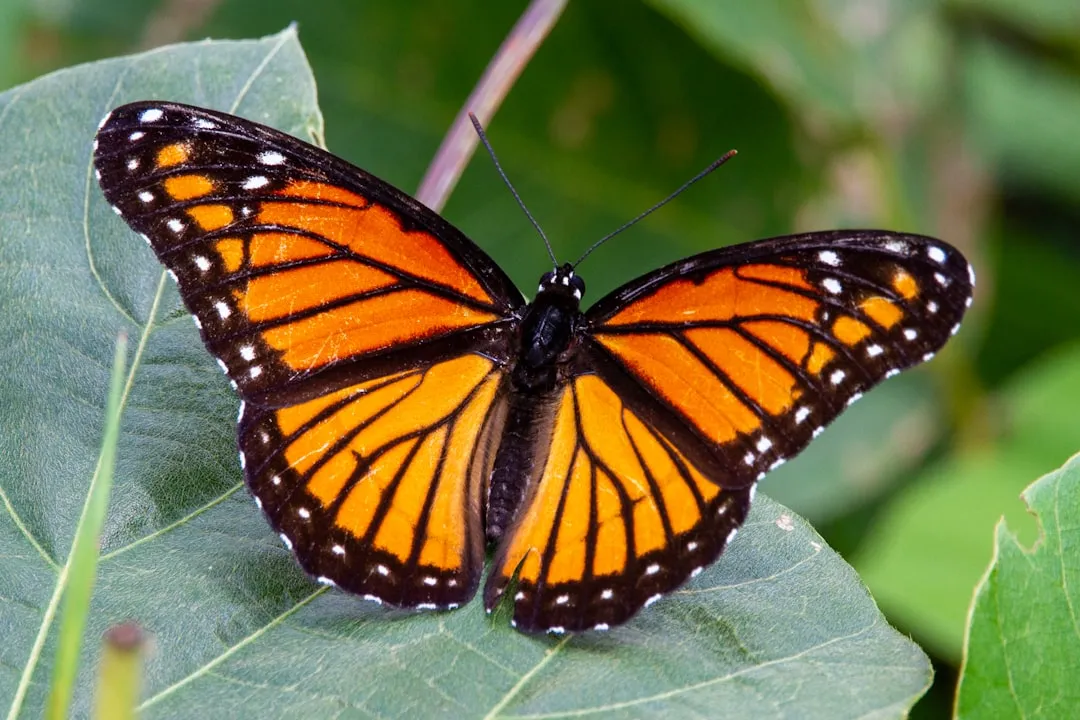
Newly emerged butterflies often rest with their wings positioned to maximize the dropping-like appearance while their wings dry and harden, a period when they cannot fly to escape predators. Many caterpillars employ the strategy during early instars when they’re smallest and most vulnerable, later switching to more elaborate defenses as they grow.
Some insects maintain the disguise specifically during daylight hours when visual predators like birds are hunting, but abandon the posture at night when different predators that rely less on vision become active. That’s a level of behavioral precision that goes well beyond simply having the right coloring. The timing of this mimicry demonstrates the fine-tuned nature of the adaptation, deployed precisely when it offers maximum benefit.
Which Species Pull Off This Trick
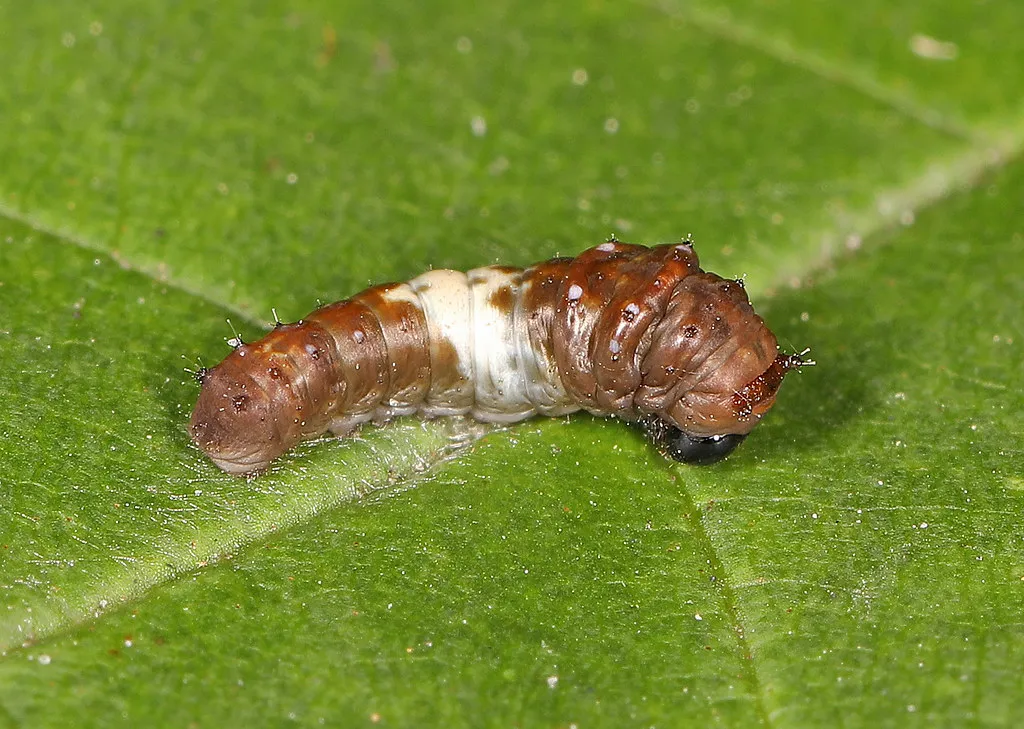
Lepidoptera are poop mimic masters. The majority of bird poop insect mimics are moths and butterflies. Considering they are a favorite bird food, this makes sense. The strategy is widespread precisely because the pressure driving it is so consistent. Birds are relentless, efficient hunters of caterpillars across almost every habitat on Earth.
The early smaller stages of swallowtail caterpillars are renowned imitators. This includes common Black, Eastern Tiger, and Spicebush Swallowtails. The Giant Swallowtail mimicry is so amazing, it has its own common name: Bird Poop Caterpillar. Caterpillars in the Papilio genus often exhibit bird-dropping mimicry in early instars, turning green or brown with distinctive eye spots as they mature.
The Color Pattern in Detail
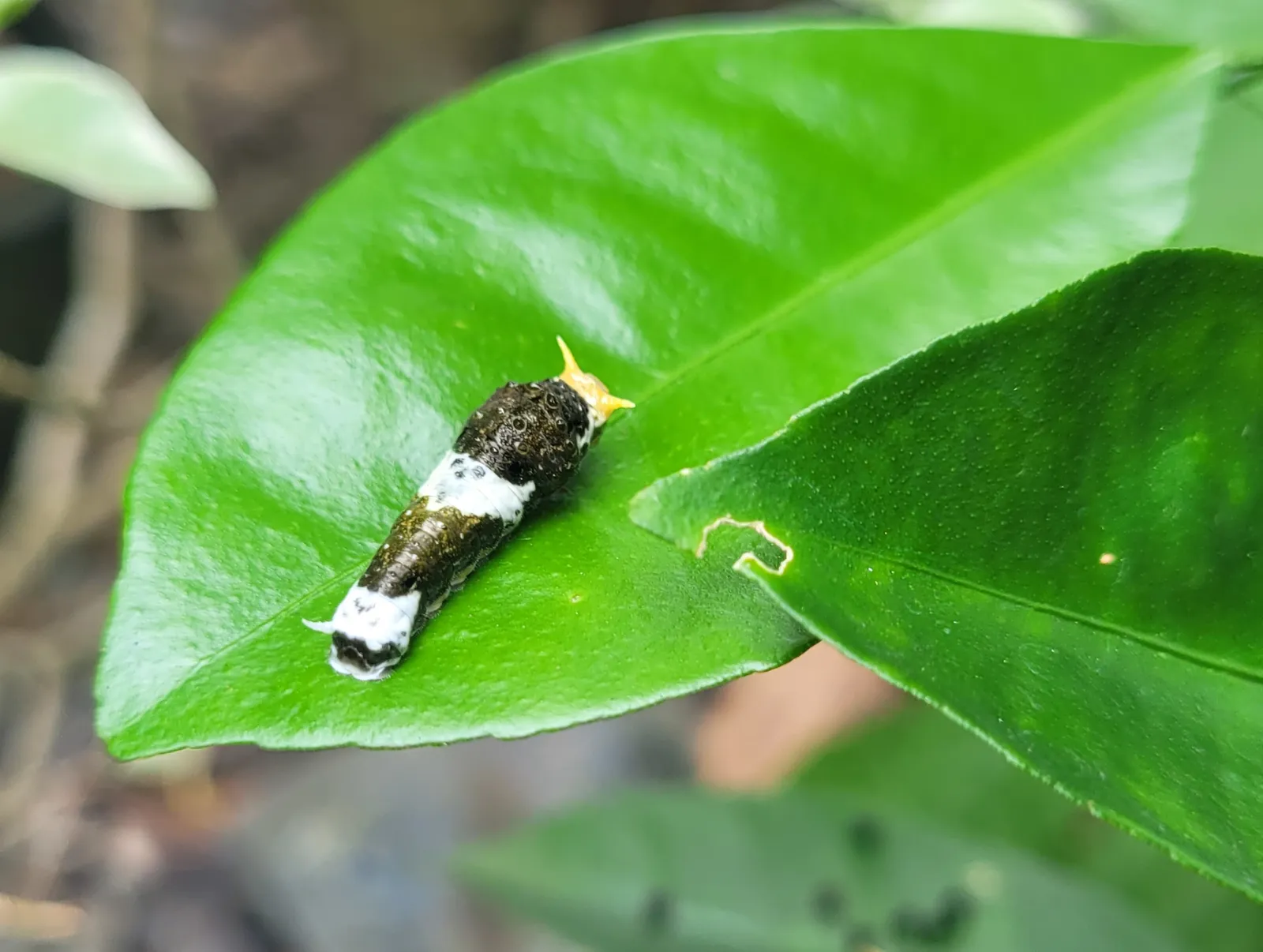
The early instar stages of many swallowtail butterfly caterpillars, including species from the Papilio genus, bear an uncanny resemblance to fresh bird droppings. These young caterpillars typically display a mottled pattern of dark brown and white, often with a glossy or wet-looking surface. That wetness is critical to the illusion.
Some caterpillars even go so far as having white patches simulating the white paste coating many bird droppings, which is mostly uric acid. The white portion of a real bird dropping is uric acid waste, not the same substance as the darker material. Some caterpillars replicate that two-tone structure almost exactly, which is remarkable given that they’ve never seen a biology textbook.
What This Tells Us About Evolution
Millions of years of evolution simply caused caterpillars to have these particular shapes, colors and behaviors. Throughout caterpillar history, the less birds and other predators could see them, the more they survived to produce adults, who produced more eggs for future caterpillars to hatch from. With time, the combinations of colors and structures were refined, until we have the amazing camouflage we can see in them today.
In the world of insects, high risk of attack has led to the development of camouflage as a means for survival, especially in the larval stage. The caterpillar stage is where survival is most precarious, and where natural selection has been most creative. Some caterpillars even have chemical defenses gained from poisonous plants, which they then broadcast to predators with a bright warning coloration. Bird dropping mimicry sits alongside those chemical defenses as one of the most successful solutions evolution has produced for the same basic problem: don’t get eaten.
The Takeaway
It’s easy to glance past something that looks unremarkable. That, of course, is precisely what these caterpillars are counting on. The disguise works because bird droppings are everywhere and because no predator wastes energy investigating something it’s learned to ignore.
What this behavior reveals is that evolution doesn’t always favor the loud, the bright, or the threatening. Sometimes the winning strategy is to look completely worthless. The caterpillar that convincingly resembles a mess on a leaf is, in biological terms, doing something far more sophisticated than it appears. It has found a way to hide in plain sight by becoming the one thing predators never look at twice.
AI Disclaimer: This article was created with the assistance of AI tools and reviewed by a human editor.