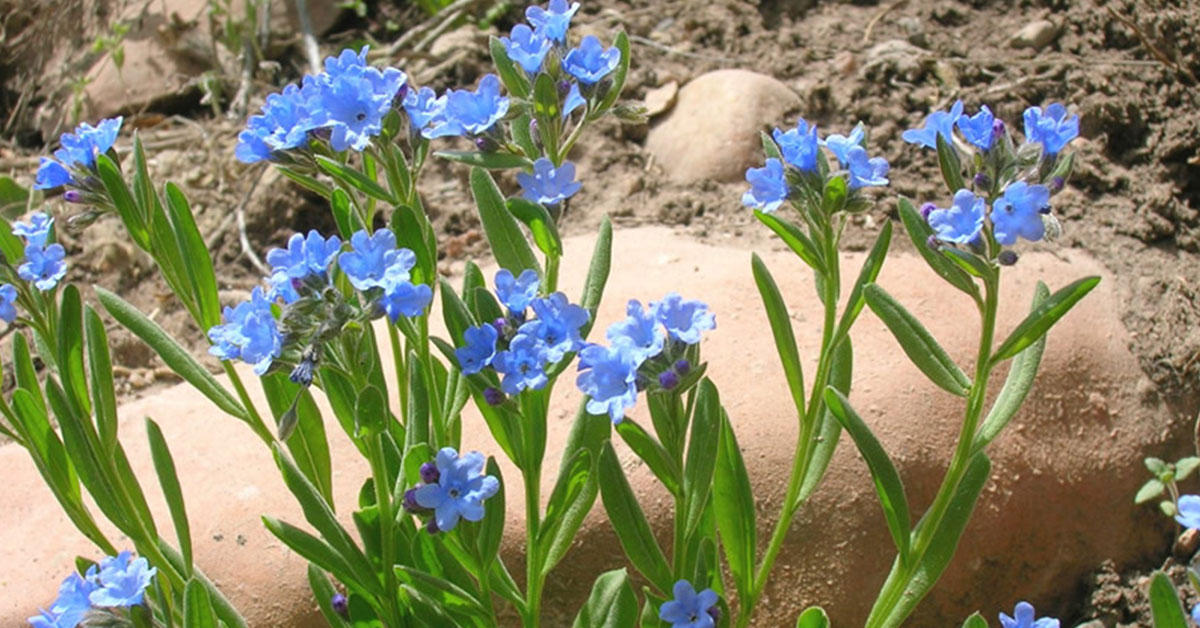

Short-Style Bluebells are aptly named – of the bluebells, it’s one of the more diminutive. But what it lacks in stature it makes up for with its stunning clusters of sky-blue, cup-shaped flowers that form in clusters at the end of its stems. It can be found growing in Colorado, Utah, Wyoming, Nevada, and Idaho. In this article, we’ll do a deep dive into growing Short-Style Bluebells and get you set up for long-term success with this flower.
Growing Short-Style Bluebells
Before we get to planting these lovely little blue flowers, let’s first get to know them a little better.
- Latin name: Mertensia brevistyla
- Other names: Short Bluebell, Small Bluebell, Shortstyle Bluebell, Snowy Bluebell
- Native to: Mountain West of the United States
- Invasiveness: Possibly
- Tenderness: Perennial
- Sun: Partial shade
- Water: Frequently until established
- Soil: Well-drained
- Hardiness zone: 3-8
- When to plant: Early to mid fall
- Spacing: 4-6 inches
- Plant height: 10 inches
- Bloom period: Mid spring
- Container friendly: Yes
- Fertilizer: High in phosphorus and potassium and lower in nitrogen
- Toxicity: Yes, all parts are poisonous to humans and animals
- Drought Resistant: Yes
- Deer resistant: Yes
- Pest resistant: Yes
Mertensia brevistyla, alternatively called Short Bluebell, Small Bluebell, Shortstyle Bluebell, and Snowy Bluebell, are very hardy flowers native to much of the western Rockies. Inside its native range, it is not considered invasive, and while no agency seems to consider it invasive, some gardeners report that it easily grows out of control. If you live outside of the U.S. states listed above, plant with extreme caution. When in doubt, plant it in a container.
This perennial doesn’t love full sun and prefers to be planted in shadier spots in well-drained soil. After you first plant it, give it water every few days. Once established, you can back off to watering just once per week. It does well in zones 3-8. Plant seeds in early to mid-fall for spring flowers.
When planting, space your Short-Style Bluebells about 4-6 inches apart. You can expect your plants to grow to about 10 inches and bloom in mid-spring. These guys do great in containers, especially if you offer a fertilizer high in phosphorus and potassium and lower in nitrogen. Once established, this flower is drought tolerant but beware: all parts of the plant are toxic to humans, pets, and other animals. Not even rabbits or deer will touch it. Short-Style Bluebells are extremely resistant to most pests. Once established, don’t expect anything to slow it down.
Water
Short-Style Bluebells need lots of water when they’ve just sprouted, usually a good drenching every few days. Once established, you can dial the water back to just once per week. These flowers are considered drought tolerant.
Sunlight
In nature, Short-Style Bluebells grow in lightly wooded areas and dry, partially shaded meadows. When planting these flowers in your garden, consider the conditions they need in the wild. They prefer to be fairly shaded and don’t thrive in direct sunlight. Consider placing them in the shade of much larger trees and shrubs.
Soil
These flowers grow well in well-draining, sandy soil, similar to what you would find in a forested meadow in the Rocky Mountain west.
Fertilizing
Especially in the first few months of planting, Short-Style Bluebells like being fed a fertilizer high in phosphorus and potassium and lower in nitrogen. Once established, they don’t require fertilizing, but it is an option.
Invasiveness
Inside its native range, it is not considered invasive, and while no agency seems to consider it invasive, some gardeners report that it easily grows out of control. If you live outside of the U.S. states listed above, plant with extreme caution. When in doubt, plant it in a container.
Growing Short-Style Bluebells in containers
Short-Style Bluebells do well when planted in containers, but be aware of their soil moisture levels. Containers tend to dry out a bit faster than ground soil, so be ready to water a little bit more frequently, maybe every four or five days instead of seven.
Common problems
Once established, Short-Style Bluebells are basically indestructible. Inside of their native range, they rarely succumb to pests or disease.
Propagating Short-Style Bluebells
The best way to propagate Short-Style Bluebells is by collecting their seeds and sowing them in early fall. If you’re trying to develop a patch of bluebells, you can simply allow nature to take its course. The flowers will go to seed and more will come up the next year.
Wildlife attracted by Short-Style Bluebells
Planting Short-Style Bluebells in your garden is an excellent way to attract butterflies and other pollinators. Among other species of bluebell, butterflies are the most common source of pollination.
Uses for Short-Style Bluebells
As far as I can tell based on the research I did for this article, Short-Style Bluebells have no medicinal use of any kind. They are an excellent plant for your local pollinators and nice to look at.