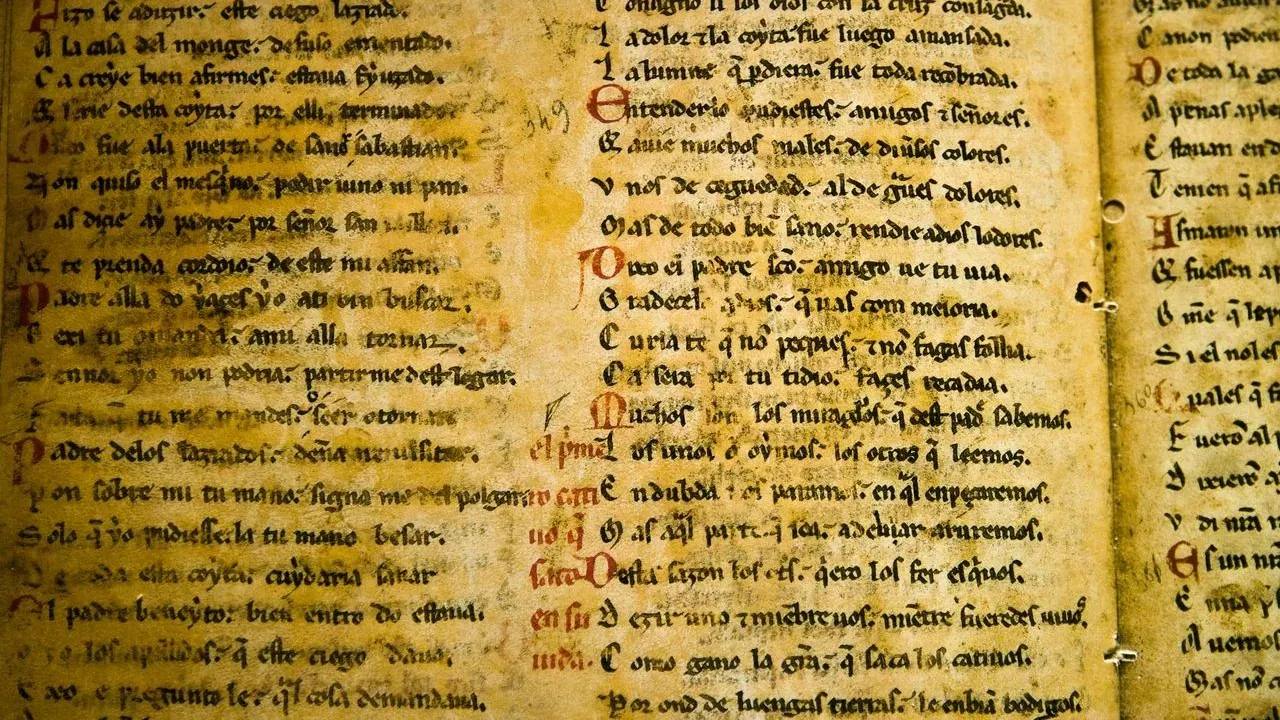

Communities that rely on sheep for wool, meat and milk have long faced sudden losses when disease sweeps through flocks. A new study shows that one such threat left its mark centuries ago inside the very pages of a medieval religious manuscript. Researchers at University College Dublin recovered genetic material from the York Gospels, a book produced in the late 900s, revealing that the sheep pox virus has circulated among livestock for more than 3,700 years. ([1])
Hidden in Parchment Pages
The York Gospels were written by Anglo-Saxon scribes in Canterbury and later moved to York Minster, where the volume has remained for centuries. Its pages were made from animal skins, primarily calf and goat, yet scientists detected sheep pox virus DNA on the parchment. The finding suggests either that the animals used for the skins carried the pathogen or that contamination occurred during the preparation process.
Because parchment can act as a stable archive for genetic material, the manuscript preserved evidence that would otherwise have been lost. University researchers described the book as a biological time capsule that captured a snapshot of animal health from the early medieval period.
Comparing Ancient and Modern Samples
To place the discovery in a longer timeline, the team compared the manuscript DNA with genetic material recovered from Bronze Age sheep teeth. The combined evidence indicates that sheep pox has affected Eurasian herds since at least 1700 BCE. The virus genome appears remarkably stable across that span, showing fewer changes than some other poxviruses have undergone.
Lead author Louis L’Hôte noted that this stability may point to key evolutionary steps that occurred even earlier, steps that allowed the pathogen to adapt to its sheep host. Such insights help explain why the disease continues to pose problems for farmers today.
Current Risks to Livestock
Sheep pox spreads quickly through direct contact and can kill large numbers of animals, especially lambs. Outbreaks reduce wool quality, meat yield and milk production, striking hardest at small-scale herders who depend on these resources. An active outbreak in Greece has already caused measurable economic damage, underscoring that the ancient threat remains relevant.
Unlike some human diseases, sheep pox does not infect people, yet its impact on agriculture can ripple through rural economies. The study therefore links a medieval manuscript directly to present-day concerns about animal health and food security.
What Archives Might Still Reveal
L’Hôte suggested that other libraries and manuscript collections worldwide could hold similar genetic traces of past animal diseases. Systematic sampling of parchment might uncover additional outbreaks and help map how pathogens moved across regions and centuries.
Further work is needed to determine whether the virus reached the parchment through infected animals or through handling during production. Either route would expand understanding of how medieval farming practices intersected with disease transmission.
The discovery illustrates how objects created for religious purposes can quietly preserve records of everyday struggles faced by farming communities long ago. Continued study of such materials may offer practical clues for managing the same pathogen in the present.
AI Disclaimer: This article was created with the assistance of AI tools and reviewed by a human editor.