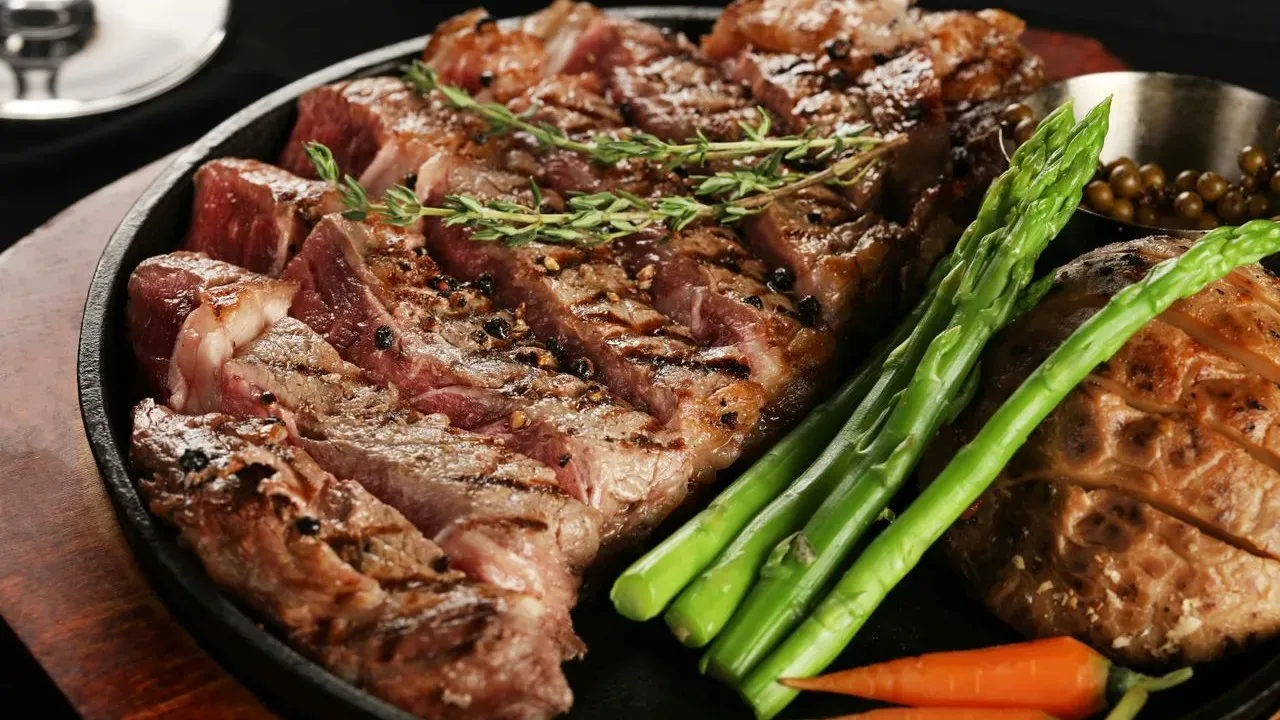

Labor Day marks the final major backyard cookout of the season for many households. Home cooks looking to serve steak that is evenly cooked from edge to edge while still delivering a deep, flavorful crust have turned to a counterintuitive approach. The method begins in a low oven before moving to the grill. This technique, detailed in a recent New York Times Cooking guide, produces results that stand out even among experienced grillers ([1]).
Why the Oven Comes First
Traditional direct grilling often leaves the outer layers overcooked by the time the center reaches the desired temperature. Starting the steak in a gentle oven reverses that problem. The low heat raises the internal temperature slowly and uniformly. Once the steak is pulled from the oven, a quick sear on a hot grill or cast-iron surface creates the crust without pushing the interior past medium-rare or medium. The result is a rib-eye with consistent doneness throughout and a pronounced Maillard reaction on the exterior. For a holiday weekend when guests expect something special, the extra step removes much of the guesswork that can accompany last-minute grilling.
Putting the Method Into Practice
Select well-marbled rib-eye steaks roughly one and a half inches thick. Season them generously with salt and let them sit uncovered in the refrigerator for several hours or overnight. This dry-brining step improves both flavor and browning. Preheat the oven to 275 degrees. Place the steaks on a wire rack set over a baking sheet and cook until they reach an internal temperature of about 115 to 120 degrees for medium-rare. Transfer them to a hot grill or skillet for two to three minutes per side. A final rest of five to ten minutes allows the juices to redistribute before slicing.
Timing and Equipment Notes
The oven phase takes roughly 30 to 45 minutes depending on steak thickness and starting temperature. The grill sear is brief, so have tongs and an instant-read thermometer ready. A two-zone fire on a charcoal grill or a screaming-hot gas grill both work well. Cast-iron pans on the stovetop offer an indoor alternative when weather turns. Because the bulk of the cooking happens in the controlled environment of the oven, the final sear can be timed to coincide with side dishes coming off the grill. That coordination helps keep the meal moving smoothly during a busy holiday gathering.
A Reliable Finish to Summer
Labor Day cookouts often carry extra weight as the last outdoor meal before cooler weather arrives. A steak cooked this way delivers the satisfaction of a restaurant-quality result without requiring advanced grill mastery. The technique has gained attention precisely because it solves a common frustration: steaks that look impressive on the outside but fall short inside. Home cooks who try the reverse sear once tend to adopt it for future rib-eyes. It turns an ordinary cut into the centerpiece of the evening while leaving time to enjoy the company rather than hovering over the fire.
AI Disclaimer: This article was created with the assistance of AI tools and reviewed by a human editor.