
Drought doesn’t give gardeners much warning. One week the beds look fine, and the next the soil is cracking and the tomatoes are wilting by noon. For most people, the instinct is to haul out the hose, crank the tap, and hope for the best. For a retired engineer, the instinct was different: figure out why the barrel was failing, and fix it properly.
What came out of that thinking wasn’t a complicated invention. It was a series of deliberate, low-cost modifications to a standard 55-gallon rain barrel that transformed a passive storage tank into a working irrigation system. The setup is replicable, it’s grounded in real physics, and the drought conditions it was built for are only becoming more common.
The Drought Reality That Made This Necessary
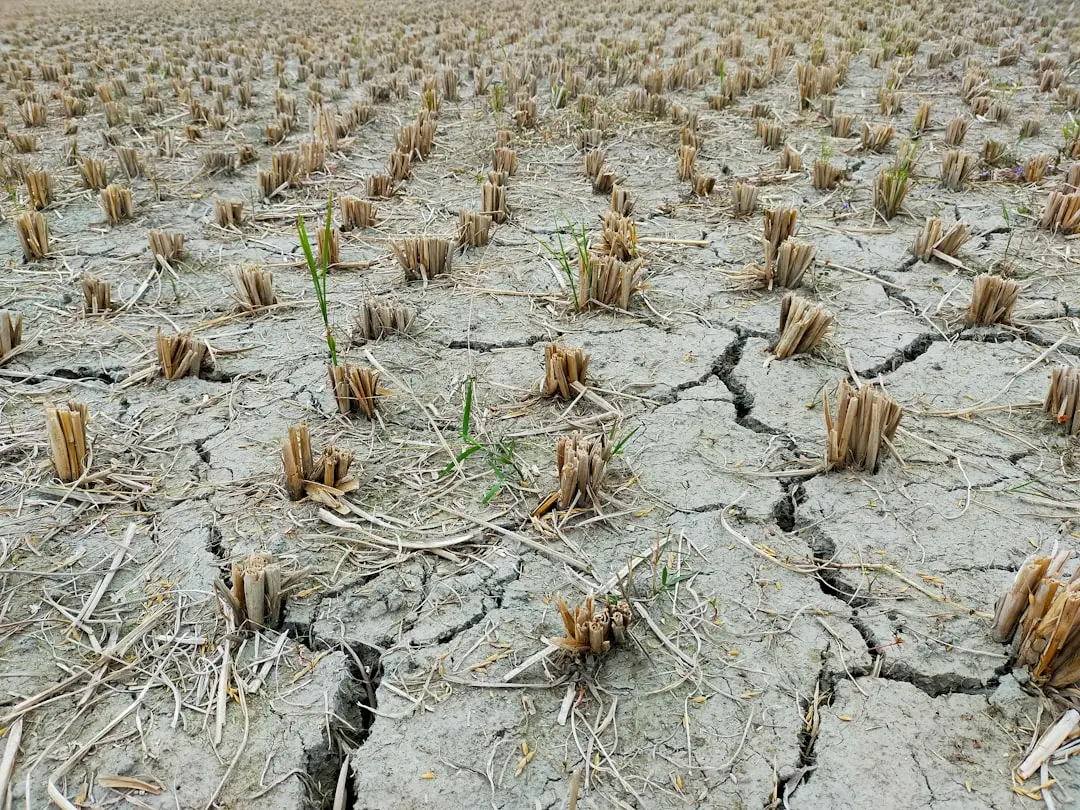
Drought conditions due to hot, dry weather reached record levels in fall 2024, affecting every state but Alaska and Kentucky, according to the National Drought Mitigation Center at the University of Nebraska. That wasn’t a temporary blip. As of June 30, 2026, roughly 40 percent of the United States and Puerto Rico and nearly half of the Lower 48 states are in drought, according to Drought.gov.
From the catastrophic wildfires in Southern California to historic low-water levels on the Mississippi River and record-low streamflow in the Northeast, drought and its impacts touched nearly every corner of the country in 2025. For backyard gardeners, this isn’t an abstract statistic. It’s dead peppers, collapsed squash vines, and water bills that keep climbing through July and August.
Why a Basic Rain Barrel Often Isn’t Enough
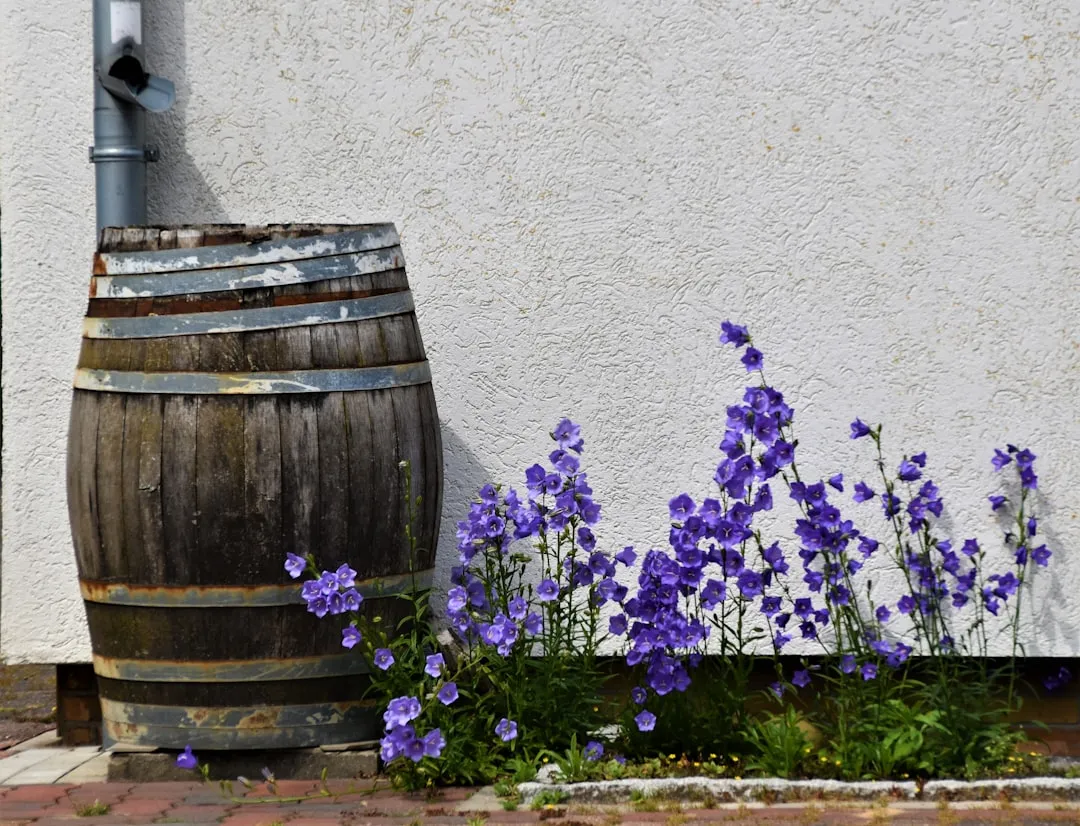
The truth is that a couple of 50-gallon barrels don’t hold much water. Think about how long it can take to irrigate a garden, compared to the few minutes it takes to use a hose to fill one or two 50-gallon barrels. Most people set one up, fill it during a rainstorm, and then empty it in two or three hand-watering sessions.
During an inch of rainfall, more than 900 gallons flows off of a house with a 30-by-50 foot roof. A single barrel captures a tiny fraction of that. The rest pours into the overflow and heads for the storm drain. The engineer’s first observation was straightforward: the collection system was wasting most of what it caught.
The Core Modification: Elevation and Gravity Pressure
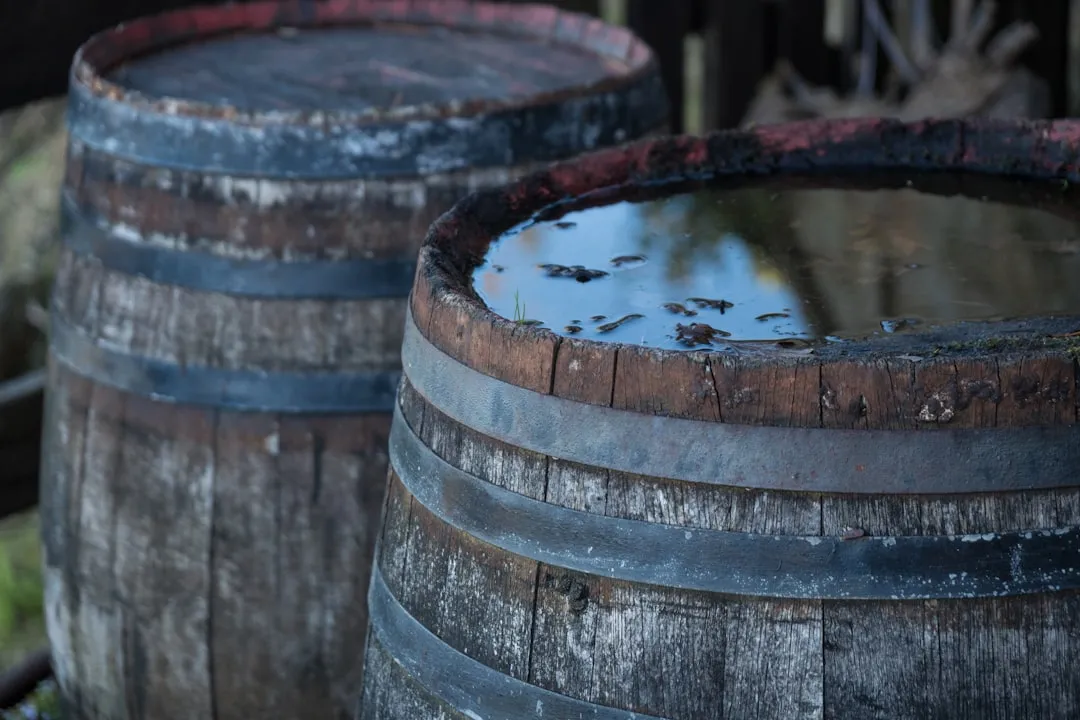
The single most impactful change was lifting the barrel off the ground. Placing blocks or a purpose-built stand to elevate the barrel 12 to 24 inches increases pressure and directly improves gravity-fed soaker hose performance. This is basic fluid physics: height equals pressure.
According to The Rainbarrel Man, each foot in elevation change is equal to 0.433 PSI of water pressure, so placing a three-foot tall barrel on a three-foot stand means roughly 2.6 PSI of water pressure. That’s enough to run a soaker hose steadily through a garden bed without a pump, an electrical connection, or any moving parts. A compacted gravel base or concrete pads work well for stability.
Adding a Low-Pressure Soaker Hose
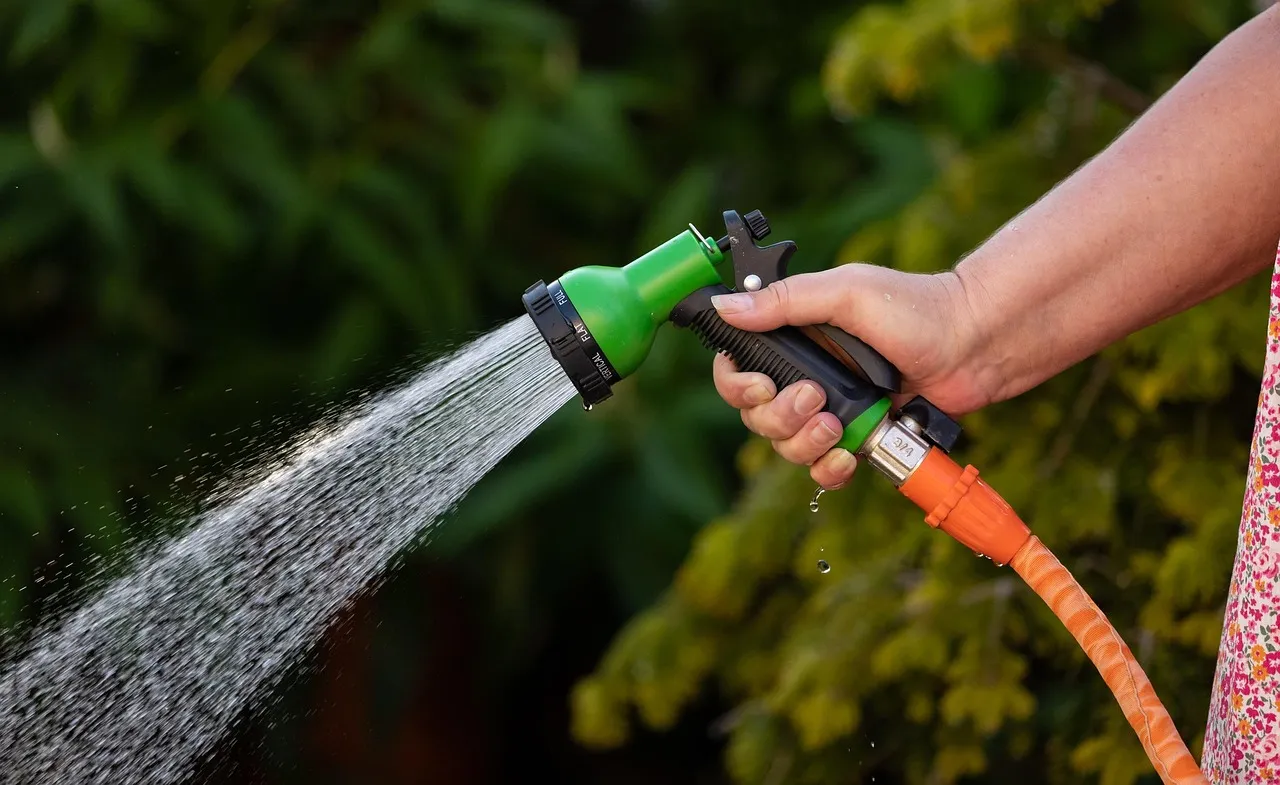
Standard soaker hoses need 8 to 10 PSI to work correctly, which is far more than a ground-level barrel can provide. The engineer’s solution was specific: use a rain barrel soaker hose, which is a different product entirely. Rain barrel soaker hoses have a more porous wall so non-pressurized water can easily seep into the garden.
Soaker hoses have a porous surface that allows controlled amounts of water to seep out as water flows through. Weave one through your garden and water will sink into the soil along the length of the hose. They work wonderfully for shady perimeter gardens, hedge rows, or any layout where the hose can curve gently to serve every plant. The result is slow, deep watering directly at the root zone, which is where it actually counts during a drought.
Drilling the Right Spigot Position
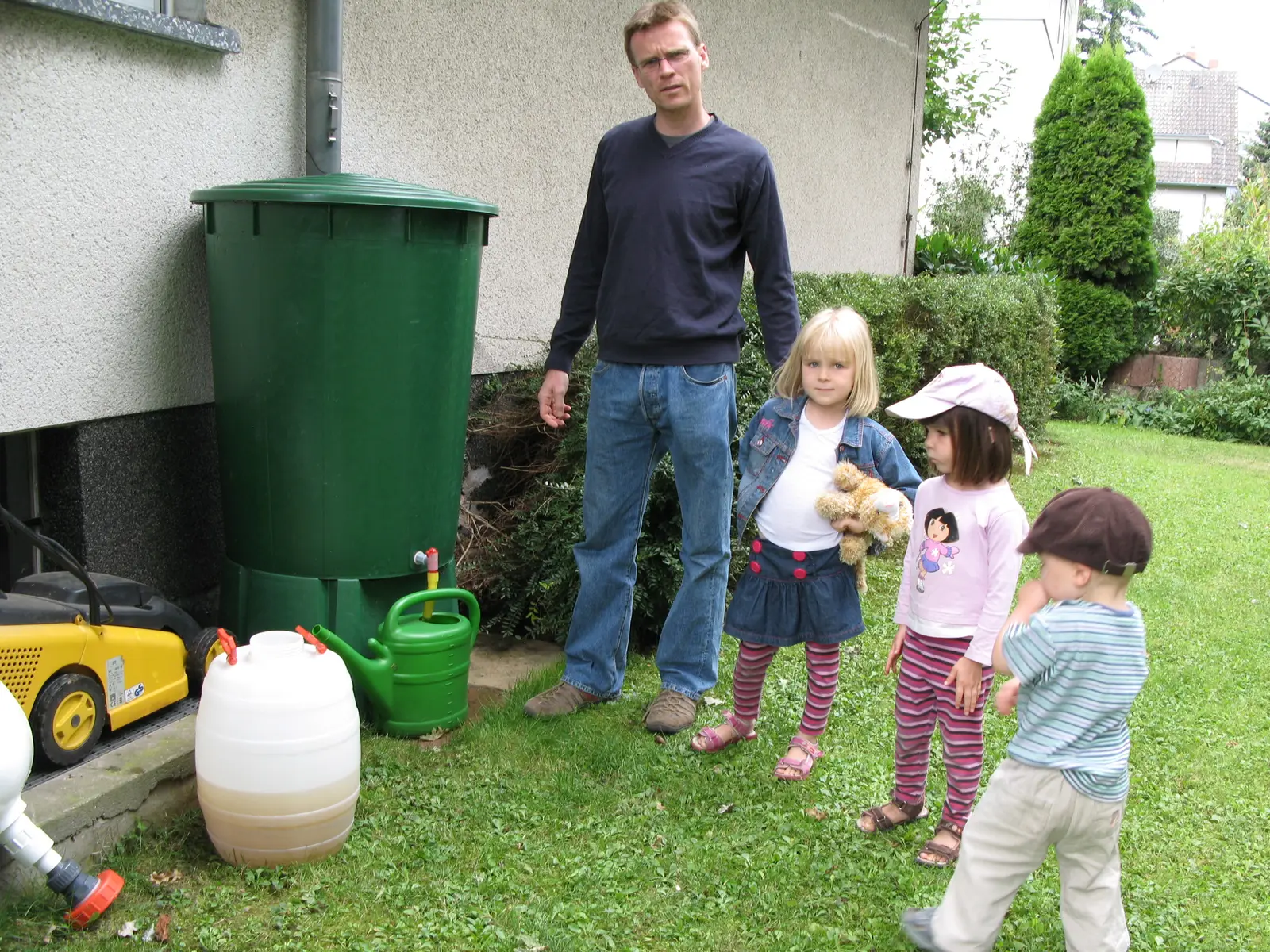
Factory spigots are often placed too high on the barrel, leaving several gallons of water permanently unreachable at the base. Install a spigot near the base, about 2 to 3 inches up from the bottom, so sediment can settle below the outflow. This detail alone recovers usable water that a standard setup simply never delivers.
If the barrel lacks a factory outlet, mark a hole approximately 2 to 3 inches from the bottom, use a hole saw sized for the bulkhead fitting, drill cleanly, then insert the bulkhead with gaskets inside and outside, wrap the spigot threads with Teflon tape, and thread the spigot into the bulkhead fitting. It’s a straightforward job that most people can complete in under an hour with basic tools.
The Overflow Linkage: Capturing What Would Be Lost
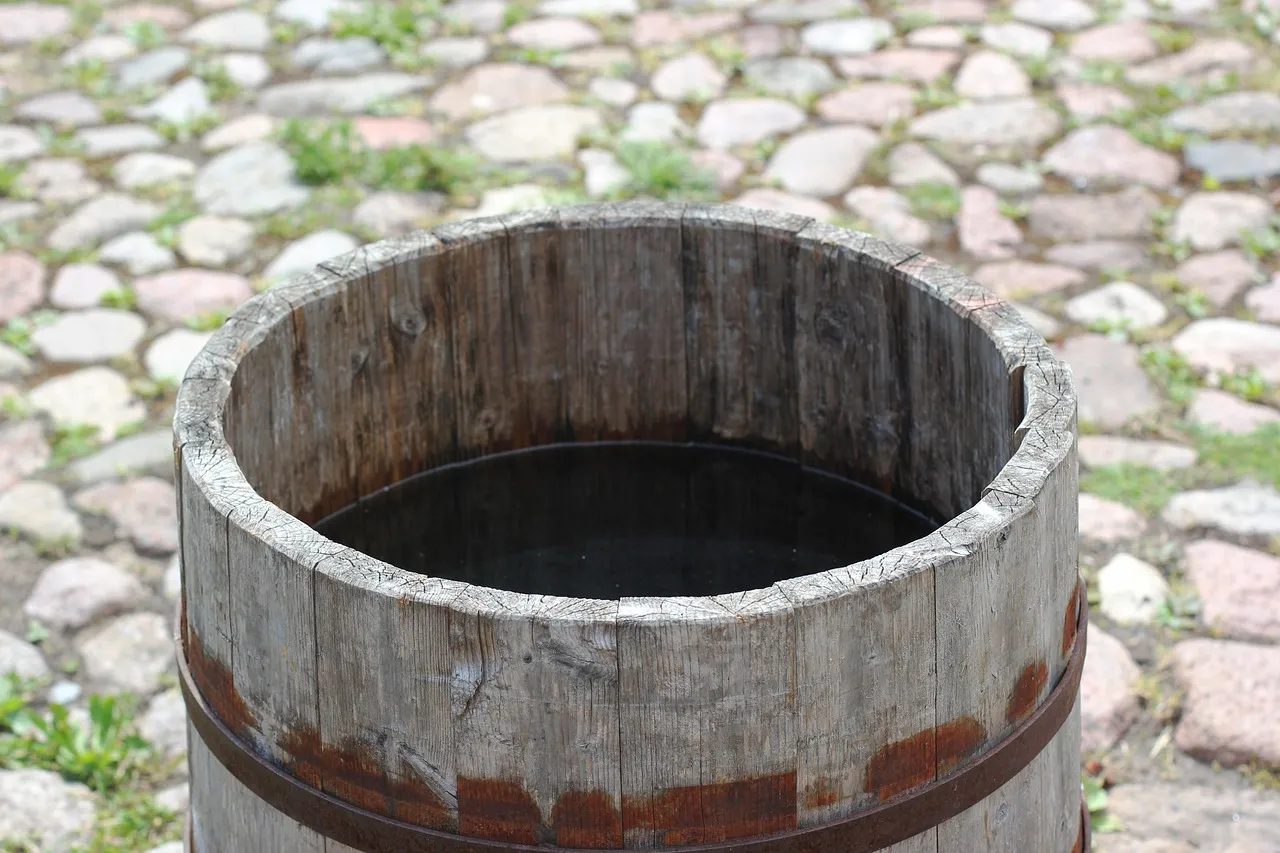
A single 55-gallon barrel fills fast. A 55-gallon rain barrel under one downspout can collect 1,500 to 3,000 gallons over a year. The problem is that most of that potential is lost the moment the barrel overflows. The engineer’s fix was to link multiple barrels in series using a manifold connection at the overflow port.
Three barrels in series will hold about 165 gallons, enough to water most home vegetable gardens through a two-week dry stretch. Linkable barrels can be connected using separately sold linking kits for increased capacity. This tripling of storage capacity alone dramatically extends the system’s useful life during a dry spell without requiring anything more than basic plumbing fittings and patience.
Why Rainwater Itself Is Better for Plants
The modification wasn’t only about volume. The water source itself matters. Rainwater is naturally soft and contains much lower concentrations of magnesium, calcium, and chlorine, and has a slightly acidic pH that most garden plants prefer. Municipal tap water, by contrast, is treated for drinking safety, not plant health.
Rainwater is naturally free of chlorine and fluoride, which can be harmful to plants. It also has a neutral to slightly acidic pH, making it ideal for most vegetables. By using rainwater, you can improve plant growth and reduce the risk of soil salinity. Over a full growing season, that difference in water chemistry adds up in measurable ways, particularly in root health and fruit set.
The Filter: A Small Part That Prevents Big Problems
One failure point in any rain barrel soaker hose system is clogging. The pores in a low-pressure soaker hose are larger than those in standard hoses, which makes them more vulnerable to debris. Rain barrel soaker hoses are prone to clogging for two reasons: the pores are larger to compensate for non-pressurized water, which lets in a little sunlight that leads to algae growth; and because rainwater isn’t chlorinated, there is nothing to combat the accumulation of algae and other particulates over time.
The fix is a fine-mesh inline filter installed between the spigot and the hose. Rain barrel soaker hoses work best with a 200-mesh filter, which is finer than the filters used for gravity-fed drip kits, to help prevent clogs. Cleaning the filter a couple of times per season is all the maintenance required. It’s a five-minute job that keeps the whole system running cleanly.
Mulching the Hose to Cut Evaporation
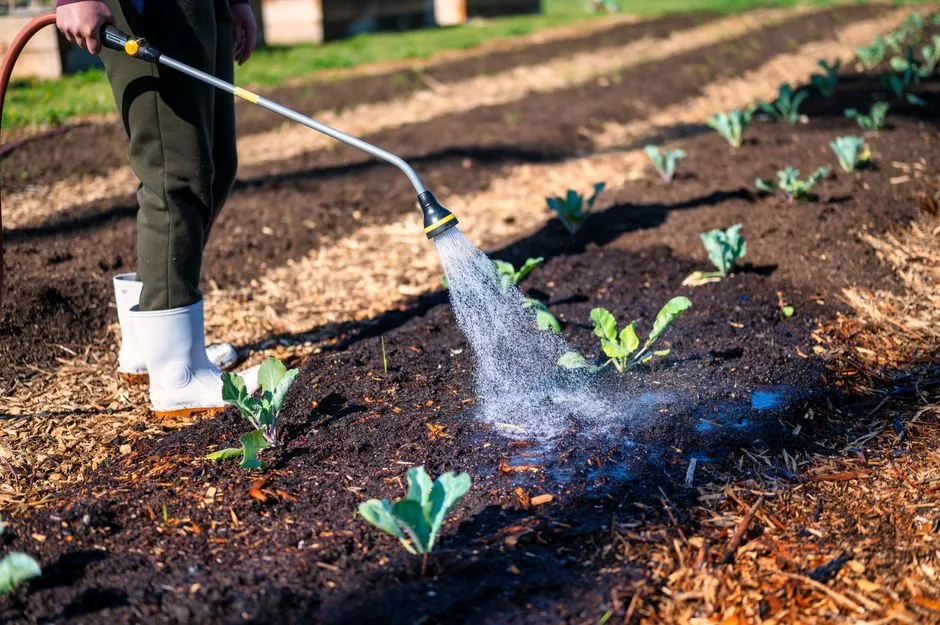
Even the best delivery system can lose water to surface evaporation before it reaches the root zone. The engineer’s solution was borrowed from standard horticultural practice: cover the soaker hose with mulch. After testing the soaker hose to confirm it waters the area well, cover it with two or more inches of mulch, such as wood chips, bark, leaves, or compost. The mulch keeps water from evaporating, helps spread the water flow, and also helps protect the hose from the sun.
Traditional sprinklers require high water pressure and waste almost 25 to 30 percent of water due to evaporation and wind effect. A mulched soaker hose loses virtually none of that to evaporation, which means each gallon stored in the barrel does far more work in the soil. In drought conditions, that efficiency gap between overhead watering and ground-level delivery is the difference between plants that survive and plants that don’t.
Gravity Timing: Letting the System Run at the Right Hour
The final touch was behavioral. The engineer used a low-pressure compatible mechanical timer on the spigot, set to run the soaker hose in the early morning. One benefit to slower water delivery is increased saturation efficiency. While you might expect to double irrigation time, an extra 5 to 10 minutes often does the trick. Slow-release watering in the cooler morning hours allows deep soil penetration before midday heat accelerates surface moisture loss.
Some mechanical or battery timers function well at near-zero pressure; the key is to make sure the product specifically states gravity or low-pressure compatibility. Gravity irrigation shines in situations where simplicity, reliability, and water conservation are priorities. Because there is no pump to fail and no electricity required, these systems can operate quietly and dependably for years. Set it up once, adjust the timing over the first week, and the system mostly looks after itself.
The Takeaway: Practical Engineering for a Drier Future
What this retired engineer built wasn’t magic. It was the result of looking at a common garden tool, identifying exactly where it was failing, and applying straightforward fixes to each weak point. Elevation for pressure, linked barrels for capacity, a low-pressure soaker hose for delivery, a 200-mesh filter for reliability, and mulch to seal in every drop.
Rainwater harvesting is becoming increasingly prevalent in the United States, particularly in drought-prone states like California and Texas, where rainwater is collected from roofs and stored in barrels or cisterns as an alternative water source for irrigation. The conditions driving that trend are not going away. Each summer brings hotter temperatures than the previous year, along with more erratic weather patterns, according to plant experts tracking garden conditions across the country.
A well-modified rain barrel system won’t replace a failing water table, but it will keep a garden alive through a two-week dry stretch using water that was already falling on your roof. That’s not a small thing when the alternative is watching a season’s worth of work dry out in the heat.
AI Disclaimer: This article was created with the assistance of AI tools and reviewed by a human editor.