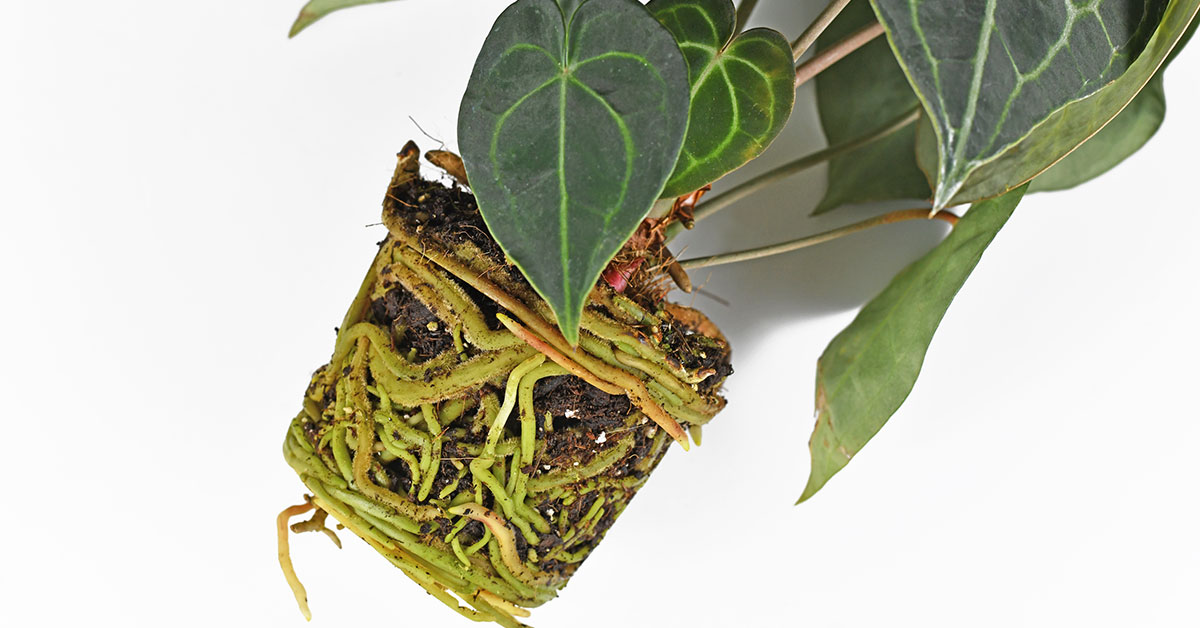

Repotting anthurium can be a great way to refresh your indoor and outdoor plants and keep them looking healthy and vibrant. With the right care, anthuriums can live for several years and produce beautiful, long-lasting blooms. In this article, we’ll go over the steps for repotting anthuriums. This includes how to choose the right pot, potting mix, and how to acclimatize your plants to their new environment. We’ll also cover how to keep your anthuriums healthy and happy in the future.
There are 10 common types of anthurium grown as houseplants, and each can be repotted using this guide. Those varieties include:
- Anthurium scherzerianum
- Anthurium crystallinum
- Anthurium andreanum
- Anthurium veitchii
- Anthurium warocqueanum
- Anthurium magnificum
- Anthurium hookeri
- Anthurium clarinervium
- Anthurium veitchii hybrid
- Anthurium salvinii
Guide To Repotting Anthurium
Repotting anthurium is a simple task that helps keep the plant healthy and happy. To repot anthurium, start by gathering a pot with a drainage hole, potting soil, and a pair of gardening gloves. Fill the pot halfway with potting soil and set the anthurium in the center. Add more soil around the plant until it is secure, and water it thoroughly. When caring for anthurium, be sure to place it in a spot with bright, indirect light, and water it when the top inch of soil is dry.
The right potting soil for repotting anthurium is one that is well-drained and slightly acidic. The soil should contain some organic matter such as compost, bark, or peat moss. It should also contain perlite or vermiculite to help improve drainage and aeration. Repotting anthurium with soil that is too rich in nutrients will result in the plant’s leaves developing yellow spots. A good potting mix for repotting anthurium should contain peat moss, perlite, and a small amount of slow-release fertilizer. The soil should also be slightly damp, but not soggy. Make sure to water the soil before and after repotting the anthurium as this will help the soil to settle and the roots to take hold. Be sure to avoid soggy soil, as this can lead to root rot.
Aftercare For Repotted Anthurium
After repotting an anthurium, it is important to provide adequate aftercare for the plant to ensure its continued health. This includes keeping the soil of the new pot moist, but not overly wet, and providing a bright, but indirect light source in order to promote healthy growth. You may want to hold off on fertilizing for a couple of months after repotting. Once your plant is established, fertilizing the anthurium once every two weeks with an all-purpose fertilizer can also help it to thrive.
The anthurium should also be monitored for pests such as mealybugs or aphids, and any infestations should be treated immediately. Finally, the anthurium should be repotted every two to three years. This will help provide the plant with fresh soil and ample room for growth.