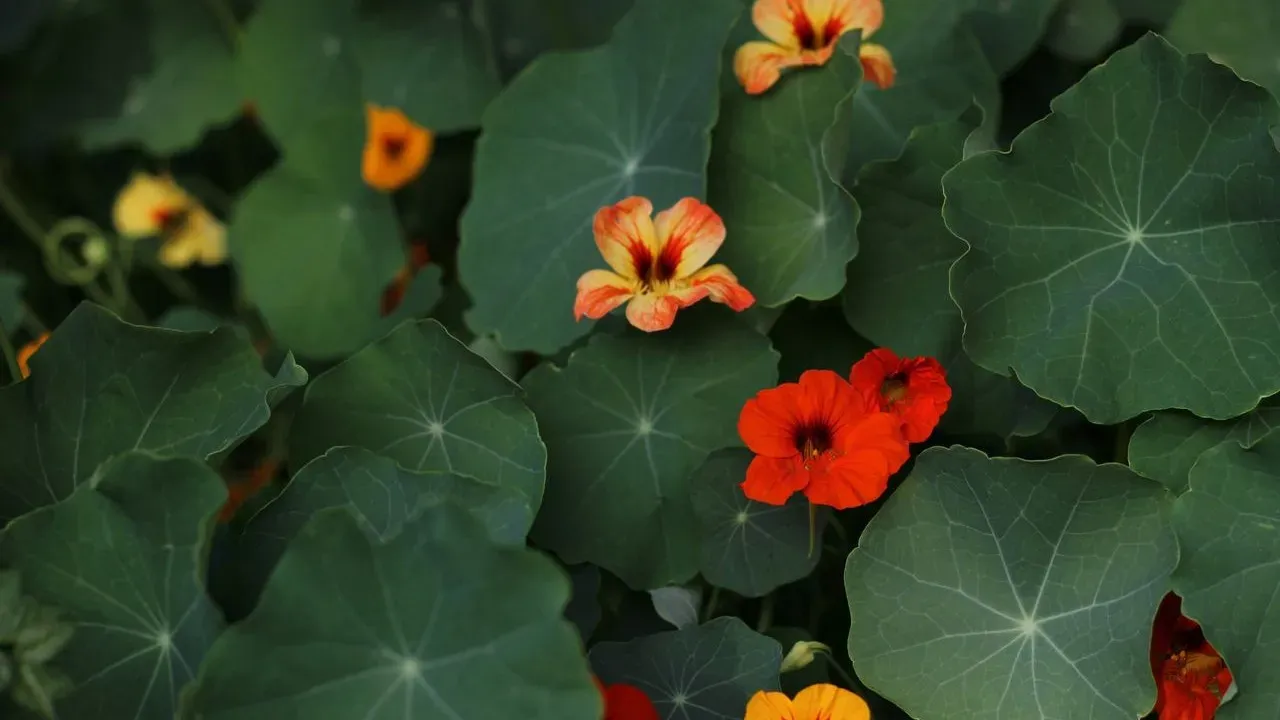

Nasturtiums deliver vibrant color and a peppery bite to summer gardens and salads alike. These cheerful annuals, however, cannot withstand freezing temperatures on their own. Gardeners in colder regions must step in with targeted protection if they hope to extend the plants’ life beyond the first frost. The approach varies by location and hardiness zone, but the goal remains the same: preserve the bright blooms and edible foliage until warmer weather returns. ([1])
Know Your Zone Before Frost Arrives
Nasturtiums belong to the species Tropaeolum majus and complete their life cycle in a single growing season. In USDA Zones 9 through 11, the plants often survive outdoors with only occasional light protection. Below Zone 8, freezing conditions typically kill them outright. Checking local hardiness data early helps determine whether the plants can stay in the ground or require more active intervention.
Even in marginal zones, nasturtiums reseed readily. Seeds that drop in autumn frequently sprout the following spring without any extra effort from the gardener. This natural habit offers a low-maintenance backup when overwintering live plants proves difficult.
Shield Plants Outdoors During Light Frost
When forecasts call for temperatures dipping below 35 degrees Fahrenheit, floating row covers provide reliable defense. Drape the fabric over the plants and anchor the edges firmly with soil, bricks, or weights to trap warmer air near the foliage. The covers can remain in place during the upper 30s and 40s for added benefit.
Container-grown specimens benefit from relocation to a sheltered spot combined with the same row-cover treatment. Cardboard boxes offer a quick, temporary alternative for small plants, though they must be removed promptly if they become wet. In all cases, coverings come off once the frost threat passes.
Move Plants Indoors in Colder Regions
Gardeners in Zone 8 and colder must lift plants before the first hard freeze. A light pruning to 10 or 12 inches reduces bulk and supplies edible leaves and flowers for the kitchen. Dig a generous root ball at least 10 inches across and deep, then settle the plant into a container of similar diameter filled with fresh soil.
Allow the newly potted nasturtium a few days in a protected outdoor area before bringing it inside. A sunny indoor spot kept between 55 and 70 degrees Fahrenheit suits the plant best. Water just enough to maintain even moisture without saturation, and harvest sparingly, always leaving several leaves on the stem. Growth slows noticeably indoors, yet the foliage and blooms remain usable through the winter months.
Return Plants Outdoors and Plan for Spring
Once spring frost danger ends, gradually reintroduce potted nasturtiums to outdoor conditions over several days. After acclimation, they can be transplanted back into the garden or left in containers. Because these are annuals, many will eventually set seed and decline, making fresh spring sowings a reliable way to maintain a continuous display.
Collected seeds from the previous season also provide an easy route to new plants. With modest preparation, the same bright, edible flowers that enlivened summer meals can return the following year without starting from scratch.
AI Disclaimer: This article was created with the assistance of AI tools and reviewed by a human editor.