

Summers in Palm Springs are serious business. Temperatures routinely climb past 110°F in the Coachella Valley, and a courtyard without shade is less of an outdoor retreat and more of a solar oven. The good news is that the right trees can transform that baked concrete into a genuinely cool, livable space, and many of them need surprisingly little water to do it.
If you’re designing a desert landscape in Palm Springs, selecting the right trees is crucial to creating a beautiful, sustainable, and water-efficient environment. With the right combination, you can achieve a real balance between aesthetics, shade, and drought tolerance in this arid region. These ten trees are worth knowing before you call the nursery.
1. Blue Palo Verde (Parkinsonia florida)
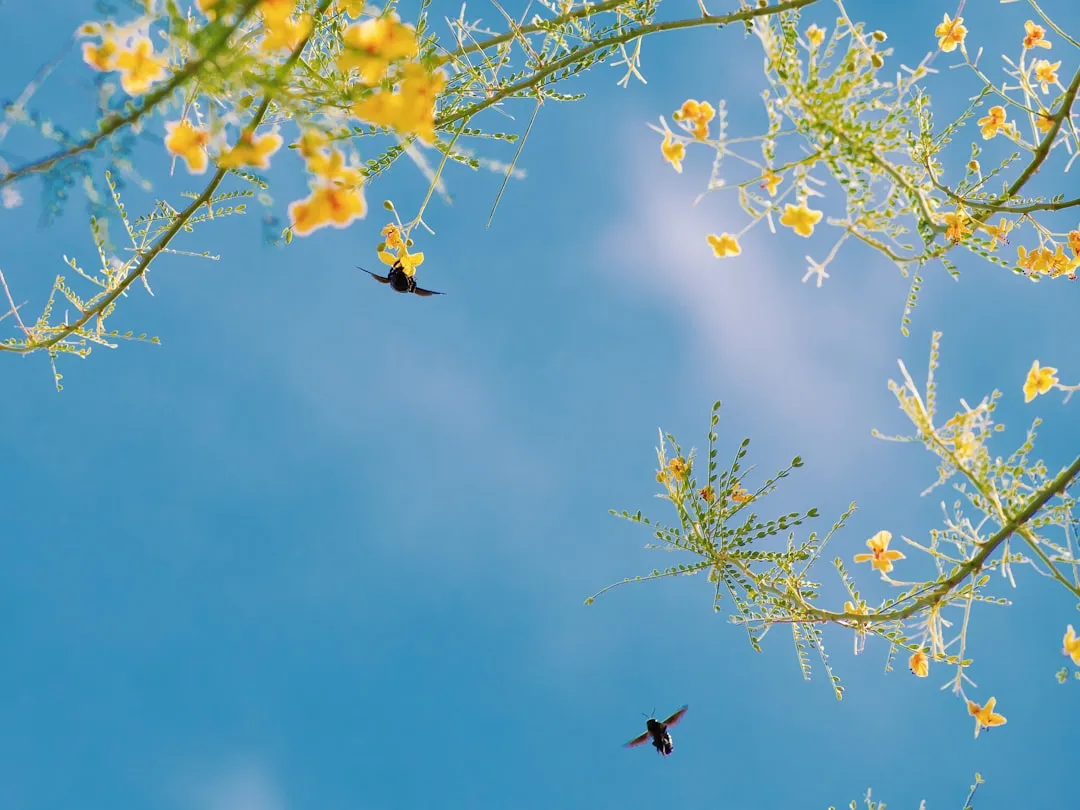
The Blue Palo Verde has been growing in the Southwest for centuries and is a mainstay of the Sonoran landscape. It can be identified by its green-grey bark and bright yellow floral display. While the small foliage is heat and cold deciduous, the blue-green bark makes it appear evergreen from a distance.
Palo verde provides filtered shade with minimal water requirements, growing to a mature size of roughly 20 to 30 feet tall and equally wide, reaching that mature size in 10 to 15 years. It is extremely drought-tolerant, capable of surviving on rainfall alone once established, and genuinely thrives in desert and semi-desert conditions.
It is a sculptural standout with sinewy green limbs and a light, airy canopy, and its smooth, photosynthetic bark glows chartreuse, making it a four-season focal point. For a courtyard with a Southwestern feel, few trees can match it.
2. Velvet Mesquite (Prosopis velutina)
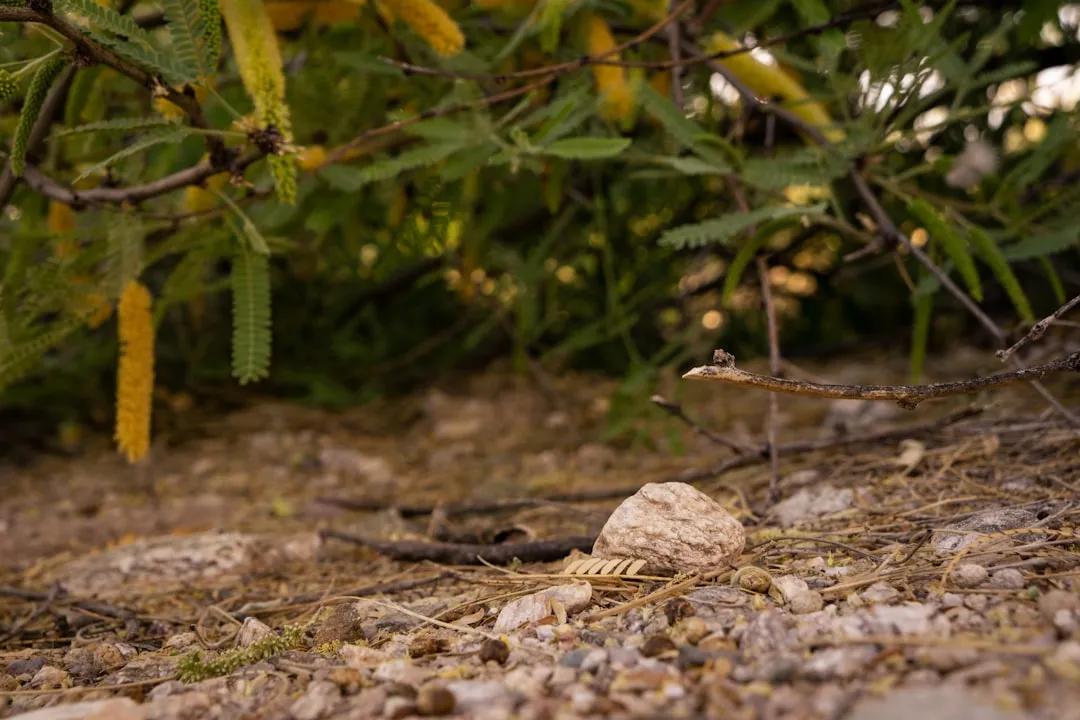
Mesquite trees are a staple in the Southwest and are known for their hardy nature. They are highly drought-resistant and can survive in the toughest of desert conditions. Mesquites offer deep shade due to their dense canopy, making them an excellent choice for creating cooler areas in your yard.
Known for their resilience, mesquites can survive in extreme conditions and provide shade and beauty to Palm Springs gardens. Their twisted trunks and feathery foliage give them a unique appearance. Watering requirements are minimal once established, though they benefit from occasional deep watering during the hottest months.
Their quick rate of growth, cooling, sheltering shade, and low maintenance make mesquites natural choices. The Chilean variety is also widely planted and popular for its wide canopy that provides plenty of filtered shade, reaching a medium size of around 46 feet.
3. African Sumac (Searsia lancea)
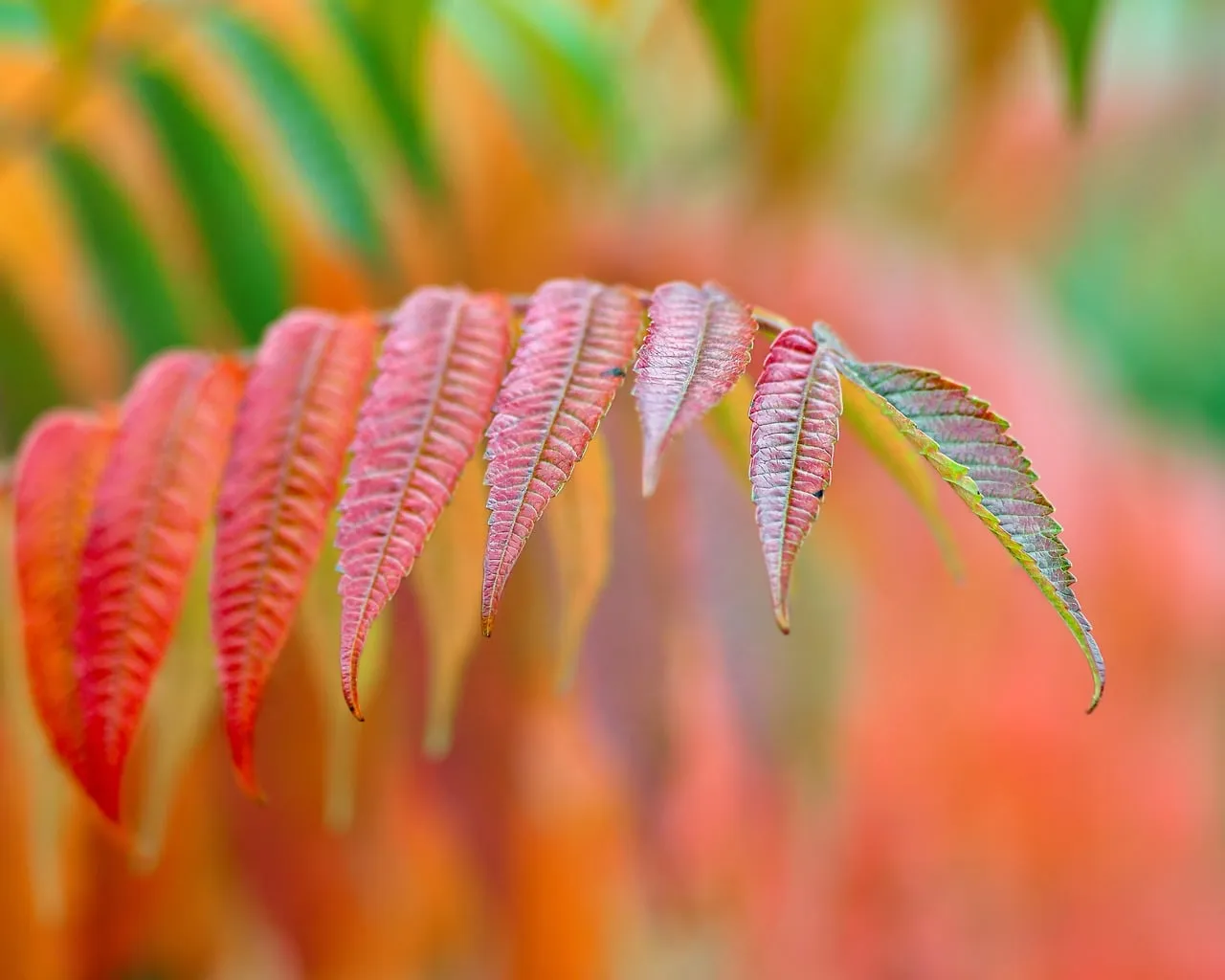
If someone with a black thumb were to ask which tree they should plant in the Palm Springs region, African sumac would be one solid recommendation. It is a nearly indestructible and freely reseeding tree, and in the right setting, the graceful African sumac provides excellent shade from the heat and fruits for songbirds to eat.
African sumac is a medium-sized evergreen tree that grows to 30 to 40 feet tall and equally wide, with an informal, weeping appearance and reddish-brown trunk and branches that turn to gray over time.
It is hardy down to 12°F and tolerates a wide range of temperature conditions, from the high heat of the desert summer to the cool maritime fog along the Southern California coast. If watered with deep, wide soakings only 10 to 15 times per year, the tree remains open and airy, and much more attractive.
4. Desert Willow (Chilopsis linearis)
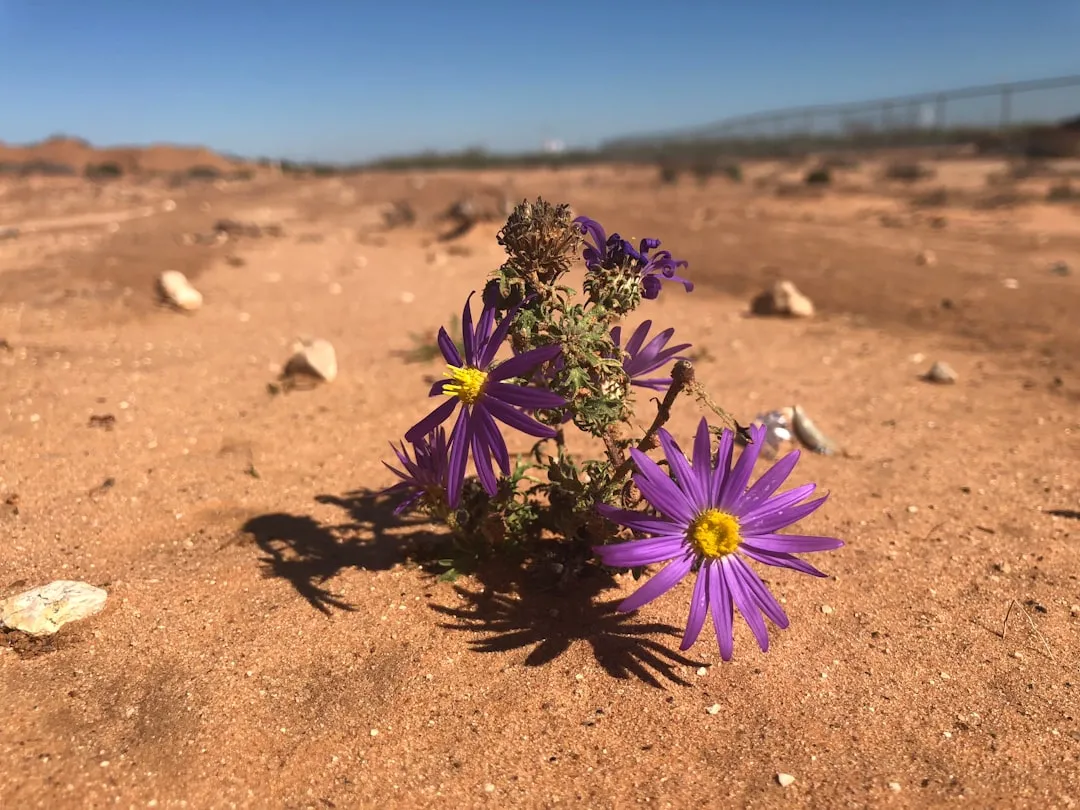
The Desert Willow is an excellent native tree option. It features beautiful trumpet-shaped flowers that come in shades of pink, purple, and white. This tree is fast-growing and can withstand extreme desert heat and drought. Its unique appearance and delicate flowers add a splash of color to desert landscapes.
It reaches up to 30 feet in height, has low water needs but tolerates occasional deep watering, and serves well as a shade tree, an ornamental, and a wildlife habitat.
On average, the Desert Willow requires watering just three times a month once roots are established. Its flowers attract hummingbirds, which adds genuine life and movement to a courtyard garden.
5. Fruitless Olive (Olea europaea)
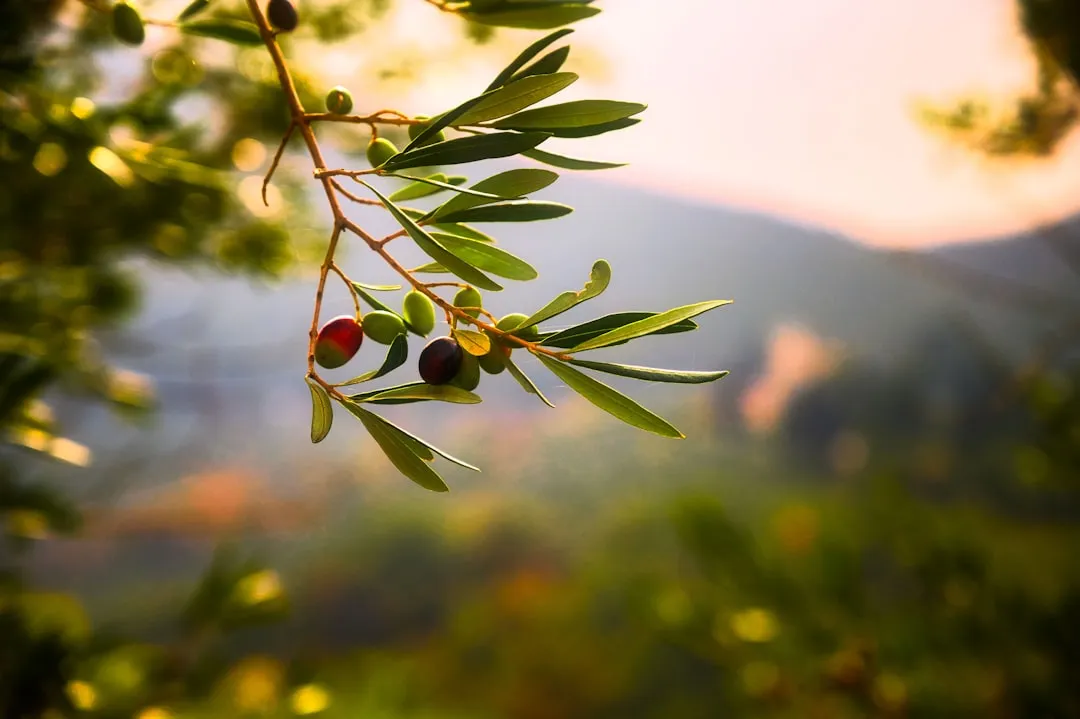
Olive trees grow all around Palm Springs, and in many local opinions, they are the ideal shade tree for the area. While they are not appropriate for tight spaces like a narrow side yard, they are perfect for a front or back yard, casting a nice shade that’s not so dense that smaller nearby plants won’t thrive.
The fruitless olive is a fast-growing variety ideal for those who love the look of an olive tree but don’t want to deal with the messy fruit it would produce. It keeps the silvery, Mediterranean look without the maintenance headache.
Fruitless varieties are particularly well suited to courtyards with paving beneath. Along with palo verde and African sumac, olive trees excel in Southern California’s hot dry climate, tolerating heat exceeding 100°F while requiring little supplemental irrigation after establishment.
6. Chitalpa (× Chitalpa tashkentensis)
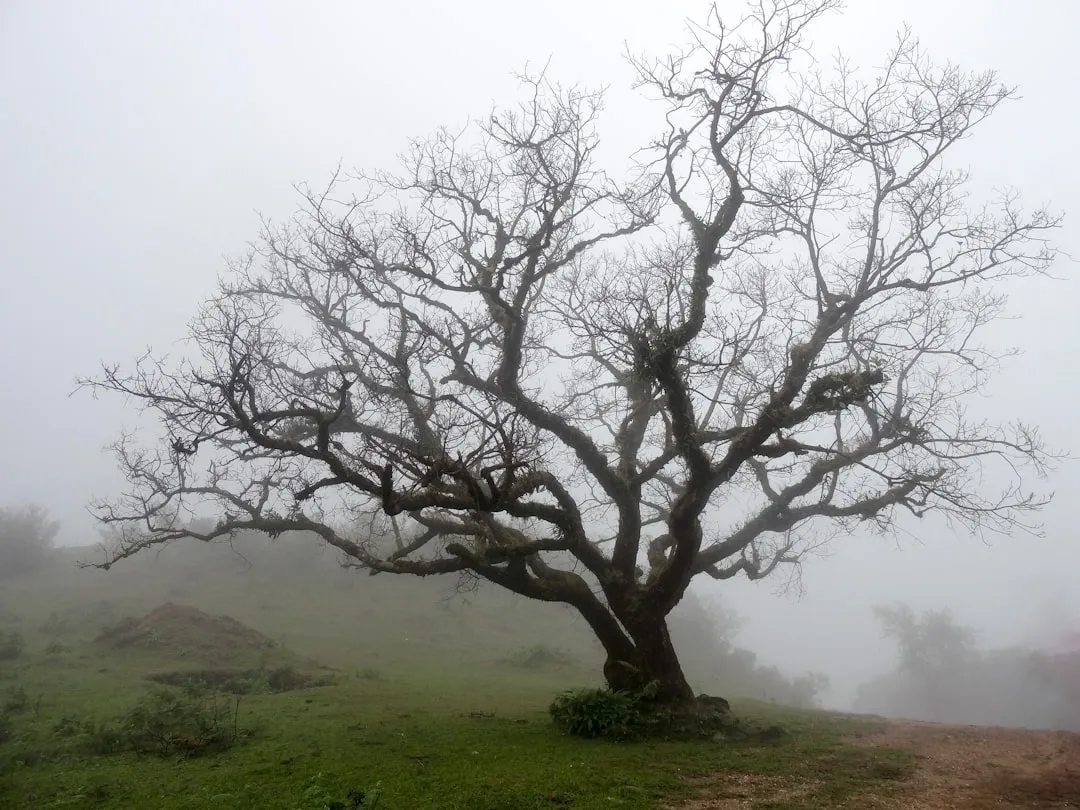
The Chitalpa Tree is a hybrid known for its trumpet-shaped pink flowers that bloom profusely in the summer. Its attractive foliage offers moderate shade. Adapted to dry climates, it’s a solid pick for gardens aiming for a splash of color without the water demand, and its manageable size makes it suitable for residential areas.
It’s a cross between the Catalpa and Desert Willow trees, combining the best traits of both. It is more evergreen and has larger, more vivid white or pink flower clusters compared to its parents, with a mature size of 20 to 30 feet high and equally wide, which works well in most small gardens.
For a Palm Springs courtyard that needs visual interest across the warm season, the Chitalpa delivers consistently without demanding constant irrigation. Chitalpa trees boast pink and white flowers, are easy to maintain, and can withstand drought.
7. Ironwood (Olneya tesota)
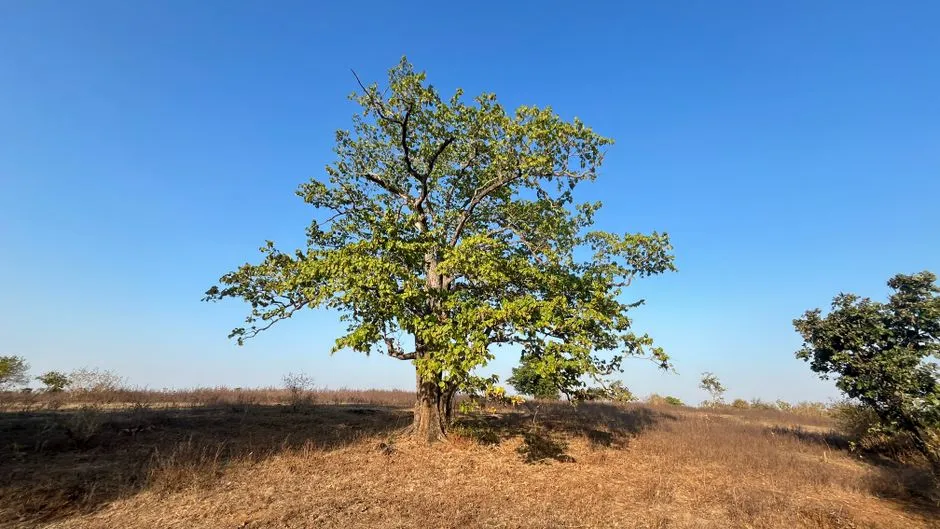
Ironwood is the tallest growing tree in the Sonoran Desert and provides a beneficial micro-habitat for many desert species. These are considered “nurse” trees in the Sonoran Desert, with animals gathering in their shade during the hottest months, and other cacti and small shrubs utilizing the canopy as shelter from the sun.
Among the best tree choices for Palm Springs are the Palo Verde, Mesquite, Desert Willow, and Ironwood. These species have adapted to low-water conditions by developing deep root systems that access underground moisture and require less frequent irrigation, making them an eco-friendly choice for landscaping.
Like other members of the legume family, Ironwood gathers nitrogen from the soil, so leaf litter and seeds are particularly rich in nutrients. This makes it a tree that actually improves the ground beneath it over time, which is a rare quality in desert horticulture.
8. Jacaranda (Jacaranda mimosifolia)
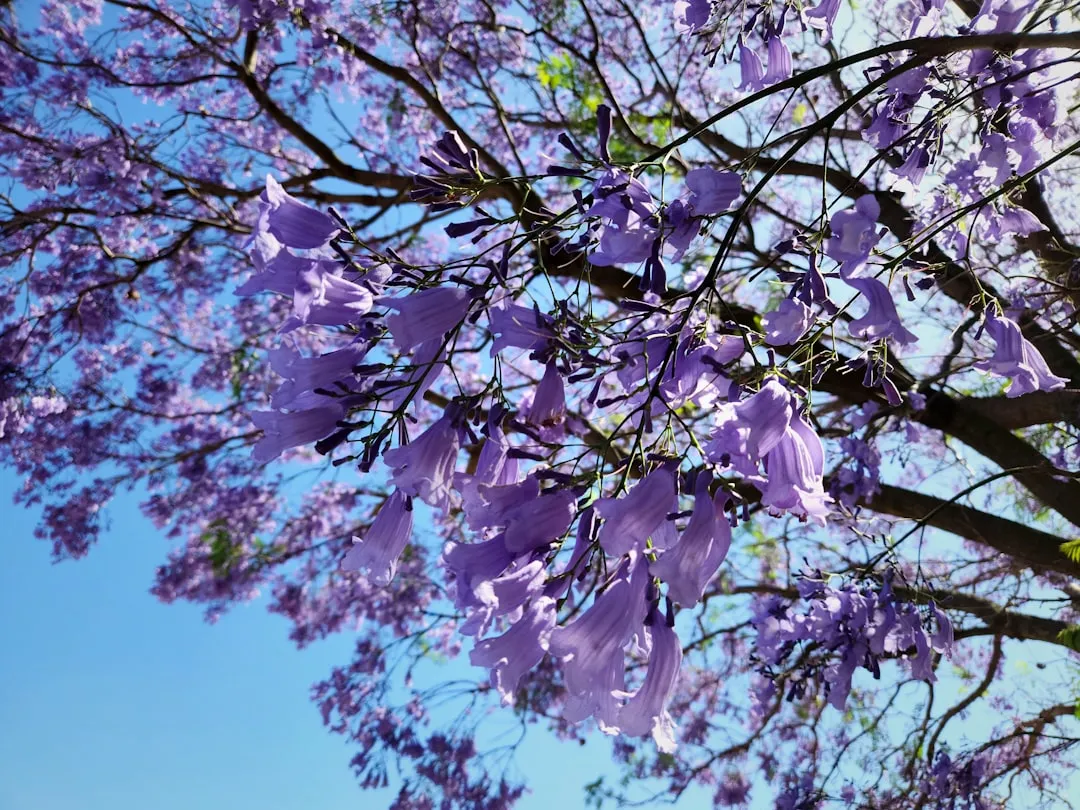
The Jacaranda is a large, round-headed, semi-evergreen tree that grows at a moderate to rapid rate, reaching 30 to 50 feet high and 15 to 30 feet wide. It’s best for parks, commercial use, or large residences due to its size. Lacy, fern-like green leaves and large clusters of lavender-blue flowers bloom profusely in May and June, producing an appealing tropical effect.
The Jacaranda does well in Palm Springs but does require ample water. It has a place in the desert landscape, particularly in areas that already receive more water because of existing plantings.
As flowers drop they produce a fair amount of litter, so avoid locating trees near swimming pools. Plant in soil with good drainage, and water deeply to reduce the development of surface roots, but do not overwater. Position it thoughtfully and the spring canopy is hard to beat.
9. Mulga (Acacia aneura)
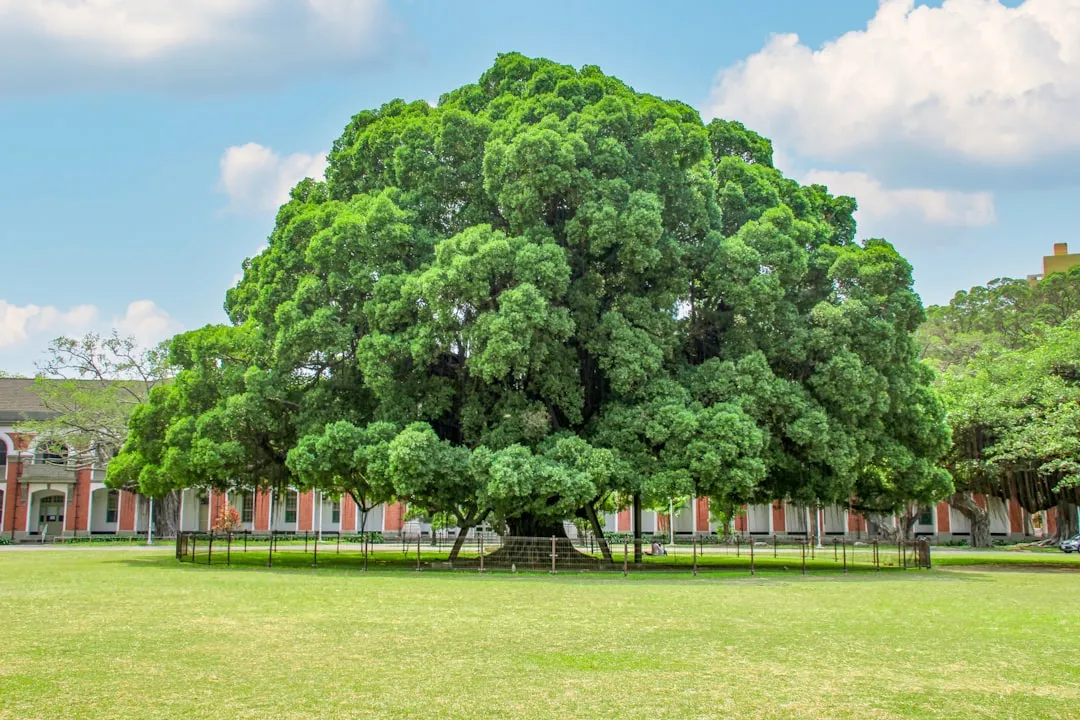
The Mulga is a drought-resistant desert tree that tolerates high heat without blinking, and every late spring sees it clad in stunning yellow flowers. As a bonus, the Mulga’s green foliage stays on the branches and produces very little litter.
Native to Australia, Mulga is well adapted to extreme heat and drought conditions. It can grow up to 20 feet tall by 15 feet wide and is considered low maintenance, requiring minimal irrigation in the summer.
The compact footprint makes Mulga a strong candidate for tighter courtyards where a larger tree would overwhelm the space. It stays tidy, stays green, and stays alive through conditions that would test most other species. That’s a dependable combination for the Coachella Valley.
10. Pomegranate (Punica granatum)
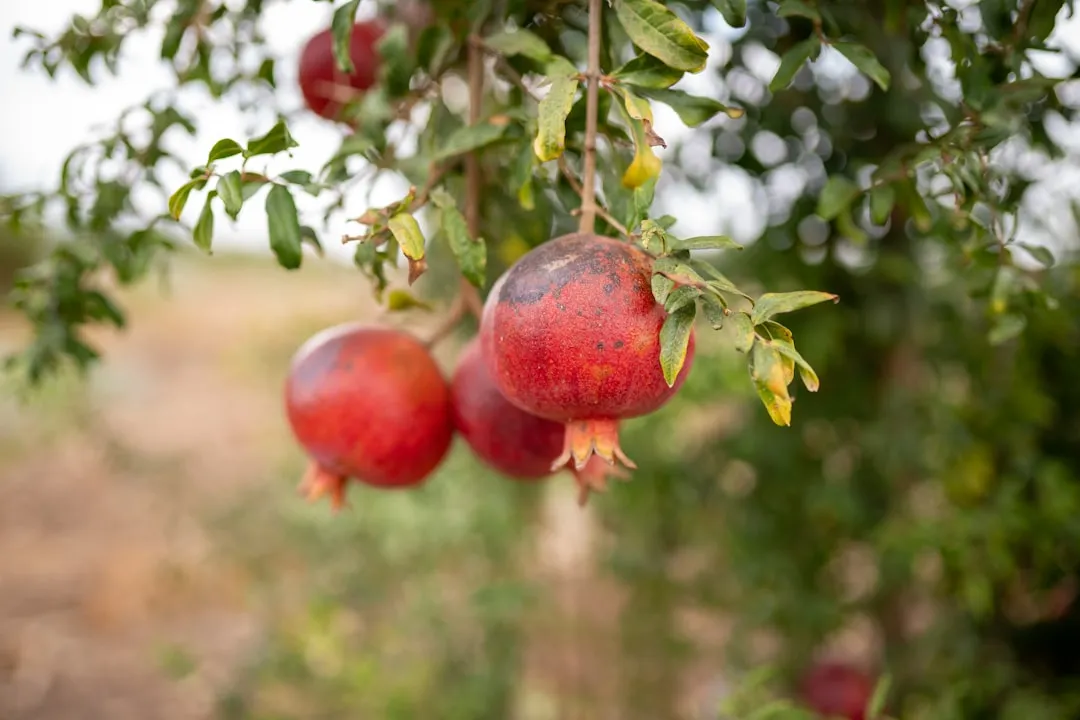
One doesn’t generally think of pomegranate trees when they think of Palm Springs, but these small deciduous trees do quite well in the desert. They stay compact enough for courtyard use, rarely overwhelming a mid-sized space the way larger canopy trees can.
Around late December, the leaves turn a golden yellow, providing just a touch of fall in Palm Springs. That seasonal shift is something many desert residents genuinely appreciate in a landscape that otherwise stays fairly static through winter months.
Pomegranates are also productive, which means they do double duty as both an ornamental and a food source. They handle the summer heat with ease, and their deep root systems establish reliably in sandy desert soils. For a courtyard that wants personality alongside practicality, this is a tree that earns its spot.
Thinking About Courtyard Design in 2026
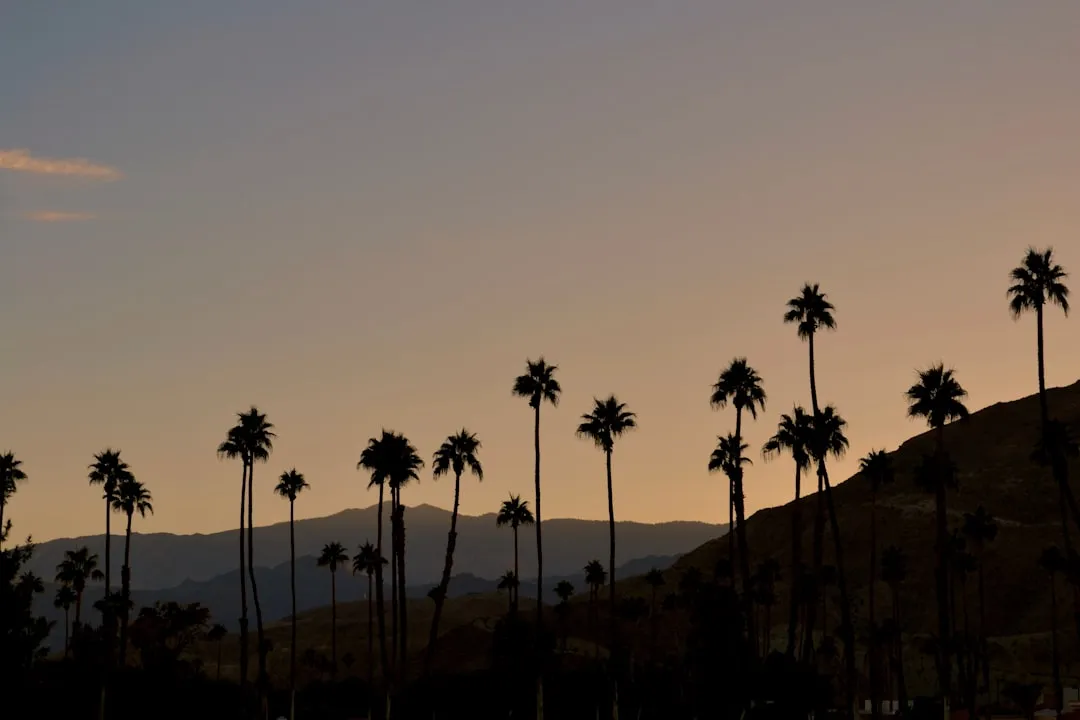
Xeriscaping in the Palm Springs area is becoming far more refined. Instead of flat gravel yards with sparse planting, homeowners are opting for layered designs that add depth and movement. Taller native trees or desert-friendly shade plants anchor the space, mid-level shrubs add structure, and low groundcovers soften the edges.
Trees provide natural shade, reducing heat and creating more comfortable outdoor spaces. This cooling effect can even lower the temperature around your home, reducing energy costs. That’s a practical return on an investment that also happens to make your courtyard far more enjoyable for nine or ten months of the year.
Protective tree wraps or shade cloths can be used to reduce sunburn on newly planted trees until they establish a strong canopy. Maintaining a healthy layer of mulch around the base of trees also helps regulate soil temperature and prevent water loss. Give a young tree its first summer of support, and it will largely take care of itself from there.
Conclusion
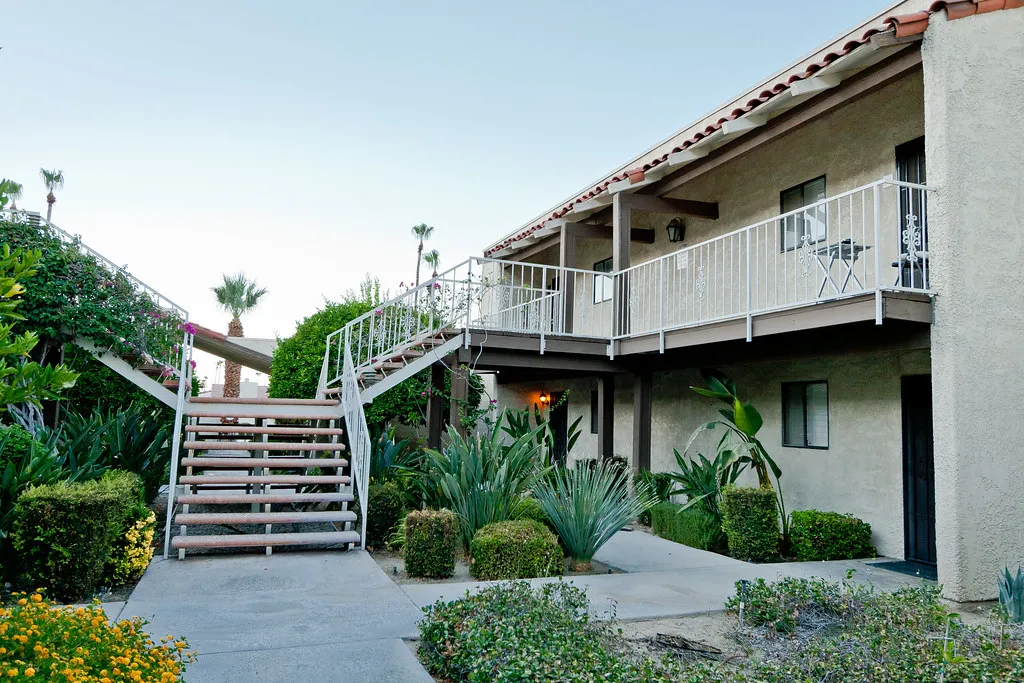
A Palm Springs courtyard doesn’t need to be a compromise between beauty and survival. The trees on this list prove the opposite: that with the right species, a desert garden can be genuinely lush, genuinely cool, and genuinely easy to maintain. Layered xeriscapes don’t just look better, they are more resilient, easier to maintain, and better suited to long-term water conservation.
The trees you choose now will be the shade you sit under for decades. Pick with that time horizon in mind, plant with intention, and the desert will work with you rather than against you.
AI Disclaimer: This article was created with the assistance of AI tools and reviewed by a human editor.