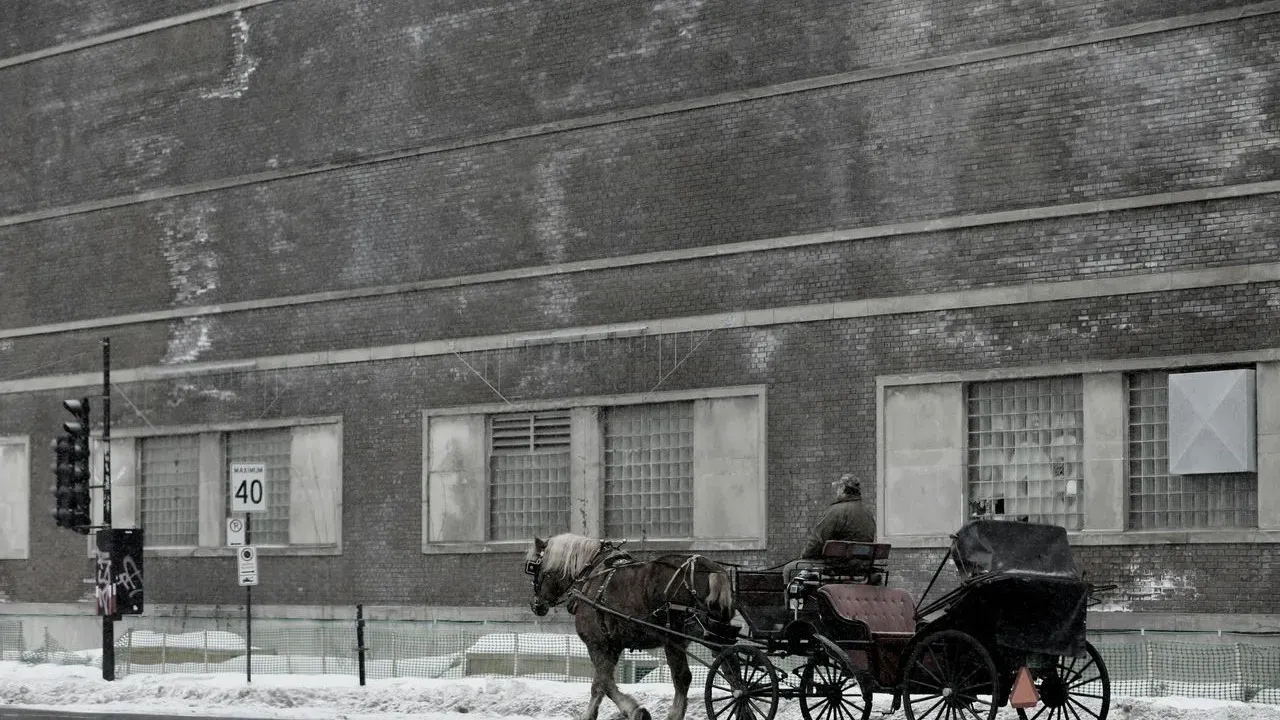

For more than 160 years, horse-drawn carriages have offered visitors a slow loop around Central Park, and that tradition is now heading toward its final chapter. New York City has ([1])released a framework to support carriage drivers, stable hands and medallion owners as it moves toward ending the industry. The announcement came weeks after the City Council approved a ban with a fixed deadline, which leaves hundreds of people who depend on the trade with a difficult question about what comes next.
A ban with a firm end date
The legislation, known as Romanch’s Law, ([2])would prohibit new licenses for horse-drawn carriages and phase out the carriages by June 1, 2028. The bill gained momentum after a deadly incident in June. ([3])A spooked carriage horse ran away from its driver, struck another carriage and killed 18-year-old Romanch Mahajan, a tourist from India.
The debate over the measure has been long and bitter. Supporters argue that carriages no longer belong in heavily traveled parts of the city, and they point to the growing number of visitors crowding the park. Opponents, including Transport Workers Union Local 100, which represents carriage drivers, maintain that the horses are well cared for and safe. That disagreement has not disappeared with the vote, and the new framework has become its latest flashpoint.
What the framework offers
The plan rests on several parts that the administration has begun to outline. Officials said they hope to facilitate medallion buybacks, and the financial help is aimed primarily at owners. Drivers and stable hands would have access to career training, educational pathways and stipends. The city also plans to establish a Horse Carriage Worker Industry Program, with a goal of helping roughly 200 affected people move into new careers. ([4])Officials have also said they will study alternatives in Central Park, including electric carriages and pedal-assist bikes.
- Medallion buybacks for owners, which the city hopes to facilitate
- A Horse Carriage Worker Industry Program for about 200 workers
- Career training, educational pathways and stipends for drivers and stable hands
- A review of electric carriages and pedal-assist bikes as Central Park alternatives
Mayor Zohran Mamdani framed the effort as a duty to those who built careers in the industry. In his words, the city will “support workers every step of the way.” ([5])A more detailed transition plan is expected by April 2027, developed with affected workers and the Transport Workers Union.
Labor pushback and open questions
The union has not embraced the framework. Its international president, John Samuelsen, argued that the Council’s bill offers “no meaningful economic relief for workers.” ([6])The union has also said it plans to file a federal lawsuit challenging the measure’s legality once the mayor signs it. Reports differ on that point. Some outlets describe the bill as still awaiting the mayor’s signature, while another report says it was already signed into law last month.
Several details remain unsettled. The framework does not specify exact dollar amounts for buybacks or stipends, and the full transition plan will determine how the training programs take shape. For drivers who have spent years working near the park’s southern edge, the months between now and June 2028 will decide whether the promised support becomes real income and a new career path.
For a city that has long treated the carriages as a postcard image, the coming months will test whether a transition can be handled with care. The April 2027 plan will show whether the promises made this week translate into jobs that workers can count on.
AI Disclaimer: This article was created with the assistance of AI tools and reviewed by a human editor.