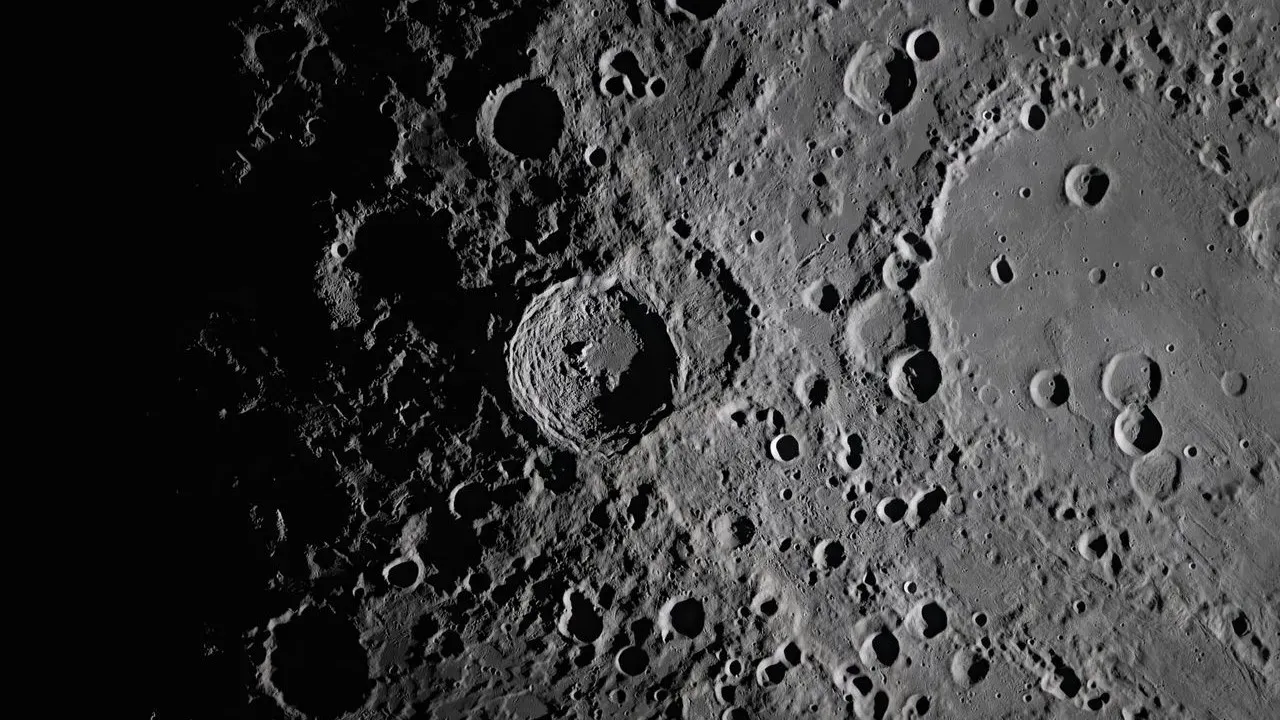

A powerful impact on the lunar surface two years ago created a steep-sided crater far larger than the Roman Colosseum, yet the event escaped notice at the time. NASA’s Lunar Reconnaissance Orbiter later captured the feature during routine imaging, turning what began as overlooked data into a rare scientific opportunity. The discovery highlights how even significant changes on the moon can remain hidden until careful analysis brings them to light. ([1])
Scale of the New Crater
The crater measures roughly 728 feet across and reaches depths of up to 141 feet. That size makes it the largest known impact feature formed on the moon in recent times. Researchers estimate such an event occurs only once every 132 years on average, giving the find unusual value for understanding ongoing surface processes. It is three times larger than the previous record holder identified by the same spacecraft a decade ago. The impact also disturbed material across more than 66 miles of surrounding terrain, ejecting dust and soil at steeper angles than models had predicted.
Why the Impact Went Unnoticed at First
The strike occurred on the moon’s near side in 2024, but no Earth-based or space telescopes recorded it in real time. Wide-angle images from the orbiter were collected in May of that year yet sat unidentified amid the volume of incoming data until August 2025. Higher-resolution follow-up observations came later that fall, with formal confirmation arriving early in 2026. The delay underscores the challenge of monitoring a body that experiences constant small impacts while larger ones remain infrequent. Only systematic re-examination of archived imagery revealed the fresh feature.
Insights Gained from the Event
Two studies published in Science Advances detail how the collision loosened the top layer of lunar soil, creating a distinct cold spot several miles wide. One scientist described the process as a form of “gardening,” in which buried material is brought to the surface and surface layers are churned. Data from the orbiter also show that the moon’s uppermost soil layer is overturned more rapidly than earlier estimates suggested. This revised pace of surface renewal carries direct consequences for how long any traces of human activity, such as footprints, might persist.
Relevance to Future Exploration
NASA plans to establish a sustained presence on the moon, and understanding the frequency and effects of impacts helps engineers design more resilient structures. The new crater provides a real-world case study for calculating the reach of ejected material and the resulting risks to equipment or habitats. Further analysis will focus on refining those risk assessments so that future bases can account for occasional large impacts without excessive protective measures. The find serves as a reminder that the lunar surface continues to evolve, even in the modern era.
AI Disclaimer: This article was created with the assistance of AI tools and reviewed by a human editor.