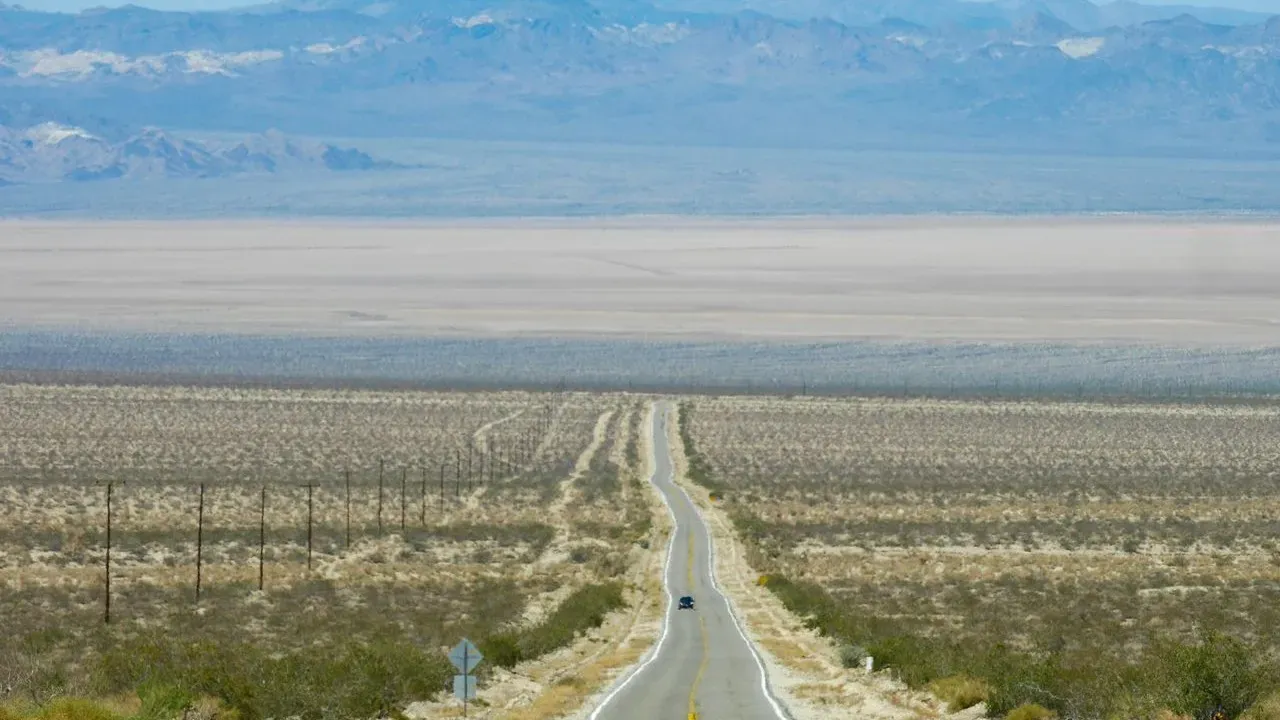

Nevada – Large stretches of public land in the Mojave Desert now sit at the center of a policy tension between rapid renewable energy development and the protection of fragile desert ecosystems. The Bureau of Land Management oversees millions of acres targeted for solar arrays under the Western Solar Plan, even as some local residents and scientists warn that scraping biological soil crust and removing native vegetation could release stored carbon and reduce the desert’s natural climate benefits. The push comes as federal incentives for such projects remain available through late 2027, prompting developers to move quickly on proposals that would cover thousands of acres near communities like Beatty.
Desert Carbon Storage Often Overlooked
Biological soil crusts and deep-rooted shrubs such as creosote play a measurable role in pulling carbon from the atmosphere. Researchers note that deserts worldwide can account for as much as 28 percent of land-based carbon uptake, a function that depends on intact surface layers and root systems. When heavy equipment disturbs these surfaces, the stored carbon can return to the air, undercutting one of the stated goals of the energy transition. Wildlife biologist Laura Cunningham has documented these processes over two decades in the region. She points out that the crust acts like a living sponge, converting atmospheric carbon into stable forms while supporting lichens, flowers, and small animals. Large-scale grading for solar fields would eliminate that capacity across wide areas, she argues, creating a net climate impact that extends beyond the immediate footprint of the panels.
Scale of Proposed Developments on Public Land
The Bureau of Land Management has identified roughly 22 million acres across several western states for potential solar use under its current planning framework. In Nevada alone, about 12 million acres have been parceled for consideration, with multiple projects already advancing through permitting. Seven major installations proposed or underway as of early 2024 would together occupy around 140 square miles. These figures reflect a policy environment in which incentives remain in place until December 2027, even after broader subsidy reductions. Developers are therefore accelerating timelines on flat, high-sunlight sites managed by the agency. Local opponents note that the resulting infrastructure would serve distant urban grids rather than nearby towns, leaving limited long-term employment once construction ends.
Local Advocates Highlight Alternative Sites
Kevin Emmerich and Laura Cunningham, who run Basin and Range Watch from Beatty, have spent years mapping proposed arrays that would blanket more than 8,000 acres visible from historic sites near Rhyolite. They argue that rooftops, parking structures, and already disturbed ground offer lower-impact locations for photovoltaic panels. The pair successfully joined coalitions that stopped earlier projects, including one in California’s Imperial Valley that would have affected tribal cultural resources and another near Moapa Valley in Nevada. Their current focus remains on keeping utility-scale facilities off intact public lands where biodiversity and carbon functions remain highest. Other national environmental organizations have offered more qualified support for the Western Solar Plan, creating a divide over acceptable trade-offs.
Tribal Concerns Over Cultural Sites
Western Shoshone and Goshute elders have raised objections to plans that would place solar infrastructure within or near the proposed Bahsahwahbee monument area. The 25,000-acre site holds ancestral significance, and roughly 7,000 acres fall inside zones under consideration for development. Tribal statements describe the federal approach as inconsistent with protections routinely extended to cemeteries and places of worship elsewhere. These lands also support species such as the desert tortoise and bighorn sheep that depend on undisturbed habitat. Activists contend that the cumulative effect of multiple arrays would fragment migration corridors and reduce forage, outcomes that extend well beyond the construction phase. The tension between expanding clean power capacity and preserving the Mojave’s ecological functions continues to shape permitting debates. Stakeholders on all sides now weigh short-term deployment targets against longer-term consequences for soil stability, carbon storage, and the species that have adapted to this arid environment over millennia.
AI Disclaimer: This article was created with the assistance of AI tools and reviewed by a human editor.