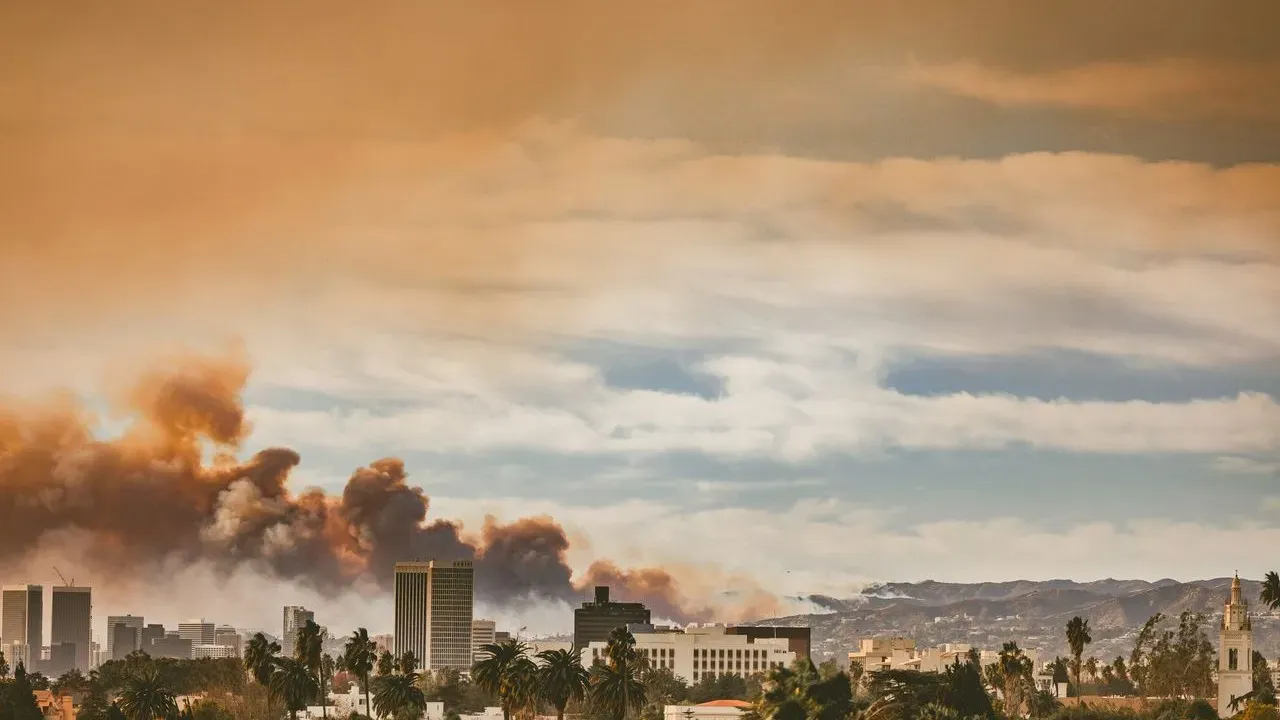

A new study shows that smoke from the 2025 Los Angeles fires carried unusually high concentrations of toxic heavy metals. At the peak of the blazes, roughly seven million people breathed air with lead levels more than 80 times above typical background concentrations for a full 24-hour stretch. The findings come from detailed, real-time measurements taken during the Eaton Fire and similar events.
Measurements Captured Urban Smoke Chemistry
Researchers at the California Institute of Technology used a specialized air-quality network called ASCENT to track the chemical makeup of fine particles hour by hour. The instruments revealed clear differences between smoke from burning homes and vehicles and smoke from vegetation alone. Lead, arsenic, and certain halogens stood out as markedly elevated in the urban plume. The team compared the Eaton Fire data with readings from a 2024 wildfire in Riverside County that burned mostly natural fuels. The Los Angeles smoke contained about 50 times more lead, three times more arsenic, and seven times more halogens than the wildland fire. These distinctions matter because they show how building materials and household items change the toxicity profile of wildfire smoke when flames reach developed areas.
Scale of Exposure and Remaining Questions
During the first days of the fires, the elevated lead concentrations reached millions of residents across the Los Angeles region. The study focused on fine particulate matter, or PM2.5, which can travel deep into the lungs. Lead is a known neurotoxin, while arsenic exposure has been linked to certain cancers over longer periods. Scientists still lack clear data on how brief but intense spikes in these metals affect human health. One expert noted that the short-term risks remain poorly understood even though the exposure levels were striking. The research also highlighted that wildfires are becoming more frequent and intense, partly because of drier conditions tied to climate change, increasing the chance that future fires will burn through developed zones.
Comparison of Key Pollutants
| Pollutant | Urban Smoke Increase vs. Wildland Smoke |
|---|---|
| Lead | 50 times higher |
| Arsenic | 3 times higher |
| Halogens | 7 times higher |
Calls for Better Monitoring and Response
Experts outside the study said the results underscore the need for improved real-time tracking and public alerts during urban-interface fires. Current air-quality checks often occur only a few times a week, missing rapid changes in smoke composition. Investments in expanded sensor networks and clearer guidance on protective actions could help communities respond more effectively. The work also points to broader challenges as cities expand into fire-prone landscapes. Understanding exactly what residents inhale when structures burn will shape future policies on emergency preparedness and long-term air-quality management.
AI Disclaimer: This article was created with the assistance of AI tools and reviewed by a human editor.