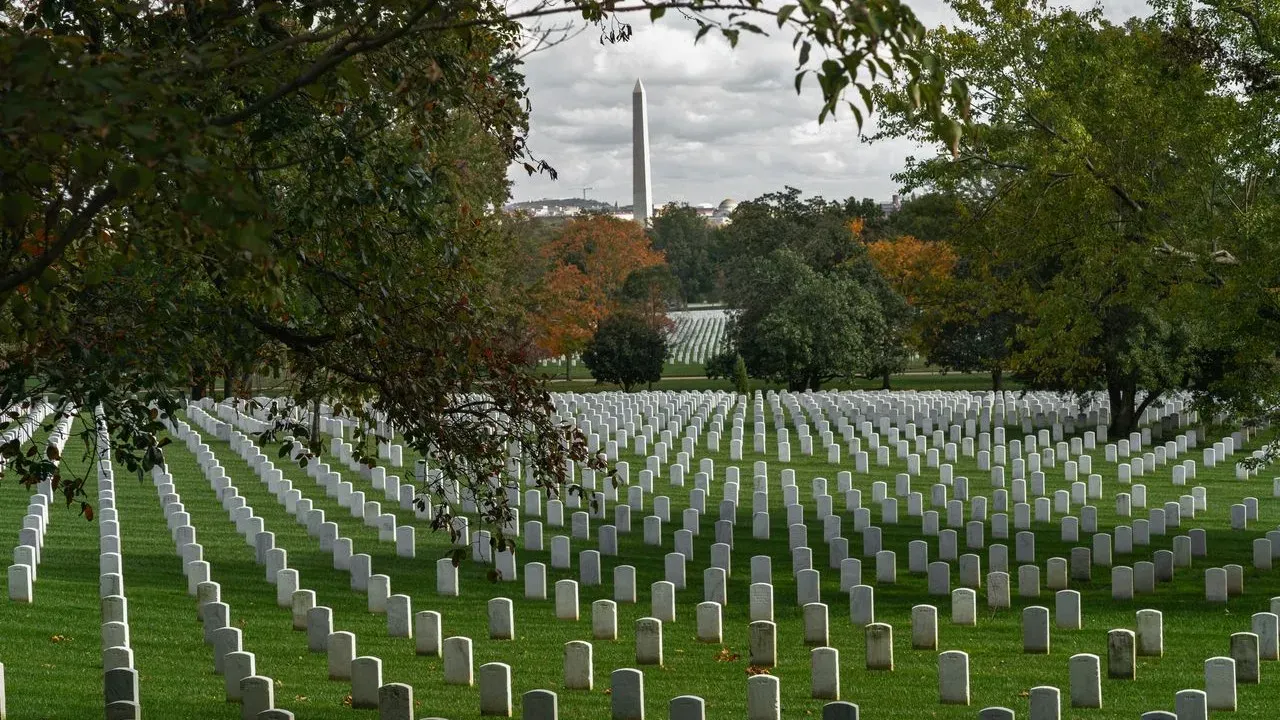

Memorial Circle sits on a traffic circle between the Arlington Memorial Bridge and Arlington National Cemetery, where the grounds meet some of the capital’s most visited memorials. Nine members of the Kennedy family now want a federal court to stop the Trump administration from building a proposed arch there. They argue that the structure would cast shadows over family graves, including that of President John F. Kennedy. The claim is a legal allegation, and the government has not yet had its day in court on it. ([1])
A shadow claim tied to a specific view
The family’s case rests on sightlines as much as shade. Their filing contends that the 250-foot structure would interfere with the view of the John F. Kennedy Eternal Flame from the Arlington Memorial Bridge, a vantage the family says was part of the original design of the gravesite. All four are buried at Arlington National Cemetery, and the lawsuit says Trump’s arch would literally cast shadows over their graves and disrupt the sightlines between the gravesites and the John F. Kennedy Eternal Flame with the Arlington Memorial Bridge.
Some of the numbers circulating in coverage of the filing are specific. The report noted that the Arch’s shadow would “briefly cover” Kennedy’s eternal flame on 18 days every year and appear over his memorial on 50 days. The family’s attorneys describe the harm as lasting, and the filing uses the word “permanently” to describe the expected shade over the graves of service members as well.
What the family is asking the court to do
The Kennedys are not simply objecting to the design. Their request to the court covers several points, and each one gives the judge a different legal question to weigh.
- Halt the arch by deauthorizing its construction at the site.
- Declare that building the arch without congressional authorization is illegal.
- Protect a sightline that the complaint says was meant to symbolize national reunification after the Civil War.
- Recognize the family’s distinct interest in the gravesites as separate from other plaintiffs’ claims.
The family’s argument on Congress overlaps with other challenges. The Kennedy family argued that the administration had not obtained congressional approval required to start commemorative construction works in the nation’s capital. Their motion also makes the case that their harm differs from that of the other parties, which is why they are seeking to join an existing lawsuit rather than file a separate one.
A growing list of legal challenges
The Kennedy filing is not the first legal challenge to the project. The District of Columbia and the Commonwealth of Virginia filed a lawsuit on Halloween against the National Park Service to halt Trump’s ‘Triumphal Arch’ planned for construction in Memorial Circle in Arlington. The Kennedys are joining a lawsuit filed last month by Washington, DC, and Virginia.
Local government has also pushed back on procedural grounds. The Arlington County Board in Virginia filed a lawsuit opposing the construction of the Triumphal Arch, becoming the first governmental body to take legal action against President Donald Trump’s planned monument. That complaint focuses on environmental review, and it argues that the project slated for Memorial Circle has moved without going through the full review process. Separately, a lawsuit filed by three Vietnam War veterans and an architectural historian has also challenged the arch.
The court has already intervened in at least one way. District Judge Tanya Chutkan granted a temporary restraining order blocking the Trump administration from carrying out any construction, excavation, demolition, utility installation, road closures, or other construction-related work at the site for 14 days. Meanwhile, the president’s proposal for the massive monument won final approval from review panels, but it faces a lawsuit that may head to the Supreme Court.
Positions and what comes next
The family’s supporters frame the case as a defense of hallowed ground. In a statement, Rory Kennedy and Maxwell Kennedy said that “This action is about protecting sacred spaces that belong to the American people,” Rory Kennedy and Maxwell Kennedy said in a statement released on behalf of the family on Tuesday. Their attorneys, Norman Eisen and Steve Jonas of Democracy Defenders Fund, have called the project an illegal interference with Arlington National Cemetery and the heroes remembered there.
The administration has defended its approach. A White House spokesman said the administration has been “fastidiously compliant with all procedural and legal requirements and are certain this meritless and dilatory lawsuit will be dismissed.” The court has also moved quickly on procedure. In the Kennedys’ filing, the judge ordered the Trump administration defendants to state whether they oppose the Kennedy family members’ motion to intervene.
For now, the central questions are not about the arch’s appearance but about who has the right to challenge it and whether Congress must approve it first. How the court handles the family’s request to join the case, and whether the shadow and sightline claims receive a full hearing, will shape the next phase of the dispute over a monument meant for the nation’s 250th anniversary.
AI Disclaimer: This article was created with the assistance of AI tools and reviewed by a human editor.