

The garage has always been America’s most honest room. Nobody performs for it, nobody decorates it, and nobody invites guests in for a look. That’s exactly why it fills up so fast. One rainy weekend, faced with a garage I could barely walk through, I decided to hand the problem over to an AI and see what came back.
What came back was a fairly thorough demolition of my assumptions about what I actually needed.
The Clutter Problem Is Bigger Than You Think

More than three in five U.S. adults surveyed feel their garage is the most cluttered space in their home, and over a third say their garage is so disorganized they can no longer park a vehicle inside. That’s a staggering number of people losing real, usable space to accumulated stuff. Professional organizers estimate that the average American home contains around 300,000 items, counting everything from forks to paperclips, and most agree that number is not unreasonable. The garage, sitting just outside the main living area, becomes the catch-all for anything without a clear home inside.
Why the Garage Gets So Overwhelmed
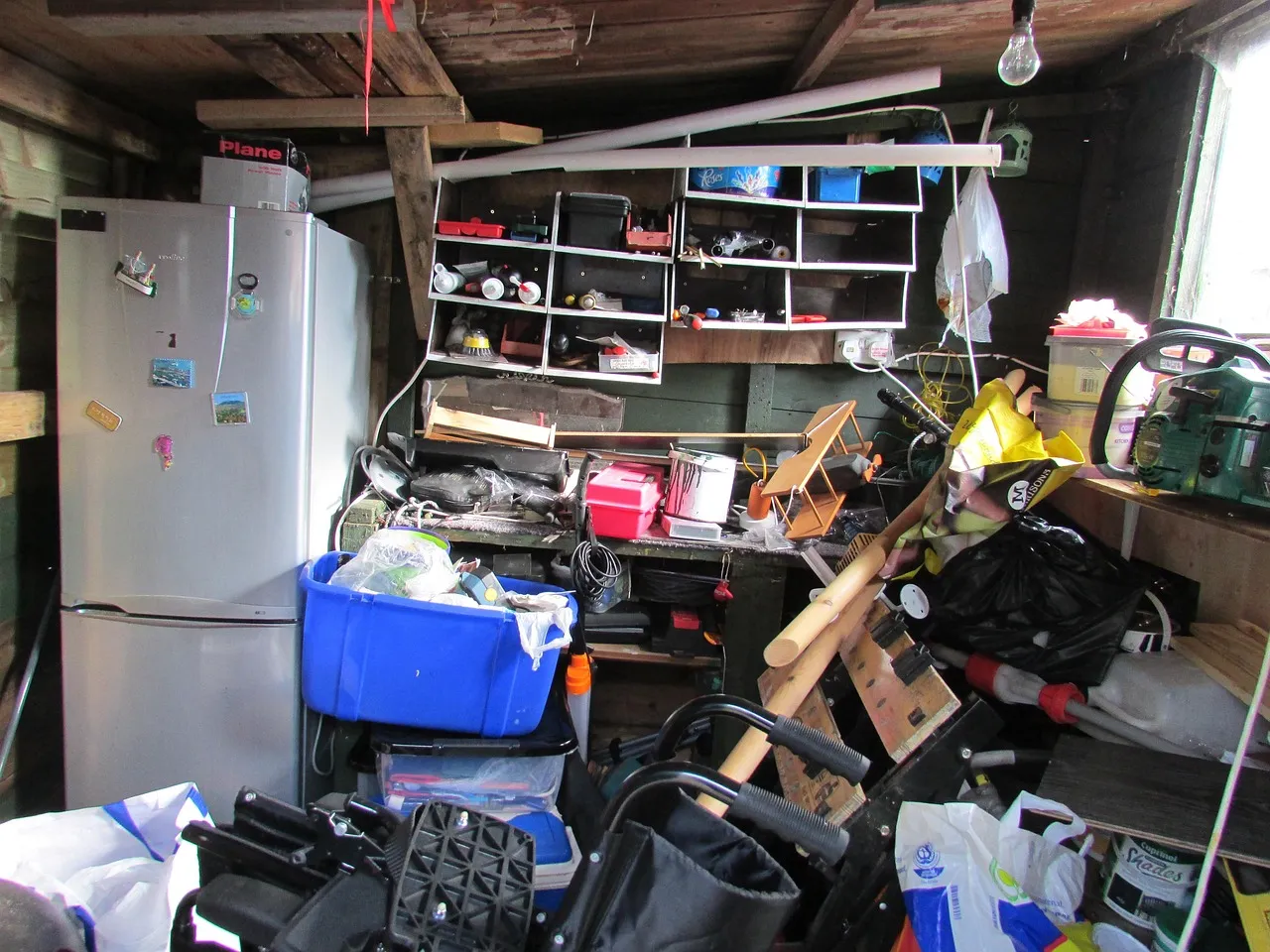
Garages are clutter magnets. Often separated from the rest of the home, they become an out-of-sight, out-of-mind space, the perfect place to stash odds and ends. Once something goes into the garage without a specific spot, it rarely comes back out. Research from a Soap and Detergent Association study found that disorganization, not actual lack of space, causes roughly four out of five cases of household clutter. That distinction matters. The problem usually isn’t that you have too much stuff for the space. It’s that nothing has a designated place.
How the AI Approached the Problem

Whether the organizing task is as small as a junk drawer or as big as a garage, ChatGPT can help inform, motivate, and provide structure for the process. When prompted with a detailed description of my garage, including rough categories of items and approximate square footage, the AI responded with a surprisingly structured plan. It offered a breakdown covering step-by-step actions, categories such as Keep, Donate, Discard, Recycle, and Unsure, along with emotional reframing for items that are hard to let go. The framing was methodical, almost clinical, but that turned out to be exactly what the situation called for.
The Recommendation to Purge Half of Everything

ChatGPT can suggest decluttering strategies such as the KonMari method or the 20/20 rule: if it takes less than 20 minutes to replace and costs less than $20, consider letting it go. When applied to a typical garage loaded with duplicate tools, decade-old paint cans, and sports equipment for sports nobody plays anymore, this logic cuts through a surprising amount of stuff. ChatGPT can provide detailed checklists for organizing each space, from the kitchen to the garage, and tailors recommendations based on the context you provide. The “throw away half” conclusion felt shocking at first, but working through the checklist category by category, it stopped feeling radical and started feeling obvious.
Where AI Advice Gets Genuinely Useful

Instead of random decluttering hacks, ChatGPT creates a plan based on your specific space and time, breaking big tasks into bite-sized, manageable chunks. For a garage project that feels too large to start, that structural scaffolding alone can be the difference between beginning and avoiding. You can request a customized schedule based on your organizing needs and lifestyle, the size of your home, and the time you actually have available. It’s less like talking to a robot and more like texting a very organized friend who doesn’t get tired of your questions.
Where AI Advice Falls Short

AI can’t see your morning rush, your family’s habits, or how your home actually functions day-to-day. One client asked ChatGPT to help organize her hallway closet and received a thorough step-by-step plan, but as she started implementing it, something struck her: it didn’t fit her family. This is the core limitation.
AI can suggest clever storage ideas, even for awkward corner cabinets, acting like a brainstorming partner who is endlessly patient and full of ideas. Turning those ideas into systems that actually work for a specific household is still a human job. The AI can set the framework; you have to test it against real life.
The Psychology of Letting Go

One thing the AI handled surprisingly well was the emotional weight of discarding things. Garages tend to accumulate objects tied to past identities: the golf clubs you bought when you thought you’d become a golfer, the baby gear kept just in case, the toolbox from someone who passed away. Thoughtful AI responses include emotional reframing for hard-to-let-go items, treating the process as something more than a logistics exercise.
That reframing actually helped. Naming the category of why something is hard to release made it easier to decide what to do with it. Sometimes a question asked in the right order is more useful than any storage hack.
The Real Cost of All That Clutter

About eleven percent of American households are renting self-storage units at an average cost of more than $85 a month, making it a roughly $44 billion industry with tens of thousands of facilities nationwide. Much of what fills those units came directly from garages. More than three quarters of homeowners in the United States planned to declutter and organize their garages in 2024, according to a Craftsman survey. The intent is clearly there. The follow-through is where things break down, which is precisely the gap where AI assistance has something to offer.
The AI Smart Home Boom Reshaping How We Think About Space

The global AI in smart home technology market was valued at roughly $15 billion in 2024 and is projected to reach over $100 billion by 2034. AI isn’t just helping people plan their spaces anymore. It’s beginning to integrate with the physical systems inside homes.
In September 2024, Google announced new AI-powered features for Nest, enabling proactive home alerts and intuitive automation routines without any user setup required. The gap between AI as a planning assistant and AI as an active participant in how you manage your home is closing quickly.
What the Experiment Actually Taught Me

The AI didn’t know my garage. It didn’t know which shelf held my father’s old level or which bin contained a child’s first Halloween costume. What it did know was structure, categories, and the logic of functional space.
Using an AI as a home organization assistant can reduce mental load, lessening stress and overwhelm. That turned out to be the actual value: not a perfect plan, but a clear enough one to make starting feel less daunting than the alternative of standing in the doorway again and walking away.
The Takeaway

Asking an AI to organize your garage won’t produce a miracle. It’ll produce a list, a framework, and a fairly direct assessment of how much you’re holding onto things you’ve already outgrown. Roughly one in four people with two-car garages don’t park in them at all, and about a third can only fit one car, largely due to clutter.
Most of us already know the garage has gotten out of hand. What AI offers is a structured way to stop knowing it and start doing something about it. The hardest part remains standing in front of the shelves with a trash bag, deciding which version of yourself you’re actually living now, versus which one you keep storing space for just in case.
AI Disclaimer: This article was created with the assistance of AI tools and reviewed by a human editor.