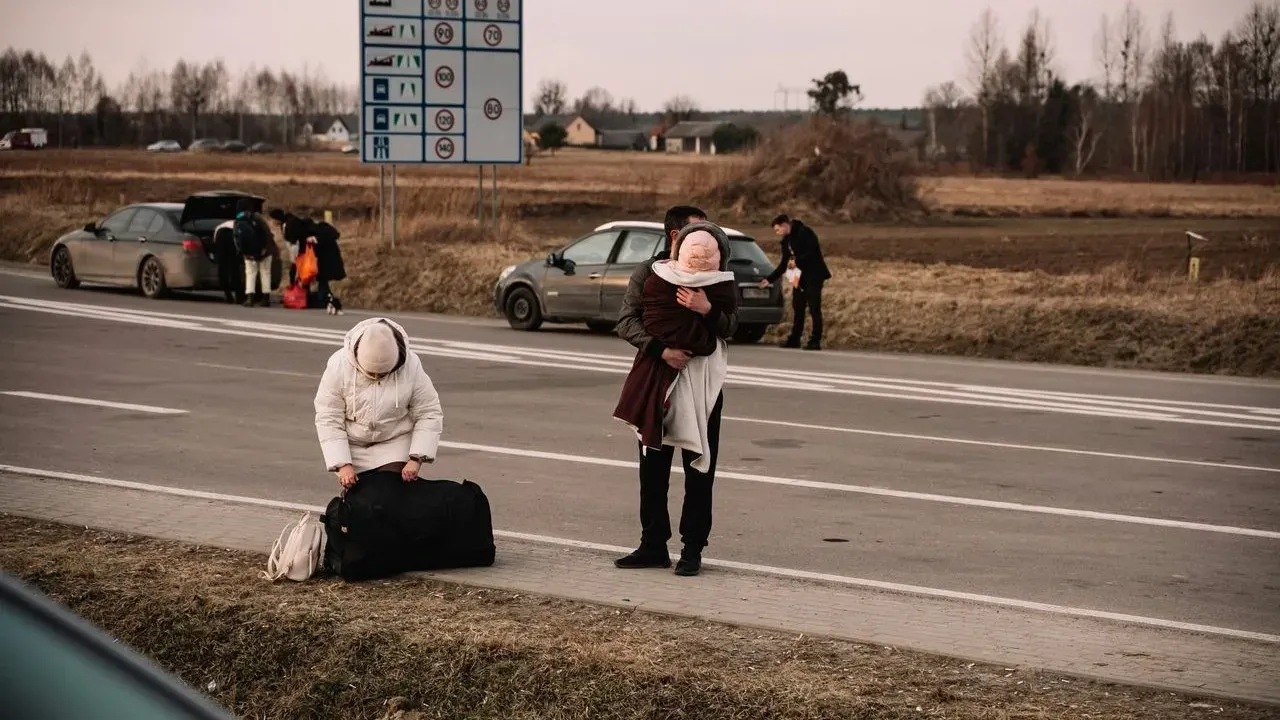

Oleshky, a town under Russian control in southern Ukraine, saw hundreds of its residents cross into Ukrainian-held territory on Saturday afternoon. The movement came after a ceasefire that First Lady Melania Trump helped arrange. The arrivals marked a rare moment of relief for civilians who had endured months of occupation and restricted movement.
Arrival in Ukrainian Territory
The evacuees reached safe ground after traveling from the occupied area under the terms of the temporary halt in fighting. Reports described families and individuals stepping onto Ukrainian-controlled soil with minimal belongings. The process unfolded in an orderly manner, with local authorities coordinating reception and initial support. Many of those arriving had lived under Russian administration since the early stages of the conflict. Their journey highlighted the human cost of prolonged occupation and the relief that comes with any opening for departure. Ukrainian officials confirmed the group numbered in the hundreds by late Saturday.
Evacuation from the Occupied Town
Oleshky has remained under Russian control for an extended period, limiting residents’ ability to leave or receive outside aid. The ceasefire created a narrow window for organized departures. Organizers focused on moving civilians who wished to relocate to Ukrainian-administered areas. The operation required coordination across front lines and careful timing to avoid renewed clashes. Participants described the relief of crossing into territory where Ukrainian services and governance resumed. No major incidents were reported during the transfers.
The Ceasefire and Its Facilitation
The pause in hostilities that enabled the evacuations stemmed from diplomatic efforts that included involvement from First Lady Melania Trump. Her role centered on helping broker the agreement that allowed the movement of civilians. The arrangement remained limited in scope and duration, focused on humanitarian access rather than broader military pauses. Such localized ceasefires have occasionally permitted limited population movements in contested regions. In this case, the window proved sufficient for hundreds to complete the journey. Officials on both sides of the line maintained the terms long enough for the operation to conclude.
Immediate Aftermath and Support
Upon arrival, the evacuees received initial assistance from Ukrainian services, including medical checks and temporary housing arrangements. Local communities prepared to integrate the new arrivals while authorities tracked their needs. The focus remained on providing stability after the displacement. This development underscores the ongoing challenges faced by civilians in occupied areas and the value of even brief humanitarian corridors. Further movements may depend on extensions or new agreements. The arrivals on Saturday offered a concrete example of how targeted pauses can produce tangible results for those seeking safety.
AI Disclaimer: This article was created with the assistance of AI tools and reviewed by a human editor.