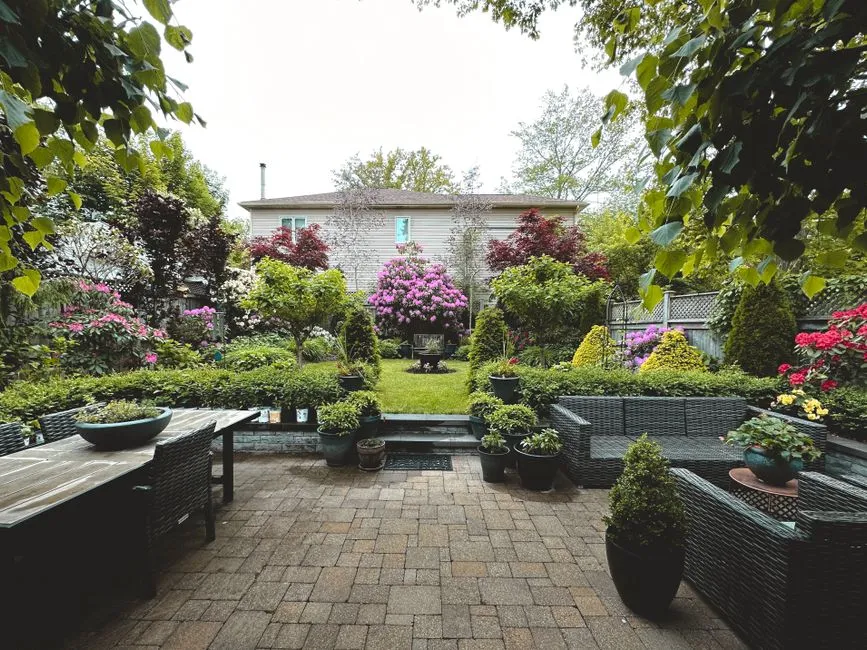

Most people assume the only real solution to a cramped backyard is tearing things up and starting over. In reality, some of the most effective transformations come from planting decisions, not construction budgets. The way plants are arranged, colored, and layered does something surprisingly powerful to how the human eye reads space.
Understanding these visual principles is less about botanical knowledge and more about how perception works. All these ideas rely on optical illusions that magically make your brain perceive the outdoor space as bigger. Once you grasp that the garden is, in a sense, a stage set for your eyes, working with plants becomes a genuinely creative exercise.
Layer Plants by Height to Build Depth
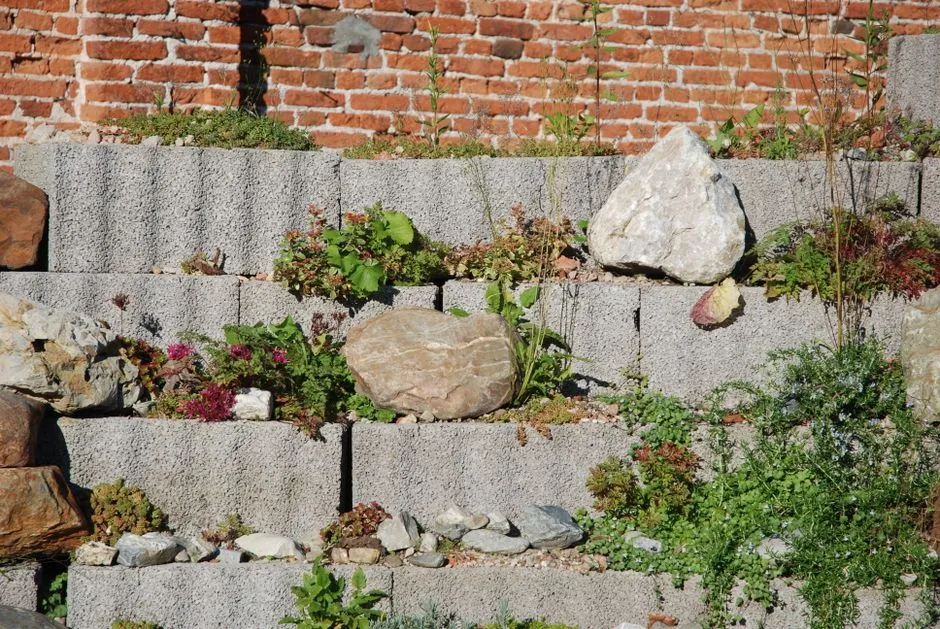
Layering is a fundamental principle of garden design that involves arranging plants in multiple tiers or levels to create a sense of depth and perspective. The effect is similar to looking at a forest: your eye travels through multiple planes and the space reads as far deeper than it actually is.
Layering is all about arranging plants by height, structure, and texture, like building a living mosaic. In nature, plants grow in layers: tall trees form a canopy, mid-sized shrubs fill the space below, and smaller groundcovers spread at the base.
Using a variety of plant heights in your garden really helps to create layers and depth. By placing taller plants towards the back and shorter ones in the front, you can make your garden feel more expansive. The front-to-back graduation is the simplest version of this technique and one of the most consistently reliable.
Use Color Temperature to Stretch the Far End
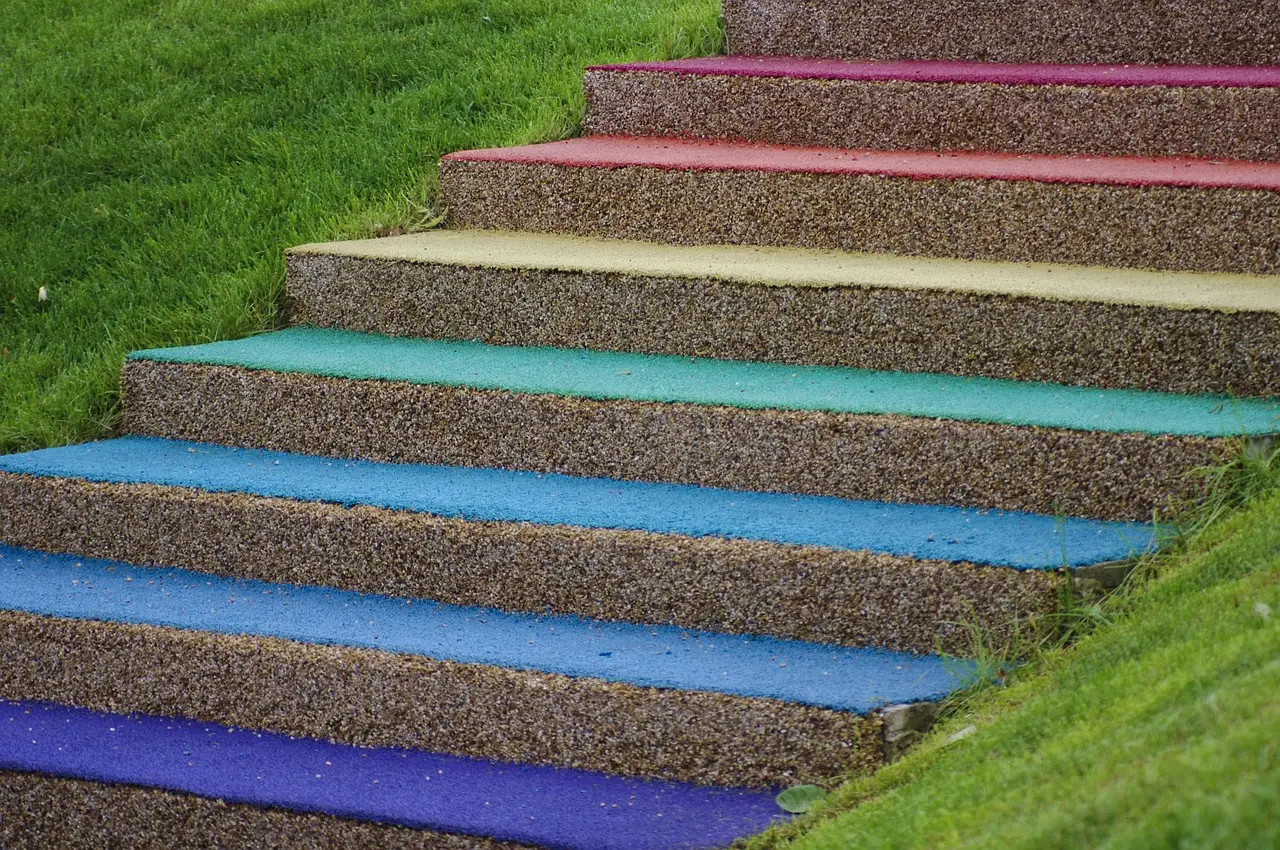
To increase perceived depth in your garden, plant intense reds, oranges and yellows at the front and cool blues, purples and lilacs at the rear. Additionally, dark colors retreat while paler colors advance. This mirrors how the human eye naturally interprets distance in open landscapes.
Bright, hot-colored plants tend to seem larger in volume and advance toward us, while cooler blue tones recede. Positioning warmer shades near the seating area and cooler shades toward the fence boundary creates a believable sense of distance between the two points.
Blue-green leaves tend to slip into the background, while gold and bronze shades step forward. When you blend both through your planting layers, warmer foliage closer and cooler, silvery tones behind, the yard keeps its sense of depth long after the blooms fade. Space still feels stretched and layered across the seasons.
Manipulate Foliage Texture to Control Scale

We can draw upon the qualities of texture to create depth in a planting and to make spaces look larger. Texture refers to the surface qualities of an object that can be seen or felt. In garden design, we are primarily concerned with the visual texture of plants and hardscape materials. While plants offer texture through bark, flowers and fruits, the dominant source of texture is foliage.
Landscape painters create the illusion of depth in paintings by reducing foliage detail in the distance. In gardens, the same effect can be achieved by incorporating plants with finer, more uniform foliage at the rear of the garden and adding bold, glossy-leaved plants near the front.
Use texture to change the perceived size of a space. Place coarse texture in the background to make a space feel smaller, or bring the coarse texture closer to the foreground layer to make a space feel larger. This is a subtle but consistent effect that works year-round, regardless of whether anything is in bloom.
Go Vertical to Reclaim Dead Wall Space
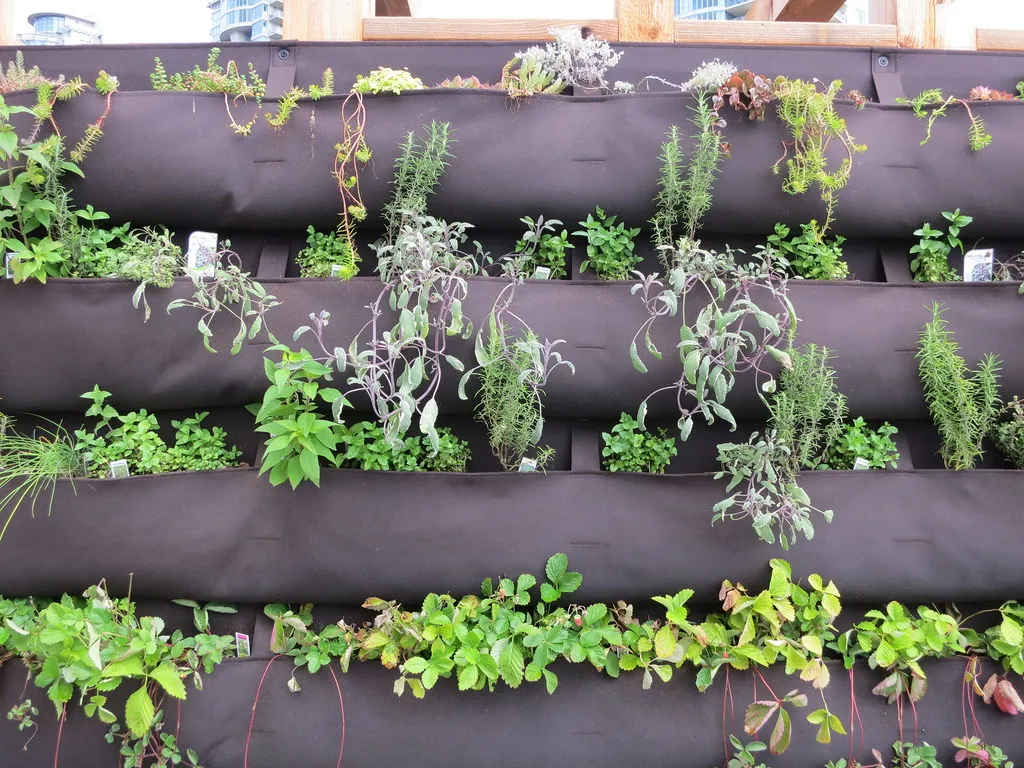
Vertical gardening involves growing plants upward rather than outward. This approach uses structures such as trellises, wall-mounted planters, or vertical towers in raised beds to create layers of vegetation. It allows you to cultivate more plants in less space, making it ideal for small backyards, patios, or urban settings.
Vertical gardening is also an opportunity to incorporate greenery into underutilized areas, like fences, walls, or corners. A bare fence is a missed opportunity in a compact yard. Covering it with climbing plants or mounted planters shifts the visual weight upward, drawing the eye away from the footprint.
Vertical gardening offers many advantages, especially for those with small yards or urban living spaces. By growing plants upwards, you can maximize your garden area and create a lush, green environment even in tight spaces. This method is perfect for balconies, patios, and small backyards. Wall planters are great for maximizing vertical real estate, especially for herbs and smaller plants. Stacked planters allow you to grow vegetables or flowers in tiers, which gives you more planting zones in a compact design. Hanging baskets are perfect if you want a more decorative or ornamental look.
Create a Clear Focal Point to Direct the Eye
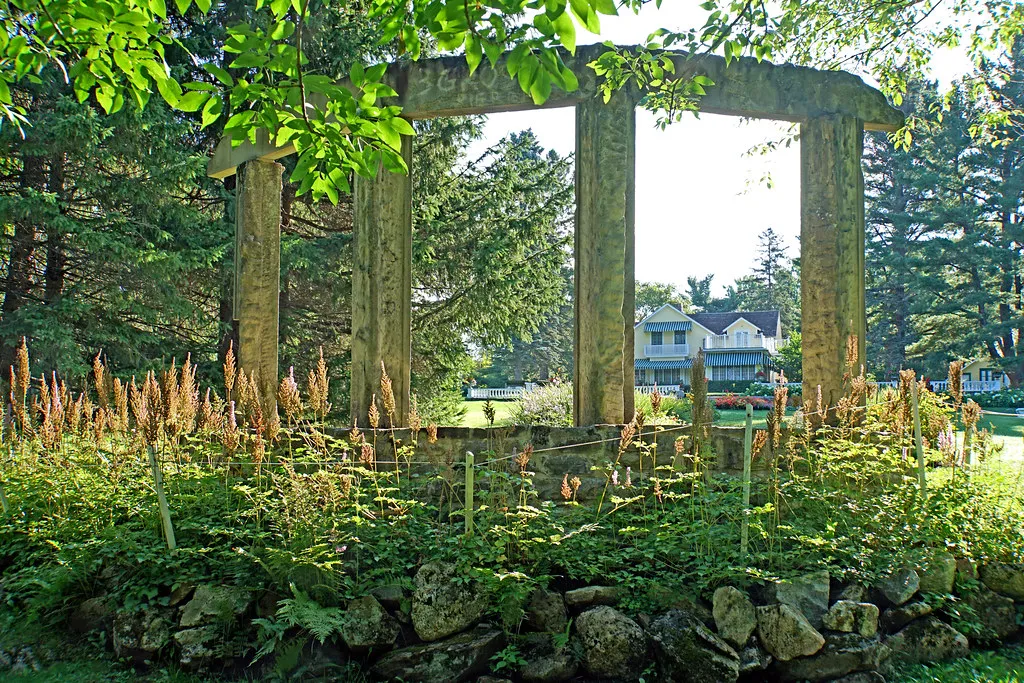
Incorporating focal points into your garden design is essential because it creates visual hierarchy and draws the eye to specific areas of interest. This is particularly important for gardens with limited space, as it helps create the illusion of more room and visual complexity. By thoughtfully incorporating focal points, you can elevate the overall aesthetic of your outdoor space and make it more inviting and enjoyable.
A specimen plant is a single plant selected for its striking appearance, due to size, shape, color, or texture, that stands out from the surrounding vegetation. Examples include a large Japanese maple with vibrant red leaves, a bold agave with sculptural form, or an unusually shaped topiary.
Focal points draw the eye through the expanse, and certain screening plants stop the eye from wandering too far off, giving the impression that there could be more garden beyond. A well-placed specimen plant near the far boundary keeps the gaze traveling outward rather than landing on a fence.
Obscure Your Boundaries with Strategic Planting
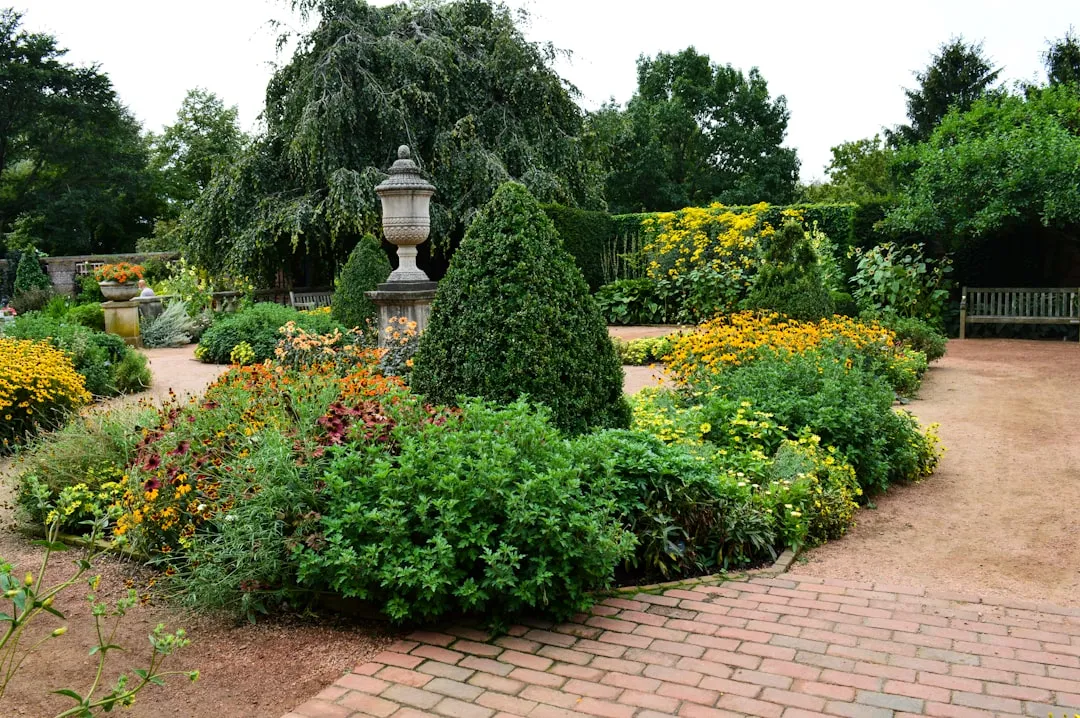
The actual boundaries of the property are always partially obscured or unclear. For instance, planting trees, shrubs, and ornamental grasses can stop the eye from looking beyond the garden to a neighbor’s property, while also creating narrow garden paths that give the illusion the garden could keep going.
Planting fine-textured “haze” plants like Russian sage, feathery fennel, Mexican feather grass, or Blue Fescue against the back boundary softens the hard line of the fence and makes it look like the yard continues into a suggestive distant mist.
The large trees and shrubs at the back of a border stop you from seeing the property line, but the grass path appears to stretch far into the distance. That sense of unresolved distance is precisely what makes a compact yard feel open rather than boxed in.
Use Curved Plant Borders Instead of Straight Lines
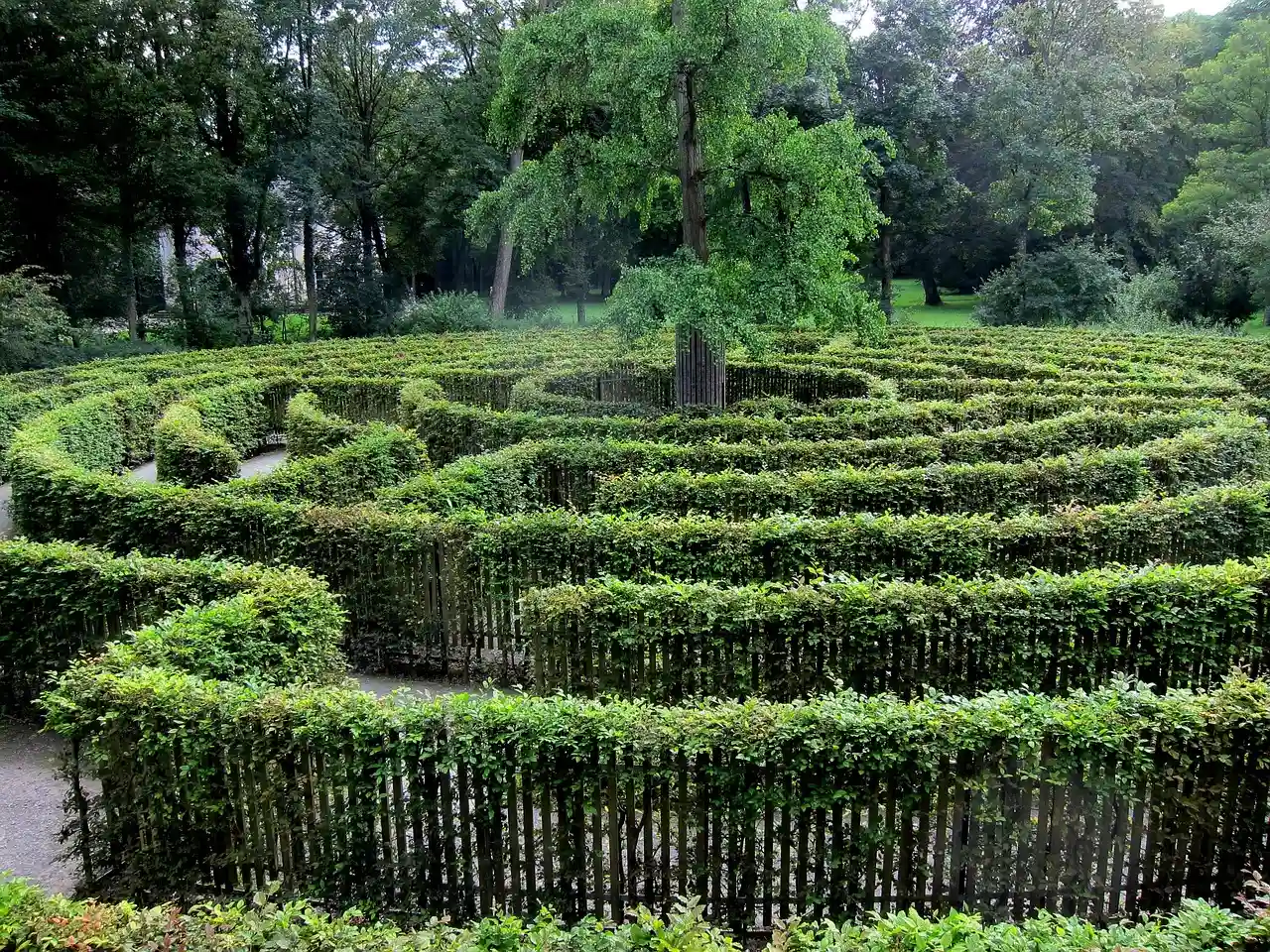
In a small garden, winding paths make a huge difference. Instead of straight lines, opt for gentle curves. This makes it feel like a mini adventure every time you step outside. These paths help create an illusion of space. As they meander through the garden, the eyes catch different plants and areas, making it feel larger than it is.
Carefully placed plantings help to accentuate the snaking of the path through a small garden and boost the illusion that the garden is larger than it really is. The curve hides what lies ahead, and that concealment is the secret: the mind naturally assumes there is more space around the bend.
The use of curving pathways to lead into other areas will create a sense of anticipation, making garden visitors curious as to what lies beyond. Using rooms to divide the space obscures the actual size of the space, making it feel larger.
Divide the Space into Garden Rooms
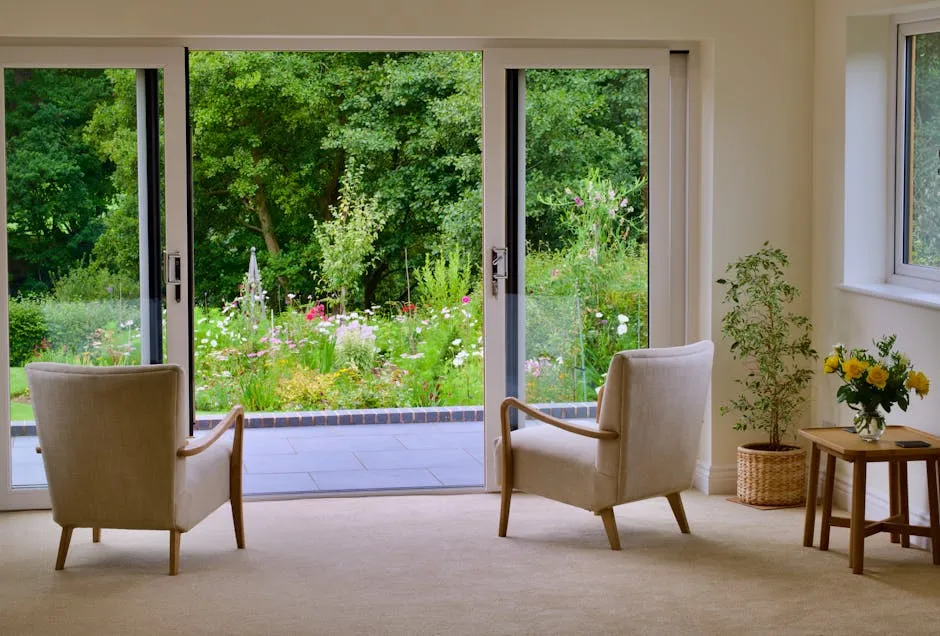
If you arrange your garden space into several zones, you can create different rooms in your landscape. Forgo the traditional flat area with a lawn surrounded by shrubs and divide the area into several usable zones. When divided by physical barriers such as walls or hedges, the rooms create an element of surprise which will make the space feel much bigger.
Make sure that visibility as you travel through the garden is never completely blocked nor wide open. Strategically create long sight lines with plant placement throughout the beds, allowing for open space to come in and out of view. This helps orient you and provide visual relief in contrast to the more enclosed areas. Doing this makes the space feel enclosed and comfortable, but never closed in and claustrophobic.
Tall ornamental grasses or a row of tightly clipped shrubs work well as soft room dividers. They give structure without the visual weight of a wall, and they move in the wind, which adds a sense of life to even the smallest plot.
Keep the Color Palette Restrained
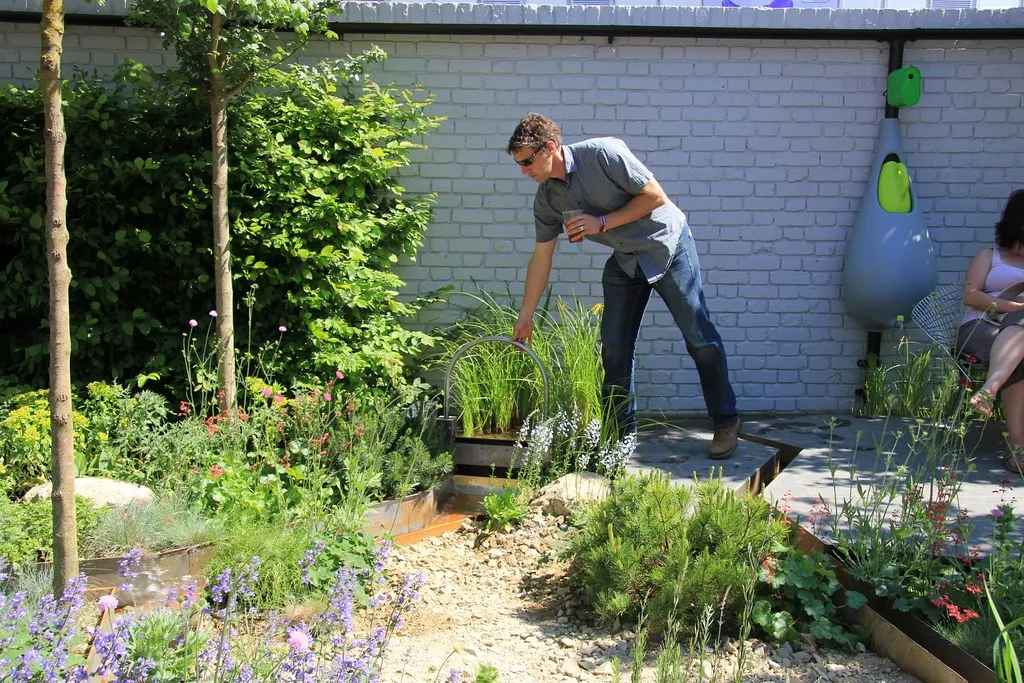
A minimal color palette feels calming and less cluttered. A modern garden planted with a limited color palette not only looks calming and chic, it can give the illusion of more space too. Much like a small room decorated in a riot of different hues and patterns can look crowded, while one with a simpler palette appears more spacious, so it is in the garden.
A small garden is a good opportunity to try the “all shades of green” look with an emphasis more on texture. When flowers are used sparingly, they register as events rather than background noise, giving each bloom more visual power.
When locating plants for color, avoid scattering different colors in small clumps or spots throughout the garden. Color should flow through the layers from top to bottom and front to back to avoid lines or clumps of color. A cohesive flow prevents the eye from bouncing around restlessly, which is exactly the feeling that makes small spaces seem even smaller.
Use Tiered Planting to Add Height and Fullness
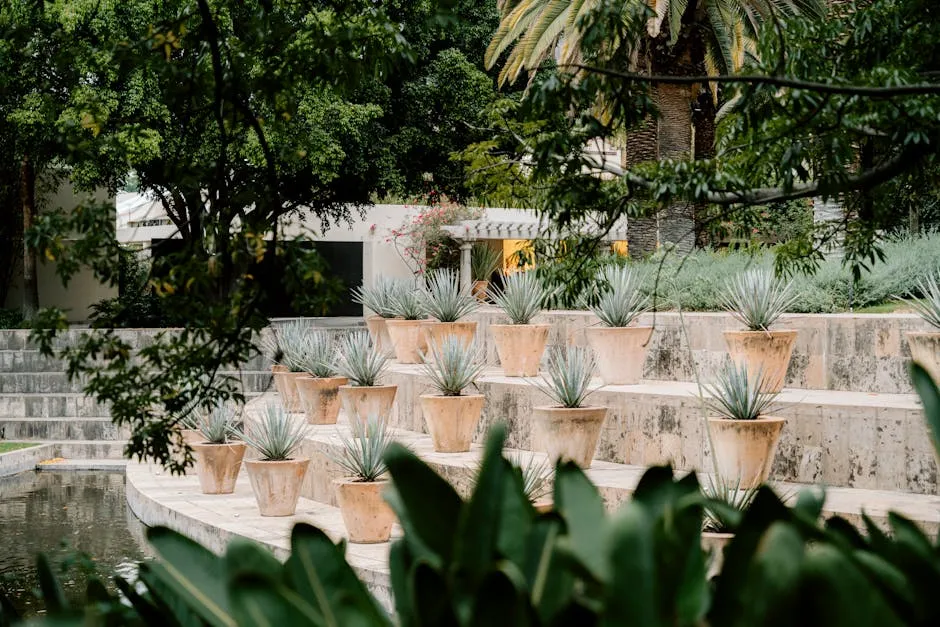
In a small garden it’s important to use more than just the floor space, if you want to make it look bigger. Making the most of wall space, and adding raised beds and planters at different levels will create more height, depth and a feeling of fullness, which will make the space feel lush and seem larger than it is.
Mid-level plantings serve as the backbone of your garden, filling the space between ground-level plantings and taller plants. Choose medium-sized shrubs, ornamental grasses, or perennial flowers to create a lush and textured backdrop for your garden. Group plants of similar heights together to create cohesive plantings. Use layering techniques to create depth within mid-level plantings, with taller plants towards the back and shorter ones towards the front.
Vertical gardens can transform small backyards or balconies into lush retreats. They also enhance privacy by covering walls or fences with greenery, creating a serene outdoor environment. When height is distributed across multiple tiers rather than concentrated in one tall structure, the entire yard takes on a sense of layered richness that feels genuinely generous with space.
Conclusion
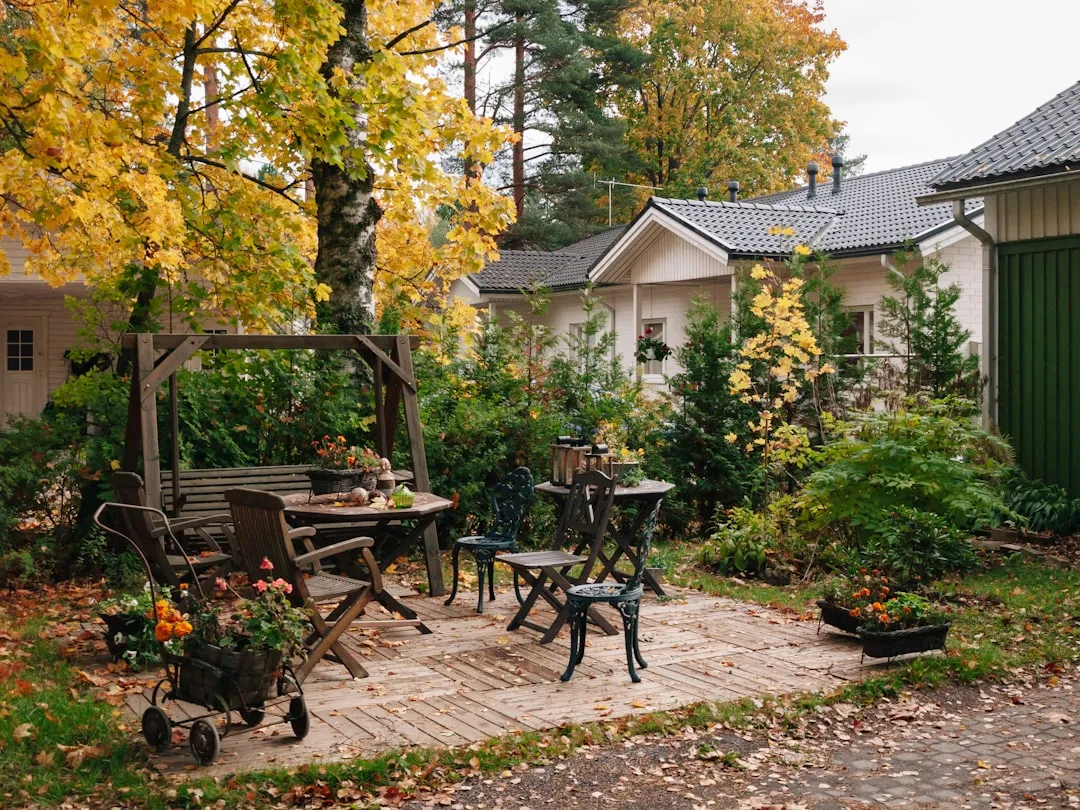
A small backyard doesn’t need to be expanded. It needs to be designed with an understanding of how the eye reads space. Every technique here, from color temperature to foliage texture to layered height, works by influencing perception rather than changing physical dimensions.
The most effective approach is usually a combination of several of these methods at once. Color depth, boundary softening, and vertical interest can all operate in the same garden without competing with each other. In fact, they reinforce one another.
The takeaway is straightforward: plants are not just filling space, they are shaping it. Used intentionally, they’re one of the most flexible and cost-effective design tools available to any gardener willing to think before planting.
AI Disclaimer: This article was created with the assistance of AI tools and reviewed by a human editor.