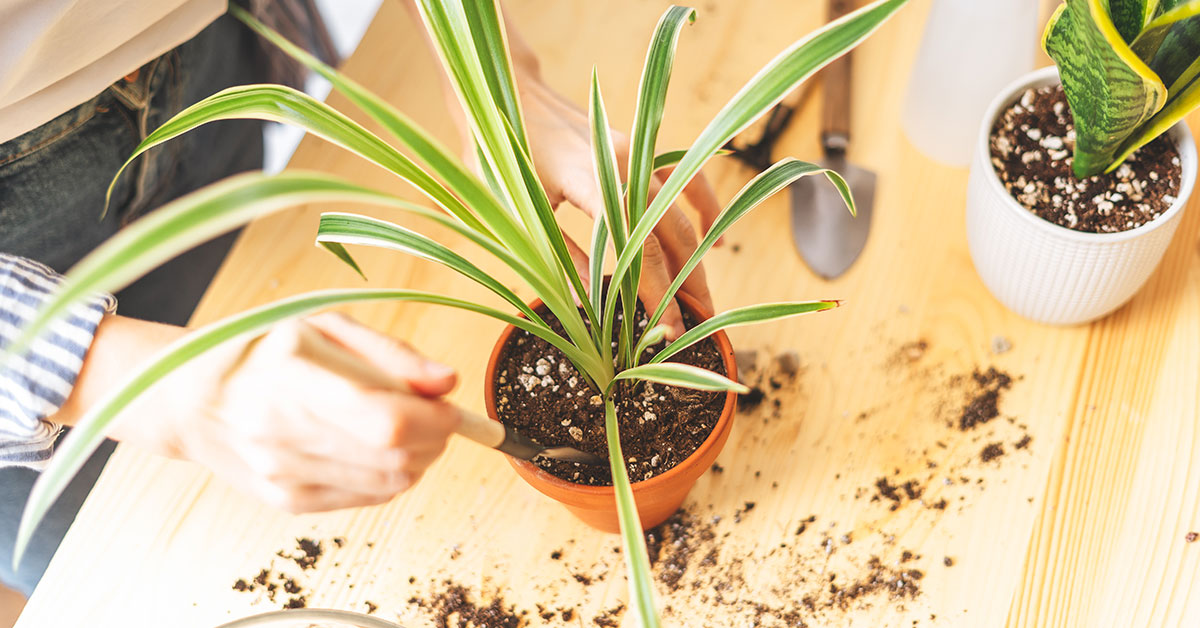

Spider plants can be a really fun indoor plant for beginners and those that love indoor gardening. Learning how to successfully repot your spider plant can help ensure it continues to thrive. Spider plants are common houseplants and are easy to care for. However, they do need to be repotted occasionally to ensure their health and growth. We’ll explain why and when to repot them, what type of soil to use, and how to do it. So, if you’re ready to give your spider plant the best care possible.
Should I Repot My Spider Plant?
Repotting your spider plant is an important part of keeping your plant healthy, and it should be done at the right time. The best time to repot your spider plant is in the spring when the new growth starts to appear. This timing allows the plant to benefit from the fresh soil and nutrients that come with a new pot. When repotting, make sure to use a pot that is only slightly larger than the old one, as spider plants prefer to be a bit root-bound. Also, make sure to use a soil mix that is well-draining and provides the plant with plenty of indirect light and consistent water.
Regular repotting helps the soil stay loose, allowing oxygen to reach the roots and encouraging new growth. It also helps to prevent overcrowding of the roots, which can cause root rot and other issues. Repotting also helps control pests and diseases. This allows for fresh soil to be introduced, ensuring a healthy environment for the plant. Finally, repotting helps a spider plant reach its full potential, as it allows for more nutrients to reach the plant and encourages growth. All these factors make repotting a spider plant essential for keeping it healthy and vibrant.
How To Repot A Spider Plant
First, water the plant thoroughly and then remove it from its pot. After that, inspect the roots and trim off any damaged or dead ones. Next, select a new pot that is slightly bigger than the last one and add a layer of potting soil at the bottom. Place the plant in the new pot and fill the sides with fresh soil, making sure that all the roots are covered. Lastly, give the plant a final drink and place it in a spot with indirect light.
When repotting, it is important to use a well-draining soil mixture with a pH of 6.0 to 6.5. A general potting soil should be mixed with an equal amount of perlite or coarse sand to increase drainage and aeration. Additionally, a small amount of fertilizer should be mixed in for extra nourishment. It is important to not overwater the spider plant, so make sure the soil is light and airy to promote drainage.
Providing Aftercare
When repotting a spider plant, it is important to provide the proper aftercare to ensure its health and longevity. After repotting, make sure to water the plant thoroughly, as spider plants prefer moist soil. If the soil feels dry, water the plant until it begins to drain out of the pot. Additionally, ensure that the plant has adequate light and temperature to thrive in. Spider plants prefer temperatures between 65 and 75 degrees Fahrenheit and indirect sunlight. Lastly, provide regular fertilization to the plant every two to three weeks to give it the nutrients it needs to grow.
Pruning a repotted spider plant is an essential part of keeping the plant healthy and attractive. To prune a repotted spider plant, start by using sharp pruning shears to remove any dead, drooping, or yellowing leaves. Next, trim off any long shoots that are growing away from the main plant. Cut back the stems of the plant to keep it from becoming too leggy. Finally, thin out any overcrowded areas of the plant to provide more air circulation and light for the remaining leaves. After pruning, repot the spider plant in fresh soil and give it plenty of water and sunlight. With proper pruning and care, your repotted spider plant will stay healthy and vibrant for years to come.
Monitor For Pests And Diseases
When repotting spider plants, it is important to check for pests and diseases that can harm the plants. Spider mites, aphids, and mealybugs can all cause damage to the leaves, while root rot, powdery mildew, and gray mold can all be harmful to the roots of the plant. When checking for pests and diseases, be sure to inspect the leaves and roots of the spider plant for any signs of damage. If any pests are found, take appropriate action to get rid of them, such as spraying an insecticidal soap or using an insecticidal spray. If any diseases are found, follow the instructions on the packaging of any fungicides to treat the plant.