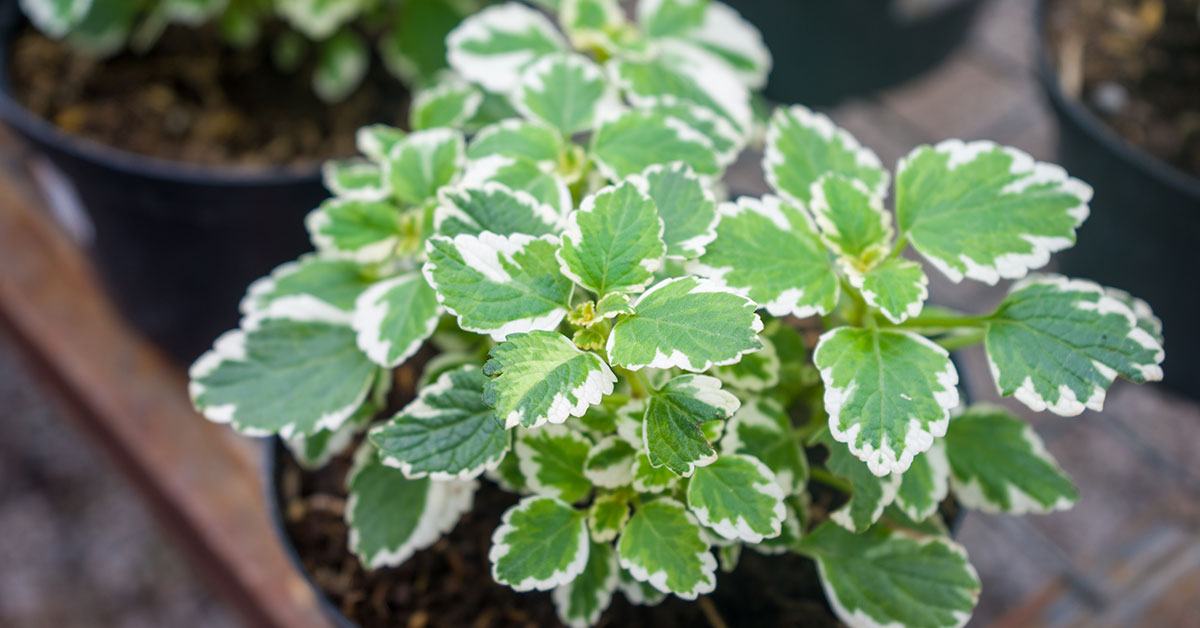

Swedish Ivy is one of my favorite houseplants to grow. It’s pretty tough and resilient and the foliage is just lovely, with its light green leaves with yellow to white edges. Propagating a new Swedish Ivy plant is pretty easy and a great activity if you just can’t get enough of this amazing plant. In this article, we’ll break down how to propagate Swedish Ivy and
What is Swedish Ivy
Swedish ivy (Plectranthus australis) is a trailing plant that is not native to Sweden but is actually native to South Africa. It is an evergreen perennial that typically grows to a height of 12-18 inches and has a spread of up to 24 inches. The leaves are ovate or heart-shaped and generally are 2-3 inches in length. They are deep green in color, with a glossy finish, and have scalloped or serrated edges. Small white flowers with purple veins appear in the summer months. The plant can be propagated by stem cuttings and is an easy-care plant that is low maintenance. It does best in bright, indirect light, with regular watering and a well-drained soil. It can be grown in hanging baskets or containers, or can be used as a ground cover.
How To Propagate Swedish Ivy
Propagating Swedish Ivy is a very easy process overall. It is generally considered non-invasive, but care should be taken to plant Swedish Ivy outdoors only in its native range. This plant is only hardy in USDA hardiness zones 10 and warmer. Here’s how to propagate Swedish Ivy:
- Start by taking cuttings from an existing Swedish Ivy plant. Take a pair of sharp scissors and cut off stems from the plant that are at least 6 inches in length.
- Remove all lower leaves from the cutting and then dip the bottom of the cutting into a rooting hormone.
- Fill a pot with a well-draining potting mix and make a hole in the soil with a pencil or your finger.
- Place the cutting into the hole and press the soil firmly around it.
- Water the soil until it is moist and then place the pot in a warm location with indirect sunlight.
- Cover the pot with a plastic bag or a clear plastic dome to create a humid environment and promote rooting.
- Check the soil every few days to make sure it is still moist. If it starts to dry out, give it a bit more water.
- When the roots start to develop, remove the plastic bag or dome and continue to keep the soil moist.
- After a few weeks, the cutting should be rooted and new growth should be visible.
- Once the new growth is visible, you can transplant the cutting into its own pot or into your garden.
You can also propagate Swedish Ivy just in water. Propagating Swedish Ivy in water is a great way to increase your houseplant collection.Start by taking a cutting of the stem, about 4-5 inches long, and removing the lower leaves. Place the cutting in a container of water with fertilizer and make sure the stem is submerged. Change the water every few days to prevent bacteria from forming. Place the container in a bright area, but not direct sunlight, and be sure to keep the water level consistent. After a few weeks, roots will begin to form and the cutting can be moved to soil. Enjoy your new Swedish Ivy!
Caring for your new plant
Once you’ve established your new Swedish Ivy plant, it’s important that you properly care for it. Here are some tips for caring for your Swedish ivy:
- Water: Water your Swedish ivy when the soil is almost dry. Allow the water to drain through the pot and discard any excess.
- Sunlight: Place your Swedish ivy in bright, indirect sunlight. Avoid direct sunlight, as this can cause scorching of the leaves.
- Fertilizer: Feed your Swedish ivy with a balanced liquid fertilizer every two weeks during the growing season.
- Pruning: Prune your Swedish ivy when needed to maintain desired shape and size.
- Temperature: Swedish ivy prefers temperatures between 60 and 75 degrees Fahrenheit.
- Humidity: Increase the humidity around your Swedish ivy by misting the leaves with water or placing the pot on a tray of damp pebbles.