
The backyard barbecue is one of summer’s most reliable pleasures. Smoke in the air, something cold in your hand, friends and family gathered around. It’s a ritual most of us don’t think twice about, and that’s precisely where things go sideways environmentally.
A single charcoal grilling session releases as much carbon dioxide as a car traveling 26 miles. Multiply that by the tens of millions of grills fired up on a summer weekend, and the picture gets complicated fast. The good news is that a truly sustainable BBQ is more achievable than most people think. It’s about knowing where the real impacts come from and making smarter choices at each step.
1. Understand Where the Real Waste Comes From

Before you can fix something, you need to know what’s broken. Food waste in retail, food service, and households reached 1.05 billion metric tons globally in 2022, representing roughly one fifth of all food available to consumers. The scope of that number is staggering, and it extends right into your backyard when party planning goes sideways.
Around sixty percent of food waste happens at the household level, with the remainder coming mostly from food service and retail as a result of inefficient food systems. A backyard barbecue, with all its unpredictability around how many hot dogs people actually want, sits squarely in that household category.
According to the U.S. Environmental Protection Agency, almost half of the trash in the United States comes from food and food packaging materials, and it’s easy to generate significant waste at a backyard barbecue, from uneaten food to disposable utensils to spent charcoal. Awareness of these specific sources is the first practical step toward doing better.
2. Rethink Your Grill Fuel

A two-hour session with a charcoal grill emits as much CO2 as driving a car for about 26 miles. In addition to high CO2 levels, cooking with charcoal also releases volatile organic compounds and particulate matter, contributing to air pollution. That’s not a small footnote. It’s a meaningful reason to consider your fuel choice seriously.
Charcoal production also contributes to deforestation and biodiversity loss, while gas grills emit roughly half the CO2 of charcoal grills and heat up more quickly. Neither option is perfect, but the gap between them is real and worth noting when you’re making a purchase decision.
The most sustainable way to barbecue is to use an electric model powered by green energy such as solar panels and to grill plant-based foods, since this combination addresses the two biggest factors: the impact of the fuel source and the environmental footprint of the food itself. If a solar-powered electric grill feels out of reach, moving from charcoal to gas is still a meaningful step forward.
3. Ditch the Disposable Plates and Cutlery

Single-use plates and utensils are a major source of waste by their very nature. One of the easiest ways to reduce waste at your cookout is simply to stick to reusable dishes and cutlery, since an estimated 40 billion plastic kitchen utensils are thrown out in America each year. That figure is hard to ignore when you’re reaching for a plastic fork.
Reusable plates come out as the top sustainable choice over disposable or compostable alternatives. Made from materials such as ceramic, glass, or stainless steel, these plates can be washed and used multiple times, reducing waste in landfills. When you’re hosting more guests than your dish cabinet can comfortably handle, borrowing extra sets from neighbors is a perfectly reasonable solution.
Plates that are only marked as “disposable” cannot be recycled or composted, and their only disposal option is the landfill. While these items will begin to decompose over time, they only break down into smaller pieces of what they’re made of, such as microplastics. The seemingly convenient option often carries the heaviest long-term cost.
4. Navigate Compostable Tableware Carefully
If reusables truly aren’t feasible for your event size, compostable tableware is the next best step. But there’s a catch that most hosts don’t know about. Certified compostable plates need the high heat of an industrial composting facility to break down correctly, since your backyard pile doesn’t get hot enough. You should always check if your community has a commercial composting program that accepts these items before you buy.
Bagasse, made from sugarcane fiber, is easily compostable at home or in industrial facilities. Bamboo is naturally biodegradable and sometimes recyclable depending on local rules. Palm leaf products are fully natural and safe for home composting. These distinctions matter, so read the label before you buy anything marketed as “eco-friendly.”
Never put compostable plates in the recycling bin, as they will contaminate the recycling stream. A well-meaning guest tossing a compostable plate into the wrong bin can cause more damage than they realize. Clear signage on your bins prevents this from happening.
5. Plan Your Food Quantities Precisely
The most underrated zero-waste BBQ tool is a simple headcount. The U.S. Environmental Protection Agency has reported that a family of four throws out nearly $3,000 of food annually. Much of that happens at events where people made rough guesses about how much food to prepare. Precision is free and effective.
When food gets tossed in landfills, it releases large amounts of highly potent methane and other greenhouse gases, and food waste alone contributes roughly seven percent of the world’s global emissions. The steak you forgot to serve becomes a climate problem once it hits a landfill.
Planning per-person portions in advance, accounting for dietary preferences among your guests, and keeping cooler bags ready for easy leftovers storage are all practical habits. Purchasing ingredients in bulk also reduces packaging waste and, with proper storage planning, avoids food spoilage, which is both a financial and environmental cost.
6. Source Local and Seasonal Ingredients
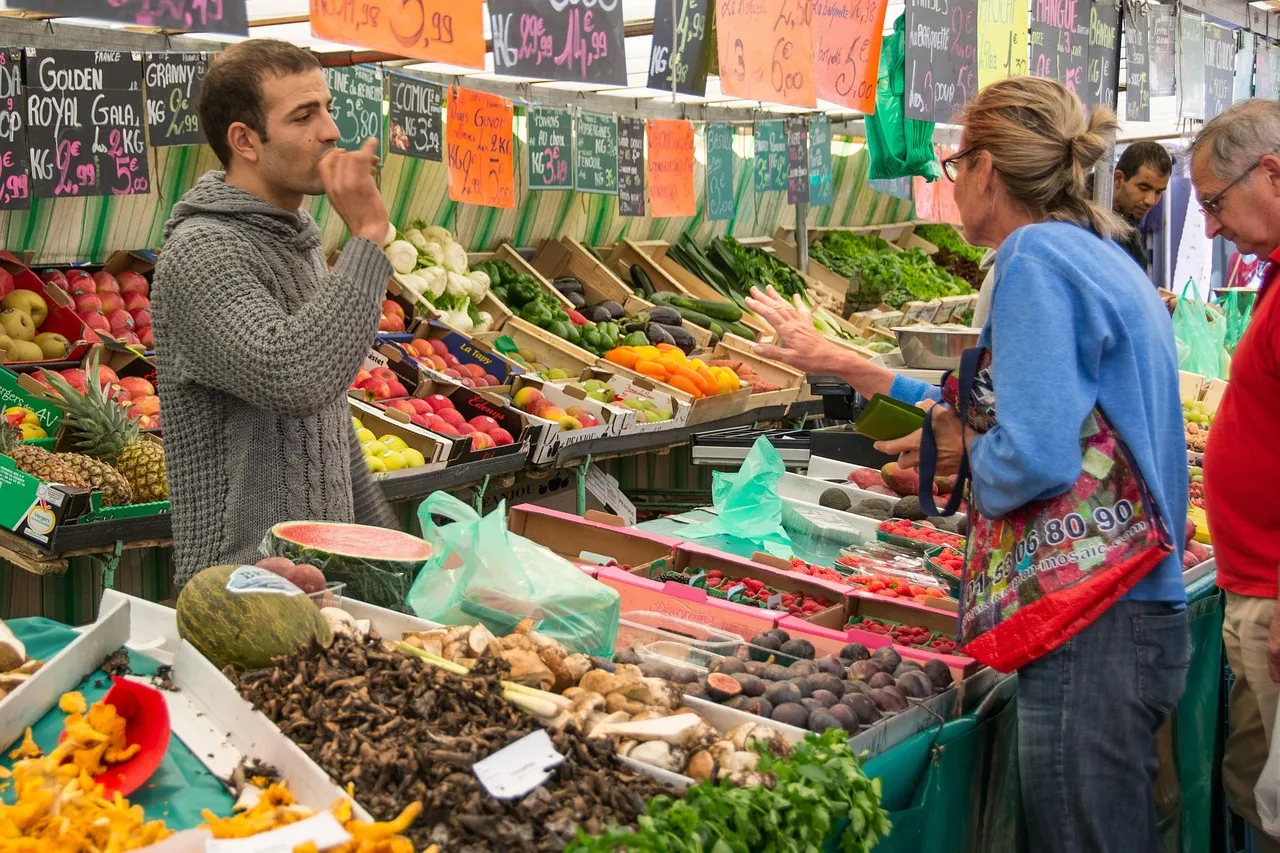
The choices you make about what to grill are just as important as how you grill. Sourcing local and seasonal ingredients reduces the environmental impact associated with long-distance food transportation and supports local economies. Food that traveled a shorter distance to reach your grill generally carries a smaller carbon load.
Choosing organic and locally sourced ingredients not only supports local agriculture but also significantly reduces the environmental impact associated with long-haul transportation. Local produce typically arrives fresher and retains more nutrients, and by opting for organic meats and vegetables, you contribute to reducing the use of harmful pesticides and fertilizers. Better for the planet, and often noticeably better tasting.
Engaging with local farmers’ markets or subscribing to community-supported agriculture boxes can provide seasonal variety while ensuring your BBQ ingredients are as fresh and sustainable as possible. Many CSA programs also offer bulk summer produce that’s ideal for grilling.
7. Shift the Menu Toward Plant-Based Options
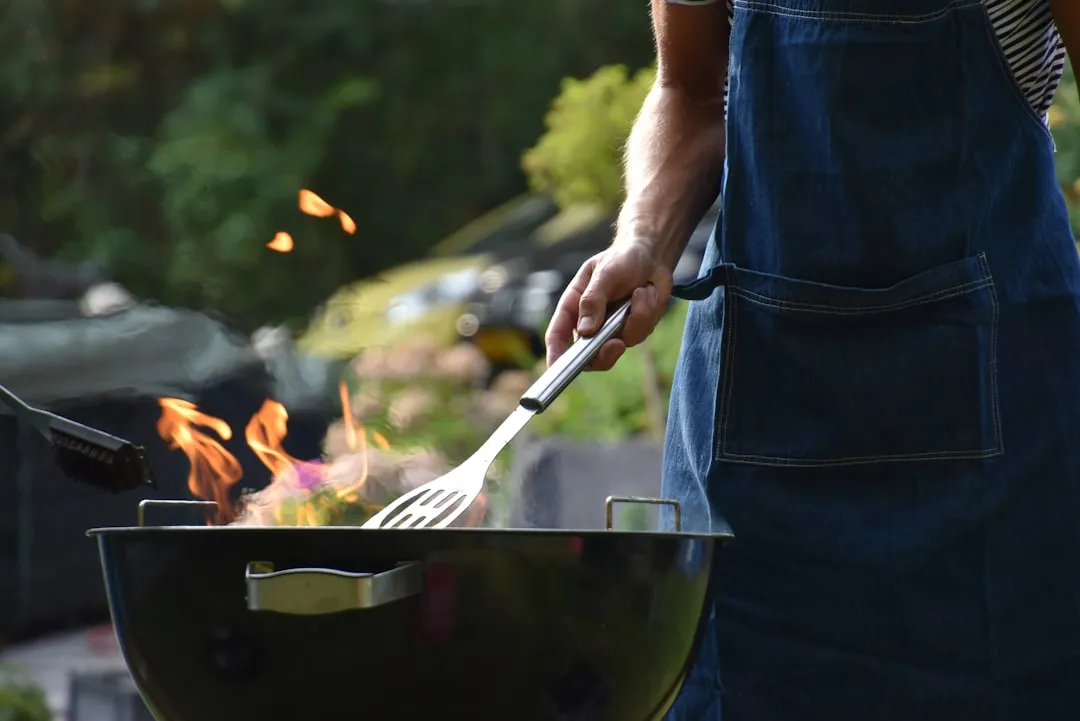
This one has the biggest single impact on your BBQ’s carbon footprint, and it doesn’t require going fully meatless. Greenhouse gas emissions from grills and barbecues are relatively minimal compared to the food itself, since meat drives 57 percent of all food product emissions, making what you grill more important than how you grill it. That changes the calculation considerably.
Reducing meat, especially beef, cuts your BBQ emissions dramatically. Grilled vegetables, corn on the cob, portobello mushrooms, halloumi, seasoned tofu, and plant-based burgers have all earned a legitimate place on a summer grill. The flavor argument against them has weakened considerably as preparation techniques have improved.
The most sustainable option according to life cycle assessment research is to barbecue on solar energy with a vegetarian burger. That’s an ideal worth working toward, even if most of us take it in stages. Every substitution in the direction of plant-based food counts.
8. Set Up a Smart Waste Station

A meticulous sustainability plan is useless if it isn’t easy to follow. Put out plenty of recycling and compost bins and clearly label what goes where, so that correct disposal is obvious and effort-free for everyone. Color-coded bins with visual examples of what belongs inside each one are simple and genuinely effective.
You should also make clear what things shouldn’t go in each bin. For example, a well-intentioned guest might put a greasy paper plate into the recycling bin without realizing that soiled paper cannot be recycled and may compromise the recyclability of anything it touches. A small sign prevents this kind of accidental contamination.
Composting reduces waste, feeds plants, and keeps harmful methane out of the atmosphere. Setting up a dedicated compost bucket for vegetable trimmings, corn cobs, and leftover salads is one of the simplest moves a host can make. It takes under five minutes to prepare and redirects a meaningful portion of your event’s waste.
9. Handle Leftover Food Responsibly

The later food is wasted along the chain, the greater its environmental impact, because we also have to account for the energy and natural resources expended in processing, transporting, storing, and cooking it. A grilled piece of chicken that ends up in the bin represents all the water, land, and fuel that went into producing it, not just the food itself.
Set up a simple leftovers station before guests leave. Have labeled containers ready, offer food openly to guests to take home, and keep a separate cooler designated for post-party storage. The EPA’s data showing American families waste nearly $3,000 of food per year underscores how financially costly this habit is alongside its environmental toll.
If food waste were ranked as a country by greenhouse gas emissions, it would come in third place, right after the United States and China. Food waste that ends up in landfills produces a large amount of methane, a more powerful greenhouse gas than CO2. Treating your leftover ribs and potato salad with a bit more respect is, in a small but real way, a climate action.
10. Think About the Full Event, Not Just the Grill

Sustainable hosting goes beyond fuel and food. Around 70 percent of consumers say they are more likely to engage with brands that provide sustainable packaging, a trend that reflects a broader cultural shift toward eco-conscious consumption that applies just as much to personal event hosting as it does to retail.
Decorations made from natural materials, cloth napkins borrowed from your linen drawer, and pitchers of water with fruit instead of single-use plastic bottles all add up. Compared to single-use plastics, returnable or reusable containers can reduce water use by up to 70 percent. Small swaps across the whole event compound into a genuinely lower-impact gathering.
A circular economy model, where waste generation is decoupled from consumption by adopting waste avoidance and sustainable practices, could lead to significant net economic and environmental gains. That logic scales right down to your backyard. The less you throw away, the less you spend, and the less pressure you put on the systems around you.
Conclusion: A Better BBQ Is Already Within Reach

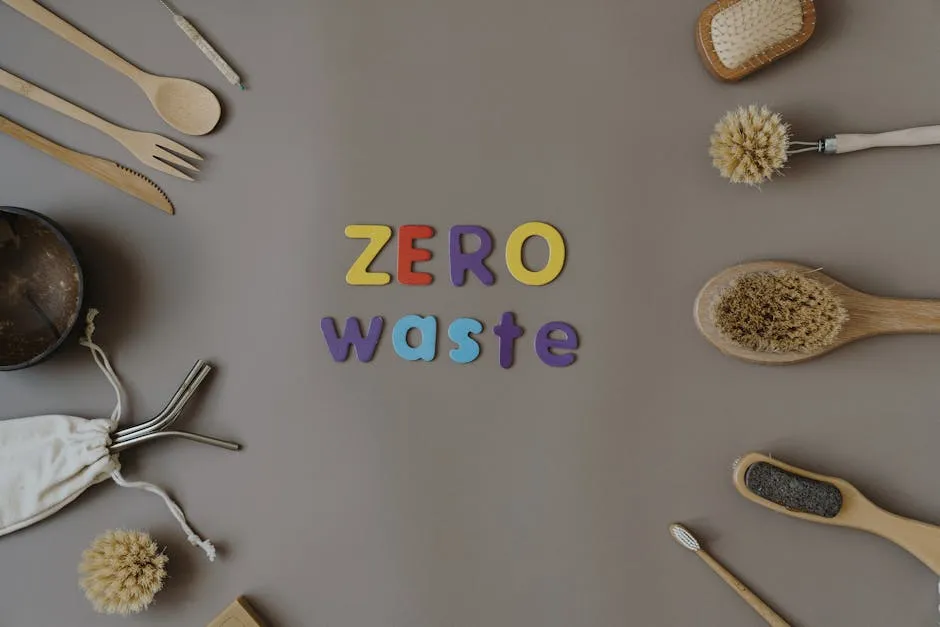
None of this requires a dramatic lifestyle overhaul. A zero-waste backyard BBQ is essentially a series of deliberate small choices: the right fuel, more plants on the grill, reusable plates, labeled bins, and a plan for the leftovers. Each decision matters individually. Together, they make a summer gathering something you can feel genuinely good about.
Progress on food waste is possible, with countries like the United Kingdom and Japan having reduced food waste by 18 and 31 percent respectively through targeted action. What works at a national policy level also works at the household level. Intentionality is the common ingredient.
The fire in your backyard doesn’t have to conflict with the values you carry the rest of the year. A sustainable BBQ still smells of smoke, still runs a little late into the evening, and still brings people together in that effortless summer way. It just leaves a lighter mark on everything else.
AI Disclaimer: This article was created with the assistance of AI tools and reviewed by a human editor.