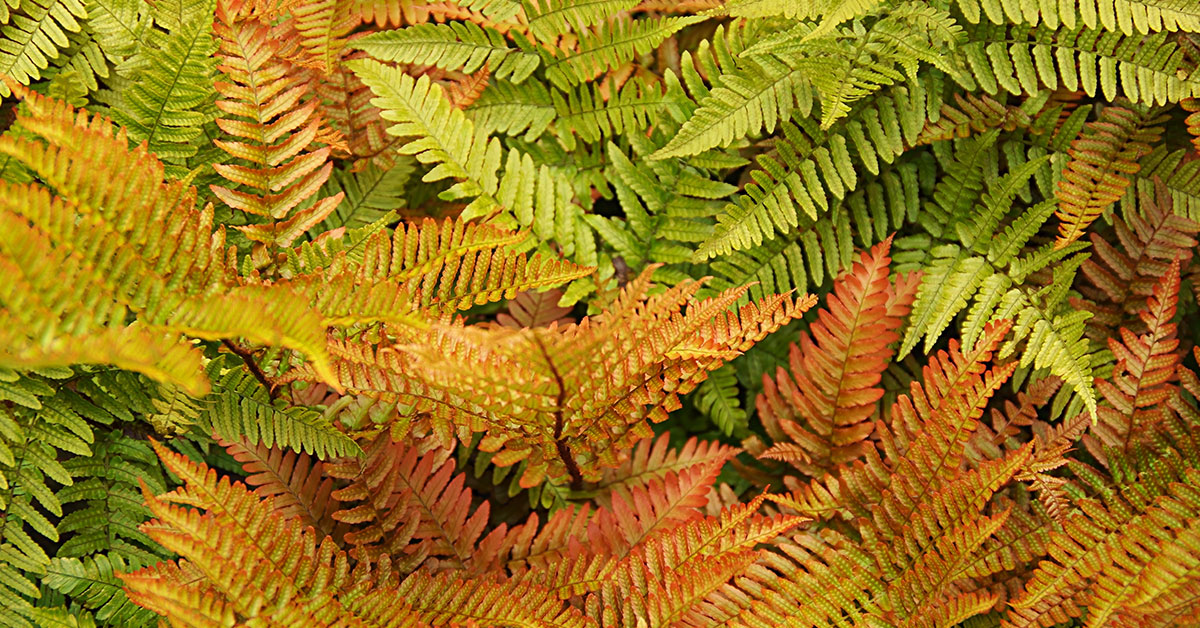

If you are looking for an easy installment into your garden, you should consider planting an autumn fern (Dryopteris erythrosora) this year. They are easy to maintain, aren’t invasive, and look stunning during the springtime with the variety of colors it turns over the months. Ferns are some of the most ancient and interesting plants you could possibly have in your garden as well. However, they do much better in zones 5 or 9. Ferns need heavily shaded areas paired with rich organic soil that will allow them to grow.
Consider where ferns naturally grow, such as dense rainforests or fairly most environments. Being native to Eastern Asia’s habitats. You can find them all over the Pacific Northwest if you live in America, especially around the coast.
Growing An Autumn Fern
Although the maintenance is fairly simple, there are some key elements that are good to check off your list before considering planting an autumn fern. These are some of the need-to-know quick facts about what autumn ferns need for them to grow successfully.
- Latin name: Dryopteris erythrosora
- Other names: Japanese wood fern, copper shield fern
- Native to: Eastern Asia
- Invasiveness: Non-invasive
- Tenderness: Susceptible to intense sunlight
- Sun: Indirect sunlight, partial sun, or full shade
- Water: Very little
- Soil: Organically rich, slightly acidic, and well draining
- Hardiness zone: Zone 5 – 9
- When to plant: Early spring
- Spacing: 2-3 feet
- Plant height: 2 feet~
- Bloom period: Mid winter to late winter
- Time to maturity: Perennial
- Container friendly: Yes
- Fertilizer: Little to none
- Toxicity: No toxins are known
- Deer resistant: Yes and rabbit resistant
- Pest resistant: Yes with an exception for slugs
Something else to keep in mind about ferns is that they aren’t like your typical plant. They do not produce seeds or flowers and stay in their foliage state their entire lifespan. If you have compost, using that is a great way to get started with planting your autumn ferns. Be sure to water only when the soil is bone dry, otherwise overwatering can destroy a fern.
Water
As mentioned above, be sure that you are not overwatering your autumn ferns. Too much water can cause rot, mold, and attract unwanted pests such as slugs can severely damage your plant. If the soil seems to be extremely dry, water your fern as needed. If the soil seems damp or moist, leave it and check again tomorrow. Continue to check how dry your soil is in the area you planted your ferns.
Sunlight
Autumn ferns do not need intense sunlight or a lot of sunlight at all. They prefer well-shaded to partially-shaded areas in your garden. Especially if you have any big shady tree’s that you’d like to plant them under. Any direct long-lasting sunlight can cause your ferns to wither and die.
Soil
Compost can be an awesome organically rich soil to start your ferns with. Ferns need somewhat acidic soil so that is able to drain easily so that water doesn’t linger too long. A lot of failure in growing ferns revolves around poor soil quality and being overwatered.
Fertilizing
If you are using rich organic compost as soil then you won’t need to use much fertilizer. It’s wise to consider how long ferns take to grow as well. You must be very patient with the growth of your ferns as they tend to take their sweet time. It takes a while for a fern to reach its full height.
Invasiveness
Ferns are not considered to be invasive only in areas where they can thrive in clusters. However, they are not like weeds where they will just appear in your yard one day unless deliberately planted.
Growing Autumn Fern in containers
You can have an autumn fern in a container or a big pot in a well-shaded area around your property or in your house. These actually make lovely indoor house decorations if you need something to liven up your personal space. Just make sure that your container is able to drain water properly.
Care & tips
Other than making sure not to overwater, giving it too much sunlight, and not using a lot of fertilizer, your autumn fern should grow successfully. You’ll notice when the leaves become withered or dead, just trim or prune them away when the time comes. A sign of an overwatered fern is when rot or slugs appear on your fern from being too wet.
Common problems
One of the obvious problems aside from overwatering is when your leaves become dry or extremely wilted. This could be from too much sunlight exposure which is dehydrating your fern rapidly. A good way to try to bring your fern back to life is by moving the plant to a more shaded area and providing enough water for the plant to bounce back. Continue to check on your plant to see how your plant’s health is.
Propagating Your Autumn Fern
The best way to propagate an autumn fern is by waiting until springtime. If you have been growing ferns, then you can strategically cut the fern into 2-3 clumps. Be sure that you leave at least one already grown frond to be able to be planted into the ground. The multiple clumps that you planted should then sprout new growth.
Uses for Autumn Fern
Ferns have been known to be great additions to any garden as they promote healthy soil for other plants surrounding them. Autumn ferns are not considered to be toxic and have some vaguely known medicinal purposes. However, it would be very wise to research which ferns may actually be toxic before imbibing or concocting a product from the plant. Otherwise, use autumn ferns for an aesthetic purpose for your household.
History of Autumn Fern
When you are planting a fern, it’s incredible to think about how long this type of plant has been able to survive being on earth. Ferns have a fossil record dating all the way back to the middle Devonian, which is about 383-393 million years ago. They have thrived in so many different places all over the world. Without even realizing it, seeing a fern in person is probably one of the closest ways you get to time travel without time traveling. Nature has many simple mysteries just like the autumn fern.
Hopefully, this information helps you with your future gardening!