

Most gardens wage a constant war against weeds. The mulch gets replenished, the hoe comes out every few weeks, and still, something unwanted always seems to find a way through. Matrix planting takes a fundamentally different approach. Instead of fighting nature, it borrows from it.
Matrix planting is an approach to planting design in which a continuous groundcover layer of one or a few species, usually grasses or sedges, forms a “matrix” into which structural and seasonal plants are set. The result is a garden that looks almost effortlessly wild while being genuinely strategic underneath. It is, in many ways, one of the more elegant ideas in modern horticulture.
Where Matrix Planting Comes From

Originating from post-World War II German urban planning efforts to develop reproducible, low-maintenance planting mixes for public spaces, matrix planting gained international prominence through the work of Dutch designer Piet Oudolf, who integrated artistic elements of color, form, and seasonality into naturalistic schemes.
Famed Dutch garden designer Piet Oudolf was one of the first to popularize the use of grasses to create a matrix in his garden designs, using “drifts” of flowering plants to add visual interest. His influence now reaches far beyond Europe.
Piet Oudolf has popularized the look of matrix gardens with his various designs at locations such as the High Line in New York City and Lurie Garden at Millennium Park in Chicago. These public projects became a turning point for how naturalistic design was perceived by a wider audience.
Understanding Why Weeds Lose in a Dense Planting

The matrix layer covers the soil surface and binds the planting together, leaving little open ground for weeds. This is the core mechanic. It is not chemistry or landscape fabric doing the work. It is plants.
Without this layer, gardens rely on mulch as a placeholder. Mulch breaks down. Weeds exploit gaps. Maintenance increases. The matrix model short-circuits that cycle entirely by replacing bare soil with living plants that persist season after season.
The science supports this clearly. In a continental-scale field experiment, annual weed biomass in species mixtures was roughly one-seventh that found in monocultures, and over 95% of mixtures had weed biomass lower than the average of monocultures. Average weed biomass in mixtures over the whole experiment was about half that of the most suppressive monoculture.
The Three Layers That Hold Everything Together
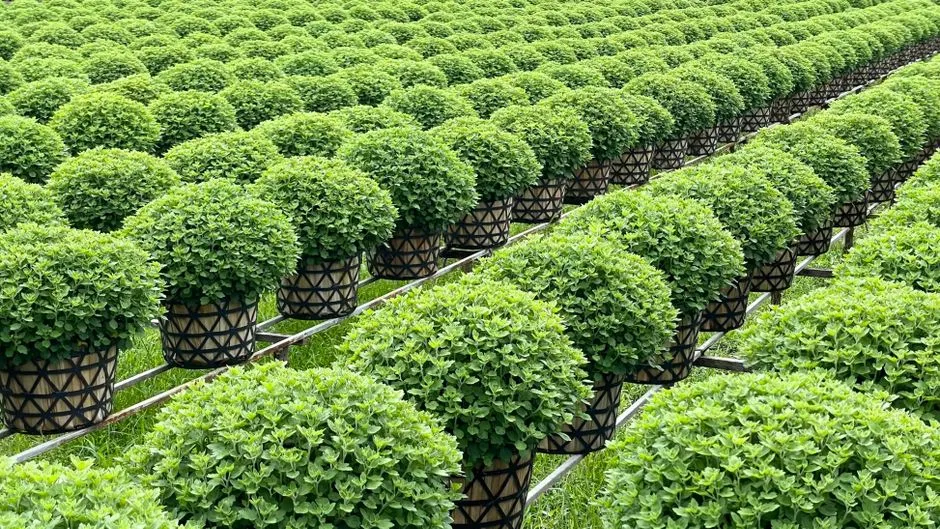
In its modern usage, matrix planting arranges vegetation in vertical layers. Groundcover occupies the first layer; taller structural plants and seasonal flowering plants are then set into it. Think of it like a stage: the groundcover is the floor, the mid-layer perennials are the main cast, and the structural plants are the backdrop.
Matrix planting creates multi-dimensional communities of plants by successively layering the vegetation, one above the other. Sunlight filters from the top through a succession of layers down to the ground level, which contains plants needing little light. This stacking of light requirements is what prevents wasted space.
With plants occupying multiple vertical layers and niches, matrix gardens maximize use of light, nutrients, water, and space. Different rooting depths prevent competition. Plants effectively agree on a division of resources without any human intervention required.
Choosing Your Matrix Layer Plants

The key to a successful matrix planting is selecting the right plants for the right place. Grasses and sedges must be short enough to not smother smaller forbs, and plants should be paired based on sociability, such as pairing aggressive species with other aggressive species.
Blue grama (Bouteloua gracilis), prairie dropseed (Sporobolus heterolepis), and Sesleria are common choices for sunny sites, while Carex species are a great choice for partial shade. Each of these forms a reliable, persistent carpet that stays dense through multiple seasons.
For shady areas, Canadian wild ginger (Asarum canadense) or massed ferns can form the base layer. The palette shifts depending on light, but the principle stays the same. You are choosing plants that colonize ground thoroughly and hold it.
Getting the Ratios Right

Benjamin Vogt, author of Prairie Up, suggests a 50-50 grass-to-forbs ratio as a starting point. This gives you a planting with visual balance and ecological stability, where neither layer dominates the other entirely at first.
Reduced plant spacing, typically on 8 to 12 inch centers or closer, promotes rapid canopy closure to shade the soil and reduce evaporation, with recommended ratios shifting to 80% grasses versus 20% forbs for greater stability in low-rainfall areas. Drier climates tend to favor grass-heavier mixes for this reason.
The groundcover layer should make up roughly 40 to 50 percent of your planting, interplanted under and around taller layers for continuous coverage. Structural plants, the taller focal points, typically make up around 10 percent of the total planting. That leaves room for the seasonal mid-layer to fill in the rest.
Selecting the Right Mid-Layer Perennials

Middle layer perennials might include butterfly weed (Asclepias tuberosa), thread-leaf bluestar (Amsonia hubrichtii), blazingstar (Liatris spp.), coneflower (Echinacea spp.), rattlesnake master (Eryngium yuccifolium), and golden Alexander (Zizia aurea). These selections are not just decorative. They bloom in sequence, keeping the planting interesting from spring through fall.
To maintain visual appeal throughout the year, focus on selecting plants with varying bloom times, foliage colors, and textures. A matrix that blooms all at once and then goes quiet for months will feel flat, no matter how well it suppresses weeds.
The goal for a matrix planting is to highlight flowering plants in every season, with a living groundcover growing as a green foundation. When the sequence is right, there is always something catching the eye, even in the depths of winter when seed heads hold their form against frost.
Planning the Layout on Paper First
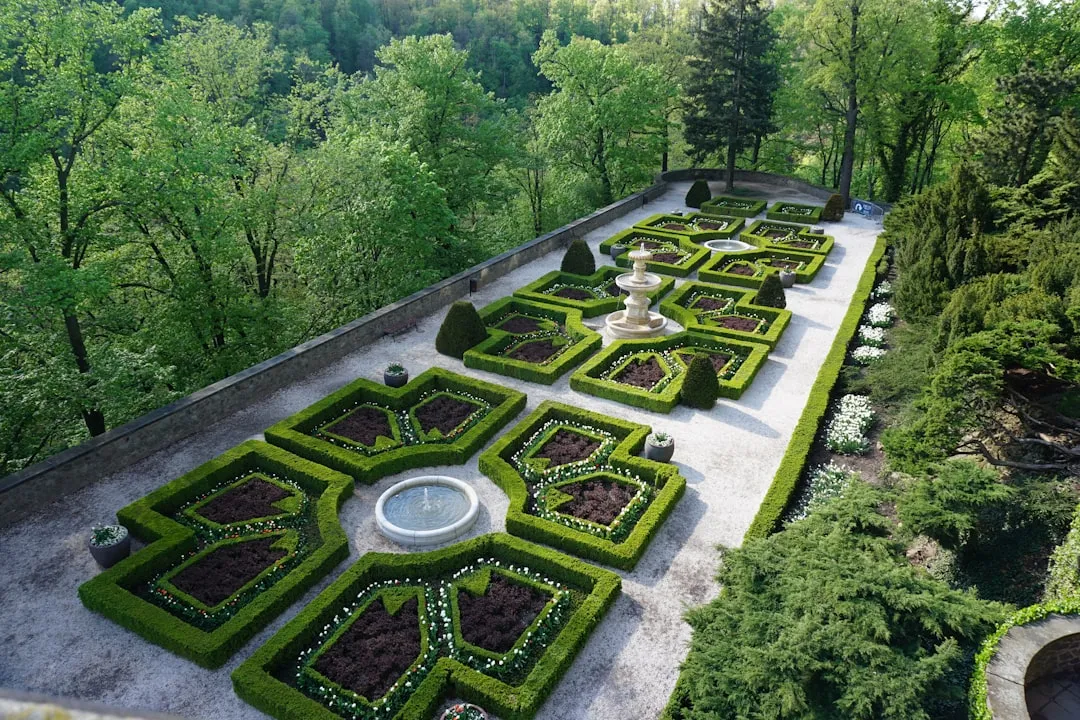
When thinking about overall garden layout, plan for plants to be arranged in an irregular, interspersed pattern rather than in straight rows. This creates niches for different species and prevents any one plant from dominating.
Group plants in odd numbers, based on their mature size, considering texture and color. Odd-numbered clusters feel more natural visually. It is a small detail, but it makes a noticeable difference when the planting matures.
Groundcover plants can be placed every 30 centimeters in a grid-like pattern, and the other layers can be planted between these plants. This gives you an organizing framework that looks structured on paper but reads as organic once the plants fill in.
Matching Plants to Your Specific Site Conditions

While matrix gardens appear wild, they are meticulously planned, with cultural needs the first consideration. Led by the concept of “right plant, right place,” they match plants that enjoy the same soil, sun, moisture, and weather conditions, and arrange them according to their patterns of growth.
In a matrix, plants with similar cultural needs are grouped so that they will knit together above and below ground, forming a cooperative ecosystem that conserves water and discourages weeds. This is the difference between a matrix and a random collection of plants. Compatibility is the foundation.
The use of hardy, drought-tolerant species minimizes the need for watering and fertilizing. Once established, a well-matched matrix should be largely self-sufficient, drawing on the ecological relationships it has built over its first few seasons.
Managing the Establishment Phase

Matrices do take a few years to get established just like a meadow or prairie landscape, but over time they require significantly less maintenance than a formal garden. As they spread and establish density, weeds are unable to find a foothold.
The maintenance that does take place includes thinning out an overly aggressive plant group or replacing unsuccessful plants. This is far more manageable than the repetitive weeding cycles most gardeners are used to. You are correcting the system occasionally, not fighting it constantly.
Where many matrix plantings fail is when too many species are asked to perform the matrix role, or when designers choose too many short-lived perennials that cannot persist. Restraint in species selection during the first year pays off considerably by year three.
The Ecological and Practical Payoff

With human inputs drastically reduced, the garden’s ecology can flourish. Established matrix plantings should not need the life support given to most gardens: fertilizer, dividing, or supplemental watering. That is a substantial reduction in both cost and labor over time.
This allows the landscape to be more disease and pest-resistant with the variety of plant material. The assorted types of plants also promote biodiversity and attract beneficial insects. A matrix garden is not just lower effort. It is actively producing ecological value.
High-density plantings reduce or eliminate the need for bringing in mulch to suppress weeds, ultimately reducing maintenance. Incorporating native grasses, wildflowers, and shrubs creates resilient habitats that support pollinators and natural pest control, and these projects demonstrate reduced maintenance and improved ecological benefits compared to traditional monoculture landscapes.
Conclusion: A Garden That Works With You, Not Against You

Matrix planting is not a shortcut. The planning stage demands real thought about plant compatibility, site conditions, spacing, and layering. What it offers in return is a garden that gradually becomes more self-sufficient, more beautiful across all four seasons, and far less demanding of your time.
The idea at its heart is simple: the goal is to mimic natural plant communities that grow densely and cover every square inch of soil, to reduce weed competition and provide wildlife habitat. Nature has been doing this without mulch or herbicides for a very long time.
A garden that outcompetes weeds on its own terms is not a fantasy. It is a design problem, and matrix planting is one of the most honest solutions available. Get the foundation right, and the garden will largely take it from there.
AI Disclaimer: This article was created with the assistance of AI tools and reviewed by a human editor.