

There’s something quietly compelling about a boundary that grows. While most garden fences decay the moment they’re installed, a living willow fence does the opposite. It roots, leafs out, and gradually fuses into a structure that becomes stronger with every passing season.
Sometimes called a “fedge,” this structure is created by planting and weaving live willow rods into a structural pattern. Unlike traditional fencing, it continues to grow and leaf out, offering a lush, natural boundary that changes with the seasons. It’s a practical choice, an ecological one, and honestly, one of the more rewarding projects a gardener can take on.
What Exactly Is a Living Willow Fence?
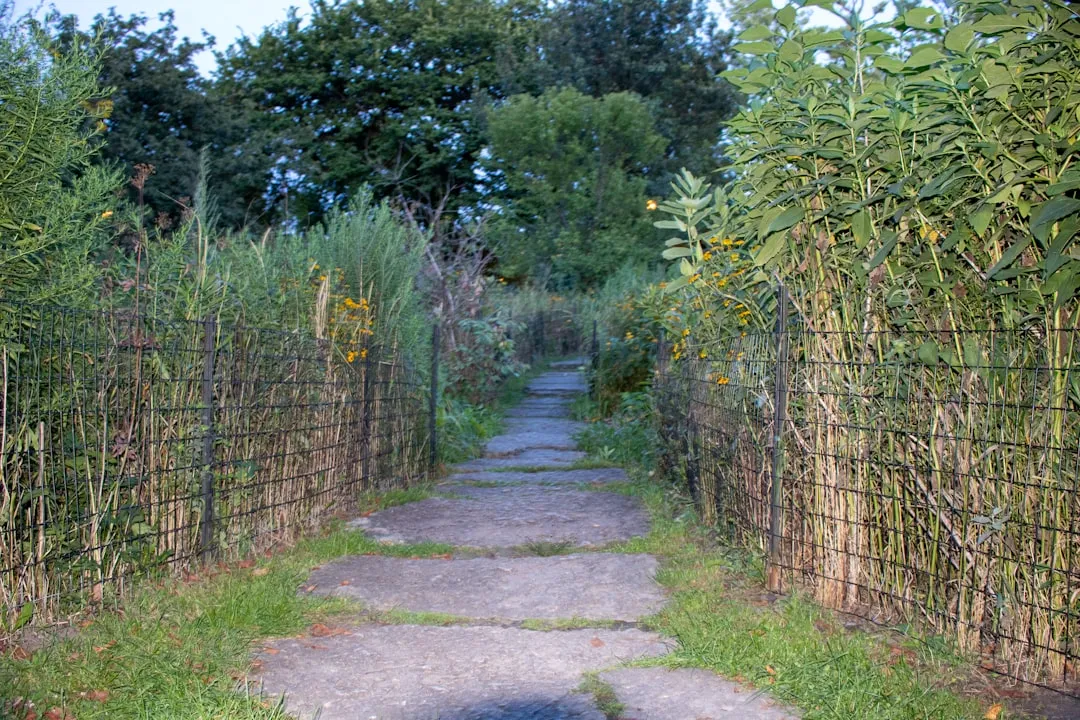
A living willow fence, also known as a fedge, something in between a fence and a hedge, can be used to create boundaries around outdoor areas. The name captures the concept well. It functions like a fence structurally but grows and fills in like a hedge over time.
Living willow fences are made from willow shoots, also known as willow whips, that are harvested, planted, and woven into a fence in the winter or early spring when the plant is dormant. When the temperatures warm up, the whips come out of dormancy and start growing.
Unlike wooden or plastic fences, living willow fences get stronger with age, provide valuable wildlife habitat, and absorb nutrients and water. That combination is hard to replicate with any manufactured material.
Choosing the Right Willow Species
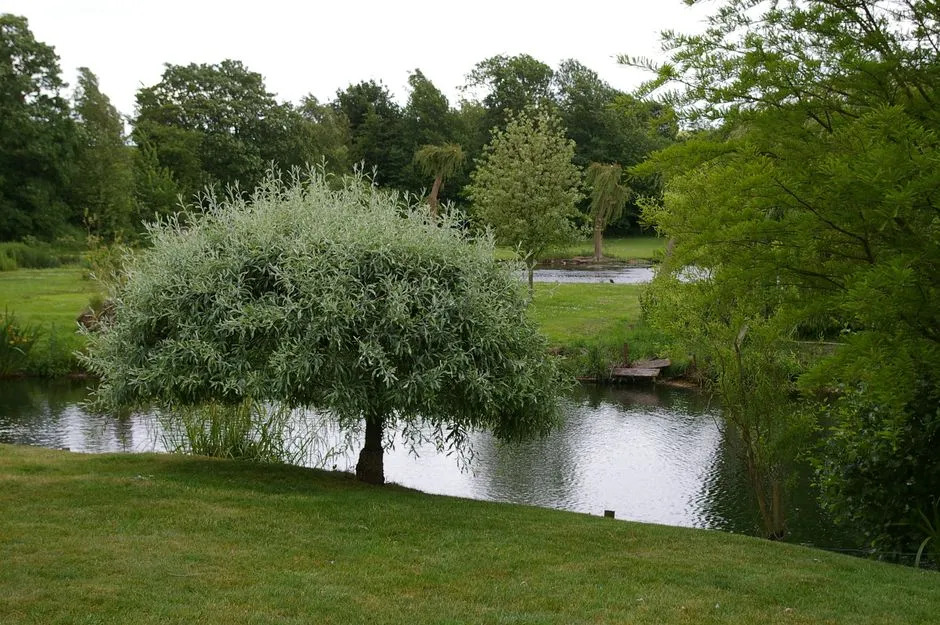
Selecting the correct Salix species is the first step. Salix viminalis, known as Basket Willow, or Salix purpurea are often recommended for their flexible, straight rods and vigorous rooting ability. These varieties are well tested across a range of soil types and climates.
Salix alba var. vitellina, golden willow, S. daphnoides, S. alba var. vitellina ‘Britzensis’, S. viminalis, and S. purpurea are especially good for making living willow structures. Each offers slightly different stem colors and growth habits, which opens up some genuinely interesting design options.
Willow stem colors vary, from bright yellow to deep rich purple, and are most apparent on fresh, one-year growth. The color of the willow will fade with age. However, heavy pruning will promote new growth and color. So a bold color palette is entirely achievable with a little discipline.
Picking the Best Time to Build
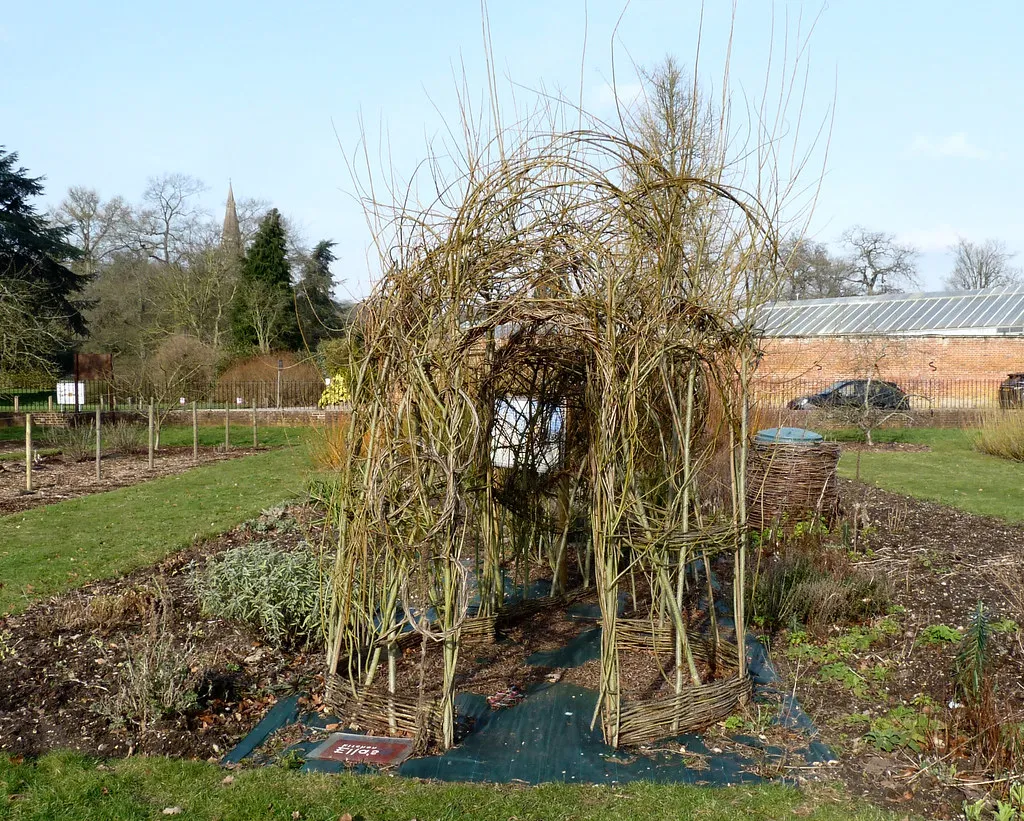
The best time to start work on a living willow fence is in winter or early spring, which is also the time of year when willow farmers harvest their willow stems. This timing is not arbitrary. It aligns with the plant’s biology.
Willow is usually harvested and cut in late autumn after the leaves have fallen. This is when the most energy is stored in the stem for new growth. Cutting can then continue right through to early spring, but it is best done while the plant is still dormant and before buds start to form.
Building a living fence requires patience and a basic understanding of plant biology. The process begins during the dormant season, typically between late November and early March, when the willow is “sleeping” and its energy is stored in the stems.
Preparing Your Site Carefully
Site preparation requires full sun and moisture-retentive soil, as willow thrives in damp conditions. Choose a location at least 33 feet, or 10 meters, away from drains, septic systems, or building foundations to prevent root damage. Willow roots are powerful and persistent, and this distance is genuinely important to respect.
Clear a strip of ground approximately 12 inches wide along the fence line, removing all competing grass and weeds. Loosening the soil to a depth of about 10 inches and incorporating compost will improve conditions for rapid root development.
Clearing a strip of ground at least 30 centimeters wide is essential. Removing all grass and perennial weeds ensures the young willow doesn’t have to compete for nutrients in its first critical year. That first year is the most vulnerable, and the preparation work you put in at the start really does show.
Sourcing and Preparing Your Willow Rods
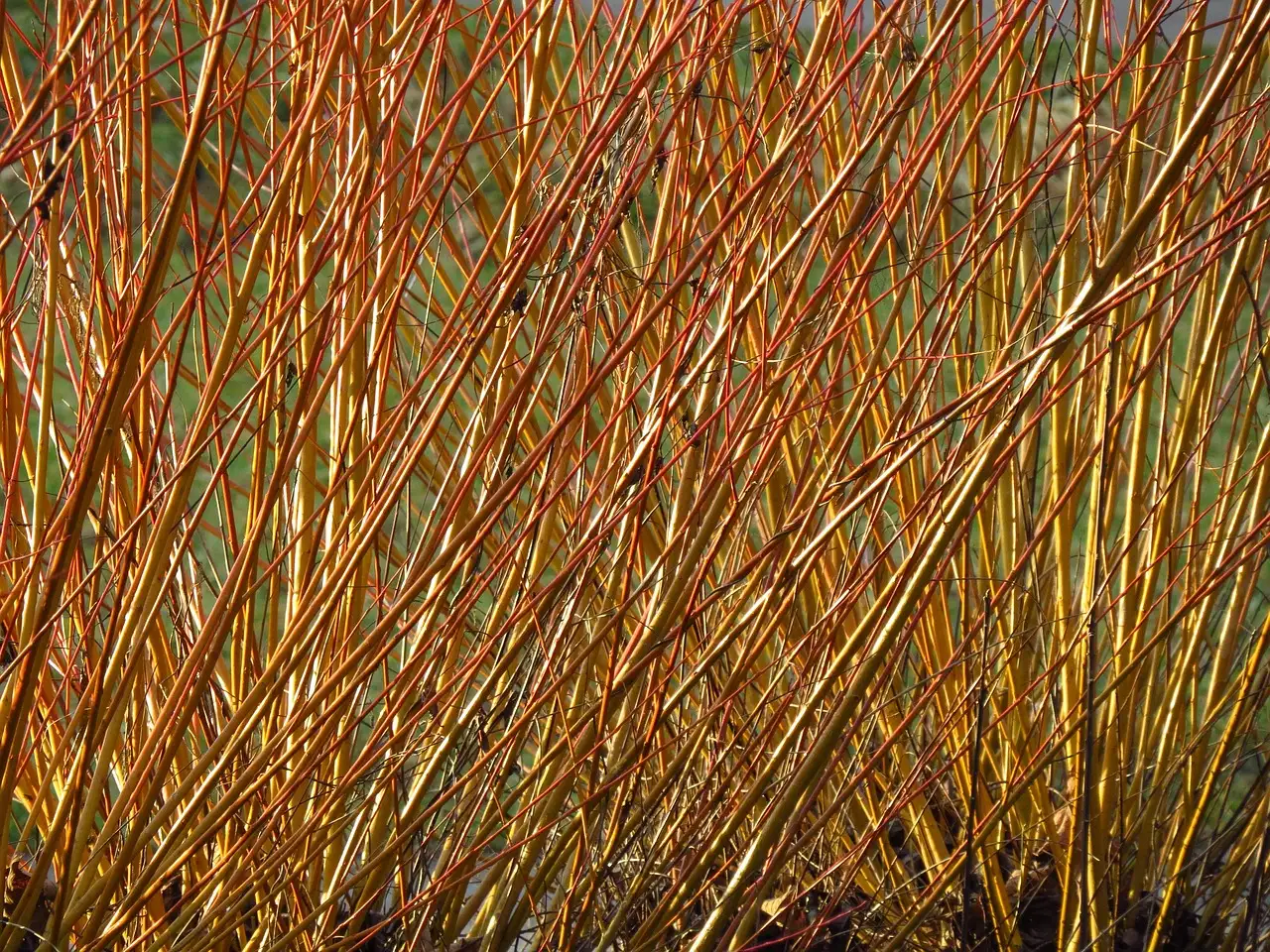
Sourcing fresh-cut willow rods is mandatory. Dried basketry willow will not grow. Look for rods that are one to two years old. One-year rods, known as “whips,” are highly flexible and ideal for weaving, while two-year rods provide the structural uprights needed for taller fences.
Your willow fence will need to be planted quickly once it arrives, but the main stems need to be left in water for at least 24 hours before planting. Make a sloping cut at the thick end of the main stems and place them upright in around 10 centimeters of water. Store the rods in a dark, cool area.
Specialist growers will supply mainly one-year-old rods or whips or staves. If possible, order two-year-old material for uprights and one-year-old for the woven infill. That combination of materials gives the structure both rigidity and flexibility where each quality is needed most.
Planting the Rods: Depth, Angle, and Spacing
Planting depth determines the long-term survival of the fence. A common rule is to push the rods at least 25 to 30 centimeters into the ground. In drier soils, planting even deeper, up to 40 centimeters, protects the base from dehydration. Using a dibber or a simple metal rod to create a pilot hole prevents the delicate bark from peeling off as the willow is inserted.
Insert half the willow stems in the ground about 8 inches deep and about 10 inches apart at 45-degree angles. Then come back and insert the other half of the stems in between, angled the opposite direction, creating a diamond pattern.
Use your thickest, longest willow stems as the main rods. Set these into the ground upright every 30 centimeters, and push each rod at least 15 centimeters deep into the ground. Save the four thickest rods to double up at either end of your willow fence, maximizing its strength.
Weaving the Fence Structure Together
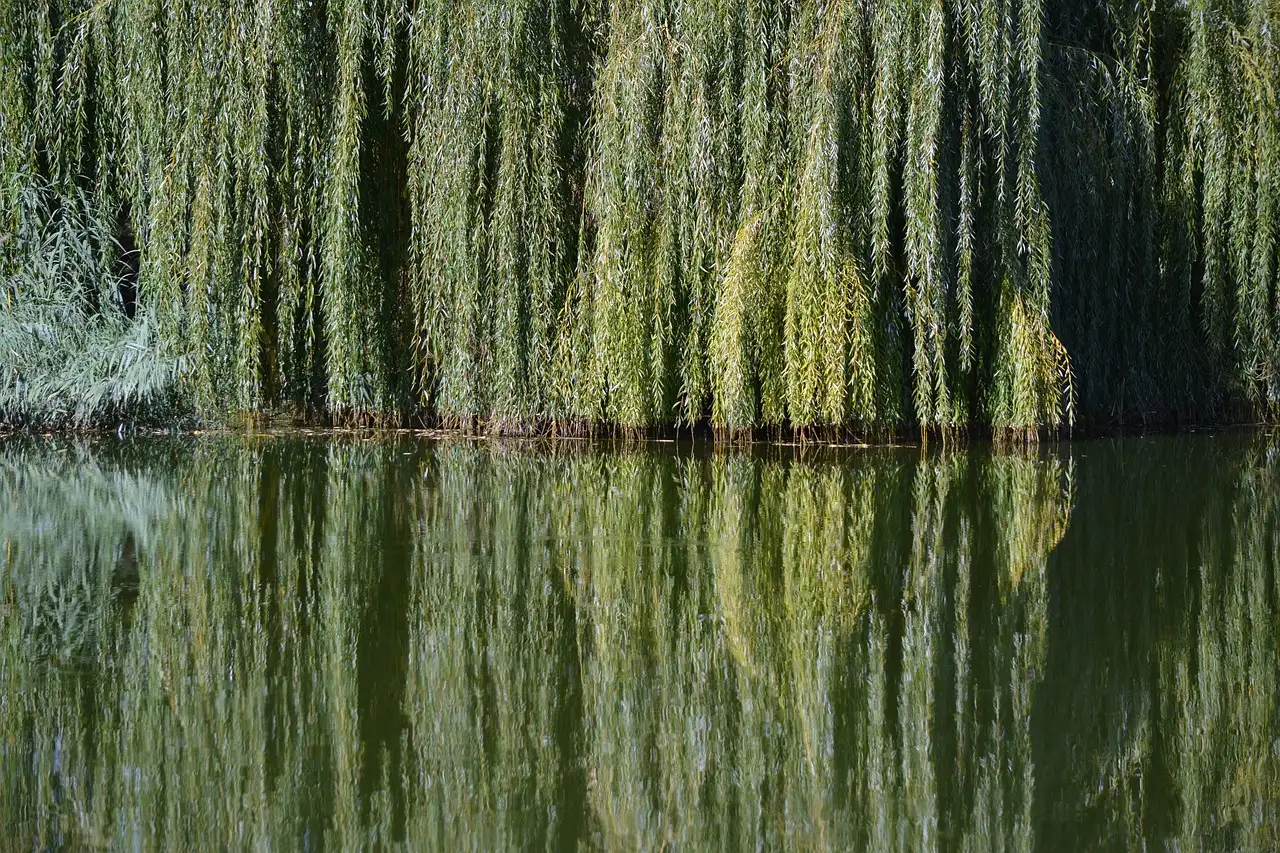
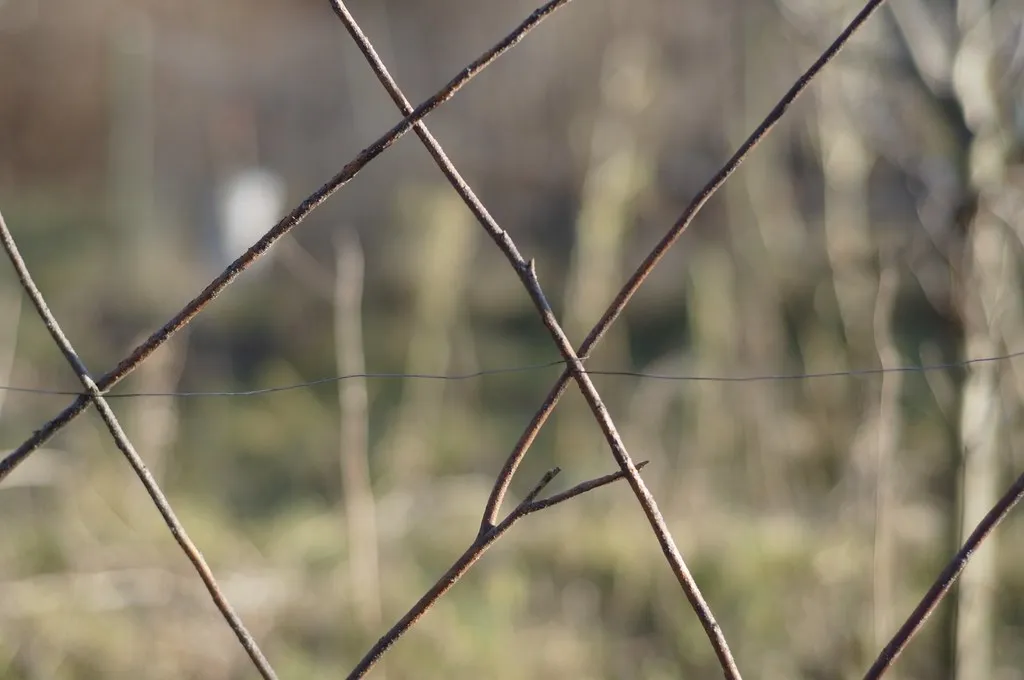
The diamond or criss-cross weave is a common, robust technique that provides structural integrity and allows for natural grafting where the rods intersect. This interlocking quality is what separates a living willow fence from something merely decorative.
Weave the rods in a front-to-back alternating pattern, similar to a basic basketry weave. This friction holds the structure together before you even apply ties. At the points of intersection, use biodegradable jute twine or flexible rubber ties to secure the rods.
Some of your stems will naturally graft together where they cross each other. Tie some of the other joints together to increase the strength of your fence. Natural ties will rot and drop off your fence after a few years. By then, the willow should have grafted together. Over time, the structure essentially locks itself.
Watering and First-Season Care
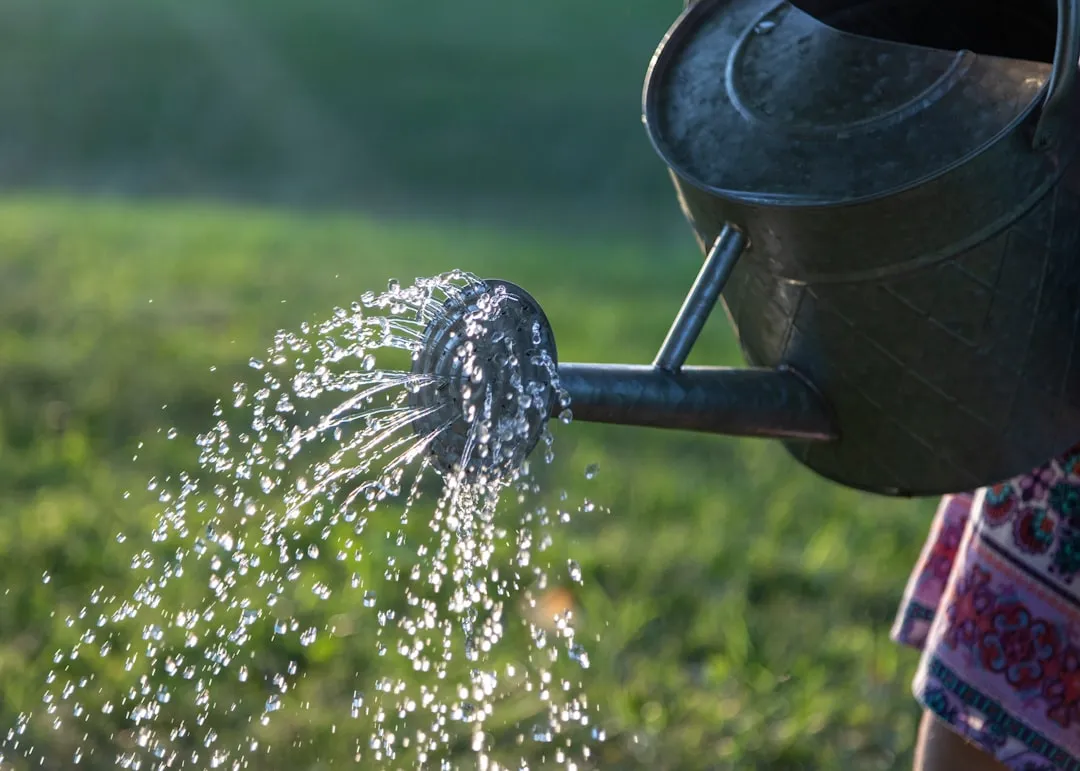
The first growing season is the most sensitive period, as the rods must expend energy to produce both roots and canopy growth. Consistent moisture is necessary for successful establishment, especially during dry spells.
Watering should be thorough and deep, aiming to saturate the soil at least 15 to 20 inches down, rather than merely sprinkling the surface. A deep drenching once or twice a week is more beneficial than frequent, shallow watering, as it encourages the deep rooting needed for long-term survival.
Once your stems are planted, add a layer of mulch around them. This will help retain moisture and further keep down weeds. A mulch layer is one of those small details that makes a real difference in dry spells, especially in that fragile first spring.
Ongoing Pruning and Annual Maintenance
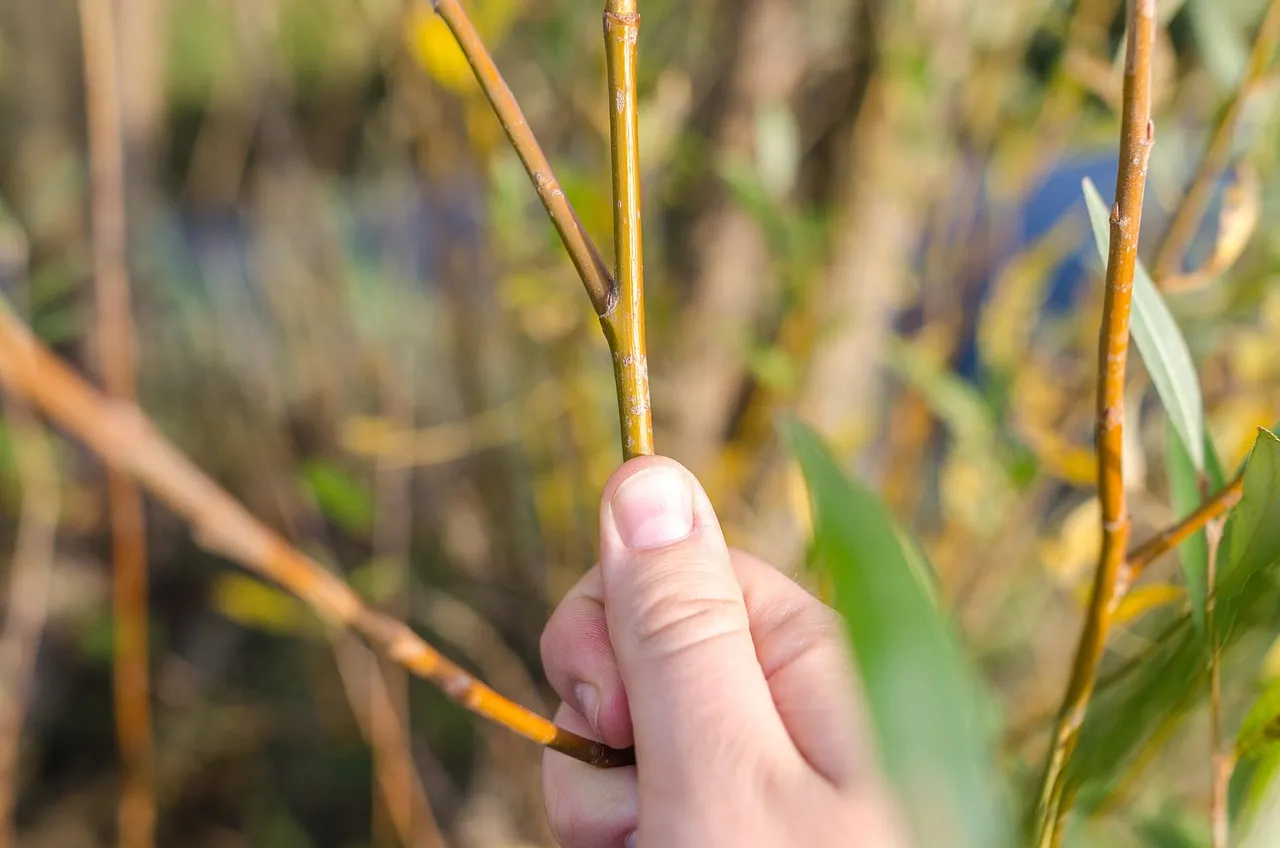
The primary maintenance task is performed during the dormant season, between late autumn and early spring, before the buds begin to swell. This annual pruning, often resembling coppicing or pollarding, controls the fence’s height and thickness, preventing it from becoming an unmanageable thicket or growing into full trees.
Willow can grow up to 2 meters per year, so you may need to trim several times during summer to keep the shape of the structure. That growth rate is impressive but it does ask something of you as the gardener.
Any new growth that has emerged since the previous year can be cut back hard to the original rods to maintain the woven pattern’s definition. Alternatively, the longest, most flexible new shoots can be woven back into the existing lattice to reinforce the structure and increase density. This integration of new growth helps the structure strengthen over time, especially as the rods begin to graft together at the intersection points.
The Environmental and Ecological Benefits
A living willow fence also makes an effective windbreak. Unlike solid fencing, which creates turbulence and plant damage on the leeward side, a woven fence naturally slows the wind down as it passes through. That permeability is actually a feature, not a flaw.
A living willow fence serves as a multifunctional ecological asset, simultaneously reducing soil erosion and creating natural windbreaks that protect vulnerable plants. Living willow barriers stand apart as vibrant ecosystems rather than mere boundaries. These living structures provide vital habitats for diverse wildlife, from nesting birds to beneficial insects and small mammals, greatly enhancing your garden’s biodiversity.
Living willow structures are carbon-negative, self-repairing, and become more beautiful every year they grow. This ancient craft, once the backbone of rural homesteads, offers a modern solution for anyone seeking a boundary that lives and breathes alongside the land. Few garden projects can honestly say the same.
Conclusion: A Boundary That Earns Its Place
A living willow fence is not a weekend shortcut. It rewards planning, patience, and a certain willingness to work with natural rhythms rather than against them. The first season asks the most of you. The seasons that follow begin to give back.
Living willow fences provide the perfect combination of immediate function and long-term beauty, creating sustainable barriers that improve over time while supporting local ecosystems and providing natural solutions to garden boundary needs.
What makes this kind of boundary genuinely different is its direction of travel. A timber fence begins deteriorating on the day it goes in. A willow fedge is just getting started. That shift in perspective, from a product you install to a living thing you tend, is perhaps the most valuable thing a garden can teach.
AI Disclaimer: This article was created with the assistance of AI tools and reviewed by a human editor.