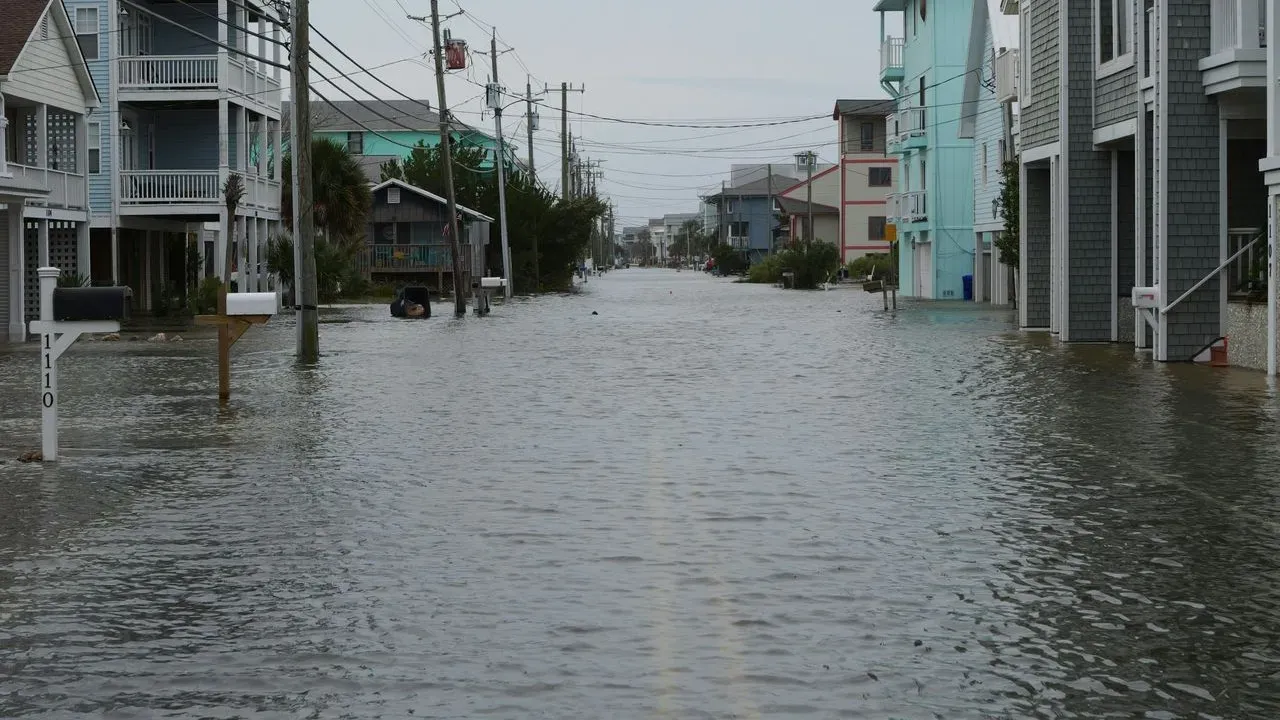

San Francisco – Thanksgiving week brings some of the highest tides of the year to the Bay Area, and a new visualization from UC Santa Cruz shows how the city’s waterfront and bay communities could fare if storm surge and rising seas arrive together. The video has drawn attention as officials warn of conditions they describe as unusual. Its scenario is hypothetical, but the water levels behind it are already high enough to concern city leaders ([1]).
A scenario built on modeling, not a forecast
The UC Santa Cruz video depicts a potential El Niño event in San Francisco’s North Bay during the winter of 2026 and 2027. Its creators assume a 20-year storm with about 20 inches of sea level above normal. It’s a hypothetical scenario, not footage of actual flooding or an official forecast.
The flood levels shown rely on modeling by the U.S. Geological Survey, and the video’s wave imagery is a visual approximation rather than a precise reconstruction. In past El Niños, sea levels typically run 6-12″ higher than average years. That context explains why the scenario is taken seriously, even though it has not occurred.
The baseline is also shifting. Tide gauges across San Francisco Bay are already running 14” above normal for the past 30 days (Oct 17- Nov 16) and are rising. In other words, the simulation starts from conditions that are already unusual.
Forecasts approach a 1983 record
The sharpest figures come from the National Weather Service, which has projected a peak of about 8.6 feet on Wednesday morning, November 25. The city’s all-time high is 8.66 feet, recorded in January 1983, so the forecast sits just below that mark. The projection was adjusted during the weekend, falling from 8.8 feet on Saturday to 8.6 feet by Sunday.
NOAA’s tide predictions are lower, at about 7.0 feet for the week’s highest water, because they leave out storm surge and El Niño effects. Actual levels could therefore run higher than the standard tables suggest, which is the main reason forecasters are urging caution.
San Francisco Mayor Daniel Lurie told residents that the National Weather Service has never seen tides of this kind recorded in the city. He urged people to consider not traveling over the holiday and to stock up on supplies before the weekend. The expected flooding is described as significantly worse than the earlier storms that left cars submerged across the Bay Area.
The high-water period is not a single event. The California King Tides Project lists three windows for the 2026 and 2027 season:
- November 24 to 26, 2026, the Thanksgiving peak
- December 23 to 25, 2026
- January 21 to 22, 2027
Preparations and what is at stake
The Port of San Francisco has placed temporary flood barriers along the Embarcadero, where heavy rain caused flooding earlier this month. Public Works reported handing out 4,000 sandbags on Wednesday and 3,000 on Thursday. Emergency management officials have said the coming storm could be as bad as or worse than the last one, and that it will land on a day of significant king tides.
Transportation is also under pressure. Federal officials have warned that San Francisco International Airport could see flooding next week if the tides arrive as forecast. Oakland San Francisco Bay Airport has been flagged as well. Caltrans is closing the Posey Tube, the tunnel linking Alameda and Oakland, for five days, and additional closures remain possible as conditions change.
What matters now: the UC Santa Cruz video is a scenario, not a prediction. The water levels forecasters are tracking, however, are close to the city’s record, and the peak is expected on the morning of November 25. Residents, commuters, and travelers should follow updates from city officials and the National Weather Service as the tides arrive.
The visualization is most useful as a warning about how little it takes to cause trouble. A few flooded streets, damaged seawalls, or submerged transit links could be enough to disrupt the holiday. The tides this week will show how close the forecasts come to the scenario on screen, and the next king tide windows in December and January will test the city’s preparations again.
AI Disclaimer: This article was created with the assistance of AI tools and reviewed by a human editor.