

Rain does more than water a garden. Every time a drop lands on a leaf, something quietly remarkable happens inside the plant. The physical impact of rainfall sets off a cascade of molecular signals, effectively telling the plant to prepare its defenses before any pathogen even arrives.
This biological foresight is not accidental. It is the result of millions of years of evolution, and scientists are only now beginning to understand just how sophisticated this system truly is.
Rain as a Hidden Threat, Not Just a Resource
Most people associate rain with growth and nourishment, but for plants, each raindrop carries genuine risk. Raindrops contain pathogens such as bacteria, filamentous fungi, and viruses, and thus can cause disease in plants. This makes rainfall one of the most consistent vectors for pathogen spread in the natural world.
Mechanical stimulation from rain, wind, and physical impact contributes to the activation of a plant’s defense system at a biochemical level, which in turn triggers a stress hormone that can lead to the strengthening of the plant’s immune system. The plant, in other words, reads the physical impact of a raindrop as a warning signal rather than simply registering moisture.
The Plant’s Immune System: A Brief Overview
Plants have their own immune system, just like humans and other multicellular organisms. When plants detect pathogens, they express immune-related genes to prevent themselves from being infected. This immune machinery is not centralized the way an animal’s immune system is, but it is surprisingly layered and effective.
A dual defense system operates in plants under two main mechanisms labeled Pattern-Triggered Immunity (PTI) and Effector-Triggered Immunity (ETI). Broad-spectrum resistance begins through Pattern Recognition Receptors detecting Microbe-Associated Molecular Patterns, which constitutes PTI as the initial defense line. Understanding both layers helps explain why raindrop-triggered immunity is such a meaningful discovery.
Trichomes: The Tiny Sensors on Leaf Surfaces
Trichomes, hair-like structures on the epidermis, directly sense external mechanical forces, including raindrops, to anticipate pathogen infections in Arabidopsis thaliana. These microscopic surface hairs are not decorative. They serve as the plant’s first line of physical perception.
An early layer of the plant immune system is evoked by sensing mechanostimulation on the leaf surface: trichomes, hair-like cells, function as mechanosensory cells that mount an effective immune response against both biotrophic and necrotrophic pathogens. The fact that a single structural feature on the leaf surface can serve both a physical and immunological function speaks to how efficient plant biology really is.
Calcium Waves: The Body’s Internal Alarm System
Exposure of leaf surfaces to mechanical stimuli initiates the concentric propagation of intercellular calcium waves away from trichomes to induce defence-related genes. Think of these waves as ripples moving outward from a stone dropped in still water, except they carry a biochemical alarm across the plant’s cells.
When trichomes are mechanically stimulated, intercellular calcium waves are concentrically propagated away from them, MAPKs are activated, and the calcium- and calmodulin-binding transcription activator (CAMTA)-regulated immune response is initiated. The speed of this signal is part of what makes it so useful: the plant begins preparing before any pathogen has had time to take hold.
The Role of CAMTA3 in Translating the Signal

Propagating calcium waves enable effective immunity against pathogenic microbes through the CALMODULIN-BINDING TRANSCRIPTION ACTIVATOR 3 (CAMTA3) and mitogen-activated protein kinases. CAMTA3 acts as a crucial molecular translator, converting the physical signal from a raindrop into a coordinated gene expression response.
In the CAMTA3 pathway, the protein acts as a transcription activator that directly regulates defense genes. The jasmonic acid pathway responds more quickly to injuries, while the CAMTA3 route appears more specialized in responding to mild, repetitive mechanical stimulation. This division of labor means the plant has two backup systems running in parallel, each tuned to a different type of threat.
The Nagoya University Study on Rain-Activated Genes

To find out how plants respond to rain, a research team led by Professor Yasuomi Tada and Assistant Professor Mika Nomoto of Nagoya University conducted a study using Arabidopsis thaliana seedlings. The team began by conducting RNA sequencing analyses to examine which genes are expressed in the leaves when they are exposed to rain. This approach allowed the researchers to map the plant’s full molecular response to rainfall with unusual precision.
They found that several major immune-related genes are expressed in response to rain, and that these genes are regulated by immunosuppressive genes called CAMTAs (calmodulin-binding transcription activators). The finding clarified a long-debated question about how physical rainfall translates into a measurable shift in gene activity. It also confirmed that the immune response to rain is not random but follows a structured regulatory pathway.
Thousands of Genes, One Raindrop
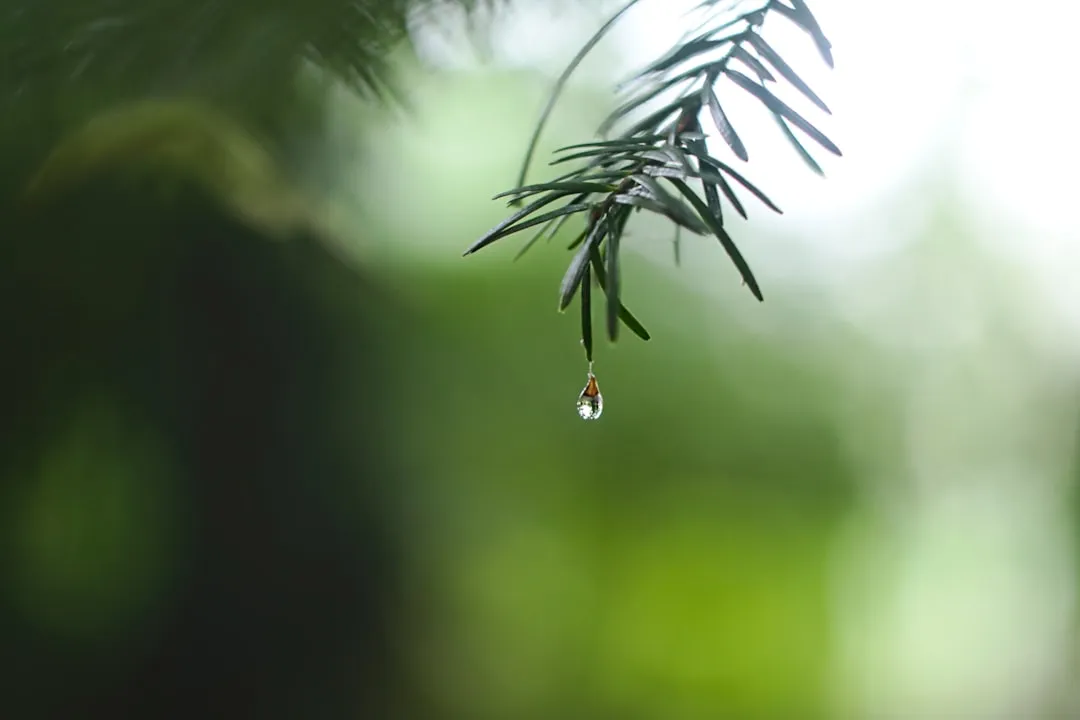
Plants cannot feel pain, but they still react strongly to mechanical stimuli from human touch, hungry animals, wind and rain. These external factors lead to the plant’s molecular defense system being activated quickly, which in turn can contribute to plants becoming more resistant and flowering later. The scale of the response is what surprises researchers most.
Mechanical stimuli affect the expression of numerous kinase and transcription factor genes; over ten percent of the genes encoding kinases and transcription factors were increased in touch-stimulated Arabidopsis plants, indicating that signal transduction pathways and transcriptional regulation are heavily influenced by such perturbations. A single mechanical event thus sets off a remarkably broad response across the plant’s genome. Mechanical stimuli instantly activate a plant’s molecular defense system, and this powerful response can contribute to plants becoming more resistant later.
Jasmonic Acid and Salicylic Acid: The Defense Hormones
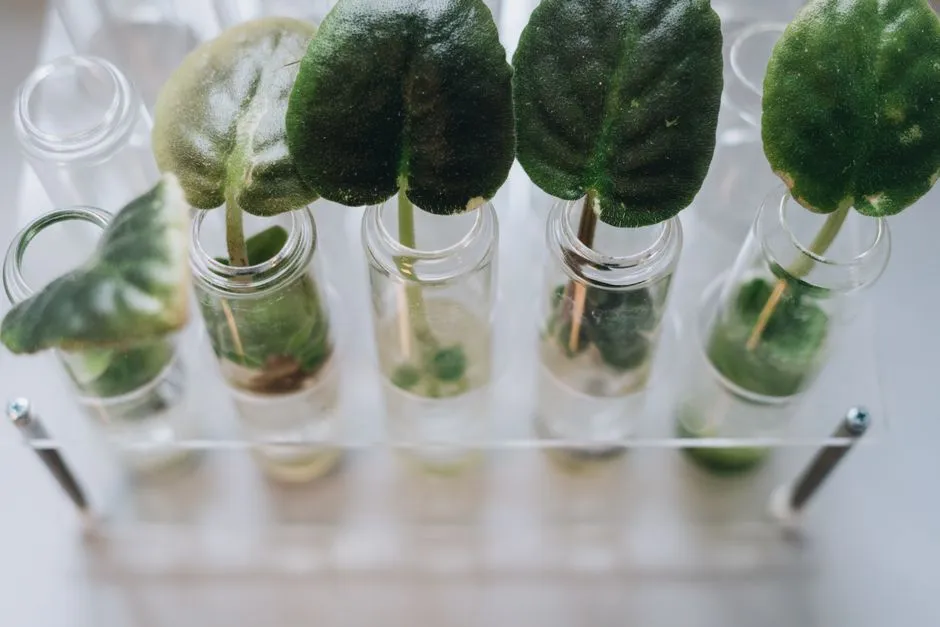
Salicylic acid and jasmonic acid are the two most important phytohormones in plant immunity. While salicylic acid plays pivotal roles in local and systemic acquired resistance against biotrophic pathogens, jasmonic acid contributes to defense against necrotrophic pathogens, herbivores, and induced systemic resistance. Both hormones become active when the rain-triggered mechanical signal moves through the plant’s tissues.
The key role of phytohormones in plant immunity is largely known; in particular, salicylic acid and jasmonic acid have been shown to contribute to plant defence response against different pathogens. Rain, then, does not just activate one hormone but can mobilize both of these immune chemical messengers depending on the nature of the threat present. Rain modulates both mechanotransduction and hormone-signaling pathways that could affect the growth and development of plants as well as environmental responses.
The Dual Safety Net: Two Pathways Working Together
The discovery of two parallel touch signaling pathways, jasmonic acid and CAMTA3, means that plants have a dual safety system. If one pathway fails, the second can take over the defense. This explains why mechanical stimulation so dramatically enhances resilience: it does not just activate a single response, but an entire network of defense mechanisms.
The upregulation of genes involved in disease resistance and defense responses suggests an overlap of common pathways activated by mechanical stimulation and other environmental stresses, such as pathogen attack or abiotic stress. Such crosstalk between different signaling pathways enables plants to mount a coordinated response to a variety of challenges, enhancing their overall resilience. The redundancy built into this system reflects just how important the response is to a plant’s survival.
What This Means for the Future of Agriculture
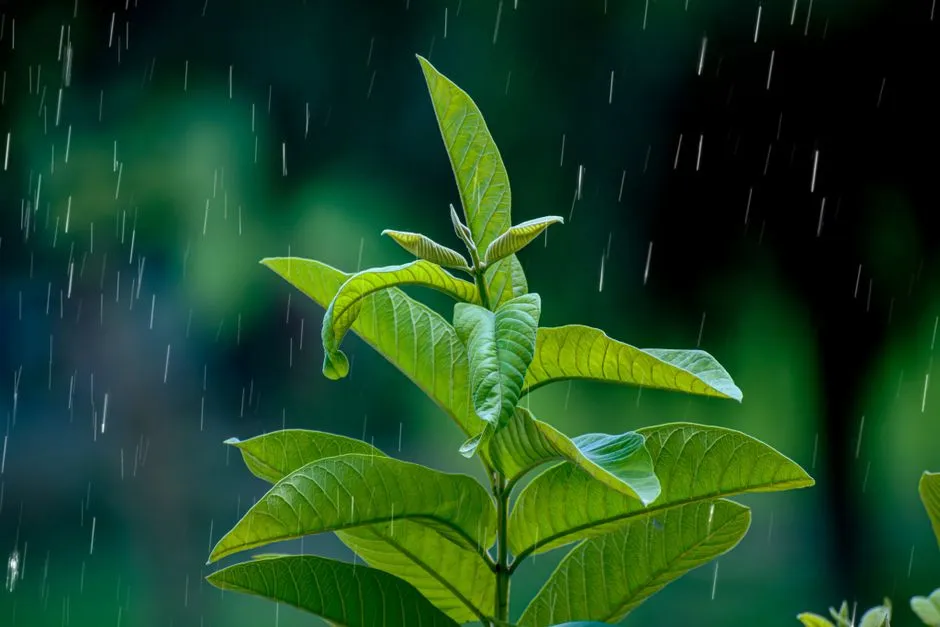
Researchers at Lund University in Sweden have found genetic keys that explain how plants respond so strongly to mechanical stimuli. Cracking this code could help lead to higher yields and improved stress resistance in crops in the future. This is not a distant prospect. The agricultural implications are already drawing serious scientific attention.
This knowledge opens the door to creating climate-change-resistant crops without chemical pesticides. If scientists can reliably trigger or enhance the same immune pathways that rain naturally activates, it could reduce dependence on synthetic fungicides and pesticides in farming. The use of conventional biocidal compounds is now being questioned by societal demands for alternatives that are environmentally friendly, and such approaches could sustain defense activation over extended periods while minimizing metabolic and environmental costs.
A raindrop falling on a leaf may seem like one of the most ordinary events in nature. It turns out it is also one of the most quietly consequential. The more researchers unpack the molecular story behind this simple contact, the clearer it becomes that plants are not passive organisms waiting to be infected. They have been listening for the rain all along.
AI Disclaimer: This article was created with the assistance of AI tools and reviewed by a human editor.