
Beneath every forest floor, every grassland, and every garden bed, there is a world that most of us have never seen. It hums with activity not through sound or movement, but through chemistry, biology, and a kind of molecular language that plants have been speaking for hundreds of millions of years. The network that carries these messages is fungal, invisible to the naked eye, and startlingly complex.
Scientists have spent decades piecing together how this system actually works. The closer they look, the more they find that plants are far less passive than we assumed. They share resources, send warnings, and respond to their neighbors in ways that continue to reshape our understanding of what a forest truly is.
The Fungal Foundation: What Mycorrhizae Actually Are
Mycorrhizal fungi have emerged as key contributors to underground communication between plants. These mutualistic fungi form connections between the roots of plants via their hyphae, known as common mycorrhizal networks, or CMNs.
The vast majority of land plants use symbiosis with mycorrhizal fungi in their roots: the plant receives limited nutrients from the soil via the fungus; in return, the fungus receives carbon from the plant’s photosynthesis. This exchange has been going on for an extraordinarily long time.
The mycorrhizal symbiosis between plants and fungi is fundamental to terrestrial ecosystems, with evolutionary origins before the colonization of land by plants. That puts this relationship well over 400 million years old, predating dinosaurs by a considerable margin.
The Wood Wide Web: More Than a Catchy Name
Through microscopic fungal threads known as hyphae, vast underground networks are formed, connecting trees, shrubs and other plants in a complex web of interdependence. Scientists refer to this phenomenon as the Wood Wide Web, a “forest internet” of sorts.
Mycorrhizal networks were discovered in 1997 by Suzanne Simard, professor of forest ecology at the University of British Columbia in Canada. Her work helped spark a wave of research that has since expanded significantly.
Groundbreaking research over the past few decades has revealed a complex network of communication and resource sharing among trees, dubbed the “Wood Wide Web.” This underground network, facilitated by mycorrhizal fungi, allows trees to exchange information and resources, fundamentally changing our understanding of forest ecosystems.
What Travels Through the Network: Carbon, Nutrients, and More
Numerous studies have reported that carbon, nitrogen and phosphorus are transferred between conspecific and heterospecific plants via AM and ECM networks. These are not trivial movements. They can influence which plants survive and how well they grow.
Both mineral nutrients and photosynthetically fixed carbon compounds have been shown to move through CMNs between plants plugged into the network. A great number of plant growth and fitness benefits have been ascribed to these associations, such as spatial extension of the nutrient depletion zone through the hyphal network, stimulation of the uptake of nitrogen and micronutrients, and increased resilience to biotic and abiotic stress.
Mycelium can transfer a wide variety of compounds and signals among plants that can modify their behaviour to protect the network as a whole. Carbon transfer is an important tool to achieve that and can promote forest regeneration.
Defense Signals: Alerting Neighbors to Danger
CMNs mediate plant-plant communication between healthy plants and pathogen-infected tomato plants. After establishment of CMNs between tomato plants, inoculation of “donor” plants with the pathogen Alternaria solani led to increases in disease resistance and activities of defensive enzymes in healthy neighbouring “receiver” plants.
Tomatoes infected with Alternaria solani, the causal agent of early blight, have been demonstrated to alert the neighboring, non-infected tomato plants by transferring disease signals, resulting in increased disease resistance, activation of antioxidative defense enzymes and increased expression of defense-related genes.
CMNs have been ascribed an important role in activating defense responses in non-infected potatoes connected to neighbors infected with oomycetes, as well as in trifoliate orange infected by pathogenic bacteria. These findings point to a system where plants don’t just react to threats individually, they appear to prepare connected neighbors in advance.
Virus Signals Through the Network: A Recent Discovery
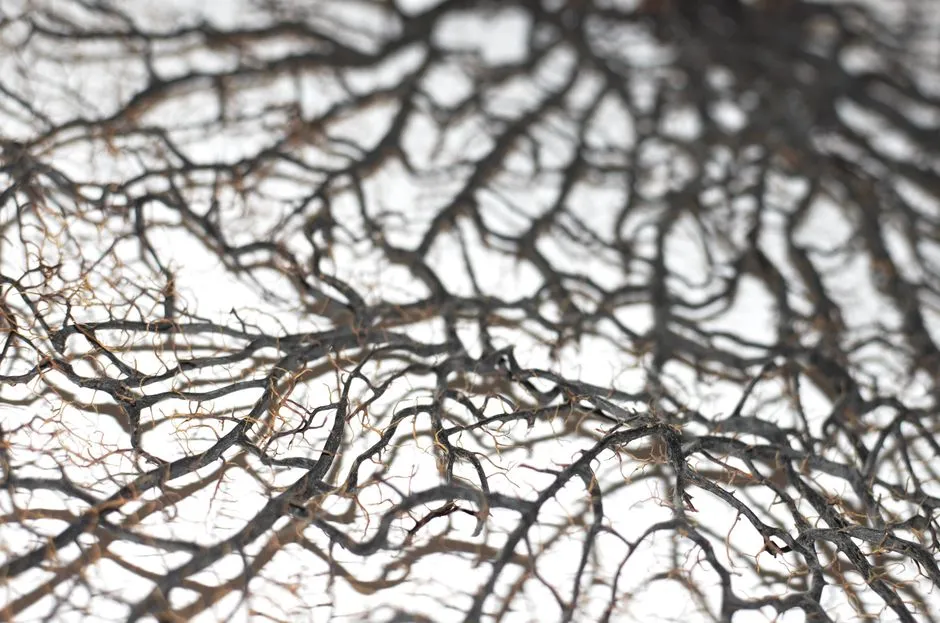
In addition to the relation between the individual plant and its symbionts, arbuscular mycorrhizal fungi build common mycorrhizal networks connecting neighboring plants through shared extraradical mycelium. Researchers are now finding that even viral infection signals can travel this route.
Recent studies indicate that AMF-inoculated plants exhibit more efficient scavenging of reactive oxygen species in virus-infected plants, as well as a defense-like hormonal response induced by AMF in grapevines infected with multiple viruses. While AMF-inoculated plants demonstrate a reduction in the concentrations of certain grapevine viruses, this effect varies depending on tissue type, season, and the specific virus and AMF species involved.
This line of research, published in 2025, is still in its early stages, but it raises intriguing possibilities for how the network might be used to buffer entire plant communities against infection, not just individual plants.
How Widespread Are These Networks Really?

More than ninety percent of all land plants live in a close symbiosis with fungi, the mycorrhiza. That figure alone gives a sense of how pervasive this relationship is across the planet’s ecosystems.
AM, ECM, and ericoid mycorrhiza are the most geographically widespread mycorrhizal types, colonizing over eighty-five percent of vascular plants in terrestrial biomes. Their reach extends from tropical rainforests to boreal woodlands to temperate grasslands.
The formation and diversity of mycorrhizal networks are influenced by multiple factors, including host plant diversity, fungal specificity, and environmental conditions. No two networks are alike, which makes studying them all the more challenging and interesting.
Where the Science Gets Complicated: Honest Debate
The prevalence and potential functions of common mycorrhizal networks, or the “wood-wide web,” resulting from the simultaneous interaction of mycorrhizal fungi and roots of different neighbouring plants have been increasingly capturing the interest of science and society, sometimes leading to hyperbole and misinterpretation. Several recent reviews conclude that popular claims regarding the widespread nature of these networks in forests and their role in the transfer of resources and information between plants lack evidence.
A study led by the University of Göttingen suggests the reality might be more nuanced. The researchers found that young beech trees could transfer carbon to nearby ectomycorrhizal fungi, but not necessarily to other trees.
Some scientists caution against anthropomorphizing trees or overstating their “intelligence.” They emphasize that while communication is real, it’s a result of evolutionary processes rather than conscious decision-making. The challenge lies in accurately describing these complex interactions without resorting to overly simplistic or sensationalised explanations.
Mapping the Invisible: The Underground Atlas

The Society for the Protection of Underground Networks (SPUN) has launched the Underground Atlas, the first digital map predicting Earth’s underground mycorrhizal fungal biodiversity. The work, published in Nature, analyzed two point eight billion DNA sequences from one hundred and thirty countries, revealing that over ninety percent of mycorrhizal biodiversity hotspots lie outside protected areas.
Mycorrhizal fungi form critical underground networks that provide plants with essential nutrients while drawing approximately thirteen billion tons of CO2 per year into soils. Despite their importance for climate regulation and ecosystem health, these “ecosystem engineers” have been largely overlooked in conservation planning.
Arbuscular mycorrhizal fungi showed the highest diversity near the equator, following biodiversity gradients observed in plants and animals. The maps also turned up important hotspots in unexpected places, revealing how little was previously known about underground fungal distribution.
Applications in Agriculture and Ecosystem Restoration
In restoration projects, incorporating mycorrhizal fungi into soil amendments can improve the success of replanting efforts. By re-establishing these networks, plants can access resources more effectively, increasing their chances of survival in disturbed environments.
Research reveals key insights that deepen our understanding of plant-AM fungi interactions and could lead to advances in sustainable agriculture. Farming systems that preserve or actively introduce mycorrhizal networks could reduce the need for synthetic fertilizers and pesticides over time.
Mycorrhizal fungi help regulate Earth’s climate and ecosystems by forming underground networks that provide plants with essential nutrients, while drawing roughly thirteen billion tons of CO2 per year into soils. Despite their key role as a planetary circulatory system for carbon and nutrients, mycorrhizal fungi have been overlooked in climate change strategies, conservation agendas, and restoration efforts.
What Comes Next: Open Questions and Emerging Research
Most studies on CMNs have focused on the transport of signals between plants. However, there is increasing attention for the role of mycorrhizal fungi in shaping the soil microbiome. This represents a whole new dimension of underground ecology that researchers are only beginning to explore.
Research on plant communication through mycorrhizal networks is gaining momentum. Scientists are employing advanced techniques, such as molecular biology and imaging technologies, to deepen our understanding of these complex interactions.
By synthesising emerging evidence, researchers highlight key advances while also identifying unresolved questions and the future research directions necessary for disentangling the ecological roles of mycorrhizal networks. The field is growing fast, and the picture is getting clearer, even if it remains incomplete.
Conclusion: A Network Worth Understanding
The underground conversation between plants is not a fairy tale dressed up in scientific language. It is a real, measurable, and increasingly well-documented system of exchange, one that spans nearly every terrestrial ecosystem on Earth and underpins much of the life we depend on.
What researchers are still working out is the precise scale and reliability of that exchange. Not every signal gets through. Not every transfer benefits the receiver. The network is ancient and complex, not a perfectly tuned instrument.
Still, the basic truth holds: plants are not solitary actors competing silently for light and water. They are embedded in a living fabric that stretches far below the surface. Understanding that fabric, protecting it, and learning how to work with it rather than against it may be one of the more important scientific priorities of this century.
AI Disclaimer: This article was created with the assistance of AI tools and reviewed by a human editor.